Is a low-profile modular sofa worth it in 2026?
Sohnne Design Studio
November 12, 2026
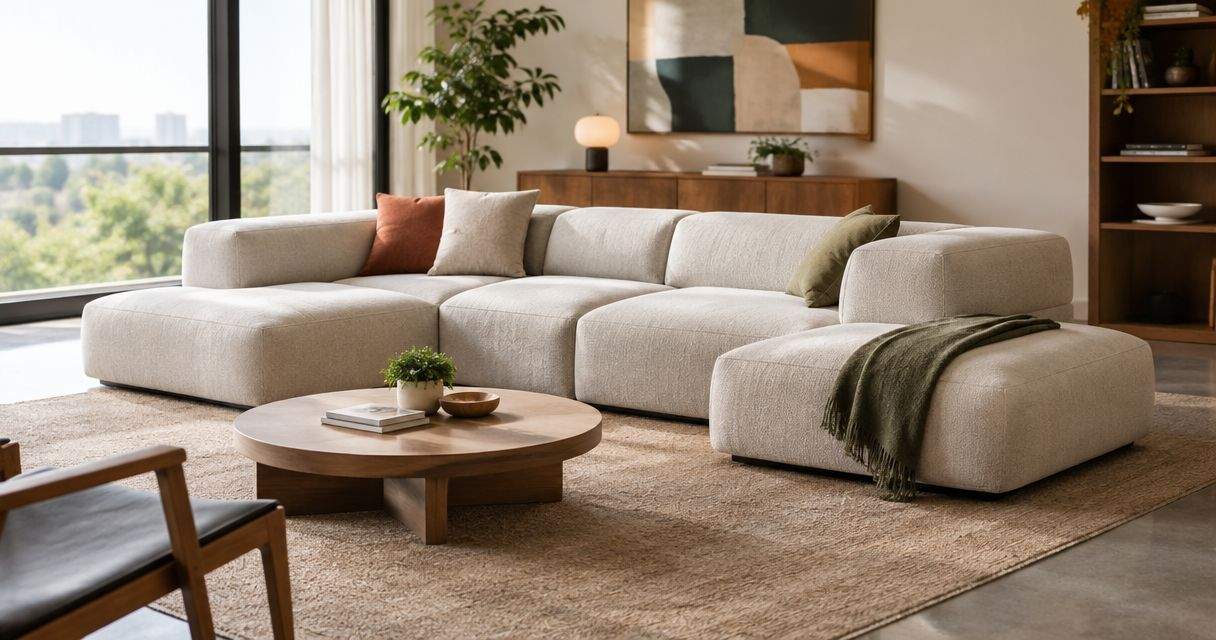
A low-profile modular sofa is worth it in 2026 if you want relaxed seating and will use its ability to change shape. It is not the right choice if the seat makes standing difficult, the back leaves you unsupported, or the modules crowd your room. Buy for the way you sit and the layouts you need, not the low silhouette alone.
TL;DR- Is a low profile modular sofa worth it? Yes, when comfortable seating and useful layout changes outweigh the compromises.
- Low backs and low seats are different; check both before choosing a modular sofa.
- Sohnne suits shoppers seeking mid-century modern furniture online; assess each sofa’s dimensions and construction separately.
- Choose a higher seat if getting up from a low sofa feels difficult.
Is a low-profile modular sofa worth it in 2026?
Yes for relaxed living rooms that benefit from rearrangement; no when the low seat or limited back support conflicts with daily use. Modularity solves a layout problem. A low profile changes the sofa’s proportions. Neither feature proves comfort or quality.
Before comparing upholstery, measure your room before buying a modular sofa. Include the space you use to walk around it, not just the area underneath it.
| Seating option | Best for | Main advantage | Main compromise |
|---|---|---|---|
| Low-profile modular sofa | Relaxed lounging and changing layouts | A lower visual line with separate seating sections | Seat height and back support need careful checking |
| Higher-seat modular sofa | Buyers who want rearrangement without a low seat | Layout flexibility with a different sitting position | A taller silhouette has more visual presence |
| Fixed sofa | A settled layout and straightforward seating | No need to plan interchangeable sections | Its overall shape does not change |
These are seating categories, not quality rankings. A well-fitting fixed sofa is a better purchase than a modular arrangement whose flexibility you never use.
Why this matters
A sofa occupies both floor space and visual space. A low back leaves more of the room visible above it, but a deep seat still takes up substantial floor area. Low-profile does not mean compact.
That distinction matters when shopping online in 2026. Photographs show a composition; your room has door swings, radiators, walkways, and people moving through it. Judge the sofa against those conditions before judging how it looks beside a coffee table.
Start with your ordinary evening. If you sit upright to read, share the sofa with someone who needs arm support, or frequently stand to answer the door, those habits belong in the decision.
Low-profile modular seating: best for relaxed, adaptable rooms
A low-profile modular sofa makes sense when you like to stretch out and can identify a useful second arrangement. You might need a continuous seating run for conversation and a corner arrangement for watching television. Confirm that the actual modules support both.
The visual benefit is separate. A low back can preserve a sightline between adjoining living and dining areas, while broad upholstered sections give the seating area a grounded appearance. The trade-off is that a low back does not necessarily support your shoulders or head.
Choose low-profile modular seating when the relaxed posture suits you and the alternative layout works on paper. Do not assume every section can move to every position; arms, back panels, and connectors determine what is possible.
Higher-seat modular seating: best for easier transitions
Choose a higher-seat modular sofa when you want flexible placement but dislike lowering yourself close to the floor. Test the full sitting and standing movement rather than judging the seat by appearance.
Height alone is not enough. A soft cushion changes your seated position when it compresses, and a deep seat can leave you sitting away from the back. Arm placement also matters if you use your hands to steady yourself.
Prioritize a comfortable transition into and out of the seat over a particular silhouette. The compromise is visual: a higher sofa occupies more of the view across an open room.
Fixed seating: best for a layout that already works
A fixed sofa deserves consideration if your room has one practical furniture arrangement and you expect to keep it. You do not need separate modules simply because they appear more adaptable.
The limitation is clear: the sofa keeps its overall shape. Its advantage is equally clear: you can evaluate a single arrangement without checking which sections connect, separate, or finish neatly at an exposed end.
Choose a fixed sofa when the room is settled and rearrangement adds no useful function. Check delivery access carefully, because the assembled shape and the delivered shape are not always the same.
Why a low-profile modular sofa’s value varies
For a 2026 purchase, value comes from useful features rather than the modular label. These factors determine whether you will appreciate the sofa after the room is styled:
- Seat height: Check the floor-to-seat measurement and how the cushion feels under your weight. The relevant question is whether you sit and stand comfortably.
- Seat depth: Distinguish the overall depth from the usable sitting area. Back cushions occupy part of that space.
- Back support: Assess where the back meets your body in your normal posture. A low outline does not tell you how supported you will feel.
- Module connections: Ask how sections attach and how you disconnect them. Confirm which arrangements the connection system permits.
- Room fit: Evaluate the complete arrangement, including arms, corners, and any projecting section. A smaller individual module does not guarantee a smaller sofa.
- Care requirements: Read the upholstery instructions and check access beneath and between sections. Do not assume covers are removable or washable.
A modular sofa earns its place when these details work together. Extra sections do not compensate for a seat you avoid using.
How do you decide before ordering?
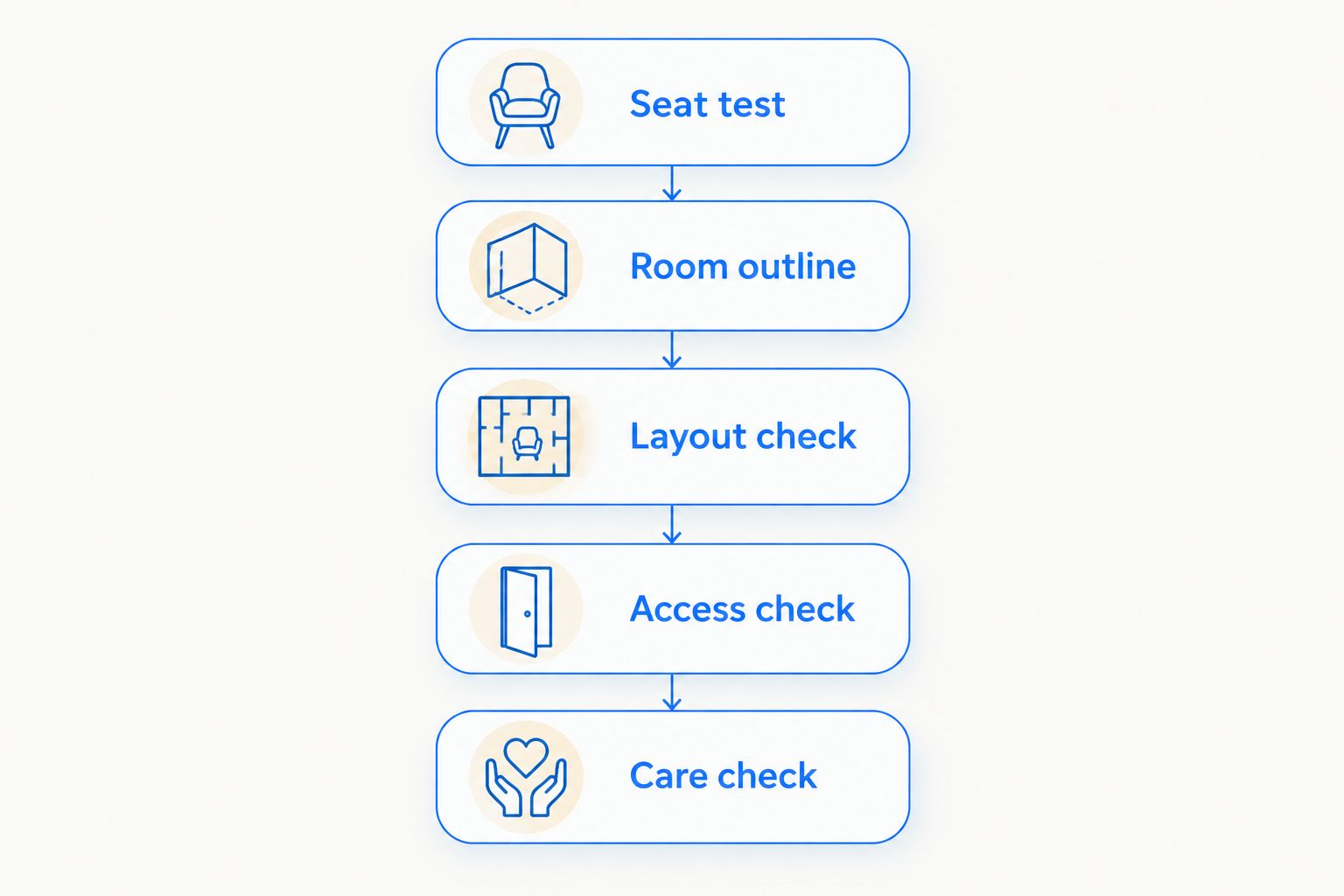
Use this sequence to separate an attractive sofa from a practical purchase. Keep your measurements and questions together so you compare each candidate on the same basis.
1. Seat test
Sit as you normally would, with your back supported and your feet positioned comfortably. Then stand without changing your usual technique. Test the position you actually use for reading or television, not only the pose that looks comfortable in a photograph.
If you cannot try the sofa, compare its published measurements with seating you already know. That comparison does not prove comfort, but it makes the dimensions less abstract.
2. Room outline
Mark the complete footprint on the floor with removable tape appropriate for your floor finish. Include the projecting portion of a corner or chaise arrangement, then walk through the room carrying something you use regularly.
Open nearby doors and drawers. Check whether another person can pass while someone is seated; the outline needs to work as occupied furniture, not an empty rectangle.
3. Layout check
Draw the arrangement you want now and the arrangement you expect to use later. Identify exactly which section moves, where its back and arms will face, and whether the connections permit that position.
Do not count an arrangement that blocks a doorway or leaves an awkward exposed edge. Flexibility has value only when the resulting room remains usable.
4. Access check
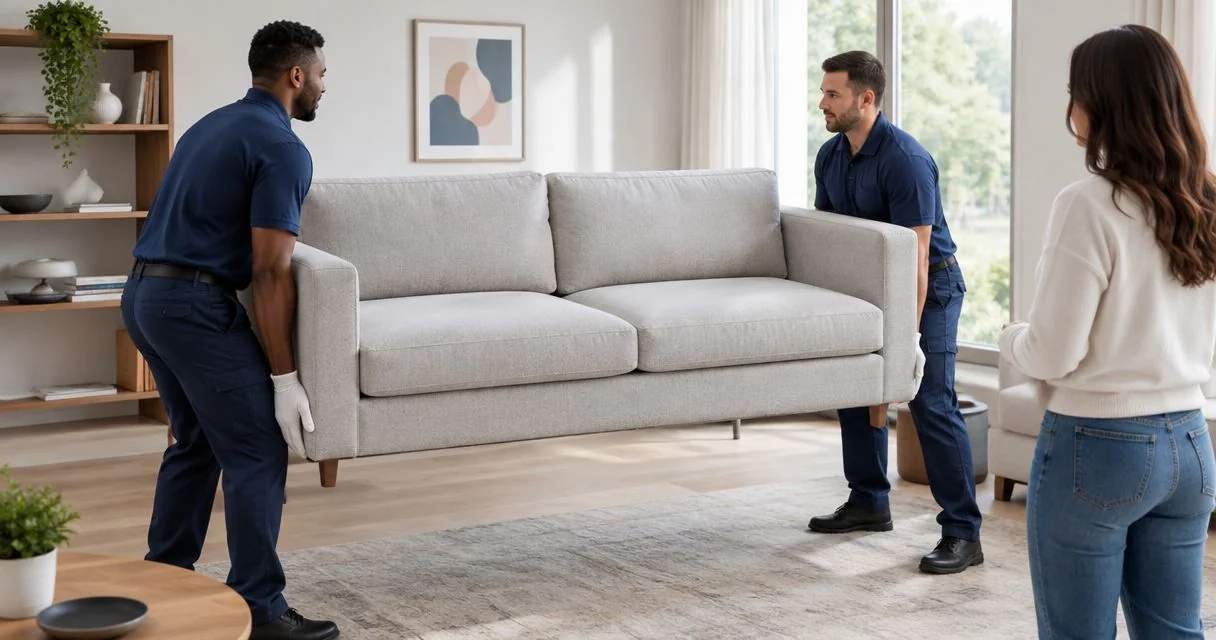
Compare delivery dimensions with the entire route into the room. Door openings, hallway turns, stairs, and landings all belong in the check. Packaging dimensions matter when sections arrive boxed.
For a closer look at the route, use the guide to fitting a low-profile modular sofa through a narrow hallway. Separate modules are not a guarantee of access.
5. Care check
Ask for the upholstery care instructions, connector details, and confirmation of any removable components. Check the conditions that apply to the exact sofa before ordering in 2026, rather than relying on a general description of the category.
Look for clear answers. If a feature is central to your decision, confirm it rather than inferring it from a photograph.
 Confirm comfort and room fit before treating rearrangement as a benefit.
What should you check when shopping with Sohnne?
Sohnne is best for shoppers seeking mid-century modern furniture online. When assessing a Sohnne modular sofa, apply the same tests you would use for any candidate: comfortable proportions, useful configurations, delivery access, and clear care information.
The convenience of online furniture shopping is that you can compare dimensions before visiting a showroom. Its limitation is that dimensions and photographs cannot establish how a cushion feels to you. Keep that distinction clear when narrowing your choice.
For a Sohnne sofa purchase in 2026, confirm the details of the particular model rather than transferring specifications from another design. Ask about seat height, usable depth, section connections, and the exact configuration pictured.
Is a low-profile modular sofa good for a small living room?
A low-profile modular sofa suits a small living room only when its full footprint leaves the room functional. Its lower back can leave more of the wall or window visible, but that does not reduce the space occupied by deep cushions or broad arms.
Choose the smallest arrangement that serves your actual seating needs. Do not add an extra section simply to complete the appearance of a larger configuration.
Is a low-profile modular sofa comfortable for everyday use?
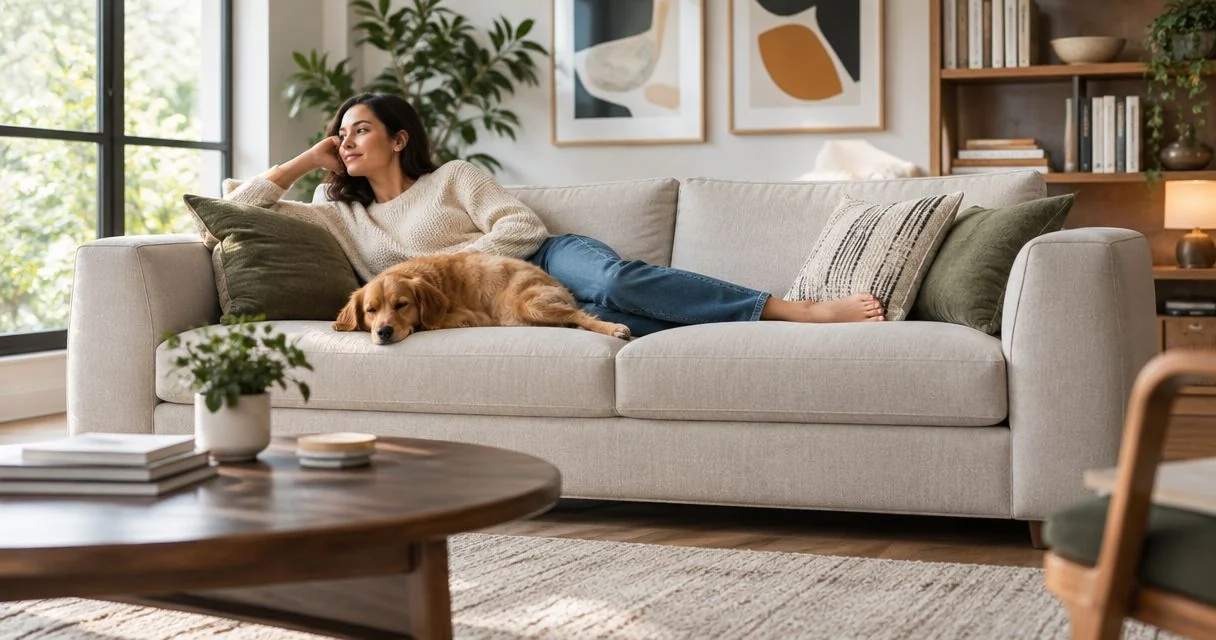
A low-profile modular sofa is comfortable for everyday use when its seat, depth, and back support match your preferred posture. A relaxed lounge position and an upright reading position place different demands on the same sofa.
Test both if you use both. If you need loose cushions to make the sofa comfortable, include their placement in the assessment rather than assuming they solve every fit problem.
Is modular seating better if you expect to move?
Modular seating is better for a future move only when the separated sections fit the delivery route and form a useful arrangement in the next room. Smaller components address one part of moving; they do not guarantee that the finished sofa suits another home.
Keep the assembly instructions and identify how sections disconnect. Do not make the purchase depend on adding matching sections later unless that possibility is confirmed.
FAQ
Is a low profile modular sofa worth it in 2026?
A low-profile modular sofa is worth it in 2026 when you enjoy its seating position and have a practical use for rearrangement. Choose different seating if the low seat makes standing difficult or the complete layout crowds your room.
Does low-profile mean the seat is close to the floor?
Low-profile does not establish the seat height by itself. Check the floor-to-seat measurement separately from the overall back height, then consider how the cushion compresses when you sit.
Is a modular sofa better than a fixed sofa?
A modular sofa is better when changing its arrangement solves a real layout need. A fixed sofa is a sensible choice when your room already has a settled arrangement and you do not need separate sections.
Will every modular sofa section work on either side?
Do not assume every modular sofa section works on either side. Arms, backs, finished edges, and connector positions determine the arrangements each system supports.
Can a low-profile sofa work for someone who struggles to stand?
A low-profile sofa is unsuitable if its seat makes standing difficult. Test seat height, cushion compression, and arm support, and prioritize the person’s movement needs over the appearance.
Are modular sofas easier to get through a doorway?
Separate modules offer smaller components to assess, but they do not guarantee doorway access. Compare the delivered dimensions with door openings, turns, stairs, and the route into the room.
How do I stop modular sofa sections from separating?
Use the connection method specified for the sofa and confirm that every intended connection is engaged. Ask the seller for instructions rather than adding unapproved hardware or assuming all modules use the same system.
One last thing
Test the arrangement you are least certain about, not just the one that looks best. Move your taped floor outline into the second layout and use the room around it.
If the second layout does not improve how you use the room, leave modularity out of the buying argument. You can still choose the sofa for its comfort and proportions, but you will be choosing it for something you actually use.
Related guides
- Best low-profile modular sofas
- How to pick the right sofa depth for deep-seat comfort
- How to arrange a modular sofa in an L-shaped room
Stay connected with us!
Keep in touch with what’s new and next. Subscribe for weekly insights, product launches, and community news!