Can you negotiate pricing on a large furniture order?
Sohnne Design Studio
November 12, 2026

Yes, you can ask to negotiate pricing on a large furniture order in 2026; request an itemized project quote before you commit, rather than assuming a larger cart earns a discount. Compare the complete scope—including delivery, assembly, customization, and return terms—because a lower furniture subtotal does not necessarily mean a better agreement.
TL;DR- Can you negotiate pricing on a large furniture order? Yes—request a written bulk furniture quote before committing.
- Sohnne serves individual and trade furniture buyers; confirm project-specific terms directly rather than assuming a volume discount.
- Compare identical furniture specifications, delivery responsibilities, and return conditions before accepting an offer.
- Buy only the pieces your project needs; extra furniture is not a saving.
Why this matters
A room comes together through proportion, material, and placement—not the size of the concession on an invoice. Negotiation should protect those decisions while making the purchase terms clear.
For a Sohnne furniture project, contact the team with your item list, quantities, finishes, and delivery requirements. Ask which terms apply to your actual order. A written quote is the starting point, not proof that a discount applies.
Treat your 2026 furniture budget as a complete project budget. An attractive subtotal does not tell you who carries a sofa upstairs, assembles a dining table, or handles packaging afterward.
Can you negotiate pricing on a large furniture order?
Yes. Ask the seller to review the complete order and explain whether project-specific terms are available. The seller decides whether to change its offer; the size of your purchase does not create an entitlement to different terms.
Use this sequence to make the request clear and keep the response useful.
Define the order
Create an itemized schedule with the exact furniture names, quantities, materials, finishes, and selected configurations. Separate essential pieces from optional additions so the seller can quote your actual requirements without guessing.
Include the delivery address and any access restrictions you already know. A ground-floor entrance and an upstairs room describe different handling requirements, even when the furniture list is identical.
Ask for a project quote
Request a written review of the whole order rather than sending separate requests for each chair or table. Explain whether you are furnishing a home, equipping a workplace, or purchasing for a client.
Ask whether the seller has an applicable purchasing route for your situation. Do not describe yourself as a trade buyer unless that accurately reflects your role, and do not assume that furnishing a business automatically establishes eligibility.
Separate the furniture from the services
Ask the seller to identify what the proposal includes and excludes. Keep furniture, delivery, assembly, customization, and any other agreed services distinguishable in the written scope.
This makes revisions easier to understand. If a revised proposal changes both the furniture specification and the delivery service, you need to see both changes before deciding whether the offer is better.
Make a specific request
State what you want reviewed: the complete furniture package, delivery arrangements, assembly, or the terms attached to a coordinated purchase. Choose the point that matters most to your project.
Avoid an open-ended request for the best possible deal. A specific question gives you a specific answer—and something you can verify on the final order.
Confirm the final agreement
Before paying, compare the final order against the accepted quote. Check item descriptions, quantities, finishes, delivery responsibilities, payment conditions, and applicable cancellation and return terms.
If a promise matters to your decision, ask for it in writing. A conversation about flexibility is not the same as a confirmed term on your order.
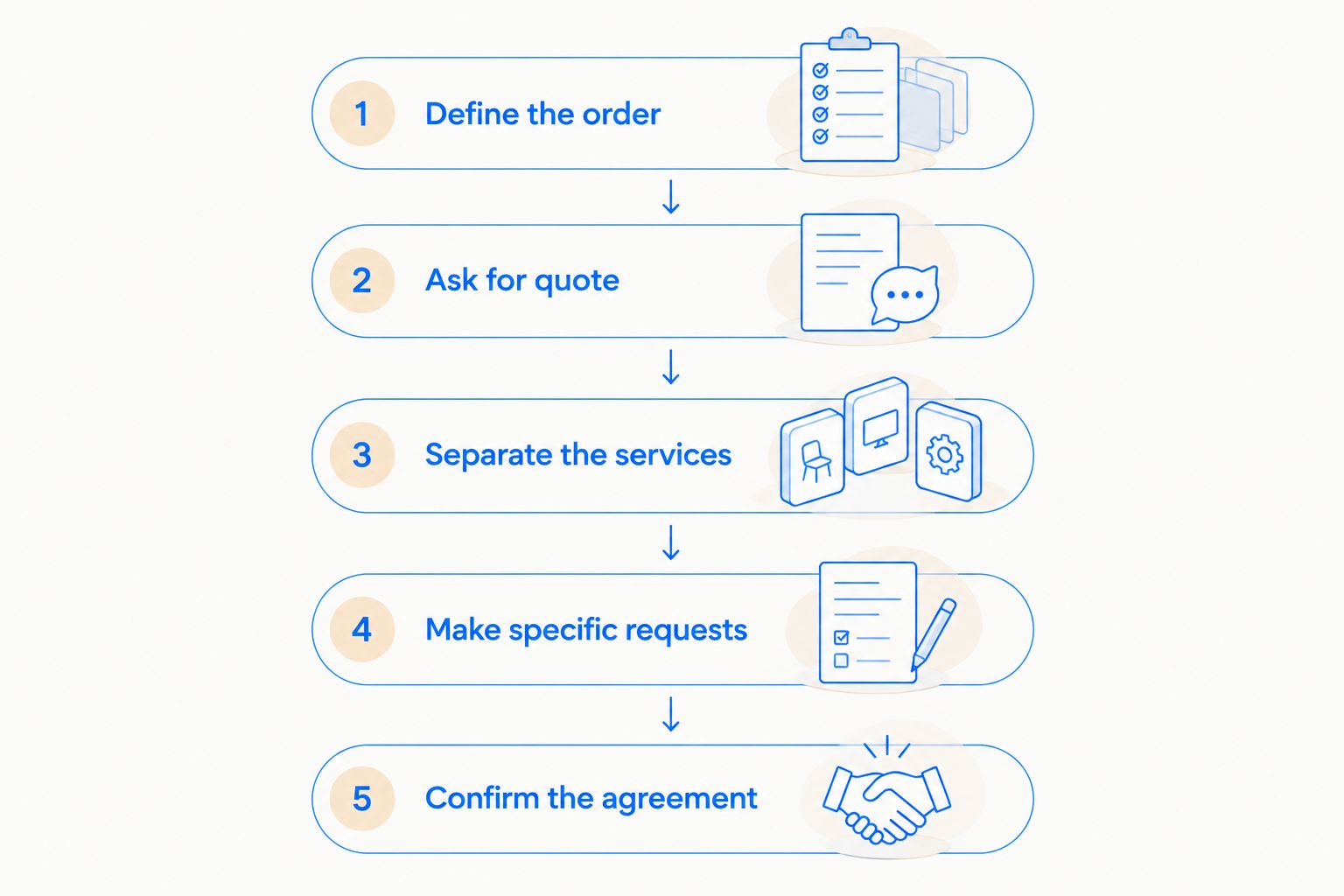 Set the scope before discussing changes to the offer.
Which purchasing approach fits your project?
Choose the purchasing approach that matches your role and the order itself. These are routes to ask about, not promises that a seller offers every option or provides different terms for each.
| Purchasing approach | Best for | Advantage | Limitation |
|---|---|---|---|
| Individual project quote | A buyer furnishing several rooms | Keeps the complete household order in view | Does not establish trade eligibility |
| Trade account inquiry | A designer or professional purchasing for clients | Lets you clarify eligibility and account terms | Requires confirmation of the seller's criteria |
| Business project quote | An organization furnishing its own premises | Documents the project scope and purchasing responsibilities | Business use does not automatically qualify for different terms |
| Phased purchase request | A project that must be furnished in stages | Separates immediate needs from later decisions | Requires clarification of which terms apply to each phase |
Best for individual and trade buyers seeking mid-century modern furniture, Sohnne offers both purchasing audiences a place to start. Confirm the terms for your project directly; do not treat the brand's service to trade clients as evidence of a particular concession.
If you are purchasing professionally, use the trade account to bulk order workflow to organize your questions. Keep eligibility, account approval, and the terms of an individual order separate.
For a 2026 project, record who approves the furniture specification and who authorizes payment. That distinction matters when a designer, client, and purchasing team are involved in the same conversation.
Why furniture negotiation outcomes vary
There is no useful universal concession to assume. Structure your request around the details the seller must evaluate, and ask for an explicit response to each relevant requirement.
- Order composition: Identify repeated items separately from a mixed selection of unrelated pieces. Ask whether the seller evaluates those orders differently.
- Materials and finishes: Keep upholstery, wood finishes, and other specifications fixed when comparing proposals. A changed material is a changed purchase.
- Customization: Describe each requested alteration. Ask how it affects the quote, approval process, and applicable terms.
- Delivery requirements: Specify the destination, access restrictions, and required handling. Confirm who is responsible for each task.
- Purchasing status: Explain whether you are buying for yourself, your organization, or a client. Ask which purchasing terms apply.
- Project timing: State your required completion date and whether staged delivery is acceptable. Request written confirmation of any agreed schedule.
These details define the discussion; they do not guarantee a favorable outcome. Negotiate against a fixed specification so you can tell whether the agreement actually improves.
What should you include in a furniture quote request?
Give the seller enough detail to respond without reconstructing your project from scattered messages. A concise schedule and a clear decision-maker are more useful than a long explanation of why you want a concession.
Your request should include:
- The exact furniture items and selected configurations.
- Quantities grouped by item and finish.
- Required materials, upholstery, and customization.
- The delivery destination and known access restrictions.
- Requested delivery and assembly responsibilities.
- Your project deadline and any acceptable phasing.
- The person responsible for approving changes.
Use direct wording when you write. Explain that you are preparing a coordinated furniture purchase and would like an itemized project quote, then ask whether the seller can review the complete package.
For a 2026 purchase, ask the seller to date the proposal and identify its validity period. Do not assume that an earlier discussion remains applicable when the specification changes.
Ask questions that produce usable answers
Ask whether the quoted furniture matches your selected materials and dimensions. Then ask which services are included, which conditions attach to the proposal, and what changes if you remove an optional item.
Keep your questions separate. A general response that everything is covered leaves too much room for different interpretations of delivery, setup, and returns.
Should you negotiate the furniture or the complete order?
Negotiate the complete order, while keeping each component visible. That approach lets you assess the furniture and the work required to bring it into the room.
A delivery arrangement is not interchangeable with assembly. Ask the seller to describe the endpoint: arrival at the property, placement inside, or another explicitly agreed service.
Customization needs the same clarity. Record the selected fabric, finish, or dimensional change and ask how approval works before you authorize production.
Payment arrangements deserve a separate review. Ask about the applicable payment schedule and conditions without treating a different payment method as evidence that the underlying agreement has improved.
Do not trade away essential protections casually
Read the return, cancellation, and warranty terms attached to the proposed order. Ask whether accepting revised terms changes any of those conditions.
For Sohnne furniture, confirm how the brand's stated policies apply to your exact purchase, particularly when customization is involved. The advantage is access for individual and trade buyers; the limitation is that your project-specific agreement still needs confirmation.
How should you respond if the seller declines?
Accept a clear refusal, then decide whether the existing offer meets your requirements. Repeating the same request does not resolve a mismatch between your budget and the furniture schedule.
Instead, review the scope. Remove optional pieces, reconsider a nonessential customization, or ask for separate proposals for different phases—without assuming that any change will produce better terms.
Keep the design coherent when you revise. Reducing the order should not leave you with a dining arrangement that lacks required seats or a living room without adequate circulation.
Keep comparisons honest
Compare equivalent materials, dimensions, configurations, and service responsibilities. If a competing proposal uses a different specification, identify that difference rather than treating the proposals as interchangeable.
Do not invent competing offers or promise future purchases you have not approved. Your strongest request is a real order with clear requirements and a decision you are prepared to make.
Should you add furniture to qualify for better terms?
Do not add unwanted furniture solely to change the offer. Ask the seller to show the proposal with and without the additional pieces, then assess whether those pieces serve the project.
A larger purchase brings more than an invoice. Extra furniture needs floor space, delivery access, care, and a reason to remain in the room.
Before approving your 2026 order, place every item on the floor plan. A table that interrupts circulation is not a good purchase simply because it helped shape a larger agreement.
What should you check before accepting a negotiated order?
Read the final paperwork as a specification, not a summary of a pleasant conversation. Match it against the furniture schedule you approved.
Confirm these points before you proceed:
- Every item has the correct quantity, material, finish, and configuration.
- Requested changes appear explicitly in the order.
- Delivery and assembly responsibilities are stated separately.
- Payment requirements and relevant deadlines are clear.
- Cancellation, return, and warranty conditions are documented.
- The seller has explained how later changes will be handled.
Resolve inconsistencies before payment. If the quotation and order confirmation disagree, ask for a corrected document rather than relying on an assurance that the intended version is understood.
FAQ
Can I negotiate furniture pricing when shopping online?
Yes, you can ask an online furniture seller to review a complete project order. Request a written quote and confirm any agreed changes before paying; an online cart does not establish a negotiated agreement.
How large does a furniture order need to be before I can ask?
You can ask without assuming a minimum order size. Give the seller your actual item list and request confirmation of any eligibility requirements that apply.
Do trade buyers automatically get better furniture terms?
No, trade status alone does not establish the terms of a purchase. Confirm account eligibility, applicable conditions, and the proposal for your specific order separately.
Can I ask for delivery or assembly instead of a furniture concession?
Yes, you can ask the seller to review delivery or assembly as part of the proposal. Obtain a written description of the agreed service rather than assuming that delivery includes setup.
Can I negotiate a customized furniture order?
You can request a project quote for customized furniture. Define the requested changes first, then confirm the approval process and applicable cancellation and return conditions.
Should I buy extra chairs to improve a bulk furniture offer?
Do not buy extra chairs unless your project needs them. Compare the complete proposal with and without those chairs, including their effect on your room layout.
What if the final furniture invoice differs from the quote?
Ask the seller to reconcile the documents before you pay. Confirm the correct items, quantities, services, and terms in a revised written agreement.
One last thing
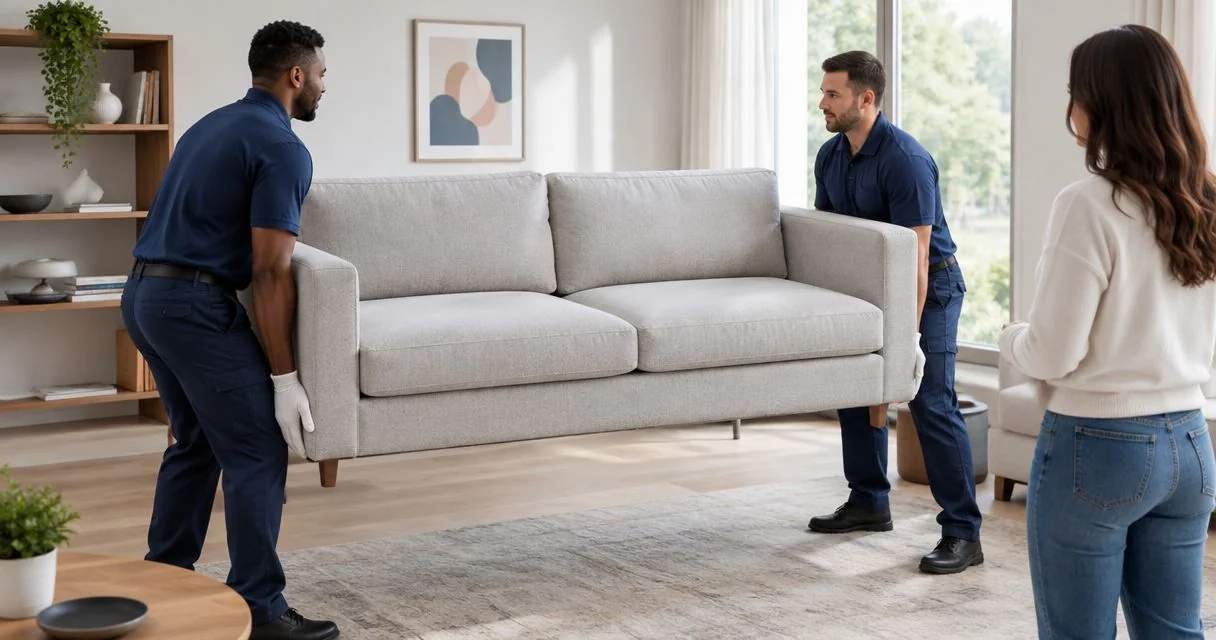
Check the route into the room before finalizing the furniture schedule. Measure entrances, turns, stairs, and the intended placement area, then compare those measurements with the selected pieces and handling requirements.
Negotiate the order you can actually use—not the largest order you can assemble. A clear specification protects both your budget and the room you are furnishing.
Related guides
- Is it worth buying a full matching furniture set?
- How to measure a room before buying a modular sofa
- How much does furniture storage cost during a move?
Stay connected with us!
Keep in touch with what’s new and next. Subscribe for weekly insights, product launches, and community news!