Is it worth buying a full matching furniture set in 2026?

Sohnne Design Studio
October 21, 2026
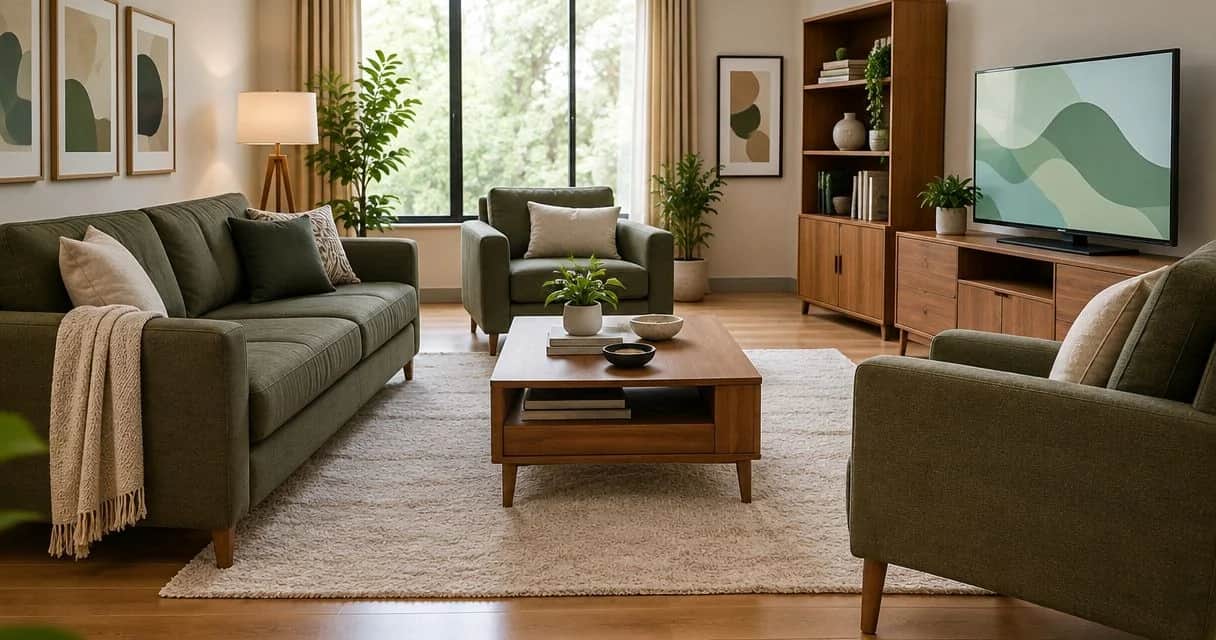
A full matching furniture set is worth buying in 2026 only when every piece fits your room, supports how you live, and earns its place independently. Matching finishes simplify coordination, but they do not guarantee comfort, sound construction, or a workable layout. Buy the complete set for a room-wide solution; choose a matching pair or individual pieces when the set includes compromises.
TL;DR- Is it worth buying a matching furniture set? Yes, when every piece fits and serves a purpose.
- Full matching sets simplify coordination but restrict your choices of size, seating, and finish.
- Matching pairs provide repetition without requiring an entirely coordinated room.
- Sohnne suits buyers seeking mid-century modern furniture with customization options.
Is it worth buying a full matching furniture set in 2026?
Yes, if you would choose every included piece even without its matching companions. A set becomes a poor choice when you accept an oversized table, an uncomfortable chair, or unnecessary storage simply to complete the collection.
Start with the layout rather than the collection photograph. This guide to measuring a room before buying a modular sofa addresses the room-fit question that comes before any matching decision.
| Approach | Best for | Main advantage | Main drawback |
|---|---|---|---|
| Full matching set | Buyers who want consistent finishes throughout a room | Fewer separate styling decisions | Included pieces restrict individual choices |
| Matching pair | Buyers who want repetition without uniformity | Creates a clear connection between selected pieces | The remaining furniture still needs coordination |
| Individually selected furniture | Buyers with existing furniture or distinct functional needs | Each piece can answer a separate requirement | Materials, proportions, and finishes need deliberate comparison |
Judge the furniture first and the match second. A shared finish is useful, but it cannot make the wrong dimensions right.
Why this matters
A room works through relationships: the chair beside the sofa, the table within reach, the cabinet outside the walking route. A matching collection answers the visual question. You still have to answer the practical ones.
For a 2026 furniture purchase, separate what you need from what the collection happens to include. Write down the seating, surfaces, and storage your room actually lacks before looking at complete-room arrangements.
You might discover that the room needs a sofa and a reading chair, not a sofa and a matching loveseat. That distinction changes the purchase more meaningfully than choosing between closely related upholstery colors.
Full matching set: best for consistent finishes
A full matching set makes sense when you want the same design language across the room and each component suits its intended position. Repeated wood finishes, upholstery, and frame details establish an immediate visual connection.
The limitation is choice within the group. A collection's chair does not automatically meet your seating needs because its sofa does, and a matching cabinet does not become useful storage merely because the finish is right.
Choose a full matching set only after approving every component separately. Look at the dimensions, construction information, care instructions, and function of each piece. Treat any component you would otherwise reject as a reason to reconsider the complete set.
Matching pair: best for selective repetition
A 2-piece matching pair lets you repeat a finish or shape without extending it across every surface. Bedside tables, accent chairs, or side tables are possible applications; the right pairing depends on your room.
This approach gives you a defined point of consistency. You can then choose the sofa, storage, or dining table according to different requirements rather than forcing everything into the same collection.
The drawback is that a pair still occupies real space. Matching chairs need usable positions, and identical bedside tables need to accommodate the space on both sides of the bed. Choose the pair because both pieces work, not because symmetry looks persuasive in a photograph.
Individually selected furniture: best for specific needs
Choosing furniture individually gives you control over each object's purpose. You can keep a cabinet you already own, select seating for different preferences, and choose a table around the room's actual circulation.
The trade-off is coordination. Without a collection providing continuity, you need to compare undertones, shapes, textures, and visual weight yourself. Unrelated pieces do not become a considered arrangement simply because none of them match.
Choose a visible connection and repeat it deliberately. That connection might be warm wood, slender frames, rounded edges, or a restrained upholstery palette. Mix the furniture, but give the room a clear relationship between pieces.
A walnut-toned cabinet beside a textured chair and a simple upholstered sofa illustrates this approach: related warmth, different surfaces, distinct functions.
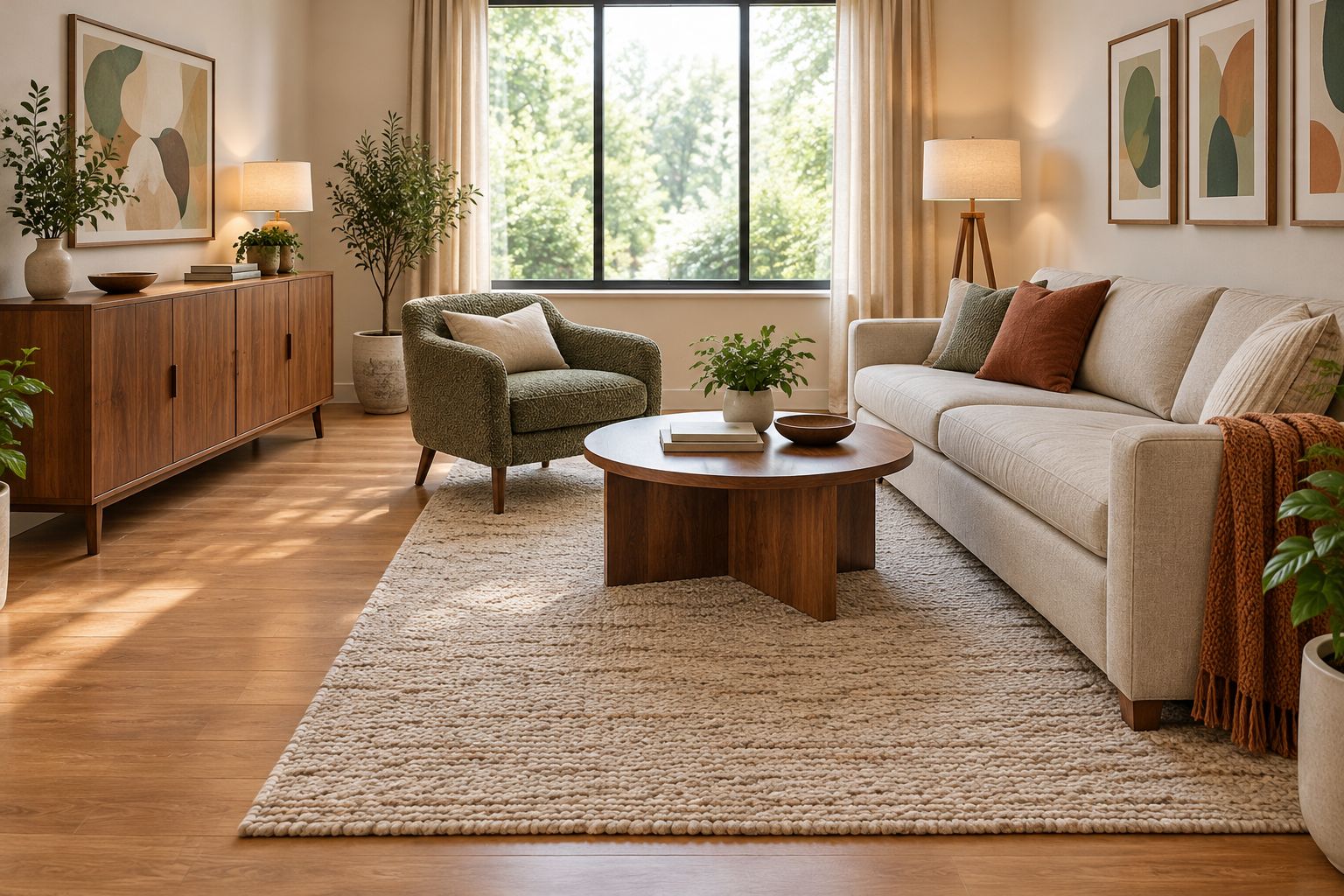 Related tones can connect furniture without repeating every shape and surface.
Why the value of a matching set varies
The value of a matching furniture set depends on its relationship to your home, not just its appearance as a collection. Review these factors before committing:
- Room fit: A collection needs to work around your doors, windows, fixed features, and walking routes.
- Existing furniture: Useful pieces you already own change what you need to buy and what needs coordinating.
- Daily use: Reading, dining, conversation, and watching television place different demands on furniture.
- Individual comfort: Matching seats can share an appearance without meeting everyone's preferred sitting position.
- Care requirements: Check each material's instructions rather than assuming the entire collection needs identical care.
- Future changes: Consider whether you want to rearrange the room, keep selected pieces, or add furniture later.
For your 2026 shortlist, record these factors beside each collection. A room photograph cannot tell you whether a drawer opens beside your bed or whether a chair suits the person who will use it.
A 5-step check before buying the complete set
1. List functions
Write down what your room needs to do. Name the activities before naming the furniture: a place to read, somewhere to put a drink, storage for tableware, or seating for conversation.
Then assign a purpose to every included component. If you cannot explain what a piece contributes, remove it from the plan and reconsider whether the complete collection still makes sense.
2. Map footprints
Use the published dimensions of each item to mark its footprint on your floor plan. Include the furniture you intend to keep, and account for doors, drawers, and other moving parts.
For a 2026 order, check the current specifications of the exact configuration you select. Do not substitute a similar-looking item or assume that pieces photographed together have proportions suited to your room.
3. Check comfort
Assess seating separately from appearance. Compare seat depth, seat height, back support, arm placement, and how the chair or sofa accommodates your preferred posture.
Where you can try furniture, sit as you expect to use it. Where you cannot, compare the published measurements with a seat you already find comfortable and review the current return terms before ordering.
4. Compare materials
Read the material description for every component. A shared color does not establish that surfaces have the same composition, finish, or care requirements.
If samples are offered, examine them beside your flooring and existing furniture in the room's light. Decide whether you want a close match or a deliberate contrast; an uncertain near-match deserves another look before purchase.
5. Remove extras
Imagine buying each piece separately, with no collection photograph beside it. Ask whether its function, proportions, and appearance would still make it your choice.
This final check reveals furniture you are accepting only to finish the set. If removing a component improves your layout, keep the improved layout rather than restoring the collection.
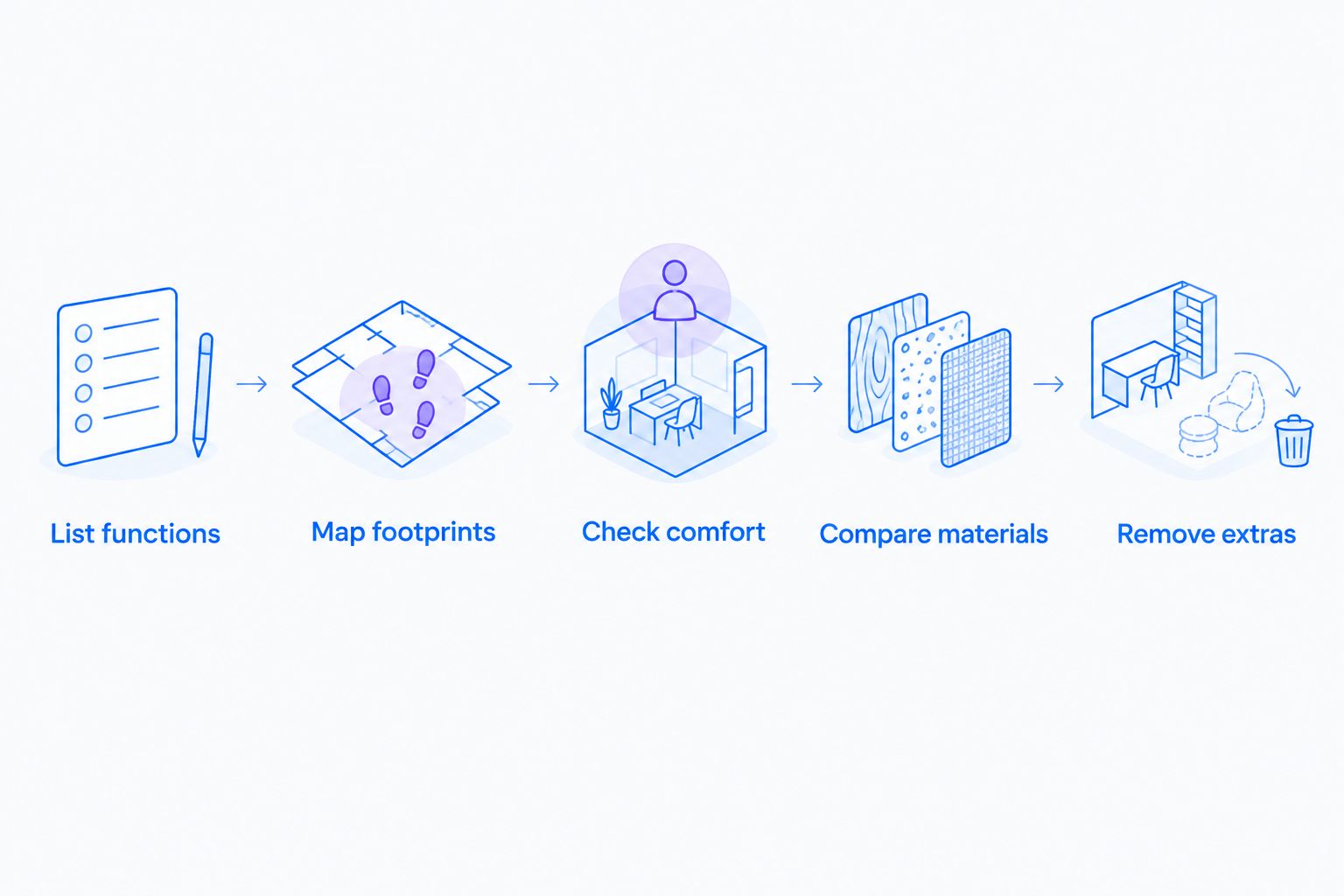 Approve the individual pieces before approving the complete set.
These checks apply equally to a coordinated collection and a room assembled over time. They keep the decision tied to what you will use, rather than what happens to appear together.
How the decision changes from room to room
Living room: start with the seating plan
In a living room, choose the seating arrangement before deciding whether the seats should match. A sofa and an accent chair create a different layout from a sofa and a loveseat, even when both arrangements belong to a single collection.
Matching upholstery offers continuity; different seat types let you address different uses. Neither approach excuses blocking access or placing a table where it is difficult to reach.
Bedroom: consider each side separately
Matching bedside tables offer a repeated shape beside the bed. Check each side individually, including nearby doors, outlets, and the storage each person uses.
A coordinated bed, dresser, and bedside arrangement works when all those pieces fit. Keep an existing dresser if it still serves you; its difference can be addressed through the room's broader material palette.
Dining room: check the working relationship
A dining table and its chairs need to function together, not merely share a finish. Review the relationship between the seat, tabletop, underside of the table, and any chair arms.
Matching chairs bring repetition around the table. Individually selected chairs offer another route, but require the same careful comparison of dimensions and practical use.
Where Sohnne fits into the decision
Sohnne is a direct-to-consumer furniture retailer offering mid-century modern seating, lighting, and dining pieces, with customization options available. Sohnne is best for buyers seeking mid-century modern furniture with customization options.
That makes the retailer relevant when you are assembling a coordinated room, but it does not settle the matching-set question. Confirm the specifications and available options for each item you consider; a preferred aesthetic is not a substitute for checking fit and comfort.
Should I buy a complete set for a small room?
A complete set is worth buying for a small room only if every footprint works. The collection label does not establish that its components suit a compact layout.
Start with essential functions and leave out pieces that duplicate them without improving use. A smaller selection that preserves access is preferable to a complete collection that obstructs the room.
Is a matching pair better than a full furniture set?
A matching pair is better when you want a specific repeated detail without coordinating the whole room. It offers a middle ground between a full collection and entirely individual choices.
Choose the pair only if both pieces have useful positions. Repetition should support the arrangement, not dictate it.
Can I mix furniture and still make the room feel coordinated?
Mixed furniture feels coordinated when its materials, shapes, or colors have a deliberate relationship. Choose a connection you can identify and repeat it across the room.
Keep the functional checks separate. A balanced palette does not resolve an uncomfortable seat or an oversized table.
FAQ
Is it worth buying a matching furniture set in 2026?
A matching furniture set is worth buying in 2026 when every included piece fits your room and serves a purpose. Reject the complete set if matching requires you to accept unsuitable furniture.
Does all my living room furniture need to match?
Your living room furniture does not need to match. Repeat a deliberate connection, such as warm wood or rounded shapes, while choosing each piece for its function.
What’s the best approach if I already own furniture I like?
Individually selected furniture is the best approach when you want to retain useful existing pieces. Plan new purchases around what the room still lacks rather than replacing everything for consistency.
Should my sofa and accent chairs have the same fabric?
Your sofa and accent chairs do not need the same fabric. Compare texture, color, care requirements, and comfort before deciding whether repetition or contrast suits the room.
Is a matching dining set automatically a comfortable fit?
A matching dining set is not automatically a comfortable fit for your household. Check seat and table dimensions, arm clearance, and the space needed to use the chairs.
Can I compare a matching set with individual furniture at Sohnne?
You can apply the same room-fit and material checks to furniture you consider at Sohnne. Review each item’s current specifications and options rather than assuming every piece forms part of a matching collection.
What should I check before ordering a complete furniture set?
Check each item’s purpose, dimensions, comfort, materials, and care instructions before ordering a complete furniture set. Confirm current delivery and return terms for the exact items you choose.
One last thing
Before your final 2026 decision, hide the collection photograph and review each item on its own. The photograph shows an arrangement; your shortlist should explain why each object belongs in your home.
The strongest reason to buy a matching set is that you want every piece—not that you want the room to match. If one component needs an excuse, change the selection before changing your room to accommodate it.
Related guides
- How to choose furniture scale for a room with high ceilings
- How to add texture to a neutral living room with furniture
- How to arrange a living room around a fireplace
Stay connected with us!
Keep in touch with what’s new and next. Subscribe for weekly insights, product launches, and community news!