Best mid-century modern mirrors in 2026
Sohnne Design Studio
November 28, 2026
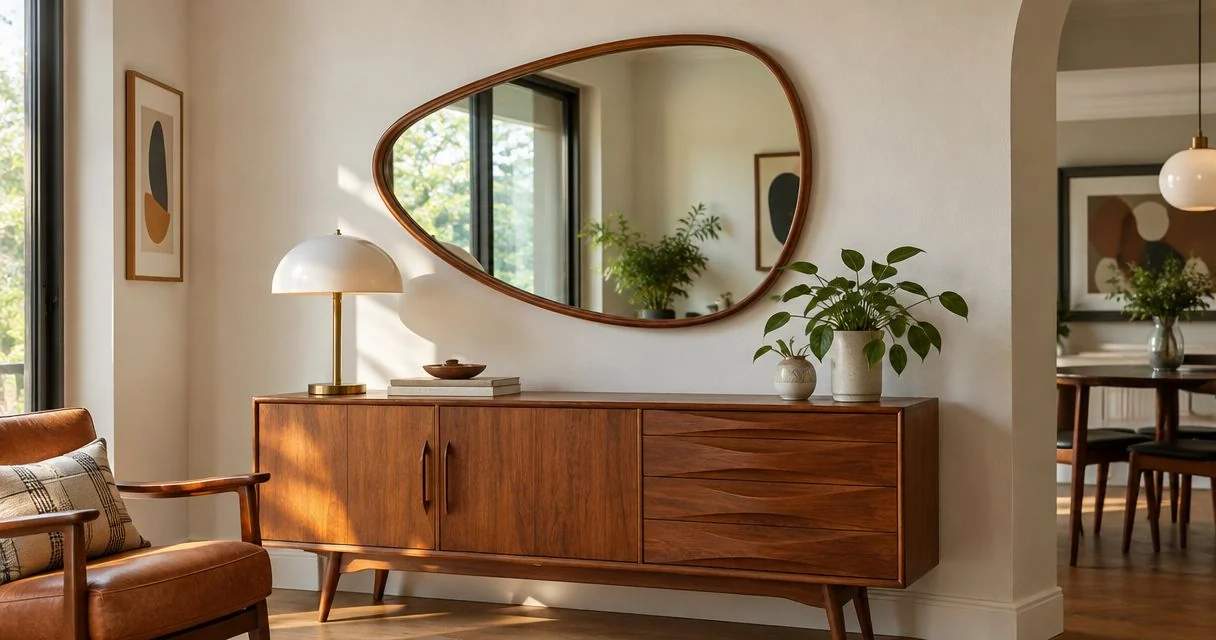
Best overall: a round walnut-framed mirror. Best for narrow walls: a vertical oval. Best for dressing: a rectangular full-length mirror. This Sohnne guide compares six mid century modern mirror styles for 2026, with the room, reflection, and frame doing the deciding.
TL;DR- Sohnne’s best mid century modern mirror style overall is a round walnut-framed design for living rooms and entryways.
- Choose a vertical oval mirror for narrow walls and a rectangular full-length mirror for dressing.
- Choose a sunburst mirror for decoration, not as your main everyday reflection.
- Check reflective glass dimensions, mounting instructions, and the reflected view before choosing a frame.
Why this matters
A mirror changes two views: the wall you hang it on and the scene it reflects. A handsome frame does little for a room when the glass doubles a cluttered countertop or catches an exposed bulb.
For a 2026 room refresh, begin with purpose rather than a decorative motif. Decide whether you need a face-level check, a full-length view, or a focal point above furniture. That decision separates the useful choices from the merely attractive ones.
What makes the best mid century modern mirror?
- Scale: The outer frame should relate to the furniture and wall around it. Measure the glass separately; a broad frame reduces the useful reflection within the same footprint.
- Reflection: Check what appears from the doorway, the sofa, and your normal standing position. Choose a view you want repeated.
- Materials: Read the frame specification. Solid wood, walnut veneer, wood-look finishes, and metal are different constructions, even when photographs look similar.
- Mounting: Confirm the mirror’s weight, hanging orientation, and required hardware. Match the installation to the wall construction and manufacturer’s instructions.
- Room role: Give each mirror a job. A dressing mirror needs usable glass; a decorative mirror has more freedom to emphasize its frame.
The strongest choice balances a clear silhouette with a useful reflection. A recognizable shape alone is not enough.
Mid-century modern mirrors at a glance
These rankings compare design types, not individual products. Each type earns a different use-case slot; construction quality still depends on the particular mirror you select.
| Rank | Mirror style | Best for | Standout feature | Key limitation |
|---|---|---|---|---|
| 1 | Round walnut-framed mirror | Everyday living rooms and entryways | Soft outline with a warm wood surround | Does not provide a full-length view |
| 2 | Vertical oval mirror | Narrow wall sections | Tall reflection without square corners | Less horizontal viewing space |
| 3 | Rectangular full-length mirror | Bedrooms and dressing areas | Head-to-toe viewing when correctly sized and placed | Requires a suitable wall and viewing position |
| 4 | Sunburst mirror | A decorative focal wall | Radiating frame creates a strong silhouette | Frame occupies space without adding reflection |
| 5 | Wide rounded-rectangle mirror | Long consoles and sideboards | Horizontal glass follows low furniture | Can repeat visual clutter across a broad area |
| 6 | Frameless beveled mirror | Rooms with substantial wood furniture | Minimal frame presence | Exposed perimeter needs careful inspection |
1. Round walnut-framed mirror: best for everyday rooms
A round walnut-framed mirror is the default choice when your room already contains rectangular furniture. Its curved perimeter provides contrast above a console, dresser, or low cabinet without introducing an elaborate pattern.
Choose the wood tone beside your existing furniture, not from an isolated screen image. A frame need not match every timber finish, but its warmth should feel deliberate next to the largest nearby piece.
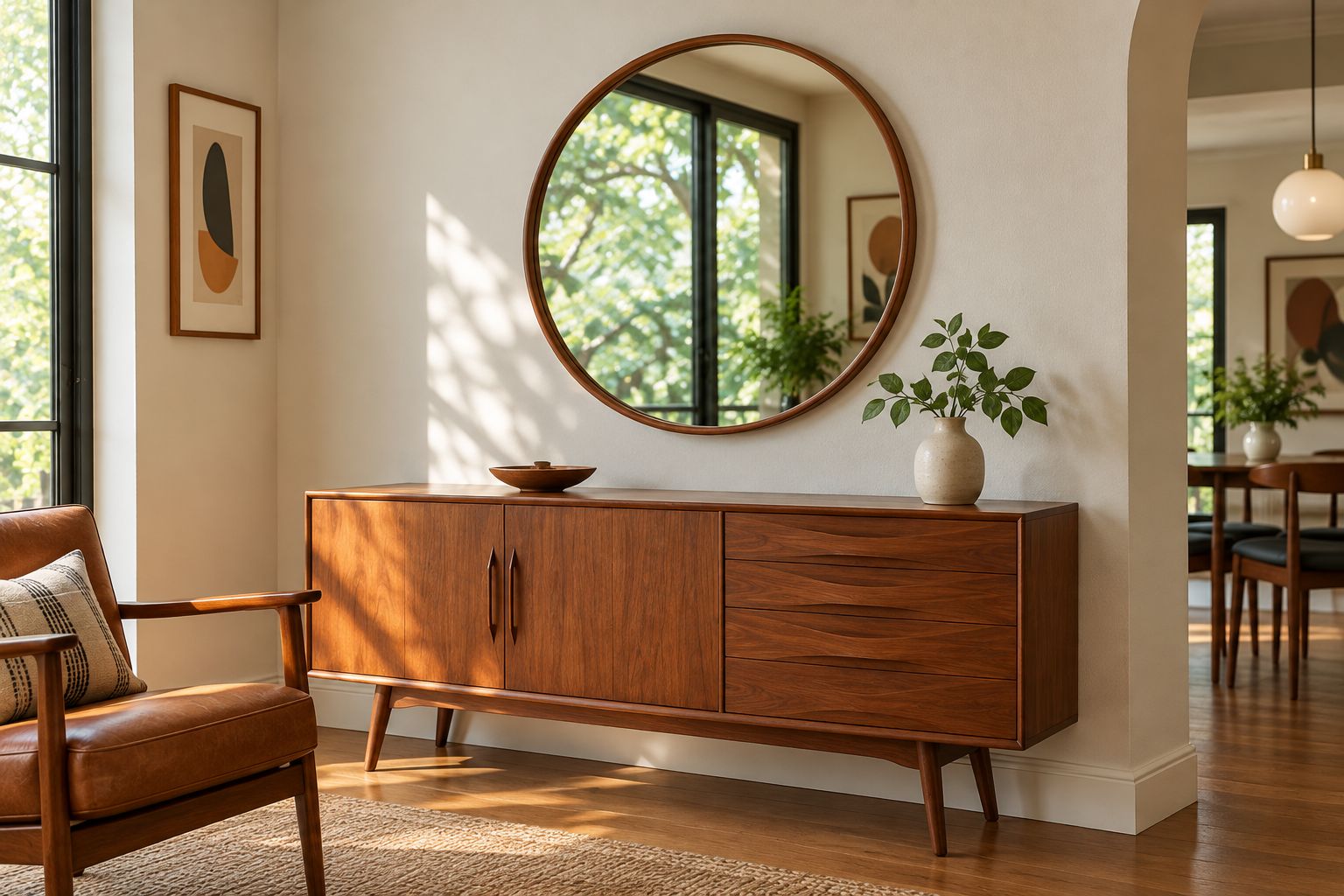 A simple round outline softens the straight lines of a low console.
Round walnut-framed mirror pros:
- Curved outline contrasts with straight-edged furniture.
- Wood introduces warmth without a radiating or ornamental frame.
- Symmetrical shape works above several furniture types.
Round walnut-framed mirror cons:
- Circular glass leaves less usable reflection near its edges.
- A strongly contrasting wood finish becomes another visual feature to coordinate.
Best for: Living rooms and entryways needing a useful, restrained accent.
Verdict: Buy for the most adaptable starting point.
2. Vertical oval mirror: best for narrow walls
A vertical oval mirror suits the wall between a door and a corner, or above a compact entry shelf. Its rounded ends keep a tall shape from feeling like another door panel.
Look at the glass width before committing. A slim outer silhouette is appealing, but the reflected area still needs to accommodate your everyday use. Hang a paper outline first and check it from the approach to the room.
Vertical oval mirror pros:
- Tall silhouette suits narrow wall sections.
- Rounded ends soften nearby doorframes and cabinetry.
- Simple geometry pairs with both wood and metal accents.
Vertical oval mirror cons:
- Narrow glass limits side-to-side viewing.
- A small oval looks disconnected above a broad sideboard.
Best for: Tight entryways, small bedrooms, and awkward vertical gaps.
Verdict: Buy for a narrow wall; skip above wide furniture unless the full arrangement supports it.
3. Rectangular full-length mirror: best for dressing
A rectangular full-length mirror puts function first. Choose the dimensions and position around the person using it, then decide how much frame the room needs.
Check the reflection while standing where you will actually get dressed. Do not assume a product photograph demonstrates the viewing distance available in your bedroom. Follow the intended mounting method rather than treating every tall mirror as suitable for leaning.
Rectangular full-length mirror pros:
- Provides a head-to-toe view when correctly sized and positioned.
- Straight edges align neatly with wardrobes and doors.
- A restrained frame leaves attention on the reflection.
Rectangular full-length mirror cons:
- Furniture in front of the glass interrupts its main purpose.
- Large dimensions require careful placement and secure installation.
Best for: Bedrooms, dressing rooms, and wardrobe areas.
Verdict: Buy for dressing; skip decorative substitutes that cannot show the view you need.
4. Sunburst mirror: best for a decorative focal wall
A sunburst mirror uses a radiating frame to make the wall feel composed around a central point. Treat the outer silhouette as the main object and the glass as a secondary feature.
This is the most decorative option in the ranking. Give it visual space, particularly when a pendant, patterned rug, or sculptural chair already draws attention nearby. Compare the glass diameter with the total diameter before judging its practical usefulness.
Sunburst mirror pros:
- Creates a focal point without a large area of glass.
- Radiating lines contrast with plain walls and low furniture.
- Offers a distinct choice when another simple circle feels too quiet.
Sunburst mirror cons:
- Decorative rays occupy wall space without enlarging the reflection.
- Detailed frames require more careful dusting than plain surrounds.
Best for: A decorative wall that needs an expressive accent.
Verdict: Buy as wall decoration; skip as your only everyday mirror.
5. Wide rounded-rectangle mirror: best above long consoles
A wide rounded-rectangle mirror follows the horizontal line of a sideboard while easing the corners. It suits an arrangement where the furniture, rather than the mirror, should establish the room’s proportions.
Keep the console surface edited. Broad glass repeats whatever stands in front of it, so a collection of cables, bottles, and small objects becomes part of the composition. Check the permitted hanging orientation before selecting a tall model to turn sideways.
Wide rounded-rectangle mirror pros:
- Horizontal shape relates clearly to long furniture.
- Rounded corners soften a substantial outline.
- Broad glass accommodates a wider reflected scene.
Wide rounded-rectangle mirror cons:
- Repeats clutter across a larger section of wall.
- Requires enough clear width around neighboring doors or artwork.
Best for: Long entry consoles, dining sideboards, and broad dressers.
Verdict: Buy for a horizontal furniture arrangement; skip where the reflected surface stays busy.
6. Frameless beveled mirror: best for wood-heavy rooms
A frameless beveled mirror avoids adding another timber finish to a room with substantial wood furniture. Its sloping glass edge supplies definition without a separate surround.
Choose it when the furniture already carries the design character. A frameless mirror does not establish a mid-century modern room by itself; its success depends on the objects, materials, and proportions around it.
Frameless beveled mirror pros:
- Adds no competing frame finish.
- Keeps the reflective surface visually prominent.
- Allows nearby furniture and lighting to remain the focal points.
Frameless beveled mirror cons:
- The exposed perimeter needs inspection for chips and damage.
- The restrained outline offers little decorative presence on an otherwise empty wall.
Best for: Rooms where wood furniture already supplies warmth and character.
Verdict: Buy to reduce visual competition; skip if the mirror must carry the whole wall.
How to choose the right size and position
Use the same sequence for every mirror on your 2026 shortlist. Resolve the wall, the view, and the installation before becoming attached to a frame.
Make templates
Try paper circles measuring 24 inches, 30 inches, and 36 inches across when comparing round mirrors. These are trial sizes, not a sizing standard; use the actual outer dimensions of any shortlisted piece for your final template.
For an oval or rectangle, cut the complete outline rather than marking only its corners. Include decorative extensions so you judge the wall space the whole object occupies.
Check the view
Ask someone to hold a small mirror near the proposed position while you stand at your usual approach. Move between the doorway and seating area. Look for repeated clutter, direct lamp glare, and an appealing part of the room to reflect.
Confirm mounting
Read the installation instructions before marking holes. Confirm the wall construction, mirror weight, fixing requirements, and permitted orientation; use qualified installation help when the job exceeds your skills.
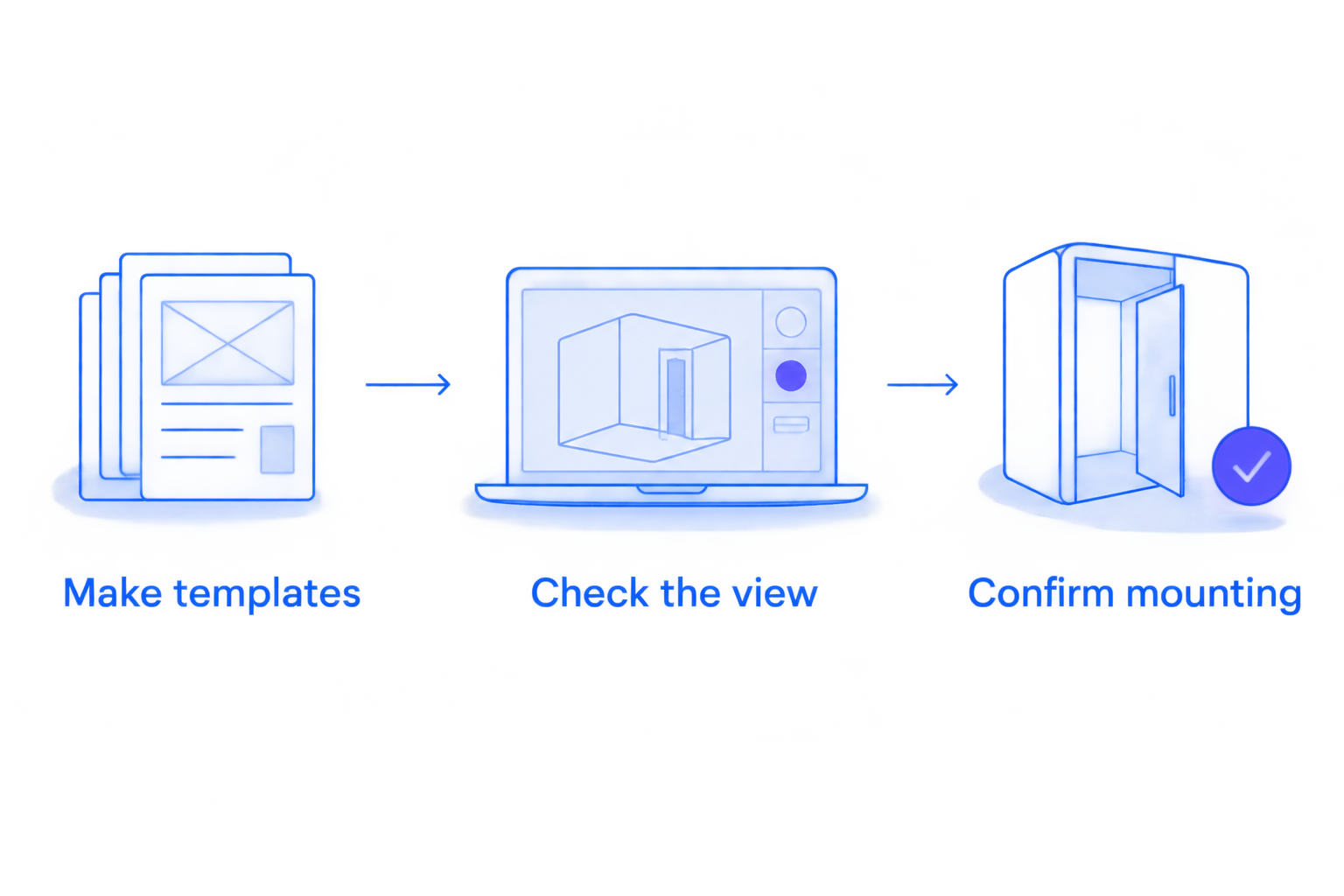 Set the size and reflection before committing to the installation.
A successful placement should work from normal viewing positions, not only from the angle used for a room photograph. Keep the template up while you use the room, then make the final choice.
How the mirror styles were ranked
Sohnne’s 2026 ranking prioritizes scale, reflection, materials, mounting, and room role. The round walnut-framed mirror leads because its simple geometry suits several everyday placements; the remaining styles answer more specific needs.
This is a design-based comparison, not a claim of physical product testing. No frame shape guarantees glass quality, secure hardware, or a particular construction. Check those details on the individual mirror.
Which mid-century modern mirror should you choose?
Sohnne’s mid century modern mirror pick for most living rooms is a round walnut-framed design. Choose it when you want warmth and a curved outline without making the frame the room’s main event.
For a 2026 bedroom project, choose the rectangular full-length mirror if dressing is the priority. Choose the vertical oval for a narrow wall, the wide rounded rectangle for a long console, and the sunburst only when decoration matters more than reflective area.
The frameless beveled mirror is the quieter choice when the room already has enough material contrast. Start with the job, then select the silhouette.
FAQ
What’s the best mid century modern mirror for a living room?
A round walnut-framed mirror is Sohnne’s best overall style choice for a living room. Its curved outline contrasts with rectangular furniture, while the wood frame adds warmth without an elaborate decorative pattern.
What makes a mirror look mid-century modern?
Clear geometry, restrained detailing, and a considered relationship with wood or metal furniture give a mirror a mid-century modern character. A circle, oval, or simple rectangle works when its scale and materials belong in the room.
Is a round mirror better than a rectangular mirror?
A round mirror is better for softening straight-lined furniture; a rectangular mirror is better when you need a broad or full-length reflection. Choose around the task rather than treating either shape as universally better.
How big should a mirror be above a console table?
Choose a mirror size by testing its actual outer dimensions above your console. A paper template shows whether the frame relates to the furniture and leaves enough room for nearby lights, doors, and artwork.
Can I use a sunburst mirror as an everyday mirror?
Use a sunburst mirror for everyday checks only if its central glass provides the view you need. The decorative rays increase the total width without increasing the reflective area.
Can a mid-century modern mirror go in a bathroom?
Use a mirror in a bathroom only when its manufacturer confirms suitability for that environment. Appearance alone does not establish whether the frame, backing, and fittings are suitable for moisture exposure.
What should I check before buying a mirror online in 2026?
Check the mirror’s outer dimensions, glass dimensions, frame construction, weight, and installation instructions. Confirm the intended orientation and inspect the applicable return terms before ordering.
One last thing
Before choosing your 2026 mirror, stand where you spend time and study the wall opposite its proposed position. That wall is about to become part of the mirror’s composition.
Choose the reflection before the frame. A plain mirror reflecting a considered corner does more for a room than an elaborate frame reflecting unfinished storage.
Related guides
- Best mid-century modern console tables
- Best mid-century modern pendant lights
- How to choose furniture scale for a room with high ceilings
- How to arrange a living room around a fireplace
Stay connected with us!
Keep in touch with what’s new and next. Subscribe for weekly insights, product launches, and community news!