Best mid-century modern pendant lights in 2026
Sohnne Design Studio
November 25, 2026
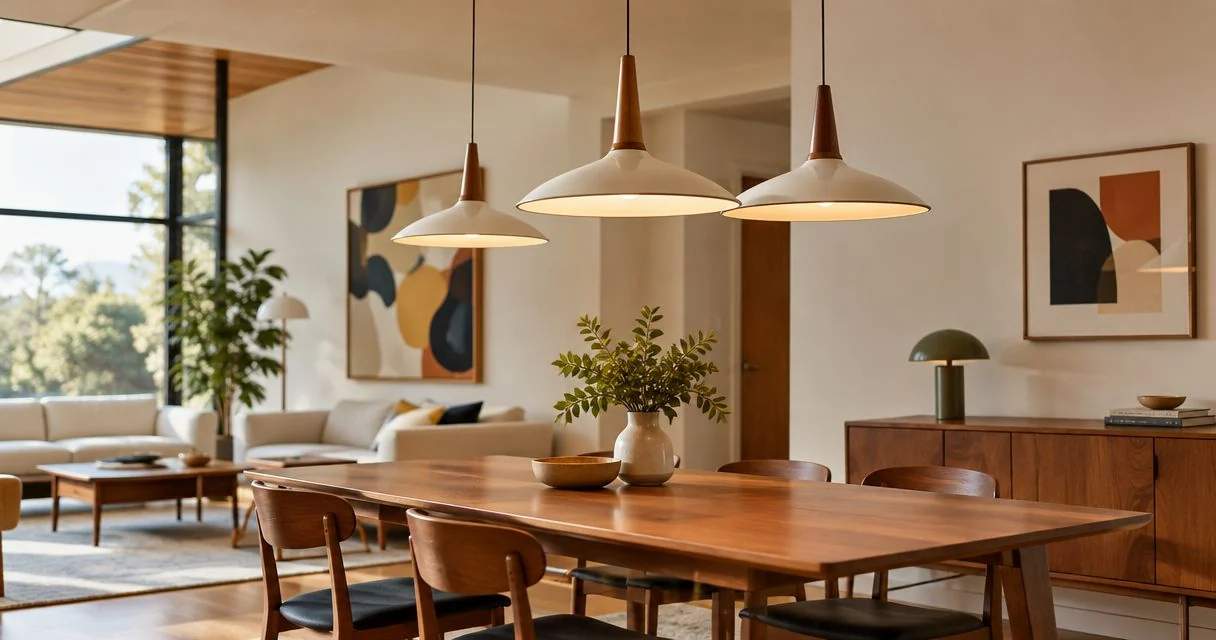
Best overall: an opal-glass globe pendant. Best for focused table lighting: a metal dome. Best for a long dining table: a linear pendant. This 2026 guide ranks five forms of mid century modern pendant lights by light direction, visual weight, and the room each suits best.
TL;DR- For Sohnne readers choosing mid century modern pendant lights, an opal-glass globe is the best default for general room lighting.
- Choose a metal dome for downward light or a linear pendant for an elongated dining table.
- Layered metal shades suit glare-conscious dining spaces; paper lanterns suit soft bedroom lighting.
- Check bulb visibility, suspension length, cleaning access, and dimmer compatibility before choosing a fixture.
Why this matters
A pendant occupies your sightline even when switched off. Its shade also determines whether light reaches the table, spreads into the room, or shines directly into your eyes.
For a 2026 room refresh, start with that lighting job rather than the finish. Brass-colored metal cannot correct an exposed bulb at eye level, and a beautiful opaque shade will not illuminate the ceiling through its sides.
At Sohnne, the broader design context is mid-century modern furniture and lighting. Here, the recommendations are fixture types rather than named products, so you can judge the shape before committing to a particular model.
What makes the best mid-century modern pendant lights
- Light direction: Match diffuse room lighting, downward table lighting, or distributed light to the activity below.
- Glare control: Check whether you can see the bulb from your normal seated and standing positions.
- Room proportion: Compare the shade width and total suspension with the furniture and ceiling around them.
- Light quality: Check color temperature and color rendering separately from the fixture's appearance.
- Daily upkeep: Look for accessible bulbs, reachable surfaces, and shade materials suited to the setting.
- Installation fit: Confirm the mounting method, electrical requirements, suspension adjustment, and dimmer compatibility.
Use these criteria before deciding between warm metal, painted steel, glass, or paper. For a wider view of ceiling, floor, and table lighting, see the guide to mid-century modern lighting fixtures.
Mid-century modern pendant lights at a glance
| Rank and pendant type | Best for | Standout feature | Key limitation |
|---|---|---|---|
| 1. Opal-glass globe | General room lighting | A translucent shade diffuses light around its surface | Less directional than an opaque dome |
| 2. Metal dome | Focused table lighting | An opaque shade directs light through its opening | The surrounding room needs separate lighting |
| 3. Linear pendant | Long dining tables | Light sources extend along the furniture below | Depends on table position and fixture alignment |
| 4. Layered metal shade | Glare-conscious dining | Overlapping elements can screen the light source | Multiple surfaces complicate dusting |
| 5. Paper lantern | Soft bedroom lighting | A translucent shade with a visually light profile | Paper needs careful handling and cleaning |
These rankings separate lighting jobs, not manufacturing quality. A well-specified dome is a better choice for focused illumination than a globe chosen solely because it ranks first.
1. Opal-glass globe: best pendant for general room lighting
An opal-glass globe places a translucent enclosure around the light source. The shade spreads brightness across its surface rather than leaving the bulb fully exposed, making this the most straightforward starting point for general room lighting.
The rounded form sits comfortably beside angular furniture. In a dining nook or sitting area, it adds a clear focal point without introducing a complicated outline.
Opal-glass globe pros:
- Diffuses the light source across a broad surface.
- Offers a simple silhouette beside patterned textiles or sculptural furniture.
- Suits rooms where the pendant remains visible from several directions.
Opal-glass globe cons:
- Does not concentrate light like an opaque downward-facing shade.
- Glass requires careful handling during removal and cleaning.
- A bright bulb can still make the shade uncomfortable to look at.
Check whether the globe has an open bottom, a removable section, or another route for changing the bulb. That detail matters more during ownership than a small difference in finish.
Best for: Dining nooks and sitting areas that need diffuse light from a restrained form.
Verdict: Buy an opal-glass globe as the default when general lighting matters more than a concentrated pool of light.
2. Metal dome: best pendant for focused table lighting
A metal dome uses an opaque shade to send light through its lower opening. It establishes a pool of light over a table or work surface while keeping the shade itself visually solid.
Choose this type when you want the surface below to feel distinct from the surrounding room. Check the interior finish and bulb position, since the outer silhouette alone does not explain how the fixture distributes light.
Metal dome pros:
- Directs illumination toward the surface below.
- Conceals the bulb from viewpoints screened by the shade.
- Gives a dining area a clear visual center.
Metal dome cons:
- Does not provide diffuse light through its opaque sides.
- An exposed lower opening can reveal the bulb to seated users.
- A broad, dark shade creates a substantial overhead presence.
Look across the table before settling the hanging position. If the bulb remains visible, choose a fixture with better shielding rather than treating dimming as the only solution.
Best for: A dining table or breakfast spot with separate ambient lighting.
Verdict: Buy a metal dome when you want light on the table, not an evenly glowing room.
3. Linear pendant: best pendant for a long dining table
A linear pendant distributes its light sources along an elongated body or suspension arrangement. Its footprint follows a rectangular or oval table more closely than a single compact shade.
The advantage is alignment, not automatic brightness. For your 2026 dining plan, compare the fixture's illuminated length with the part of the table you actually use.
Linear pendant pros:
- Extends illumination along an elongated surface.
- Creates a clear relationship between the light and table.
- Can organize a dining zone within an open-plan room.
Linear pendant cons:
- Becomes visually misaligned when the table moves away from its intended position.
- Requires attention to mounting location and leveling.
- Multiple exposed light sources can introduce glare.
Choose the table position first. A pendant centered on the room but offset from the dining surface makes the arrangement feel unresolved, even when both pieces look good separately.
Best for: A long dining table with a settled position in the room.
Verdict: Buy a linear pendant for an elongated table; skip it if the dining layout changes frequently.
4. Layered metal shade: best pendant for glare-conscious dining
A layered metal pendant uses overlapping shade elements to redirect light and interrupt direct views of the source. The useful feature is the shielding geometry, not the number of layers.
Look beneath and between the elements. A sculptural profile does not guarantee that the bulb disappears from your seated sightline.
Layered metal shade pros:
- Can screen the light source from direct view.
- Adds depth without relying on exposed bulbs.
- Brings a sculptural form to a simple dining setting.
Layered metal shade cons:
- Overlapping surfaces make dusting more involved.
- Shade geometry determines performance; appearance is not enough.
- A complex fixture can compete with patterned surroundings.
For a 2026 dining room with plain walls and quiet furniture, this type supplies detail overhead. Keep nearby decorative objects restrained so the shade remains readable.
Best for: A dining area where shielding the light source is a priority.
Verdict: Buy a layered metal shade only after checking bulb visibility from the seats below.
5. Paper lantern: best pendant for soft bedroom lighting
A paper lantern surrounds the light source with a translucent paper shade, creating a luminous volume with a light visual presence. It suits a bedroom where you want the ceiling fixture to feel softer than a solid metal object.
Treat it as ambient lighting rather than a substitute for a bedside reading light. Follow the fixture's specified bulb type and wattage limits exactly.
Paper lantern pros:
- Diffuses the light source through a translucent surface.
- Adds texture without a heavy-looking metal shade.
- Pairs naturally with wood, woven textiles, and plain bedding.
Paper lantern cons:
- Tears more easily than metal or glass.
- Is less suitable near cooking grease or persistent moisture.
- Needs gentle cleaning rather than wet wiping.
Check whether the shade is replaceable and how it attaches to the frame. A delicate material is easier to live with when routine maintenance does not require awkward handling.
Best for: A dry bedroom or quiet sitting area needing soft ambient light.
Verdict: Buy a paper lantern for atmosphere; skip it where the shade faces frequent contact or splashes.
Check the light before choosing the finish
For a warm residential starting point, compare bulbs labeled 2700 K and 3000 K. These are color-temperature choices, not brightness ratings; use the lumen figure when comparing light output.
If accurate-looking wood, upholstery, and food colors matter, consider CRI 90 or higher as a shopping criterion. CRI describes color rendering, while color temperature describes the light's warm or cool appearance.
For your 2026 shortlist, record these specifications beside each fixture. A warm-looking product photograph is not a substitute for a stated bulb specification.
- Color temperature: Keep neighboring fixtures visually consistent unless you deliberately want contrast.
- Color rendering: Check the stated CRI rather than judging from photographs.
- Dimming: Verify compatibility between the light source, driver where applicable, and dimmer.
- Serviceability: Check how bulbs or integrated components are maintained.
Do not assume that every LED dims, or that every dimmable fixture works with every dimmer. Follow the fixture documentation and use a qualified electrician for electrical installation.
Plan the pendant around the room
Resolve placement before installation. A fixture needs to work from the doorway, from the seats below, and along the routes people use through the room.
Table position
Mark the furniture footprint before locating the pendant. Center a dining fixture on the table arrangement rather than automatically centering it between the room's walls.
Seated sightlines
Sit in each chair and look across the table. Check whether the shade interrupts conversation or whether the bulb remains directly visible.
Walking routes
Keep a low-hanging fixture over the furniture it serves, not over an open circulation route. Confirm the final suspension with the installer and the fixture's instructions.
Cleaning access
Work out how you will reach the shade and change the light source. A pendant that requires awkward handling deserves a second look before it is installed.
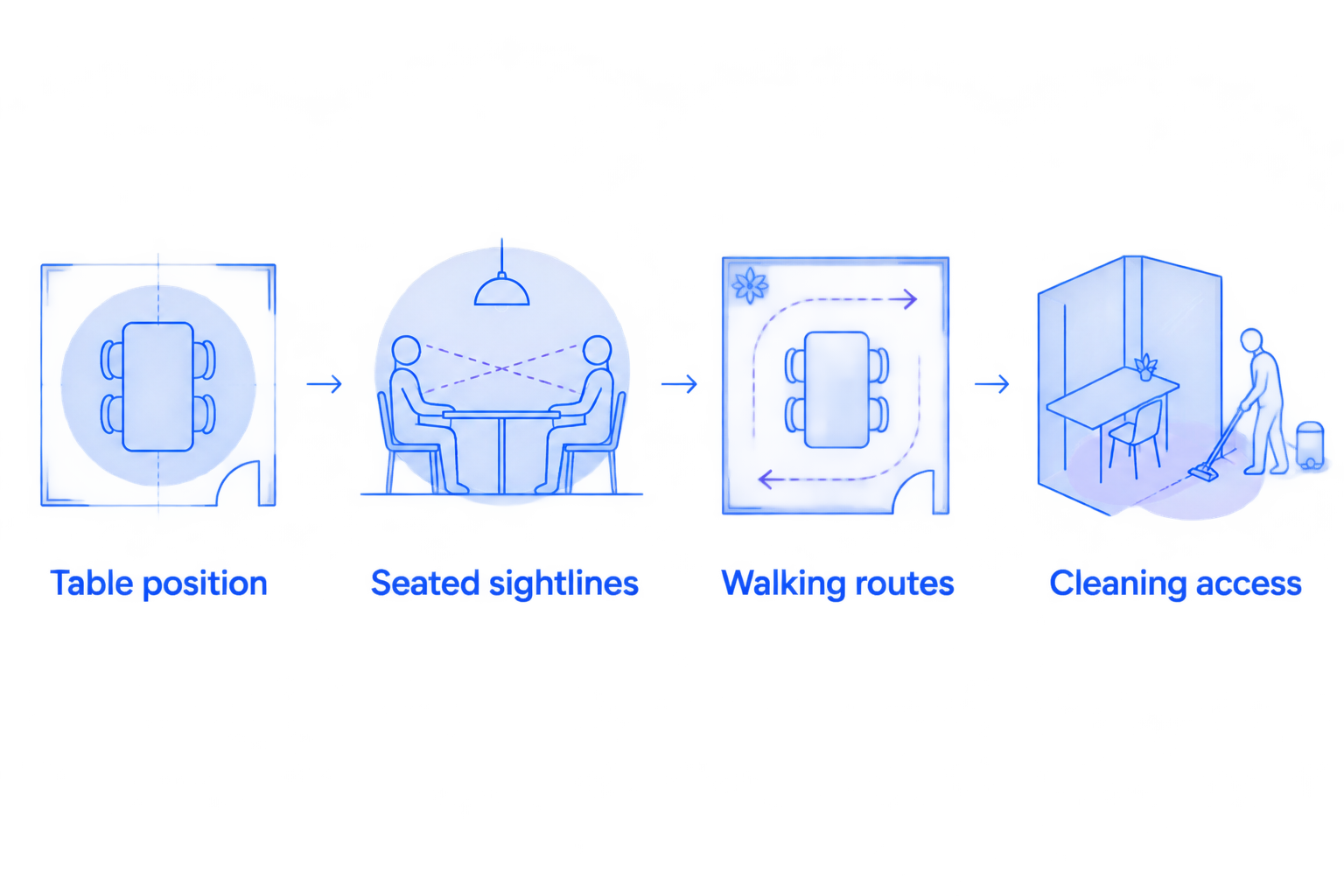 Set the furniture position before committing to the pendant location.
How the pendant types are ranked
The order follows the criteria above: light direction, glare control, room proportion, light quality, upkeep, and installation fit. The opal-glass globe takes the default position because diffuse light and a simple outline suit a general room-lighting brief.
This Sohnne pendant-light guide ranks forms by use case, not named models by tested performance. Compare the actual fixture specifications before choosing within any category.
Which pendant should you choose?
Choose an opal-glass globe if you are undecided. Move to a metal dome for focused downward light, a linear pendant for a long table, or a layered metal shade when direct bulb visibility is your main concern.
For a bedroom, choose paper when you want a softer-looking shade and accept its care requirements. In 2026, the strongest choice is still the one that suits your furniture arrangement after the light is switched on.
FAQ
What’s the best shape for mid century modern pendant lights?
An opal-glass globe is the best default for general room lighting. Choose a metal dome instead when you want light directed onto a table.
Is an opal-glass globe better than a metal dome?
An opal-glass globe is better for diffuse light, while a metal dome is better for focused downward illumination. Choose according to the lighting job rather than appearance alone.
What pendant works best over a long dining table?
A linear pendant suits a long dining table because its light sources extend along the surface. Set the table position before deciding on the fixture location.
Should I choose 2700 K or 3000 K pendant lighting?
Compare 2700 K for a warmer appearance with 3000 K for a slightly less warm appearance. Keep nearby light sources consistent if you want a unified room.
How do I stop a pendant light from glaring in my eyes?
Choose a fixture that screens the light source from your normal viewing positions. Check bulb visibility while seated; dimming alone does not replace effective shielding.
Can a paper pendant work in a bedroom?
A paper pendant suits a dry bedroom where you want soft ambient light. Keep it away from contact and moisture, and follow the fixture’s bulb limits.
Can one pendant light the whole room?
Do not assume one pendant will meet every lighting need. An opaque downward-facing shade needs support from other lighting when you also want to illuminate the surrounding room.
One last thing
Check the pendant while it is off. You will still see its underside, cord, canopy, and relationship to the furniture in daylight.
Sohnne's recommendation is simple: judge the whole hanging object, not just the illuminated shade. A convincing room needs both views to work.
Related guides
- How to choose furniture scale for a room with high ceilings
- How long does a paper lantern lamp last?
- Mid-century modern side chairs for a dining room
Stay connected with us!
Keep in touch with what’s new and next. Subscribe for weekly insights, product launches, and community news!