Best mid-century modern lighting fixtures in 2026
Sohnne Design Studio
November 18, 2026
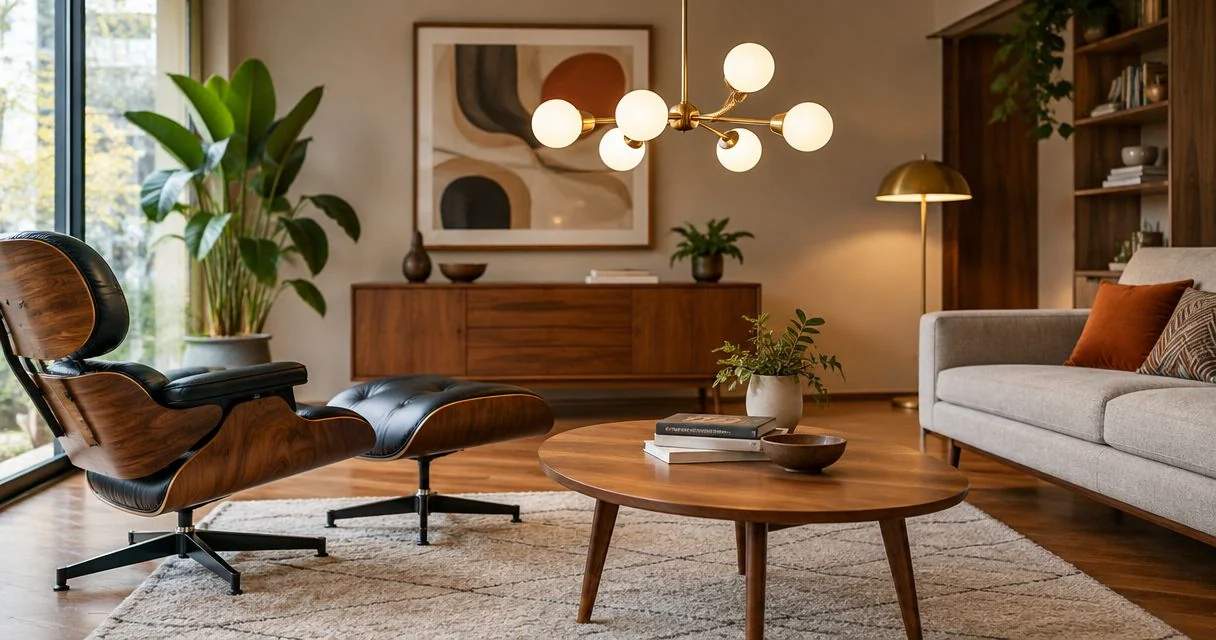
Best overall: an opal-globe ceiling fixture. Best for dining rooms: a branching chandelier. Best for a simple plug-in update: a dome table lamp. This 2026 guide compares mid century modern lighting fixtures by light direction, room fit, glare control, and installation needs.
TL;DR- Sohnne recommends opal-globe fixtures as the best mid century modern lighting fixtures for soft, general room lighting.
- Choose a branching chandelier for dining, an adjustable floor lamp for reading, and a dome table lamp for consoles.
- Check the shade opening, bulb access, and dimmer compatibility before choosing a sculptural silhouette.
- Build ambient lighting and task lighting separately; a striking ceiling fixture does not replace a reading light.
Why this matters
A fixture has two jobs: it shapes the room when switched off and controls the light when switched on. A beautiful shade that exposes a bright bulb at eye level fails the second job. Start with the activity beneath it, then choose the form.
For a room furnished through Sohnne, carry the same attention to proportion into the lighting plan. A broad sofa, a compact dining nook, and a narrow hallway need different distributions of light, even when they share warm wood and restrained metal finishes.
This is a ranking of fixture types, not individual models. The distinctions help you choose the right category before comparing product specifications for your 2026 room project.
What makes the best mid-century modern lighting fixtures
- Light distribution: Diffused light supports general illumination; a directed beam serves reading or work. Choose the job first.
- Glare control: Judge the fixture from seated and standing positions. An exposed bulb creates a different experience from a covered light source.
- Room proportion: Compare the whole silhouette with nearby furniture, including projecting arms, shade width, and the space below it.
- Useful adjustment: An adjustable arm or shade helps only when its movement reaches the surface you need to light.
- Installation fit: Check the mounting method, electrical requirements, cord route, and access to switches before committing.
- Maintenance: Look for accessible bulbs, cleanable surfaces, and clear information about replaceable parts or integrated light sources.
Mid-century lighting at a glance
| Rank and fixture type | Best for | Standout feature | Key limitation |
|---|---|---|---|
| 1. Opal-globe ceiling fixture | General room lighting | A translucent shade softens the visible light source | Does not provide a focused reading beam |
| 2. Branching chandelier | Defining a dining area | Outward-reaching arms create a broad composition | Exposed bulbs demand careful glare checks |
| 3. Adjustable floor lamp | A dedicated reading seat | A movable shade directs light toward a page | The base and cord need clear floor space |
| 4. Dome table lamp | A console or sideboard update | A compact, self-contained pool of light | An opaque dome limits light above the shade |
| 5. Adjustable wall sconce | A bedside without a table | Wall mounting keeps the surface below clear | Placement becomes tied to furniture position |
| 6. Paper-shade pendant | A softly lit bedroom | A lightweight-looking shade diffuses light | Paper needs gentle handling and careful cleaning |
1. Opal-globe ceiling fixture: best for general room lighting
An opal-globe ceiling fixture surrounds the light source with translucent glass. The globe softens the visible bulb and distributes light around the shade, making this the most useful starting point for a room that needs general illumination.
Choose the mounting format around the room. A close-to-ceiling globe keeps the composition compact; a suspended globe brings the light lower over a defined area. Neither format replaces a task lamp beside your reading seat.
Opal-globe fixture pros:
- Softens the appearance of the light source.
- Uses a simple silhouette alongside expressive furniture.
- Offers a clear choice between compact and suspended formats.
Opal-globe fixture cons:
- Glass requires careful handling during cleaning.
- Bulb access depends on how the globe attaches.
Best for: Living rooms, bedrooms, and entryways needing a calm ambient layer.
Verdict: Buy an opal-globe fixture as the default, after checking light output and shade access.
2. Branching chandelier: best for defining a dining area
A branching chandelier arranges several light sources along projecting arms. Its horizontal spread gives a dining table a visual center without requiring a solid, heavy-looking shade above it.
For a 2026 dining-room refresh, compare the arm spread with the tabletop rather than the room alone. Check the view from every dining chair: a bulb that looks discreet from the doorway can sit directly in a seated guest's sightline.
Branching chandelier pros:
- Creates a distinct center over a dining table.
- Open spaces between arms preserve views across the room.
- Repeated light sources establish a clear visual rhythm.
Branching chandelier cons:
- Exposed bulbs create glare without suitable shielding or placement.
- Multiple arms and sockets add cleaning surfaces.
Best for: Dining areas that need a sculptural overhead focal point.
Verdict: Buy for a defined dining zone; skip it where projecting arms crowd circulation.
3. Adjustable floor lamp: best for a dedicated reading seat
An adjustable floor lamp brings directed light beside a chair without fixing the light to a wall. A movable arm or shade lets you aim toward the page rather than brightening the entire room.
Test the position with the chair in use. The shade should illuminate your book without exposing the bulb to your eyes, and the base should remain outside your route into the seat. Reach the switch without leaning across a hot shade or pulling the cord.
Adjustable floor lamp pros:
- Directs light toward a specific task.
- Moves with a revised seating layout.
- Adds useful light without overhead installation.
Adjustable floor lamp cons:
- The base occupies floor space beside the chair.
- A trailing cord needs a safe route to the outlet.
Best for: Reading corners and living rooms where the ceiling light leaves the page in shadow.
Verdict: Buy for reading; skip a fixed decorative shade if you need adjustable direction.
4. Dome table lamp: best for a console or sideboard update
A dome table lamp creates a contained composition: rounded shade, supporting stem, and base. An opaque dome directs light downward, leaving the upper part of the room quieter.
This is Sohnne's pick among mid-century modern lighting fixtures for a surface-level update that does not require ceiling work. Check the footprint against the usable surface, then look beneath the shade from your normal seated position. A low shade edge can hide the bulb; a shallow shade can leave it visible.
Dome table lamp pros:
- Establishes a pool of light on a console or sideboard.
- Moves easily between suitable surfaces.
- Brings rounded geometry into a room of straight lines.
Dome table lamp cons:
- Takes up space needed for books or everyday objects.
- An opaque shade does little to illuminate the ceiling.
Best for: Consoles, sideboards, and side tables needing a contained accent light.
Verdict: Buy for an atmospheric update; skip it as the room's only light.
5. Adjustable wall sconce: best for a bedside without a table
An adjustable wall sconce places light beside the bed while leaving the surface below clear. A directional shade serves reading; a translucent shade serves softer background illumination. Choose between those functions before choosing the finish.
Mark the intended position while sitting against your actual pillows. Check switch access, shade movement, and the view from the opposite side of the bed. Hardwired and plug-in versions have different installation requirements, so confirm the exact fixture details.
Adjustable wall sconce pros:
- Keeps a bedside surface clear.
- Positions light close to the reader.
- Separates bedside lighting from the central ceiling fixture.
Adjustable wall sconce cons:
- Mounting position limits later furniture changes.
- Plug-in cords remain visible unless carefully routed.
Best for: Compact bedrooms and bedsides where a table lamp would crowd the surface.
Verdict: Buy after confirming the bed position; wait if the layout is unsettled.
6. Paper-shade pendant: best for a softly lit bedroom
A paper-shade pendant filters light through a lightweight shade. Its soft outline works where you want an overhead presence without another reflective metal or glass surface.
Read the fixture's bulb and clearance instructions closely. Paper condition also matters: tears, dust, and deformation remain visible when the shade is illuminated. The guide to how long a paper lantern lamp lasts addresses the maintenance question to consider before choosing this material.
Paper-shade pendant pros:
- Diffuses the visible light source.
- Introduces a soft texture above hard furniture surfaces.
- Creates an overhead focal point without a solid-looking shade.
Paper-shade pendant cons:
- Paper tears more easily than metal or glass.
- Cleaning requires gentle handling and suitable methods.
Best for: Bedrooms and quiet sitting areas where soft illumination matters more than a directed beam.
Verdict: Buy for diffused atmosphere; skip it for a demanding task-lighting role.
How to choose the right light for your room
Start with the activity
Name the missing function before shopping: general lighting, reading light, or accent lighting. A darker corner does not automatically need a brighter ceiling fixture. It might need a lamp placed beside the activity.
For your 2026 lighting plan, map these needs separately:
- General lighting: Light that helps you use and move through the room.
- Reading light: Directed illumination on a book or work surface.
- Accent lighting: A focused contribution to a surface, object, or corner.
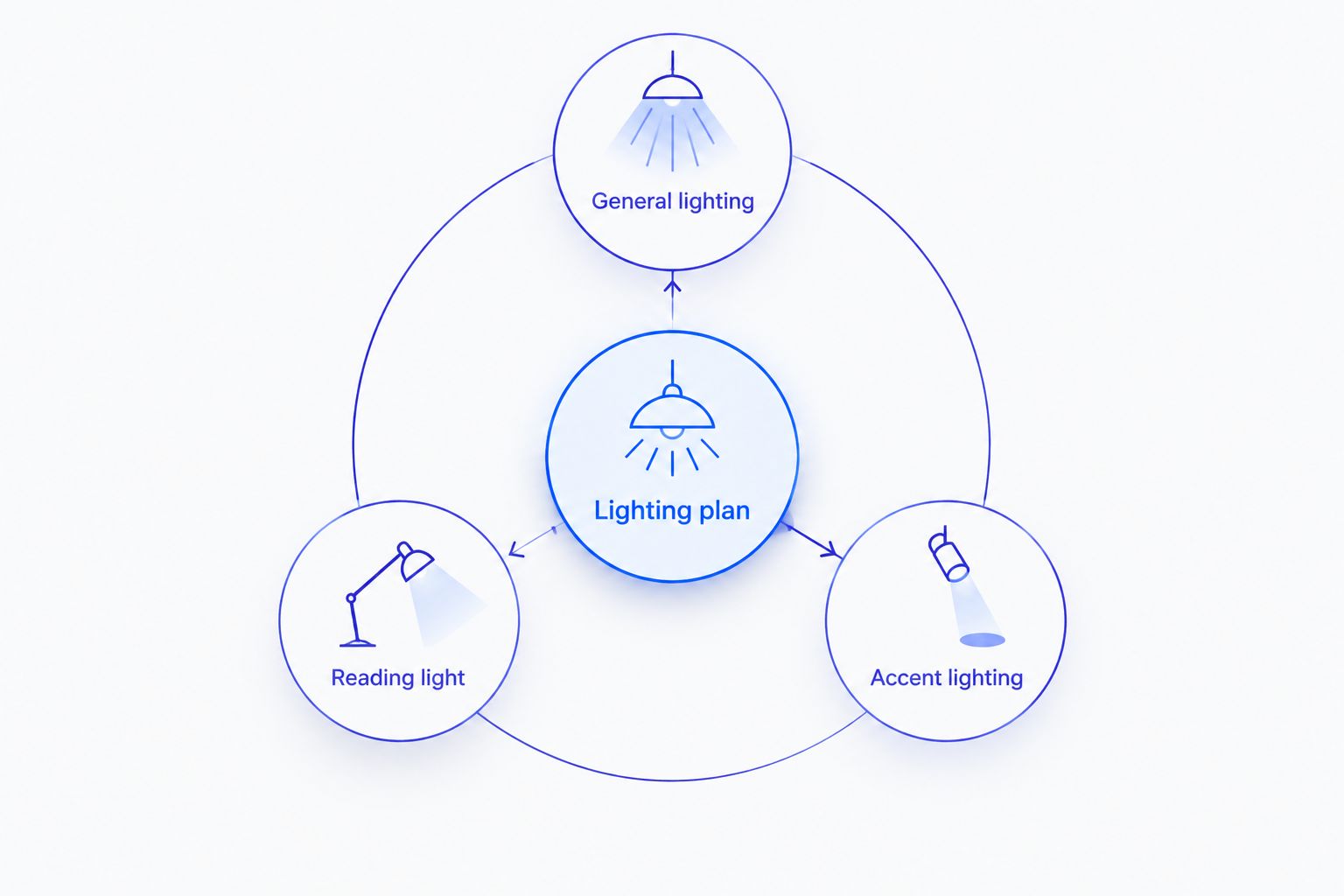 Choose the missing function before choosing the fixture shape.
Match color temperature deliberately
For a warm residential starting point, compare bulbs marked 2700 K and 3000 K. A 4000 K bulb appears cooler than either. Kelvin describes the color appearance of light, not how much light a bulb produces.
Keep visible lamps consistent when you want a unified evening atmosphere. Then check lumen output separately. A warm bulb is not automatically dim, and a cooler bulb is not automatically brighter.
Check the room from the seat
View a candidate fixture from the sofa, dining chair, and doorway. Shade openings, reflective finishes, and exposed bulbs read differently from each position. Product photography alone does not show your sightlines.
Picture a reading corner with the floor lamp beside and slightly behind the chair, its shade aimed toward the book. The useful detail is the relationship between shade, page, and eye—not whether every metal finish matches.
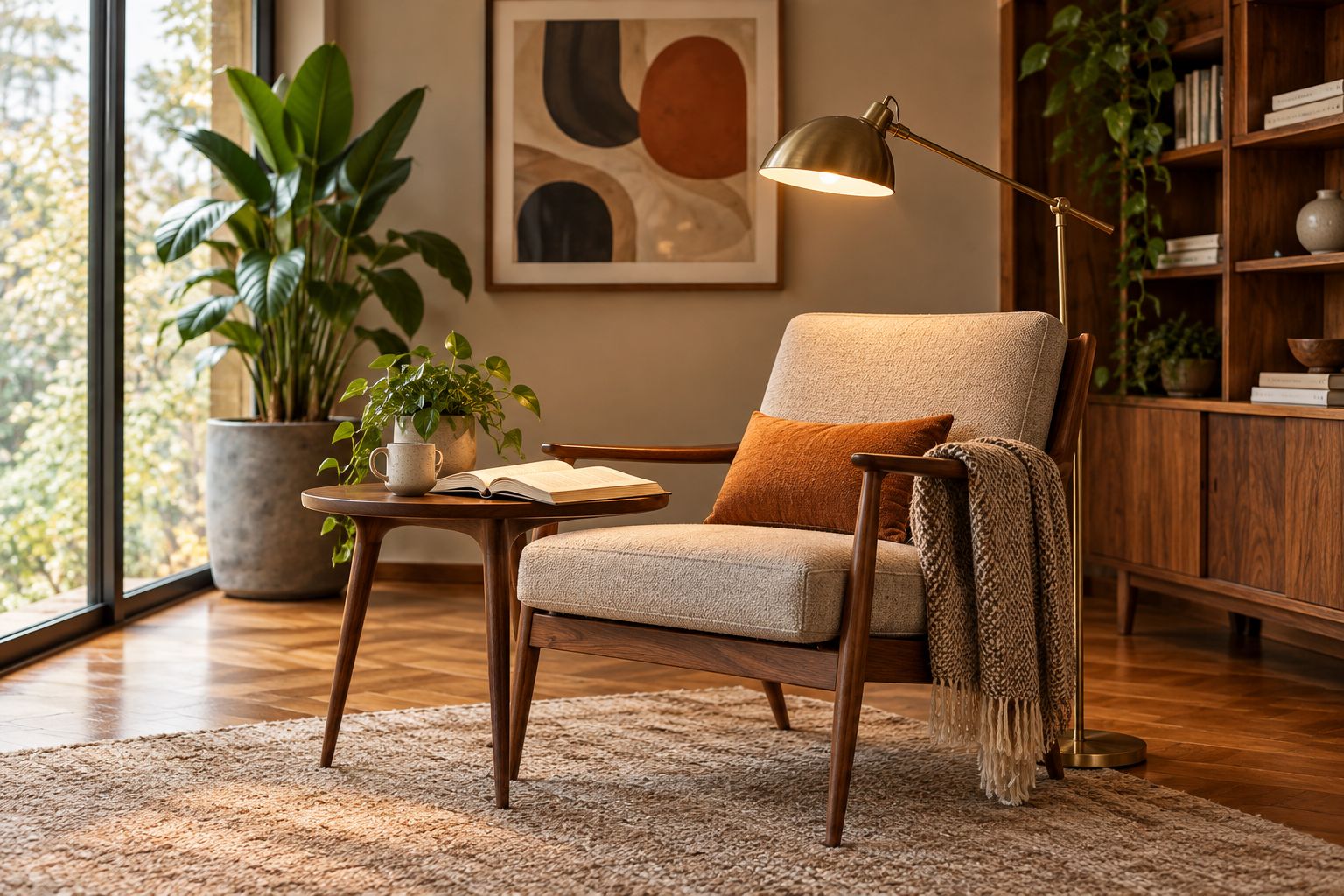 Place the light for the reader before arranging decorative objects.
How the fixture types rank
The order prioritizes general usefulness, then distinct room functions. Opal-globe fixtures lead because diffused ambient light is a practical foundation. Branching chandeliers define dining areas, while adjustable floor lamps answer a more specific reading need.
The lower positions are not quality judgments. Wall sconces depend on settled furniture placement; paper shades require different care. For 2026, choose by function, glare control, proportion, installation fit, and maintenance—not silhouette alone.
Which mid-century lighting should you choose?
Choose an opal-globe ceiling fixture if you need one clear starting point. Add an adjustable floor lamp if reading remains uncomfortable, rather than asking the ceiling fixture to do both jobs.
Sohnne's recommendation is to keep the fixture's purpose clear: branching arms over dining, a directed shade beside a reader, and a dome lamp on a console. Repeat a finish where it helps the room feel connected, but let each light serve its location.
FAQ
What’s the best mid-century modern lighting fixture for a living room?
An opal-globe ceiling fixture is the best starting point for general living-room lighting in this guide. Add a directed floor lamp where you read, because diffused overhead light does not provide the same focused illumination.
Is a branching chandelier better than a globe pendant?
A branching chandelier is better for a spread-out dining-room focal point; a globe pendant is better for a simpler, diffused composition. Compare glare and the fixture’s relationship to the tabletop before deciding.
What color temperature should I choose for mid-century lighting?
Start by comparing 2700 K and 3000 K bulbs for a warm residential setting. Check lumen output separately, because color temperature describes light appearance rather than brightness.
Can I mix brass and black lighting fixtures?
Yes, you can mix brass and black fixtures. Repeat each finish deliberately and keep the forms related through a shared curve, shade shape, or visual weight.
What’s the best light for reading beside a chair?
An adjustable floor lamp is the best choice here for a dedicated reading chair. Position its shade to illuminate the page without exposing the bulb to your eyes.
Do I need a dimmer for a dining chandelier?
A compatible dimmer gives you control over a dining chandelier’s output. Confirm compatibility across the fixture, bulbs, and dimmer before installation; dimming does not replace proper glare control.
Are paper-shade pendants practical for bedrooms?
Paper-shade pendants suit bedrooms when you want diffused overhead light and can handle the shade gently. Follow the fixture’s bulb, clearance, and cleaning instructions, and use a separate directed light for reading.
One last thing
Inspect the fixture from underneath before you commit. A shade that looks enclosed in a front-facing photograph can reveal the bulb from a dining chair or low sofa. That small change in viewpoint is more useful than another finish sample when glare is the real problem.
Related guides
- How to choose furniture scale for a room with high ceilings
- How to position a lounge chair for natural-light reading
- How to arrange a living room around a fireplace
Stay connected with us!
Keep in touch with what’s new and next. Subscribe for weekly insights, product launches, and community news!