Best mid-century modern dining chairs in 2026
Sohnne Design Studio
November 25, 2026
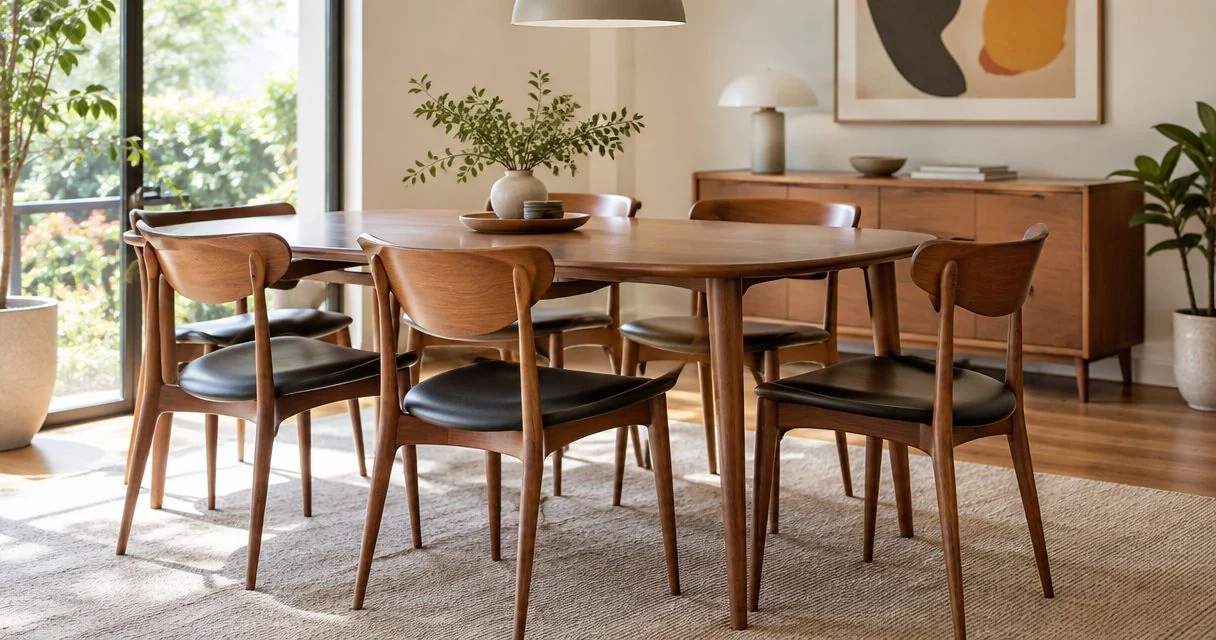
Best overall: wood-frame chairs with upholstered seats. Best for compact rooms: armless moulded plywood chairs. Best for easy cleanup: moulded plastic chairs. This 2026 guide compares five types of mid century modern dining chairs by comfort, table fit, maintenance, and visual weight—not by a familiar silhouette alone.
TL;DR- For Sohnne shoppers, wood-frame mid century modern dining chairs with upholstered seats are the best everyday starting point.
- Choose armless moulded plywood chairs when compact dining spaces need clear sightlines and unobstructed access.
- Choose moulded plastic chairs for wipeable surfaces; check comfort and care instructions before committing.
- Measure the table apron, chair width, and pullback space before choosing dining seating.
Why this matters
A dining chair has two jobs: support you at the table and leave enough room to move around it. A sculptural back cannot compensate for arms that strike the apron. Start with your table and daily routine, then consider the furniture at Sohnne.
The best choice changes with the room. A padded seat suits lingering dinners; an unupholstered surface simplifies cleanup. For your 2026 shortlist, decide which compromise you can live with before choosing a finish.
What makes the best mid-century modern dining chairs
Use these criteria to judge every chair, including a beautiful one:
- Table fit: Seat height, arm height, and overall width must work with your actual table, including its underside supports.
- Seated comfort: Back angle, seat depth, front-edge shape, and cushioning matter more than appearance alone.
- Construction: Inspect joints, hardware access, finish coverage, and the connection between the seat and frame.
- Maintenance: Match the surface to your tolerance for crumbs, spills, scratches, and fabric care.
- Room fit: Allow space for seated diners, pulled-out chairs, and the route through the room.
- Visual balance: Compare the chair's back, legs, and material against the table rather than evaluating either piece separately.
Material alone does not establish quality. For a closer construction checklist, use the guide to mid-century modern dining chairs ranked by durability.
Mid-century modern dining chairs at a glance
These are chair categories, not named product recommendations. Each earns a different use-case slot, and individual models still need a dimensional and construction check.
| Rank and chair type | Best for | Standout feature | Key limitation |
|---|---|---|---|
| 1. Wood frame, upholstered seat | Everyday dining | Exposed wood with a padded sitting surface | Upholstery adds a separate care requirement |
| 2. Armless moulded plywood | Compact dining rooms | Shaped wood surfaces without projecting arms | An unpadded seat feels firm |
| 3. Moulded plastic | Frequent spill cleanup | Wipeable seating surface | Surface texture and scratches need scrutiny |
| 4. Wood frame, woven seat | Texture-led interiors | Open frame with tactile woven material | Crumbs collect within the weave |
| 5. Upholstered dining armchair | Table-end seating | Padding with forearm support | Arms restrict table clearance and access |
1. Wood-frame chairs: best for everyday dining
A wood frame with an upholstered seat is the most balanced starting point for a dining room used throughout the week. You get a defined timber outline and padding where you sit. Choose the back shape carefully: a padded seat does not make an awkward back comfortable.
This is the default recommendation for a 2026 dining refresh when you want one chair type around the whole table. Keep the frame visually simple if the tabletop already has pronounced grain or a substantial base.
Wood-frame upholstered-seat chair pros:
- Combines exposed timber with seat cushioning.
- Offers a clear material connection to wooden dining tables.
- Leaves the back visually lighter than a fully upholstered chair.
Wood-frame upholstered-seat chair cons:
- Seat fabric requires care separate from the wooden frame.
- Padding does not resolve poor seat depth or back fit.
Best for: Everyday meals and households that want some softness without fully upholstered seating.
Inspect the underside before deciding. Look for secure seat attachment, accessible fasteners where present, and care instructions for the exact fabric. Ask whether the seat can be serviced separately rather than assuming it is removable.
Verdict: Buy when the back supports you comfortably and the upholstery suits your cleaning routine.
2. Armless moulded plywood: best for compact dining rooms
Moulded plywood uses shaped layers of wood to form the seat, back, or both. An armless version keeps the chair's sides unobstructed, which helps you enter and leave the table without working around projecting arms.
Choose by overall dimensions, not by how slender the chair looks. Splayed legs can occupy more floor space than the seat suggests, and a wide curved back still needs room beside its neighbor.
Armless moulded plywood chair pros:
- Keeps the sides open for access.
- Exposes wood grain across a shaped surface.
- Avoids upholstery care when the seat is unpadded.
Armless moulded plywood chair cons:
- The sitting surface feels firm without padding.
- Exposed edges and finishes need inspection for damage.
Best for: Small dining rooms where chair access and clear sightlines matter.
Sit far enough back to use the backrest. If the seat's curve presses against your thighs or the front edge feels abrupt, choose another shape. Adding a loose cushion changes your sitting height and does not correct every fit problem.
Verdict: Buy for compact rooms after checking the full leg footprint; skip a shape that creates pressure while seated.
3. Moulded plastic: best for frequent spill cleanup
An unupholstered moulded plastic chair gives you a seating surface without fabric to absorb a spill. The practical benefit is straightforward, but inspect the whole assembly. A simple seat can still sit on a base with joints and recesses that collect dirt.
Choose this category for its care routine, not because every plastic chair performs alike. Surface texture, finish, base construction, and the manufacturer's cleaning instructions all matter.
Moulded plastic chair pros:
- Provides a wipeable, unupholstered seating surface.
- Removes fabric cleaning from the seat-care routine.
- Introduces color without adding another textile.
Moulded plastic chair cons:
- Scratches and scuffs can remain visible on exposed surfaces.
- A rigid seat offers no cushioning unless a separate pad is added.
Best for: Dining areas where easy surface cleanup takes priority over a padded feel.
Check the transition between seat and back, the front edge, and the connection to the legs. Do not assume a chair stacks, suits outdoor use, or tolerates abrasive cleaners because it is plastic. Those are model-specific properties.
Verdict: Buy for straightforward cleanup; hold if you have not checked seated comfort.
4. Wood-frame woven-seat chairs: best for texture-led interiors
A woven seat introduces texture without covering the entire chair in fabric. Beside a plain tabletop, the combination of open timber and woven material gives the dining setting detail without another large upholstered surface.
The weave deserves close attention. Paper cord, plant fibers, and synthetic strands have different care requirements; a photograph does not identify the material reliably.
Wood-frame woven-seat chair pros:
- Adds tactile contrast to smooth tables and floors.
- Keeps the timber frame visible.
- Brings detail through material rather than ornament.
Wood-frame woven-seat chair cons:
- Crumbs collect between strands.
- Cleaning and repair depend on the exact woven material.
Best for: Calm, texture-led dining rooms where material character matters more than rapid cleanup.
Inspect tension, attachment points, and the underside of the seat. Ask for cleaning instructions before using water or a household cleaner. If repairability matters to you, confirm who can service that particular weave.
Verdict: Buy for material texture; skip if trapped crumbs or specialized care will become a daily irritation.
5. Upholstered dining armchairs: best for table-end seating
An upholstered dining armchair gives the head of the table a more enclosed sitting position. Padding and arm support distinguish it from a simple side chair, while its larger outline creates a deliberate endpoint to the arrangement.
Use this category selectively. An armchair that fits beautifully at an open table end can become awkward along a crowded side.
Upholstered dining armchair pros:
- Gives you a place to rest your forearms.
- Adds softness at the ends of a dining arrangement.
- Creates contrast with simpler side chairs.
Upholstered dining armchair cons:
- Arms can prevent the chair from sliding beneath the table.
- A larger upholstered surface adds cleaning work.
Best for: Table ends with enough width, pullback space, and apron clearance.
Measure the highest point of the arms against the lowest obstruction beneath the tabletop. Also test standing up and turning away from the table. A chair must work during movement, not just in its tucked-in position.
Verdict: Buy for generous table ends; skip when arms compromise access or circulation.
Measure the chair against your table
For a 2026 shortlist, record the table's usable dimensions before saving more chair photographs. Measure the underside as carefully as the top. Aprons, corner blocks, and legs determine where a chair actually fits.
Use these common residential planning guidelines as starting points, not guarantees:
- Seat gap: Allow about 10–12 inches between the seat surface and the underside of the tabletop; check apron clearance separately.
- Place width: Start with about 24 inches of table edge per diner, then increase it for wider chairs or more elbow room.
- Pullback space: Start with about 36 inches between the table edge and a wall or obstruction; busy walkways need more.
Your body and room decide the final fit. Measure a chair you already find comfortable, including seat height, usable depth, and back position, then compare those dimensions with the candidate.
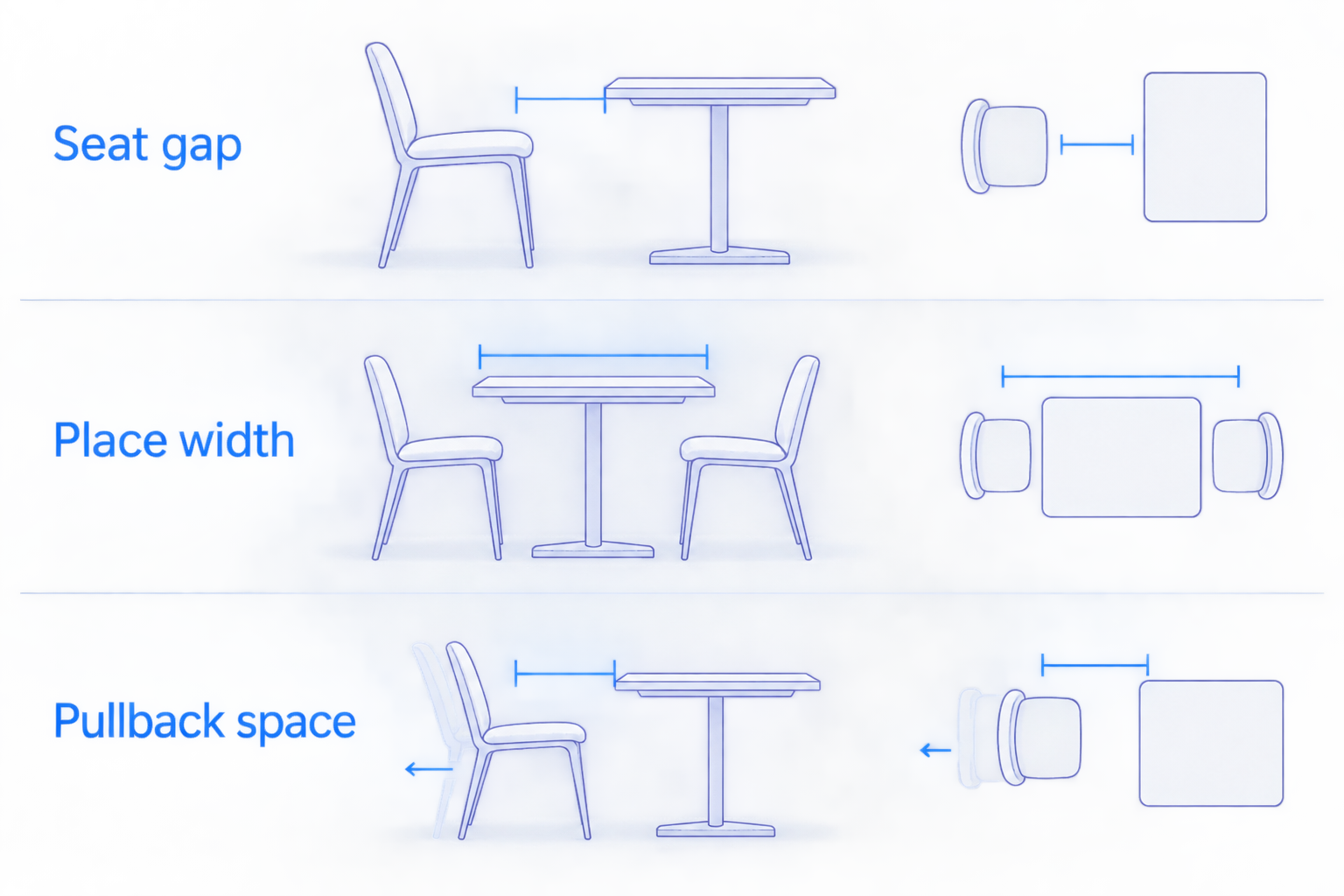 Check the space beneath, beside, and behind the chair before choosing a silhouette.
Map the chair footprint on the floor with removable tape. Include the outermost legs, not just the seat. Then pull an existing chair into the proposed position and walk behind it while someone is seated.
Pair the materials without matching everything
A coherent dining room does not require identical wood finishes. Compare undertones, grain, and the visual thickness of the legs. A heavily figured tabletop often needs a quieter chair; a plain surface leaves more room for a sculptural back.
Historical context also broadens your eye beyond a single outline. The discussion of Fler’s mid-century designs places dining furniture within a wider design vocabulary; use that perspective to compare proportions across the whole setting rather than collecting isolated statement pieces.
For your 2026 room plan, choose one relationship to repeat: a wood undertone, a curved line, or a restrained upholstery color. Let the other elements vary. Too many competing back shapes make the chair arrangement harder to read.
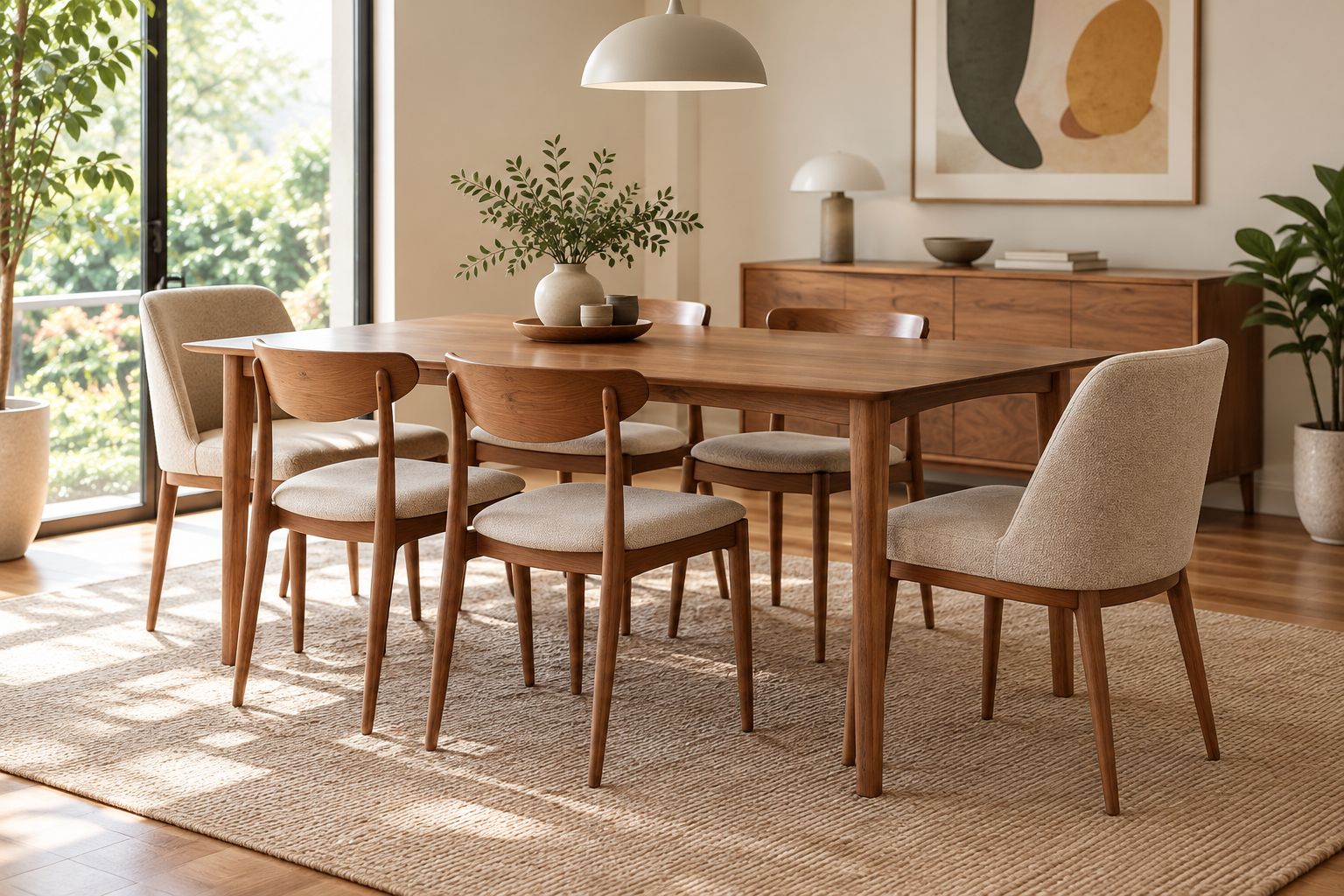 Repeat a material relationship while allowing the table-end chairs a different outline.
How the chair types rank
This 2026 ranking prioritizes table fit and everyday usefulness, followed by maintenance and visual balance. Wood-frame upholstered-seat chairs take the default position because they combine exposed timber with padding. The remaining categories answer more specific needs rather than competing for the same room.
For Sohnne shoppers comparing mid century modern dining chairs, the rule is simple: reject poor fit before comparing finishes. This is a category buying guide, not a model-by-model test or a claim that every chair within a category performs equally.
Which dining chairs should you choose?
Choose wood-frame chairs with upholstered seats if you want a clear starting point. Move to armless moulded plywood for compact-room access, moulded plastic for surface cleanup, woven seats for texture, or upholstered armchairs for spacious table ends.
Before committing to a full set, compare the exact dimensions and care requirements with your room. Where possible, sit in the chair at a table of similar height. Comfort without the table is only half the decision.
FAQ
What’s the best type of mid century modern dining chair for everyday use?
A wood-frame chair with an upholstered seat is the best everyday starting point in this guide. It combines exposed timber with seat padding, but the back shape and table clearance still need checking.
Which dining chairs work best in a small room?
Armless moulded plywood chairs are the compact-room pick in this guide. Check the overall width and leg footprint because a visually slim chair does not always occupy less floor space.
How much space should I leave between a dining chair and the table?
About 10–12 inches between the seat surface and tabletop underside is a common planning guideline. Check the table apron separately and confirm that your thighs have comfortable clearance.
Are upholstered dining chairs better than wooden seats?
Upholstered dining chairs are better when you want padding, while unupholstered wooden seats remove fabric care from the routine. Seat shape and back fit remain essential with either option.
Can I mix dining armchairs with side chairs?
Yes, use armchairs at the table ends and side chairs along the longer edges when the dimensions allow. Repeat a material or color relationship to keep the arrangement coherent.
Are all moulded plastic dining chairs suitable outdoors?
No, plastic construction alone does not establish outdoor suitability. Use a chair outdoors only when its manufacturer explicitly identifies it for that use.
What should I check before choosing dining chairs from Sohnne?
Check the exact chair dimensions, materials, care instructions, and fit beneath your table. Compare overall width, seat height, and arm height where applicable rather than choosing from photographs alone.
One last thing
Check the feet before you choose the finish. A chair's outermost floor contact points can extend beyond its seat, changing how neighboring chairs fit and where your own feet land. Trace that footprint beside the table; it reveals problems a front-facing photograph leaves out.
Related guides
- Mid-century modern side chairs for a dining room
- Danish-style wooden dining chairs for daily use
- Mid-century modern lighting fixtures
Stay connected with us!
Keep in touch with what’s new and next. Subscribe for weekly insights, product launches, and community news!