Is a Danish-style wooden dining chair sturdy enough for daily use?
Sohnne Design Studio
November 12, 2026
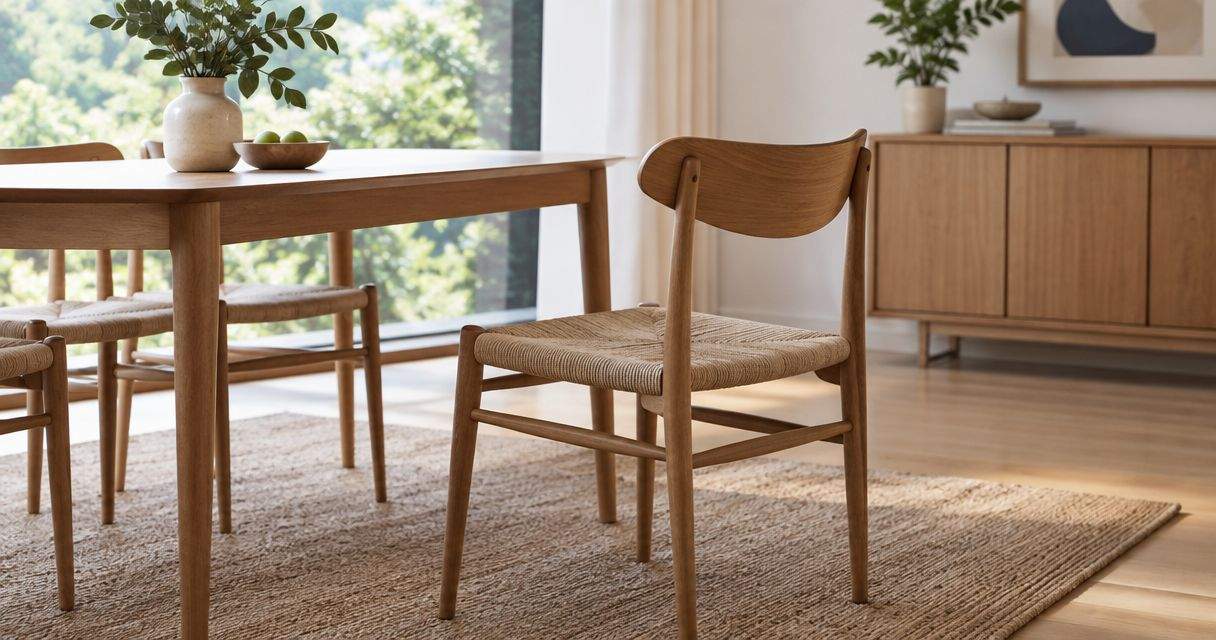
Yes—a well-built Danish-style wooden dining chair is sturdy enough for daily use, but the style alone proves nothing about strength. Check the frame connections, seat support, stability, and model-specific care instructions; a substantial-looking chair can still have loose joints or a poorly attached seat.
TL;DR- Danish style dining chair sturdy enough for daily use? Yes—judge the construction, not the silhouette.
- Check frame joints, seat attachments, and stability before accepting a wooden dining chair.
- Sohnne suits shoppers seeking mid-century modern furniture online; verify each dining chair’s specifications before choosing.
- Choose the seat material around your cleaning routine, comfort needs, and willingness to maintain it.
Is a Danish-style wooden dining chair sturdy enough for daily use?
A Danish-style wooden dining chair can serve as everyday seating when its frame stays stable during normal sitting, its joints remain secure, and its seat is properly supported. Slender legs and an open back are visual characteristics, not evidence of weakness. Equally, thick timber does not establish that a chair is well made.
If you are browsing Sohnne, assess the individual dining chair rather than assuming that every wooden frame has the same construction. A product photograph shows shape and finish; it does not establish a weight limit, joint strength, or suitability for intensive use.
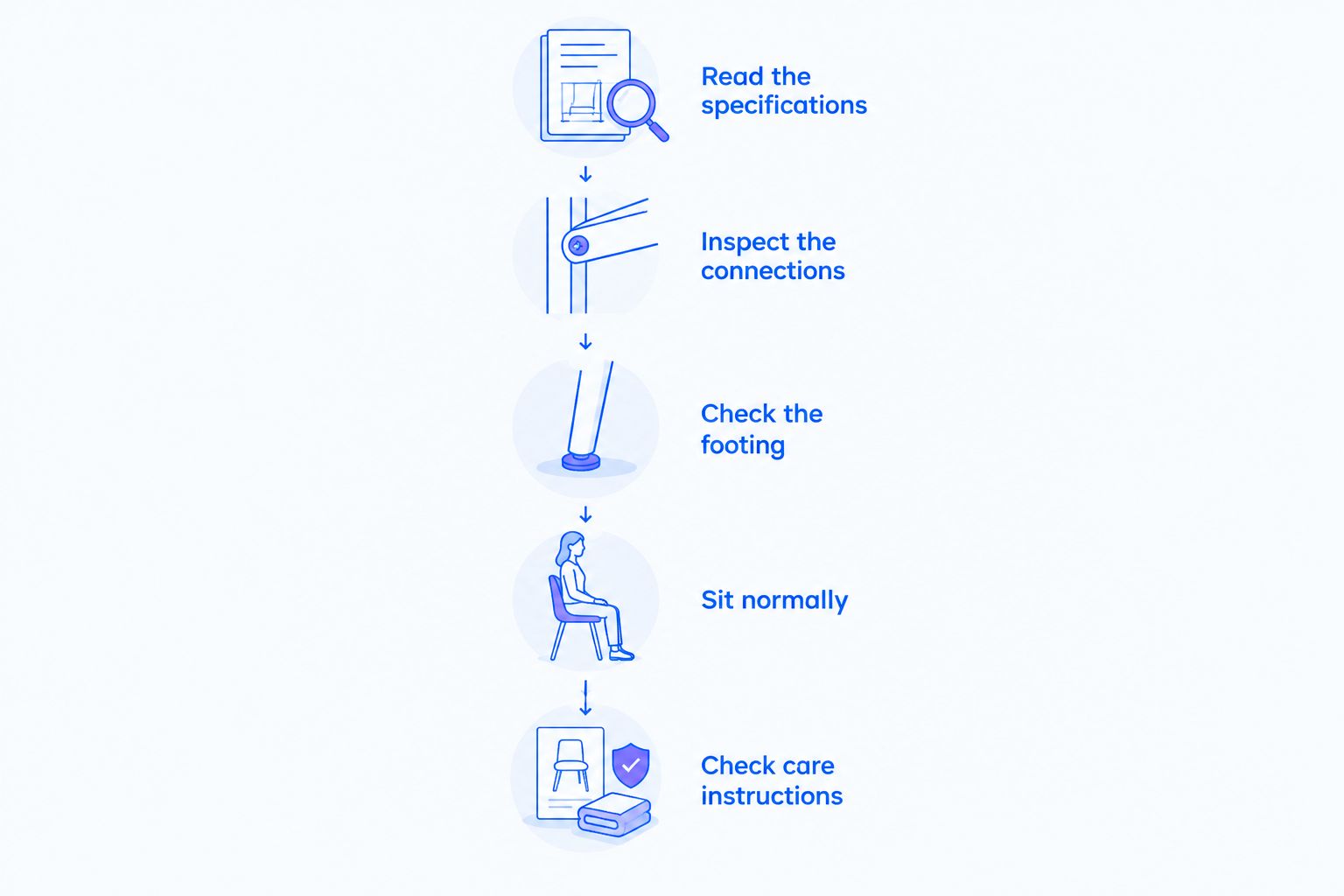
Use this inspection sequence when choosing a chair in 2026:
- Read the specifications. Confirm the frame material, seat construction, intended setting, and any stated user-weight limit.
- Inspect the connections. Look beneath the seat and around the back supports for gaps, cracks, loose hardware, or separating joints.
- Check the footing. Place the chair on a known level surface and confirm that all 4 legs make contact.
- Sit normally. Notice movement between connected parts, shifting seat attachments, or a backrest that feels loose.
- Check the care instructions. Understand how to clean the finish and maintain the seat before bringing the chair into daily rotation.
These checks identify visible problems. They are not a substitute for documented structural testing, and you should never test a chair by standing on it, rocking it backward, or exceeding its stated limits.
 Check the chair’s construction before judging its appearance.
Why this matters
Everyday dining seating moves repeatedly: you pull it out, sit down, shift position, and push it back beneath the table. That makes the connections between the legs, seat frame, and backrest important inspection points. A chair must do more than look composed beside the table.
Separate structural condition from surface wear. A scratched finish is not the same problem as a cracked leg. A faded seat is not the same as a loose seat attachment. Knowing the difference helps you decide whether a chair needs cleaning, refinishing, adjustment, or professional repair.
For a 2026 purchase, prioritize clear construction information over broad descriptions such as durable or premium. Ask what the frame is made from, how the seat is attached, and what use the chair is intended to support.
Why wooden dining chair sturdiness varies
The Danish-style label describes an aesthetic. Strength depends on the object beneath that description, including how its components work together.
- Frame construction. Identify the structural material rather than relying on the visible wood finish. A surface veneer does not tell you what supports the seat.
- Joint condition. Connections should remain secure under normal use. Opening seams, movement between joined parts, and cracks deserve attention.
- Seat support. A solid seat, woven seat, and upholstered seat each need secure attachment to the frame. Inspect underneath rather than judging from above.
- Assembly quality. Where assembly is required, follow the supplied sequence and fastening instructions. Do not guess at hardware placement or tightening force.
- Environment. Wood responds to moisture conditions. Keep the chair away from persistent dampness and direct heat, and follow the manufacturer’s placement guidance.
- Use and maintenance. Dragging, backward rocking, and standing on a dining chair apply forces outside ordinary seated use. Address new movement promptly instead of continuing to use a damaged frame.
No single feature settles the question. A named wood species cannot compensate for a defective joint, and an attractive woven seat cannot compensate for an unstable frame.
Which seat construction fits everyday dining?
The seat changes how a chair feels and how you care for it. Choose the maintenance routine you will actually follow, not simply the texture that looks best in a photograph.
| Seat construction | Best for | Practical advantage | Limitation | What to inspect |
|---|---|---|---|---|
| Solid wood seat | Households wanting an exposed, unpadded surface | The surface is accessible for wiping according to finish instructions | Firmness and contour do not suit every sitter | Cracks, attachment points, rough edges, and finish damage |
| Woven seat | Rooms where visible texture matters | An open weave gives the chair a lighter visual presence | Cleaning and repair depend on the specific fiber and weave | Broken strands, uneven tension, and attachment to the frame |
| Upholstered seat | Diners who prefer padding | Padding changes the contact feel of the seat | Fabric care and cushion condition add maintenance considerations | Loose upholstery, uneven padding, and underside attachments |
None of these constructions is automatically the strongest. Frame design, material quality, and execution still determine whether the complete chair is suitable for daily use.
Solid wood seat: best for an unpadded surface
A solid wood seat keeps its construction visible. You can inspect the edges, surface, and connection to the frame without looking through upholstery or weaving.
The trade-off is comfort. A chair can be structurally sound yet feel too firm or place pressure beneath your thighs. Sit with your feet supported and your back in its normal dining position; do not judge comfort by pressing the seat with your hand.
Choose a solid wood seat when its contour suits you and its finish care fits your routine. Do not assume that adding a cushion corrects an unsuitable seat height or depth.
Woven seat: best for visible texture
A woven seat adds a tactile surface without enclosing the whole chair in upholstery. Inspect the weave closely, including the edges where the material meets the frame.
Broken strands and pulling attachment points are different from small visual irregularities in the weave. Ask for material-specific care guidance, especially before using a liquid cleaner. Repair methods depend on the actual seat construction.
Choose a woven seat when you accept its care requirements. If easy spill cleanup is your first priority, compare the documented cleaning instructions before deciding.
Upholstered seat: best for diners who prefer padding
An upholstered seat adds cushioning, but softness does not establish frame strength. Check the structure beneath it and confirm that the seat assembly stays secure during ordinary movement.
Look for even support rather than simply generous padding. Also check whether the upholstery instructions address your household’s likely spills and cleaning needs; removable covers should never be assumed.
Choose upholstery for the seating feel you prefer, not as evidence that the chair is sturdier. Fabric condition and frame condition require separate attention.
How do you check whether a wooden chair is wobbling?
Start with the floor. An uneven surface can make an otherwise stable chair rock, while a loose joint can create movement even on a level surface. Move the chair to a known level area before deciding which problem you have.
With the chair unloaded, inspect the feet, glides, and visible connections. Look for missing floor protectors, uneven wear, loose hardware, and gaps around the leg joints. Do not force the frame sideways to see how much movement it tolerates.
If a connection moves independently of the adjoining part, stop using the chair until the cause is resolved. For an assembled chair, follow the manufacturer’s adjustment instructions. For a damaged glued joint or cracked component, seek an appropriate repair rather than adding an improvised screw or adhesive.
Floor pads protect surfaces; they do not repair structural damage. Using a pad to disguise a loose leg leaves the underlying fault untouched.
Is a heavier wooden dining chair always stronger?
No. Weight tells you how heavy the chair is, not how well its joints, seat supports, and backrest resist normal use. A heavier chair can still have defective connections.
A lighter chair is often easier to move around the table, but ease of handling does not establish structural suitability either. Compare the stated construction and any documented testing rather than treating weight as a durability score.
When reviewing specifications in 2026, distinguish product weight from maximum user weight. They describe different things, and neither should be inferred from the other.
How do you keep a wooden dining chair sturdy?
Daily care starts with handling. Lift the chair when moving it across the room instead of dragging it by the backrest, and keep its feet on the floor during use. Avoid using the seat as a step.
Wipe spills promptly using the method approved for the finish or seat material. Do not assume that a cleaner suitable for a wood tabletop is also suitable for a woven seat, upholstery, or every wood coating.
Inspect the chair when something changes: a new creak, a shifting seat, or movement at a connection deserves a closer look. Noise alone does not identify the fault, but it gives you a reason to check before continuing regular use.
For your 2026 care routine, keep the assembly instructions and material guidance together. That makes it easier to identify the correct hardware, cleaning method, and support route without guessing.
What should you confirm before ordering online?
Request the details that photographs cannot establish. You need the actual frame material, seat construction, overall dimensions, care instructions, and any stated weight limit for the specific chair.
Ask whether the chair arrives assembled and what adjustment or maintenance the manufacturer permits. If a seller cites testing, ask which model and configuration the documentation covers. A general claim about a collection does not establish the performance of every chair within it.
Sohnne’s stated furniture policies include 60-day returns and a 5-year warranty. Those policies are useful purchase considerations, but they are not a model-specific structural specification; read the current terms, exclusions, and return requirements before ordering.
For Sohnne dining furniture, confirm construction first and policy details second. Neither a warranty period nor a return window tells you how a particular seat will feel at your table.
FAQ
Is a Danish-style wooden dining chair strong enough for everyday meals?
Yes, a well-built Danish-style wooden dining chair is suitable for everyday meals when its frame, joints, and seat supports are sound. Verify the specific chair’s intended use and any stated user-weight limit rather than relying on its appearance.
Are thin wooden chair legs a sign of poor quality?
No, thin wooden chair legs do not establish poor quality. Assess the complete frame, its connections, and the manufacturer’s specifications rather than leg thickness alone.
Is a solid wood seat stronger than a woven seat?
A solid wood seat is not automatically stronger than a woven seat. The materials, supporting frame, attachments, and condition determine whether the complete chair is suitable for daily use.
Should I keep using a wooden dining chair that wobbles?
Stop using a wobbling wooden dining chair until you identify the cause. Check it on a known level surface, then inspect the feet and connections; do not hide a damaged joint with a floor pad.
Can I use an indoor wooden dining chair outside?
Use an indoor wooden dining chair outside only if the manufacturer explicitly approves that setting. An indoor finish and seat material should not be assumed suitable for rain, dampness, or outdoor exposure.
Does a dining chair warranty prove the chair is sturdy?
A dining chair warranty does not prove structural strength. Read the model’s construction details and any documented testing separately from the warranty’s duration, coverage, and exclusions.
What should I ask before buying a wooden dining chair online in 2026?
Before buying a wooden dining chair online in 2026, ask for its frame material, seat construction, dimensions, assembly requirements, and any stated weight limit. Also confirm the cleaning guidance and current return terms.
One last thing
The strongest chair is still the wrong dining chair if it does not work with your table. Before committing in 2026, check the seat position, backrest comfort, and whether any arms clear the tabletop’s underside or apron.
Inspect strength, then test fit. A chair should remain stable while letting you sit close enough to eat comfortably; neither requirement replaces the other.
Related guides
- Mid-century modern side chairs for a dining room
- Can designer-style furniture last as long as high-end pieces?
- Is it worth buying a full matching furniture set?
Stay connected with us!
Keep in touch with what’s new and next. Subscribe for weekly insights, product launches, and community news!