Can designer-style furniture last as long as high-end pieces?

Sohnne Design Studio
October 27, 2026
Yes—designer-style furniture can last as long as high-end pieces when its construction, materials, and repairability support the same demands. Neither a familiar silhouette nor a premium label establishes lifespan; for a 2026 purchase, compare the frame, joints, upholstery, and replaceable parts rather than appearance alone.
TL;DR- Does designer style furniture last? Construction, daily use, and repairability matter more than the design label.
- Sohnne suits shoppers seeking mid-century modern furniture; assess durability at the individual-piece level.
- A warranty describes coverage, not a guaranteed furniture lifespan.
- Choose documented materials, sound connections, and manageable care over unsupported longevity claims.
Can designer-style furniture last as long as high-end pieces?
Yes, but judge comparable pieces under comparable use. A chair used occasionally in a bedroom faces different demands from the same chair used every evening. A meaningful comparison accounts for those demands before drawing conclusions about quality.
The strongest evidence sits beneath the surface. Look for a clear description of the load-bearing structure, how its parts connect, and what happens when a cushion, cover, or fitting wears out. Photographs establish shape and finish; they cannot establish every hidden construction detail.
Sohnne sells mid-century modern furniture directly to consumers. Sohnne is best for shoppers seeking mid-century modern furniture, not a shortcut around checking construction. Its stated 5-year warranty and 60-day returns provide useful ownership terms, but neither establishes how long an individual piece will last.
Use this comparison when evaluating a designer-style piece against a high-end one in 2026:
| Check | Designer-style furniture | High-end furniture | What decides the comparison |
|---|---|---|---|
| Frame | Requires a specific construction description | Requires the same evidence | Materials, connections, and support |
| Upholstery | Assess the actual covering and care instructions | Assess the actual covering and care instructions | Suitability for your household |
| Cushions | Check filling and replacement access | Check filling and replacement access | Support and serviceability |
| Finish | Examine edges and exposed surfaces | Examine edges and exposed surfaces | Application quality and care requirements |
| Repair | Ask what can be removed or replaced | Ask the same questions | A practical route to repair |
| Warranty | Read coverage and exclusions | Read coverage and exclusions | The written terms, not the headline |
Why this matters
Furniture does not wear out as a single object. A frame can remain sound while the seat loses support, and a surface can look tired while the structure remains usable. Separating those problems helps you decide whether a piece needs maintenance, repair, or replacement.
It also changes what you inspect before buying. A beautiful chair with inaccessible upholstery presents a different ownership proposition from one with removable components. Buy for the way you will use the furniture, then check whether you can maintain it.
For your 2026 shortlist, treat durability as a set of questions rather than a descriptive word. Ask what is specified, what can be inspected, and what the seller will confirm in writing. Keep those answers alongside the assembly and care instructions.
What construction details should you check first?
Start with the parts carrying your weight or supporting the surface. Upholstery and decorative panels can conceal them, so request underside photographs or construction information when the listing leaves the structure unclear.
Follow this sequence:
- Identify the frame. Ask what forms the load-bearing structure, rather than accepting a general reference to wood or metal.
- Inspect the joints. Look for connections that sit squarely, without unexplained gaps or movement during normal use.
- Check the support. Establish what supports the seat or tabletop and how that support attaches to the frame.
- Assess the covering. Read the material description and care instructions together. An attractive surface still needs to suit your routine.
- Confirm repair access. Ask whether cushions, covers, glides, and hardware can be removed, and whether replacements are offered.
A seller's inability to answer a question is not proof of poor construction. It is a limit on what you can verify. Do not fill that gap with an assumption based on the photography.
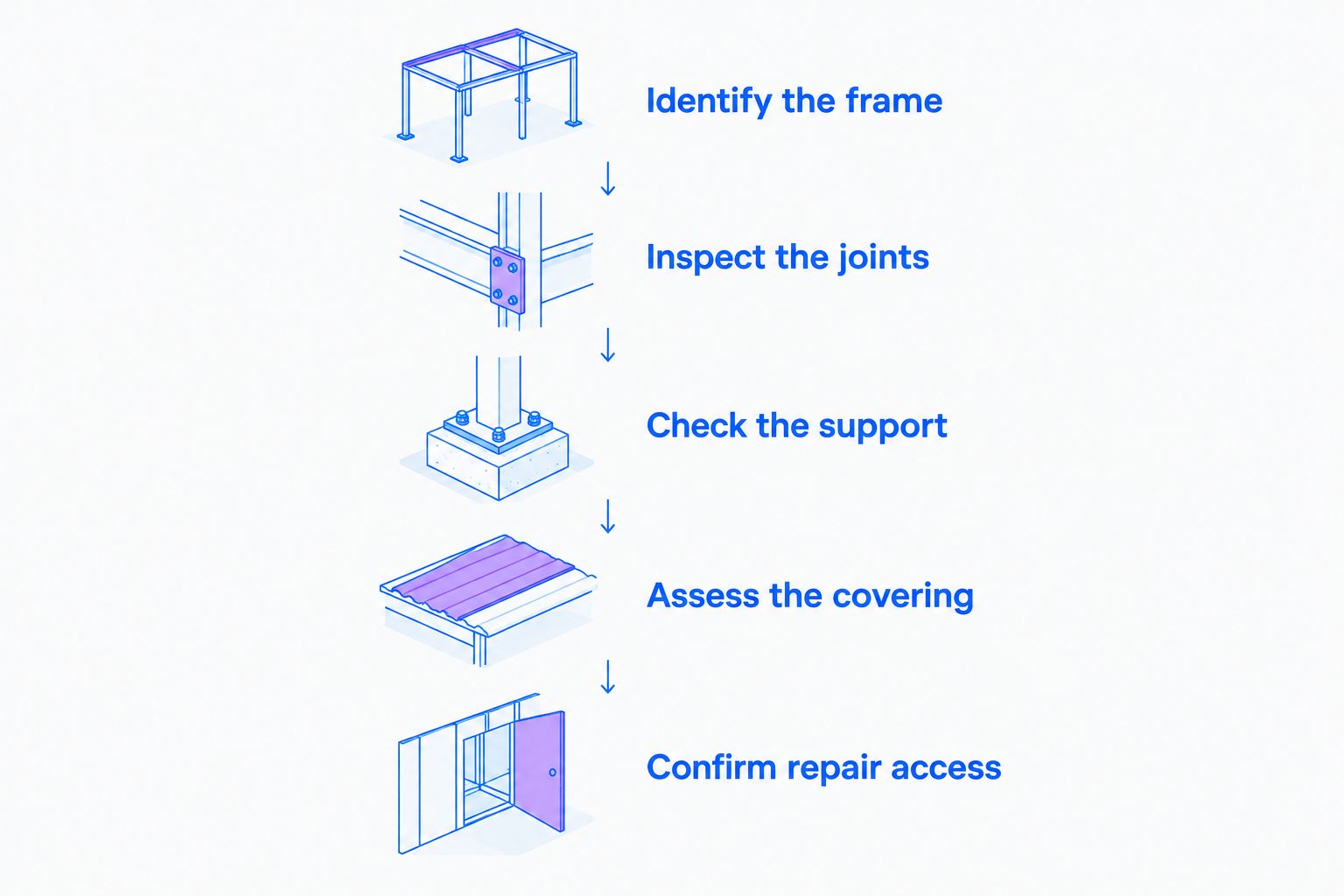 Check the structure before judging the surface.
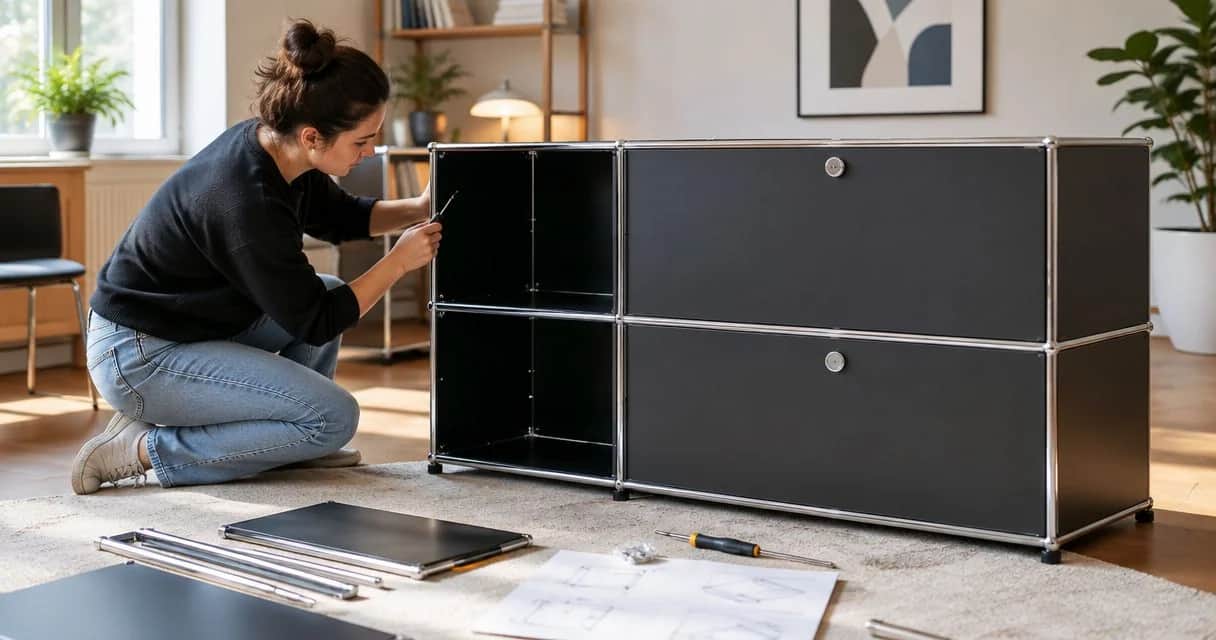
On delivery, examine the furniture on a level surface and follow the assembly instructions before assessing stability. Photograph damage, uneven connections, or missing components promptly. Avoid taking apart anything the instructions do not authorize.
Which materials last best for your household?
No material wins every durability comparison. Solid timber, veneer, metal, leather, and woven upholstery each bring different maintenance and repair considerations. The right choice depends on the finished object, not the material name alone.
For example, a veneer describes a surface layer, not the entire structure beneath it. Leather identifies a broad material category, not a complete account of its finish or care needs. Ask for the detail that turns a general label into something you can evaluate.
| Material or surface | Best for | Strength | Limitation to consider |
|---|---|---|---|
| Solid timber | Buyers comfortable with natural variation and finish care | Some surfaces allow refinishing, depending on construction and finish | Moisture changes affect wood; not every finish accepts the same repair |
| Wood veneer | Buyers seeking a consistent wood surface | Provides a real-wood surface over a substrate | Deep sanding can cut through the thin surface layer |
| Metal frames | Buyers who prefer an exposed, inspectable structure | Connections and surface condition are often visible | Finish damage and loose connections still need attention |
| Leather upholstery | Buyers prepared to follow finish-specific care | Surface wear can be assessed directly | Cleaning methods must suit the particular leather and finish |
| Woven upholstery | Buyers prioritizing texture and household fit | Offers varied constructions and care options | Snagging, staining, and cleaning requirements differ by textile |
Choose from an actual sample when one is offered. Look at the texture in your room's light and compare the care instructions with your habits. A surface that demands care you will not provide is a poor fit, regardless of its appearance.
Do not interpret a soft seat as weak construction, or a firm seat as evidence of longevity. Comfort and durability are separate questions. You need both the right sitting experience and a sound structure underneath it.
Why furniture lifespan varies
Furniture longevity depends on the relationship between the object and its setting. These factors explain why matching appearances do not produce matching outcomes:
- Construction and assembly. Connections carry repeated loads. Correct assembly matters alongside the quality of the components.
- Frequency and type of use. An occasional accent chair and a household's main seat face different patterns of wear.
- Material suitability. Coverings and finishes need to match the room's exposure, spills, pets, and cleaning routine.
- Sunlight and moisture. Direct light can alter finishes and textiles, while moisture affects materials and connections differently.
- Maintenance. Following the supplied care instructions helps avoid damage caused by unsuitable cleaning products or methods.
- Repairability. Accessible, replaceable components let you address local wear without automatically replacing the whole piece.
When comparing furniture in 2026, describe your intended use to the seller. Ask whether the particular piece is intended for that setting. Residential use and shared commercial use should not be treated as interchangeable without written confirmation.
Does a longer warranty mean furniture lasts longer?
A longer warranty is not a lifespan measurement. A warranty sets out the seller's obligations for covered problems; it does not say that every material will remain unchanged throughout ownership.
Sohnne states a 5-year warranty. Read the applicable terms to understand what is covered, what is excluded, and what you must provide when making a claim. Keep your order records and the care instructions with that documentation.
The same distinction applies to returns. A 60-day return window gives you a defined period under the brand's stated policy, not evidence of long-term wear performance. Check the applicable conditions before relying on it.
For a 2026 furniture purchase, ask separate questions about warranty coverage and repair support. A covered defect, normal upholstery wear, and accidental damage are different issues. Do not assume they receive the same response.
Can you repair furniture instead of replacing it?
Repairability can extend useful ownership when the remaining structure is sound. A worn cushion or damaged glide does not necessarily require replacing a complete chair. The practical question is whether the affected component can be reached and replaced appropriately.
Before buying, ask:
- Can you remove the seat cushion without disturbing the frame?
- Does the cover come off, and what cleaning method does its label permit?
- Can an upholsterer access the seat and back?
- Are fittings identifiable and removable?
- Does the seller offer replacement components for this specific piece?
Removable does not mean washable. Likewise, a visible screw does not establish that a part is intended for routine disassembly. Follow the instructions rather than treating apparent access as permission.
If you already own the furniture, diagnose the problem first. A qualified repairer can distinguish surface wear from a compromised connection or damaged structure. Stop using a piece that feels unstable until the cause has been assessed.
How do you help furniture last after delivery?
Begin with the manufacturer's instructions. Use the specified assembly method, cleaning products, and placement guidance; generic advice should not overrule the directions for your particular finish or covering.
Place furniture so ordinary movement does not repeatedly knock its edges or pull on its arms. When moving it, lift from the points identified in the instructions rather than dragging it across the floor. Protecting connections matters as much as protecting visible surfaces.
Keep direct sunlight and heat exposure in mind when choosing a position. Use window coverings where appropriate, and avoid placing furniture against a heat source. For spills, follow the covering's care directions instead of experimenting with household cleaners.
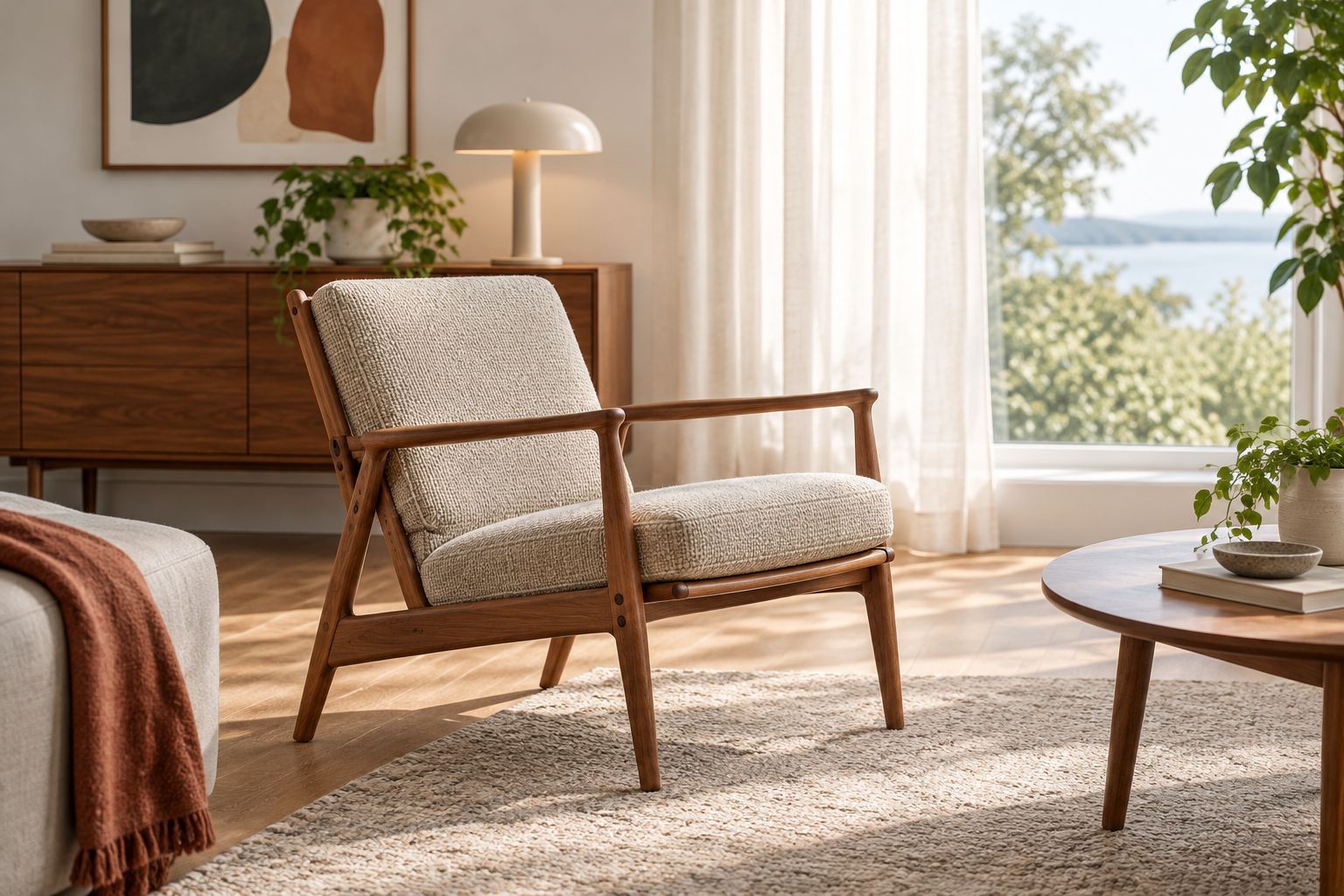 Room placement belongs in the care plan, not just the styling plan.
Inspect the piece when you clean it. Look for new movement, lifting edges, pulled seams, or changing seat support, then consult the instructions or seller before making adjustments. Addressing a developing problem is more useful than waiting until it affects the whole piece.
How should you decide between similar-looking pieces?
Choose the piece with the clearest evidence of suitability, not the strongest durability language. Words such as premium and timeless do not explain a joint, a cushion filling, or a care requirement.
Build a short written comparison using the same questions for every option. Record the structural materials, covering, care instructions, warranty terms, and answers about replacement parts. Leave unanswered questions visibly unanswered rather than treating silence as equivalence.
Sohnne's mid-century modern furniture belongs in that same comparison. Its direct-to-consumer model and stated ownership policies are relevant, but the individual piece still needs to meet your comfort, construction, and maintenance requirements. Assess those separately.
Your final 2026 decision should be simple to explain: the furniture suits its intended use, its important details are documented, and you understand how to care for it. If those conditions are not met, keep looking.
FAQ
Does designer style furniture last with everyday use?
Designer-style furniture can last with everyday use when its construction and materials suit that use. Check the frame, seat support, covering, and repair access rather than relying on appearance.
Can designer-style furniture last as long as high-end furniture?
Yes, designer-style furniture can last as long as high-end furniture, but a label alone cannot establish the comparison. Assess comparable pieces under comparable use and look for documented construction details.
Does a 5-year furniture warranty guarantee 5 years without wear?
A 5-year warranty does not guarantee 5 years without wear. It describes coverage under written terms, so read the exclusions and distinguish defects from normal wear.
Is solid wood always more durable than wood veneer?
Solid wood is not automatically the more durable choice for every piece. Construction, substrate, finish, exposure, and repair requirements all affect the comparison.
Does firm sofa cushioning last longer than soft cushioning?
Firmness alone does not establish cushion longevity. Ask about the cushion construction and replacement options, and assess comfort separately from structural quality.
Can I wash any removable furniture cover?
No, a removable cover is not necessarily washable. Follow the care label for the specific covering rather than assuming removal permits machine washing.
What should I ask before buying furniture online?
Ask for structural materials, connection details, upholstery care instructions, and repair information. Also read the applicable warranty and return terms before ordering.
One last thing
Ask what happens when the first component wears out. That question reveals more about long-term ownership than asking whether a piece is built to last. A clear answer identifies the component, explains access, and establishes whether repair support exists.
Save that answer. Furniture is easier to maintain when its materials and instructions remain identifiable after the listing changes or the packaging is gone.
Related guides
- How to pick a sofa finish for a high-traffic household
- How to care for bouclé fabric furniture
- Buying a new sofa versus reupholstering an old one
- How long a designer-style leather sofa lasts with daily use
Stay connected with us!
Keep in touch with what’s new and next. Subscribe for weekly insights, product launches, and community news!