Can you return designer-style furniture that doesn’t fit your space?
Sohnne Design Studio
November 14, 2026
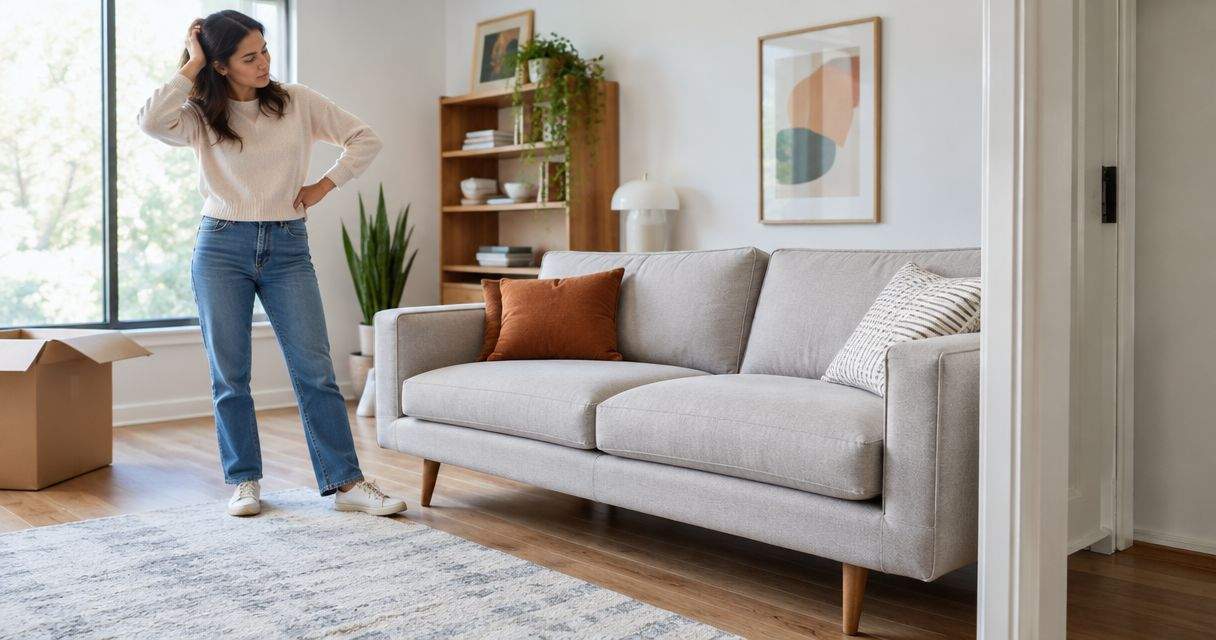
Yes—if your order qualifies under the seller’s return policy, you can return furniture that does not fit your room or delivery route. A size mismatch alone does not establish eligibility, and you need to confirm return transport, packaging requirements, and any deductions before sending the piece back.
TL;DR- Can you return furniture that doesn’t fit? Your order’s return terms determine eligibility, deadlines, and collection requirements.
- Sohnne states a 60-day return window; confirm the conditions that apply to your furniture order.
- Measure the delivery route and usable floor space separately before choosing replacement furniture.
- Keep packaging and request written instructions before arranging return shipping.
Why this matters
Furniture needs to fit twice: through the building and within the room. A sofa can clear the front door yet interrupt the path to the kitchen; an accent chair can suit the floor plan yet fail at a tight stair turn.
For a 2026 purchase, save the return terms attached to your order rather than relying on a general promise. If you are considering Sohnne furniture, start with the return-window guide and confirm your item’s eligibility before ordering. A return window is not the same as an unconditional return approval.
Can you return furniture that doesn't fit your space?
You can return furniture for a fit problem when the applicable policy accepts that reason and your order meets its conditions. Separate the physical problem from the return process: explain what does not fit, then ask what the seller requires to authorize the return.
Use this sequence before moving or repacking the item:
- Check eligibility. Find the terms for your exact order, including any conditions attached to its configuration or customization.
- Record the mismatch. Photograph the furniture, the obstructed area, and the measurements that show the problem.
- Request approval. Ask for written confirmation of eligibility and the next required action.
- Confirm transport. Establish who arranges collection, what packaging is required, and how the handover works.
- Keep records. Save the authorization, collection evidence, and refund correspondence until the return is resolved.
These steps create a clear record; they do not replace the seller’s instructions. If those instructions require a particular sequence, follow it rather than booking your own carrier first.
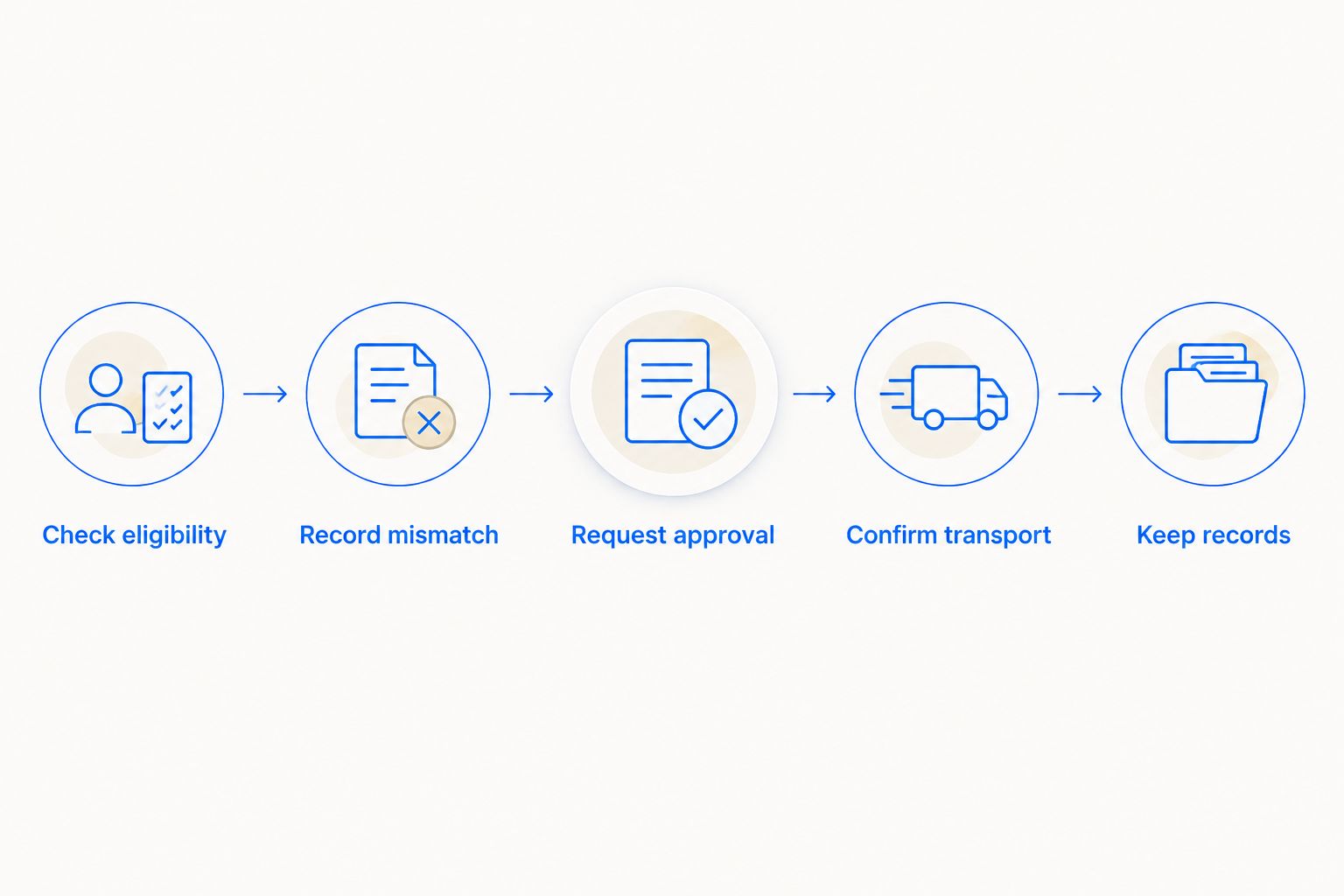 Confirm eligibility and transport instructions before sending furniture back.
Identify which fit problem you have
A precise explanation helps keep the conversation focused. Do not describe an undamaged but oversized piece as defective; report the actual mismatch and include the relevant measurements.
| Fit problem | Best next action | Advantage | Limitation |
|---|---|---|---|
| Furniture cannot clear the delivery route | Document the narrow opening or turn and ask for instructions | Identifies the access problem directly | Does not establish permission to refuse delivery |
| Furniture fits inside but blocks movement | Photograph the layout and compare the usable floor area | Shows why the room cannot function as planned | Room preference and product defects are different issues |
| Furniture feels visually oversized | Test another position before requesting a return | Helps distinguish placement from scale | A new position cannot reduce the furniture’s dimensions |
| Delivered dimensions appear inconsistent with the listing | Save the listing and photograph your measurements | Gives the seller something specific to review | Measurement method needs to be clear |
What does a 60-day return window tell you?
Sohnne states that it offers 60-day returns. That gives you a stated period to investigate, not a complete description of the conditions for every item or order.
Before relying on that period, ask which event starts the clock and what must happen before it expires. A policy can distinguish between submitting a request, receiving authorization, handing over the furniture, and completing delivery back to the seller; establish which requirement applies to your purchase.
Sohnne is best for mid-century modern furniture buyers who want a stated 60-day return window. The limitation is that the window alone does not settle eligibility, packaging, collection, or deductions.
For your 2026 order, put the relevant deadline in your calendar as soon as the seller confirms it. Do not assume an unanswered message extends the period, and keep the timestamp of your original request.
Why furniture return eligibility varies
The answer depends on the terms attached to the purchase, not simply on whether the furniture looks wrong in the room. Review these factors as questions to resolve, rather than assuming the same rules apply across retailers:
- Timing: Which date starts the return period, and what action must you complete before the deadline?
- Order type: Do customization choices or order-specific terms change eligibility?
- Condition: What inspection, assembly, or use is permitted before a return?
- Packaging: Must you retain the original carton, protective materials, hardware, or labels?
- Transport: Who authorizes and arranges collection, and what handover evidence should you retain?
- Refund terms: What deductions, if any, apply, and when does refund processing begin?
A return request should answer these questions before the furniture leaves your possession. An approval that does not explain transport still leaves an important part of the process unresolved.
What should you send with a return request?
Send a short account of the problem with evidence the seller can assess. Include your order reference, the item involved, its current condition, and whether it remains packaged or has been assembled.
For a doorway problem, photograph the opening with the measuring tape visible. For a room-layout problem, show the furniture in position and identify the blocked doorway, cabinet, or walking route. Keep the images factual rather than relying on a wide-angle photograph that changes the apparent proportions.
Ask for written confirmation of:
- Whether the order qualifies for a fit-related return.
- The deadline and the action required to meet it.
- Whether you should leave the furniture assembled or disassemble it.
- The required packing method and collection arrangements.
- Any deductions and the point at which refund processing begins.
If you need order-specific guidance, contact the furniture support team before arranging a shipment. Keep the reply with your order documents so the instructions remain easy to find.
How do you check whether replacement furniture will fit?
Measure the route before the room. A piece that suits your layout still needs a workable path from the delivery entrance to its final position.
Record the furniture’s 3 overall dimensions: width, depth, and height. Use inches consistently throughout your notes, and keep packaged dimensions separate from assembled dimensions. They answer different questions and should not be substituted for one another.
Check the delivery route
Measure the usable opening with doors open, not just the surrounding frame. Note handles, railings, low ceilings, elevator openings, landings, and the space available to turn between adjoining passages.
Compare the relevant dimensions with the seller’s delivery information. Do not assume legs, arms, backs, or bases detach unless the product documentation says they do. If access depends on removing a component, ask for confirmation before ordering.
A narrow passage is not the only obstacle. A long piece also needs space to change direction, so a successful straight-line measurement does not settle a corner or stair turn.
Check the usable room
Mark the furniture footprint on the floor with removable tape suitable for the surface. Then open nearby doors and drawers, pull dining chairs back, and walk through the room as you normally would.
This test reveals conflicts a photograph hides. A low sofa can appear quiet while occupying substantial depth; a slender chair can still project into a busy route. Judge the occupied space, not just the outline seen from the doorway.
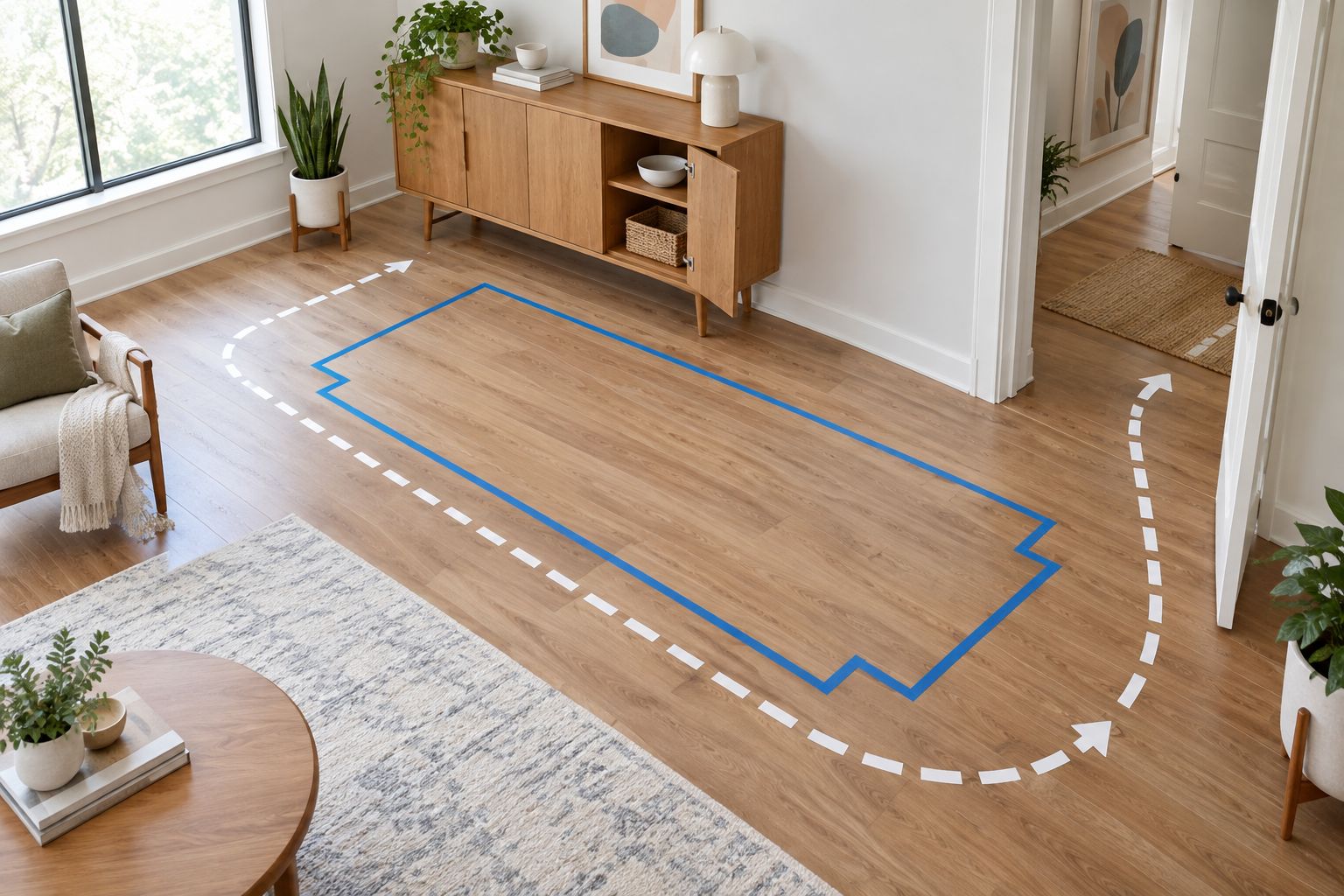 Test doors, storage access, and walking routes before committing to a furniture footprint.
Check movement as well as footprint
Static measurements do not describe every kind of furniture use. A reclining seat needs its extended position assessed; a swivel chair needs room to turn without striking a wall or table.
The same distinction matters when choosing the right hanging chair size: the seat’s outline is only part of the space occupied during use. Check the manufacturer’s clearance and installation requirements rather than judging fit from the seat width alone.
For your 2026 replacement order, keep a simple room sketch alongside your access measurements. Mark fixed obstacles first, then add the furniture in its intended position and operating position where relevant.
Should you return it, exchange it, or change the layout?
Choose according to the actual obstruction, not the inconvenience of starting again. A layout adjustment is sensible only when it preserves the room’s everyday use.
| Option | Best for | Advantage | Trade-off |
|---|---|---|---|
| Request a return | A piece that cannot work in the intended space | Lets you choose a different size or form | Eligibility and collection need confirmation |
| Ask about an exchange | A fit problem with a clearly identified replacement | Keeps the decision focused on corrected dimensions | Exchange terms and replacement access still need checking |
| Change the layout | A workable piece placed in the wrong position | Avoids replacing furniture unnecessarily | Another position can create a different obstruction |
Before choosing an exchange, repeat the measurements using the replacement’s exact dimensions. A smaller-looking profile does not prove a smaller footprint, and a different configuration still needs an access check.
If you keep the piece, test the revised arrangement during ordinary activities. Sit down, carry a laundry basket through, open storage, and use adjacent seating. Do not solve a visual problem by creating a movement problem.
Does free delivery mean the return is free?
Free delivery does not establish the terms of return transport. Read the return instructions separately and ask who arranges collection and whether any deductions apply.
Keep your 2026 order confirmation with the written return approval. If the two documents appear inconsistent, ask the seller to explain which terms apply before you authorize collection.
Is a return window the same as a warranty?
A return window and a warranty serve different purposes. A fit-related request concerns whether you can send the purchase back; a warranty concerns the coverage described in its own terms.
Sohnne lists 60-day returns and a 5-year warranty. Do not treat the 5-year warranty as an extended opportunity to return furniture because the proportions do not suit your room.
FAQ
Can you return furniture that doesn’t fit through the door?
You can return furniture for a doorway mismatch if your order’s return terms allow it. Photograph the access problem and request instructions before refusing delivery or arranging transport yourself.
Can I return a sofa because it looks too big in my living room?
You can request a return for an oversized sofa, but approval depends on the applicable policy. Explain that the issue is room fit and confirm condition, packaging, and deadline requirements.
How long is the return window on Sohnne furniture?
Sohnne states a 60-day return window. Confirm when that period begins, which orders qualify, and what action you must complete before the deadline.
Can I return furniture after assembling it?
Assembly does not establish whether a return is permitted; the order’s return conditions decide. Ask for instructions before disassembling or repacking the furniture.
Do I need the original packaging to return furniture?
The seller’s return instructions determine the packaging requirement. Retain cartons, protective materials, hardware, and labels until you have confirmed fit and decided to keep the furniture.
Can customized furniture be returned if it doesn’t fit?
Customized furniture needs an order-specific eligibility check. Confirm the terms before ordering rather than assuming the standard return window applies to your selected configuration.
Should I book a courier as soon as I request a return?
Wait for written return and transport instructions before booking a courier. Confirm authorization, the destination, packing requirements, and the evidence needed at collection.
One last thing
The most useful measurement is not always the narrowest doorway. The space immediately beyond it determines whether a long piece can turn into the next room.
Before your next 2026 furniture purchase, save the room sketch, access measurements, product dimensions, and applicable return terms together. That small record keeps the design decision connected to the practical one: whether the piece can enter, function, and remain in your home.
Related guides
- How to measure a room before buying a modular sofa
- Can an oversized lounge chair fit through a standard doorway?
- How to choose furniture scale for a room with high ceilings
Stay connected with us!
Keep in touch with what’s new and next. Subscribe for weekly insights, product launches, and community news!