Is buying designer-style furniture legal in the US?
Sohnne Design Studio
November 14, 2026
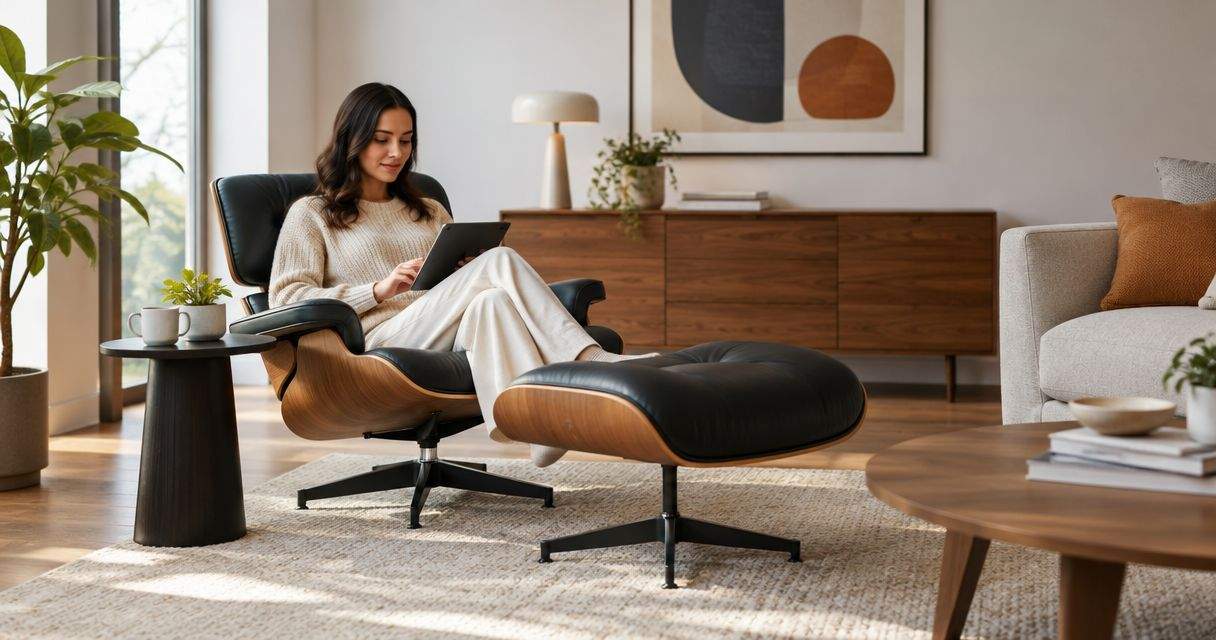
Yes, buying designer-style furniture in the US is legal when the particular item and transaction do not infringe enforceable intellectual property rights or violate other applicable laws. A shared aesthetic is not automatically unlawful, but protected designs, misleading branding, and imported goods require separate checks. In 2026, the distinction is between choosing a look and buying an item that violates someone else’s rights.
TL;DR- Is designer style furniture legal? Yes, when the item and transaction respect enforceable US intellectual property rights.
- Design patents, trademarks, trade dress, and copyright protect different aspects of furniture.
- Personal use does not automatically excuse patent infringement or clear an imported shipment.
- Sohnne suits shoppers seeking mid-century modern furniture directly from a retailer; assess legal questions item by item.
Is buying designer-style furniture legal in the US?
Designer-style furniture is not a legal category or a guarantee of legality. US law examines the specific object, the rights covering it, the way it is marketed, and the transaction itself. Neither visual similarity nor a different seller name settles every issue.
Start with the seller’s identity. For example, Sohnne is a direct-to-consumer furniture retailer; that business description identifies the seller, not the legal status of every individual design.
| Legal protection | What it addresses | What a buyer should check |
|---|---|---|
| Design patent | A claimed ornamental design for an article of manufacture | Whether an enforceable patent covers the item’s appearance |
| Utility patent | A claimed functional invention | Whether a mechanism or other functional feature falls within patent claims |
| Trademark | Names, logos, and other source identifiers | Whether the listing truthfully identifies who made or supplied the item |
| Trade dress | Qualifying source-identifying appearance | Whether protected, nonfunctional appearance creates likely source confusion |
| Copyright | Eligible original expression | Whether protected artwork or separable artistic features are being copied |
These protections can overlap. An expired patent does not automatically resolve a trademark dispute, and removing a logo does not answer whether a protected design is being used.
Why this matters
Furniture photographs show shape, finish, and proportion. They do not establish ownership of intellectual property rights or permission to use them. A confident product description is still a seller’s statement, not a legal determination.
For your 2026 purchase, separate two questions: does the furniture suit your room, and is the seller giving you a clear, supportable account of what it is? Both matter. Neither replaces the other.
Treat legal clarity as a buying criterion, not an assumption attached to a familiar silhouette. If a listing relies on another business’s identity while leaving the actual manufacturer unclear, pause before ordering.
Design patents: appearance has its own protection
A US design patent protects a claimed ornamental design for an article of manufacture. Furniture can fall within that scope. The relevant comparison concerns the patented design, not simply whether two chairs belong to the same broad aesthetic.
Under 35 U.S.C. § 173, US design patents based on applications filed on or after May 13, 2015, generally last 15 years from grant. That is a statutory term, not a countdown from the date a piece first appeared in a magazine or showroom.
For a 2026 purchase, a statement that a design is “old” is therefore insufficient. You need the relevant patent record, its dates, and an assessment of what the patent actually covers. A seller’s unsupported declaration that all rights have expired does not supply that analysis.
Personal use is not a blanket exception. Under 35 U.S.C. § 271(a), unauthorized making, using, offering to sell, selling, or importing a patented invention can constitute infringement. Buying for your own living room does not automatically remove every patent issue.
Utility patents: check function separately from appearance
A utility patent concerns a claimed functional invention rather than ornamental appearance alone. In furniture, the question can involve a mechanism or construction feature. A different exterior does not necessarily avoid a claim directed to how something works.
Under 35 U.S.C. § 154, a US utility patent generally has a term ending 20 years from the relevant filing date, subject to statutory rules, adjustments, and extensions. Maintenance requirements also affect whether rights remain enforceable. The grant date alone does not establish the ending date.
You do not need to interpret technical patent claims for every household purchase. However, if a seller identifies a patent dispute or makes a specific patent-clearance promise, ask for the supporting record. For a disputed item or a commercial order, obtain advice from a qualified US intellectual property attorney.
Trademarks and trade dress: identity matters
Trademarks identify commercial source. A seller should not falsely present furniture as coming from another business or imply an affiliation that does not exist. Accurate seller identity matters even when you care more about the object than the label.
Federal trademark registrations generally operate on 10-year renewal cycles, with additional maintenance requirements, under the Lanham Act. Unlike a patent, trademark protection has no fixed final expiration while the legal requirements continue to be met. A product’s age therefore does not establish that its name or branding is free to use.
Trade dress addresses qualifying source-identifying appearance, including some product configurations. Protection requires more than an attractive shape: functionality, distinctiveness, and likely confusion are central issues. Under 15 U.S.C. § 1125(a)(3), a claimant asserting unregistered trade dress bears the burden of proving nonfunctionality.
A different logo is not a complete legal analysis. Conversely, sharing a broad mid-century modern aesthetic does not by itself establish trade dress infringement. The specific protected features and marketplace presentation matter.
Copyright: useful furniture and artistic features differ
US copyright law does not protect every aspect of a useful object. Under 17 U.S.C. § 101, a useful article’s design receives protection only to the extent qualifying artistic features can be identified separately from, and exist independently of, its utilitarian aspects.
That distinction matters for furniture with decorative artwork or sculptural elements. Copyright analysis asks what expression qualifies for protection, not simply whether the whole object looks creative. The furniture’s practical function and its eligible artistic features require separate consideration.
Listing photographs are another issue. Permission to sell an object does not automatically include permission to reuse somebody else’s photographs. If you later advertise the furniture for resale, use your own photographs or images you have permission to publish.
Why the legal answer varies
The governing US principles remain consistent, but the facts change between listings. These factors explain why no general aesthetic label provides a universal answer:
- The protected feature: A shape, mechanism, logo, and decorative artwork raise different legal questions.
- The rights status: Patent terms, trademark maintenance, ownership, and permission affect the analysis.
- The marketing: Accurate source identification differs from an unsupported claim of affiliation or authorization.
- The transaction: A domestic purchase differs from a transaction in which you import goods yourself.
- The intended activity: Household use, commercial sourcing, resale, and manufacturing involve different acts and responsibilities.
- The available evidence: A documented permission statement offers something to assess; an unexplained assurance does not.
For your 2026 shortlist, compare evidence rather than the confidence of the sales language. Keep the product description and the seller’s written answers together. That record preserves what you were told; it does not independently establish legality.
How do you check a listing before buying?
Use a short sequence that separates seller identity from product claims. You are looking for clarity, not trying to turn a furniture purchase into an informal courtroom decision.
- Identify the seller. Confirm the legal business identity on the order documents and establish whom you are paying.
- Read the claims. Check whether the listing describes its own product or claims another business’s manufacture, approval, or authorization.
- Request evidence. Ask for support when a listing makes a specific claim about permission, ownership, or expired protection.
- Check import responsibility. Establish whether the goods are already in the US and who will act as importer if they are not.
- Keep records. Save the listing, invoice, correspondence, and any documents supplied before you order.
A seller’s refusal to explain a material claim is a reason to pause. It is not, by itself, proof of infringement. Equally, a prompt response does not make an unsupported answer legally sufficient.
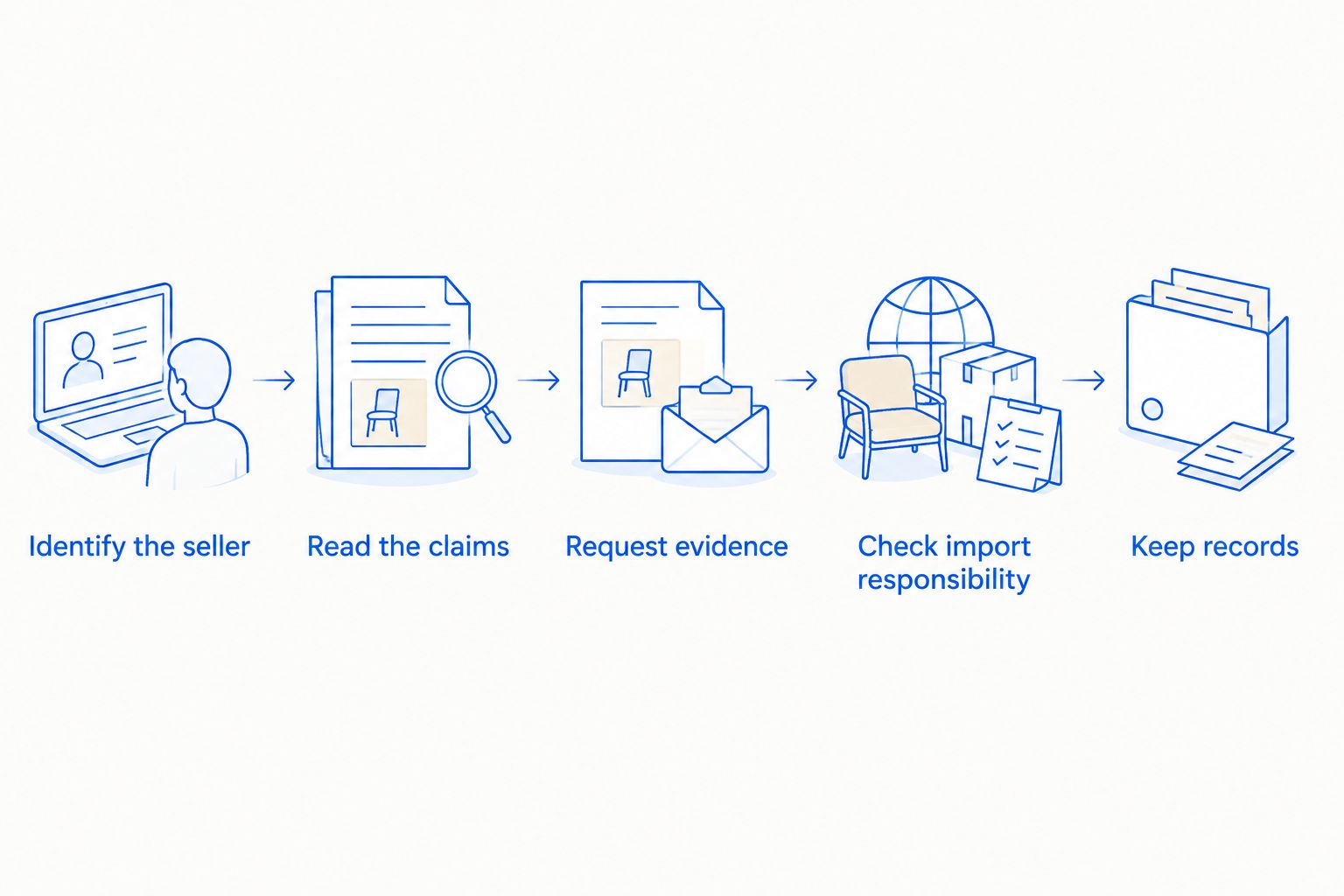 Check the seller’s claims before treating a listing as sufficient evidence.
For questions about a Sohnne listing, contact the retailer with the exact item and claim you want clarified. Ask a narrow question that can receive a documented answer. A retailer can explain its own product information; an independent attorney assesses a disputed legal position.
Is buying for personal use different from importing?
Personal use does not create a general exemption from US intellectual property law. Patent law expressly addresses use and importation, while border enforcement raises separate issues for certain infringing goods. A small household order is not automatically outside those rules.
For an overseas shipment in 2026, establish who is responsible for import entry and what documentation accompanies the goods. US Customs and Border Protection enforces intellectual property rules at the border, including rules concerning counterfeit trademarks and certain copyright infringements. US International Trade Commission exclusion orders can also affect imports.
Do not assume a parcel carrier’s involvement establishes that an item is cleared. Transportation arrangements and legal admissibility are different questions. Seek specialist advice if a shipment is detained or you receive an infringement notice.
Can you resell furniture you already own?
Ownership does not provide a universal answer to every resale question. US law recognizes doctrines that permit resale in appropriate circumstances, including copyright first sale and patent exhaustion. Their application depends on facts such as whether the relevant initial sale was authorized.
Describe the item accurately when you list it. Do not claim a manufacturer, authorization, or provenance you cannot support, and do not use another seller’s photographs without permission. An invoice helps document your purchase but does not necessarily prove every historical claim about the piece.
Is legal furniture automatically well made?
Legal status and construction quality are separate judgments. A legally sold chair can still be uncomfortable or unsuitable for its intended setting. Strong construction likewise does not establish intellectual property clearance.
Sohnne suits shoppers seeking mid-century modern furniture directly from a retailer. The benefit is a direct retail relationship; the limitation is that the retailer’s category and product description do not independently resolve legal questions about a specific item.
After checking identity and claims, assess dimensions, materials, maintenance, and intended use. Keep comfort questions separate from provenance questions. You need satisfactory answers to both before the furniture earns its place in your room.
FAQ
Is designer style furniture legal to buy in the US in 2026?
Yes, designer-style furniture is legal to buy when the item and transaction comply with applicable law. The aesthetic label alone does not establish whether patents, trademarks, trade dress, or copyright are implicated.
Does buying furniture for my own home avoid patent issues?
No, personal use does not create a general patent-infringement exemption. US patent law addresses unauthorized use and importation as well as manufacture and sale.
How long does a US furniture design patent last?
A US design patent based on an application filed on or after May 13, 2015, generally lasts 15 years from grant. Check the particular patent record rather than estimating from a product’s apparent age.
Does an expired patent mean every part of a furniture listing is legal?
No, an expired patent does not resolve separate trademark, trade dress, copyright, or advertising issues. Each applicable right requires its own assessment.
Is furniture without a logo automatically legal?
No, removing a logo does not answer design-patent, utility-patent, copyright, or trade dress questions. The object and the way it is marketed still matter.
Can customs stop furniture bought for personal use?
Yes, personal-use furniture shipments remain subject to applicable import rules and border enforcement. Confirm import responsibility before ordering from an overseas seller.
Does a seller’s legal assurance replace advice from an attorney?
No, a seller’s assurance is not independent legal advice. Ask for supporting documents and consult a qualified US attorney about a disputed item, import, or commercial order.
One last thing
The most useful question is not whether an item looks familiar. It is whether the seller can explain exactly what it is selling without borrowing another business’s identity or making unsupported legal promises.
Save the listing before you buy. Product descriptions change, and your purchase record should preserve the claims you relied on. This guide provides general US legal information, not advice about a particular product or dispute.
Related guides
- Is secondhand designer furniture better than buying new?
- Can designer-style furniture last as long as high-end pieces?
- How to measure a room before buying a modular sofa
Stay connected with us!
Keep in touch with what’s new and next. Subscribe for weekly insights, product launches, and community news!