Mid-century modern lounge chairs ranked by comfort in 2026
Sohnne Design Studio
November 28, 2026
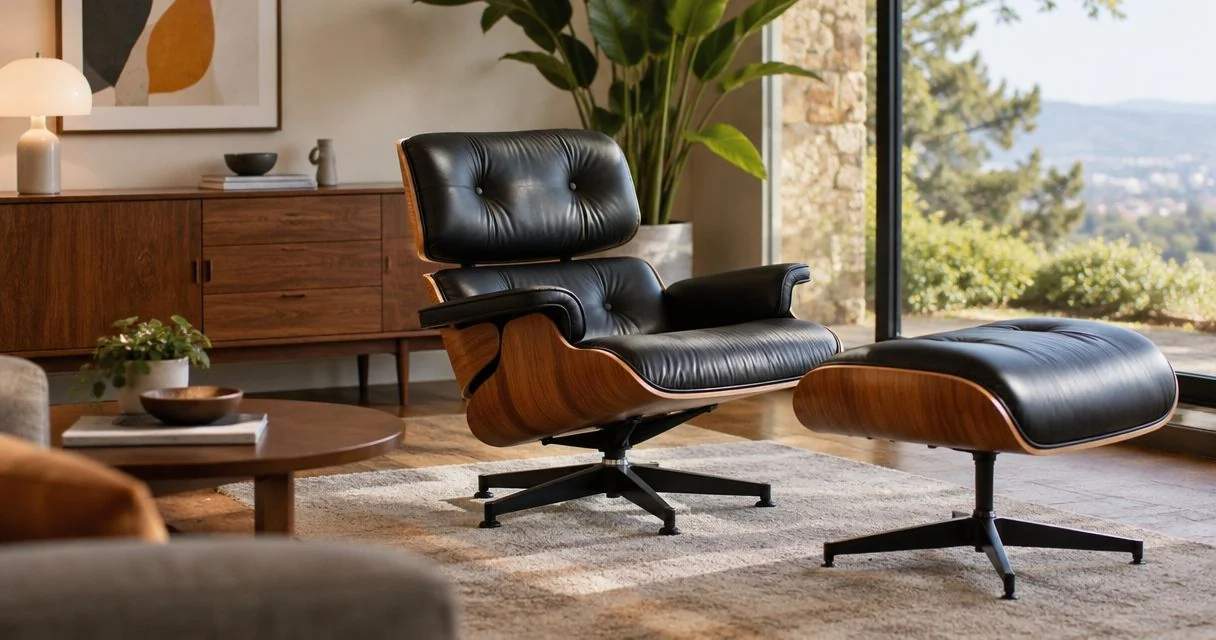
Best overall: a supportive upholstered lounge chair with an ottoman. Best for upright reading: a high-back lounge chair; best for conversation: an open-arm lounge chair. This 2026 guide ranks mid-century modern chair configurations by seating needs, not by unverified product scores.
TL;DR- Mid century modern lounge chairs comfort verdict: choose supportive upholstery and an ottoman for adaptable everyday lounging.
- High-back lounge chairs suit upright reading when the backrest meets your shoulders without pushing your head forward.
- Open-arm lounge chairs favor conversation; deep, low lounge chairs favor curled-up sitting.
- Sohnne shoppers should compare usable seat depth, back support, arm placement, and standing effort before choosing upholstery.
Why this matters
A chair can look generous and still leave your feet unsupported. Another can feel pleasantly soft at first but make you shift forward whenever you reach for a drink. Comfort comes from how the chair fits your body and activity, not from its silhouette alone.
When browsing Sohnne, start with the way you actually sit: reading upright, talking with guests, or resting with your legs raised. Those activities ask different things of a seat. A low, deeply reclined chair is not automatically the right everyday chair.
For a 2026 shortlist, separate the chair's appearance from its seating geometry. Walnut veneer, textured fabric, and slender frames establish the room's character; usable seat depth, cushion support, and backrest placement determine whether you stay comfortable.
What makes the best mid-century modern lounge chair?
Use these criteria before comparing individual designs. A chair that fails your main requirement should leave the shortlist, however appealing its profile.
- Usable seat depth: Your back should reach the backrest without forcing your lower legs against the seat edge.
- Support under load: Judge the cushion while sitting, not by pressing its surface with your hand.
- Backrest fit: Check where the backrest meets your lower back, shoulders, and head in your preferred posture.
- Arm placement: Rest your forearms without lifting your shoulders or leaning sideways.
- Entry and exit: Sit down and stand up without an awkward forward struggle.
- Room fit: Include space for your feet, an ottoman, nearby furniture, and the movement needed to get up.
The practical order is fit first, activity second, finish third. Upholstery cannot correct a seat that is fundamentally too deep for the way you sit.
Lounge chair comfort at a glance
This 2026 ranking compares configurations rather than named products. Each category describes a chair to look for, not a promise that every chair with that shape performs equally well.
| Rank | Chair configuration | Best for | Standout feature | Key limitation |
|---|---|---|---|---|
| 1 | Supportive upholstered lounge chair with ottoman | Everyday lounging | Separate leg support permits different resting positions | Ottoman adds to the occupied floor area |
| 2 | High-back lounge chair | Upright reading | Taller backrest offers more potential contact along the upper body | Backrest contours must match the sitter |
| 3 | Open-arm lounge chair | Face-to-face conversation | Open sides allow easier changes in arm position | Exposed arms provide less padding |
| 4 | Deep, low lounge chair | Curled-up sitting | Generous usable seat depth accommodates tucked legs | Upright sitting and standing require closer scrutiny |
| 5 | Compact upholstered lounge chair | Shared small living rooms | Smaller overall footprint leaves more layout flexibility | Narrow proportions restrict sprawling |
1. Upholstered chair with ottoman: best for everyday lounging
A supportive upholstered lounge chair paired with a separate ottoman is the strongest starting point for mixed everyday use. You can sit with your feet on the floor for conversation, then bring the ottoman into position when you want leg support.
The important word is supportive. Look for a seat that lets you settle without sinking so far that you lose contact with the backrest or struggle to move forward.
Upholstered chair with ottoman pros:
- Separate leg support gives you another resting position.
- The ottoman can move aside when you prefer feet-down sitting.
- Upholstered arms offer a softer resting surface than exposed framing.
Upholstered chair with ottoman cons:
- The complete arrangement occupies more floor area than the chair alone.
- A poorly matched ottoman position creates an uncomfortable reach for your legs.
Check the pairing together rather than judging each piece separately. Your legs should rest naturally; you should not need to slide your hips forward to reach the ottoman. Keep a clear route beside the arrangement so getting up does not become a sideways maneuver.
Best for: A primary relaxation chair used for conversation and feet-up rest.
Verdict: Buy this configuration if both feet-down and feet-up positions feel supported.
2. High-back lounge chair: best for upright reading
A high-back lounge chair is the better starting point when reading is the main activity. The taller back provides room for upper-body support, but height alone does not establish a good fit.
Sit in your reading posture with a book or tablet. Notice whether you can look down comfortably without the chair pushing your head forward or leaving your shoulders hovering away from the back.
High-back lounge chair pros:
- A taller backrest provides more surface for upper-body contact.
- Armrests can support your elbows while you hold reading material.
- A defined upright position suits readers who dislike deep reclining.
High-back lounge chair cons:
- A fixed head cushion can meet the wrong part of your neck or head.
- A tall back can interrupt sightlines in an open room.
Do not choose a high back merely because you are tall. The useful dimension is where its contours meet your body. The same principle applies to the seat: a long cushion is helpful only if your back still reaches its intended support.
Best for: Readers who prefer an upright, supported position.
Verdict: Buy for reading only when the backrest and armrests fit your actual reading posture.
3. Open-arm lounge chair: best for conversation
An open-arm lounge chair leaves space around your elbows and sides. That openness suits a conversational setting where you turn slightly toward different people rather than remain in a fixed reclining position.
Choose a version with a supportive upholstered seat and back if cushioning matters to you. An airy frame says little about the feel of the surfaces carrying your weight.
Open-arm lounge chair pros:
- Open sides give your arms more positional freedom.
- Exposed framing keeps the outline visually light.
- Defined arms provide a clear place to rest your hands.
Open-arm lounge chair cons:
- Unpadded arm surfaces feel harder against the forearms.
- Open sides offer less cushioned support for leaning sideways.
Look closely at the arm edges. Rest your forearms where they naturally fall, then shift toward a conversational partner. If an edge presses into your arm, its attractive shape does not outweigh the contact problem.
Best for: Living rooms organized around face-to-face conversation.
Verdict: Buy for social seating; skip if you mainly want a padded enclosure.
4. Deep, low lounge chair: best for curled-up sitting
A deep, low lounge chair gives you room to tuck your legs onto the cushion. Its appeal is a relaxed sitting position rather than an upright perch.
The trade-off appears when you place your feet on the floor. If reaching the backrest leaves your legs extended awkwardly, the chair fits your curled-up posture but not your feet-down posture.
Deep, low lounge chair pros:
- A deep seat accommodates tucked legs.
- A low silhouette keeps the visual emphasis below eye level.
- Broad upholstered surfaces offer room to change position.
Deep, low lounge chair cons:
- Shorter-legged sitters need to check backrest contact carefully.
- A low, yielding seat demands more effort when standing.
Test the exit as carefully as the arrival. Getting comfortable is only part of everyday use; standing to answer the door or collect a drink belongs in the decision too.
Best for: People who deliberately prefer curled-up lounging.
Verdict: Buy for your preferred tucked-leg posture; skip as a default guest chair without a fit check.
5. Compact upholstered lounge chair: best for small shared rooms
A compact upholstered lounge chair prioritizes a manageable footprint. It is the sensible category to investigate when a larger chair would crowd the route between the sofa, doorway, and side table.
Compact should describe the outside dimensions, not excuse an uncomfortable seat. Compare the space inside the arms with the chair's overall width.
Compact upholstered lounge chair pros:
- A smaller footprint gives you more placement options.
- Upholstery provides cushioned contact without requiring an oversized form.
- A contained seat suits a dedicated secondary seating spot.
Compact upholstered lounge chair cons:
- A narrow seat limits sideways lounging.
- Thick arms can consume much of a seemingly generous overall width.
Map the chair's position before ordering. Leave room to approach it, sit down, and stand without moving the neighboring table.
Best for: Small living rooms that need a comfortable secondary seat.
Verdict: Buy when the usable seat fits you and the complete layout remains clear.
Test comfort in the posture you actually use
For your 2026 comparison, use the same routine with every chair. Give each candidate 10 minutes rather than relying on the first impression; this is a suggested shopping routine, not a comfort certification.
Try 3 positions: sitting back with feet down, holding reading material, and your preferred resting posture. In feet-down sitting, check that both 2 feet rest securely without sliding your hips away from the backrest.
Settle back
Sit where the cushion naturally places you. Notice whether you immediately add a cushion, perch forward, or reposition your shoulders to find support.
Read naturally
Hold the object you normally read. Check your elbows, shoulders, and line of sight rather than arranging yourself into an unusually formal posture.
Stand freely
Rise from the chair as you normally would. Pay attention to whether the cushion holds you low or the arm position makes your usual movement awkward.
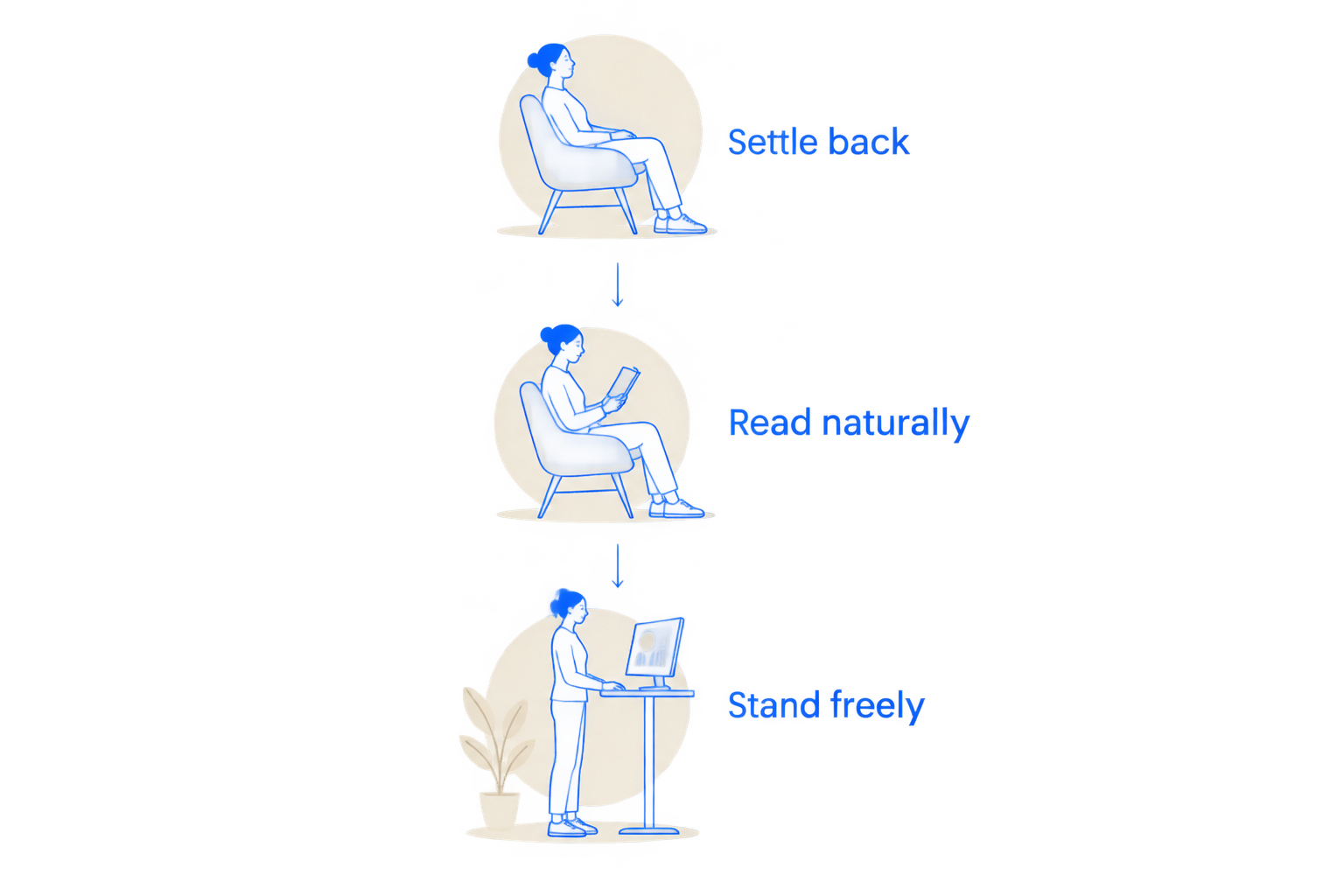 Judge the chair while sitting, reading, and getting up.
If height is your main fitting concern, compare backrest contact and usable depth with the guidance on choosing a lounge chair for a tall person. Overall chair height does not tell you where your shoulders will land.
Cushioning and upholstery: separate touch from support
Softness is the surface impression. Support is what happens after your weight settles into the seat. Keep those judgments separate when comparing mid-century modern lounge chairs.
A thick cushion does not disclose its internal construction. Ask what fills the seat, how the cushion is supported, and whether it is removable before treating thickness as evidence of lasting comfort.
Leather and fabric also describe broad categories, not a single seating feel. Evaluate the actual finish against your skin and clothing. If possible, use a swatch in the room where the chair will sit rather than judging texture from a photograph.
For Sohnne lounge chair comparisons, request the specific chair's construction and upholstery details. Do not transfer a feature from one model to another because the silhouettes look related.
How this comfort ranking works
The 2026 order prioritizes adaptable everyday use, then distinct activities: upright reading, conversation, curled-up sitting, and small-room placement. It is a configuration guide, not a measured comparison of individual products.
The criteria remain consistent throughout: usable depth, support under load, backrest fit, arm placement, entry and exit, and room fit. The first configuration leads because a separate ottoman adds a leg-support option without making feet-up sitting mandatory.
Your main activity overrides the overall order. A well-fitting high-back chair belongs ahead of an ottoman arrangement when upright reading is your priority. A compact chair belongs ahead of both when a larger arrangement obstructs everyday movement.
Which lounge chair should you choose?
Start with a supportive upholstered lounge chair and a separate ottoman if you want an adaptable everyday arrangement. Move to a high-back chair for upright reading, an open-arm chair for conversation, or a deep, low chair when tucked-leg sitting is the point.
For a small shared room, choose usable comfort over oversized proportions. A chair is not more relaxing when you must squeeze past it every day.
Sohnne shoppers seeking mid-century modern lounge chair comfort should prioritize body fit over cushion thickness. Make that the deciding rule for your 2026 purchase, then choose the material and silhouette that belong in your room.
FAQ
What’s the most comfortable type of mid-century modern lounge chair?
A supportive upholstered lounge chair with a separate ottoman is a strong starting point for mixed everyday lounging. Its advantage is positional choice: feet down for conversation or legs supported for rest. Body fit still decides the final choice.
Is a high-back lounge chair better for reading?
A high-back lounge chair suits upright reading when its contours support your back without pushing your head forward. Check armrest placement while holding your usual book or tablet.
Are deep lounge chairs comfortable for shorter people?
A deep lounge chair fits only if you can maintain the support you need in your preferred posture. For feet-down sitting, check that reaching the backrest does not leave your feet unsupported.
Does a thicker cushion mean a more comfortable chair?
No, cushion thickness alone does not establish comfort. Judge the seat under your weight and ask about its filling and support construction.
Should I choose a lounge chair with an ottoman?
Choose an ottoman when you want separate leg support and have space for the complete arrangement. Test the chair and ottoman together so you do not need to slide forward to reach it.
What should I check before ordering a lounge chair online?
Check usable seat depth, seat height, width between the arms, backrest dimensions, and overall footprint. Request the specific chair’s upholstery and cushion details, then compare its dimensions with seating you already find comfortable.
Can a compact lounge chair still be comfortable?
Yes, a compact lounge chair can be comfortable when its usable seat and backrest fit you. Compare the space inside the arms rather than relying on overall width alone.
One last thing
Before choosing a new chair, measure a chair you already enjoy using. Record its usable seat depth, seat height under your weight, and armrest position, then note what you would change.
That personal reference is more useful than borrowing someone else's preferred dimensions. The best comparison chair is often already in your home.
Related guides
- Is a mid-century lounge chair good for everyday use?
- How to style a lounge chair in a home library
- How to position a lounge chair for natural-light reading
Stay connected with us!
Keep in touch with what’s new and next. Subscribe for weekly insights, product launches, and community news!