Is a mid-century lounge chair good for everyday use?
Sohnne Design Studio
November 21, 2026
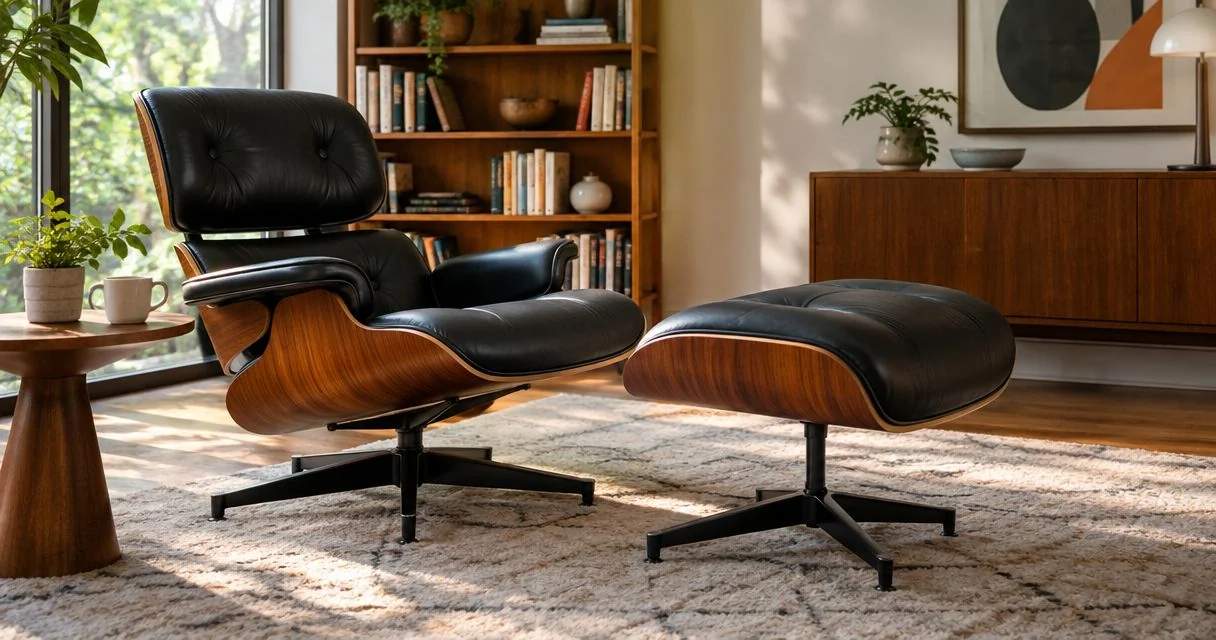
Yes—a mid-century lounge chair is good for everyday use when its seat depth, back angle, cushioning, and armrests suit your body and the way you relax. The main limitation is posture: a low, reclined chair that feels right for reading or listening is not automatically suitable for desk work or easy standing.
TL;DR- For mid century lounge chair everyday use, choose body fit and stable support before appearance.
- Sohnne suits shoppers seeking mid-century modern furniture; assess each lounge chair individually for daily comfort.
- An upright seat suits conversation; a reclined seat suits relaxation but needs more usable floor space.
- Check upholstery care, cushion support, and the effort required to stand before choosing everyday seating.
Why this matters
An everyday chair needs to work when you are tired, carrying a book, or getting up to answer the door. A pleasing silhouette does not tell you whether the seat presses behind your knees or the arms hold your shoulders too high.
For a 2026 furniture purchase, begin with your usual activity rather than a photograph. If reading is the priority, the guide to styling a lounge chair in a home library connects the chair to the lighting, shelves, and surfaces around it.
Choose the chair for the position you actually use, not the position that looks best in a room photograph. That distinction separates a daily seat from an object you mostly admire.
Is a mid-century lounge chair good for everyday use?
Yes, provided the individual chair supports your preferred sitting position without making you brace, perch, or slide forward. Mid-century modern describes a design vocabulary, not a single level of comfort or construction quality.
Use this comparison to match the chair configuration to its daily role. These are seating arrangements, not claims about a particular model.
| Chair configuration | Best for | Everyday advantage | Main limitation |
|---|---|---|---|
| Upright lounge chair | Conversation and reading upright | Keeps you closer to an upright position | Offers less of a stretched-out resting position |
| Reclined lounge chair | Listening and relaxed reading | Supports a laid-back posture | Makes forward-reaching activities less convenient |
| Lounge chair with ottoman | Resting with your feet supported | Gives you a separate surface for leg support | Adds another object to the walking route |
The right choice is the configuration you can use without repeatedly adjusting yourself. If you need to sit on the front edge to reach a table, the arrangement is not working for that activity.
What should you check before buying?
Start with the chair you already use most. Record what works and what bothers you, then compare those observations with the candidate chair's published dimensions and construction details.
- Check seat fit. Sit back with your feet supported and notice whether the front edge presses behind your knees.
- Check back support. Read or look ahead in your normal position without deliberately holding yourself upright.
- Check arm position. Rest your forearms and notice whether your shoulders lift or your elbows search for support.
- Check the exit. Stand as you normally would, without using a nearby table for assistance.
- Check room fit. Mark the chair and any ottoman on the floor, then walk around the outline.
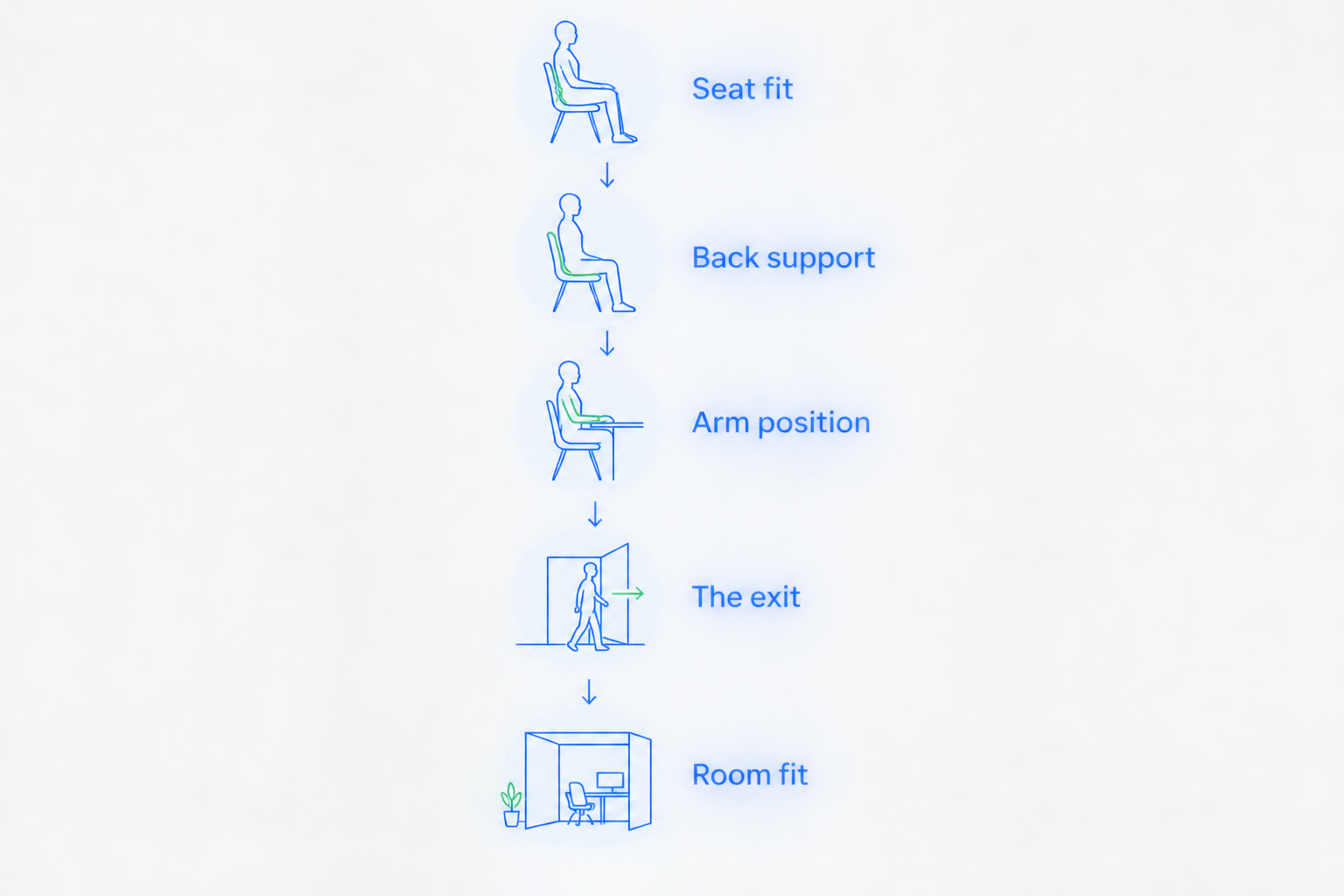 Test the chair as a seat and as part of the room.
A listing reviewed in 2026 should answer practical questions about the actual chair, not just describe its appearance. Ask for clarification when seat measurements, upholstery details, or assembly instructions are unclear.
Upright lounge chair: best for conversation and reading upright
An upright lounge chair makes sense when you alternate between reading, talking, and reaching for a nearby drink. Look for a backrest that meets your back while your feet remain supported.
The advantage is a position that keeps you engaged with the room. The compromise is that an upright chair does not provide the same resting posture as a deeply reclined seat.
Check the armrests with a book in your hands. Arms that feel comfortable when empty-handed can interfere with the position you use to read.
Choose an upright configuration when sitting up is the main activity. Do not rely on a loose cushion to correct a seat that is fundamentally too deep for you.
Reclined lounge chair: best for listening and resting
A reclined lounge chair suits activities that let you lean back rather than work over a surface. Check where your head naturally falls when your back rests against the chair.
The benefit is the resting position itself. The limitation appears when you try to eat, write, or use a laptop: those tasks bring you forward and away from the backrest.
A low seat also deserves a deliberate standing test. If you rock forward repeatedly or pull hard on the arms to rise, choose a different seat height or configuration.
Choose a reclined configuration for relaxation, not as a substitute for a task chair. Comfortable leisure seating and comfortable desk seating solve different problems.
Lounge chair with ottoman: best for supported feet
An ottoman gives your feet a place to rest without requiring a single continuous reclining frame. Its position also lets you adjust the distance between the seat and foot support.
The trade-off is space. Measure the whole arrangement in its used position, rather than counting on the ottoman staying tucked against the chair.
Check whether your legs rest comfortably without pressure concentrated at an edge. Keep a clear route past the arrangement, especially if the chair sits between a doorway and the rest of the room.
Choose an ottoman arrangement when you regularly put your feet up and have room to leave it usable. Skip the extra piece if it will spend most of its time blocking a route.
Why everyday lounge chair comfort varies
Comfort depends on the relationship between your body, the chair, and the activity. A positive review from another person cannot establish that relationship for you.
These factors deserve attention in any 2026 shortlist:
- Seat depth and height. Check whether you can use the backrest while keeping your feet supported. A seat that is too deep for you encourages perching or extra cushioning.
- Backrest angle and shape. Match the resting position to your activity. Notice gaps and pressure points rather than judging support from the outline alone.
- Cushion response. Assess how far you settle into the seat and whether you can change position comfortably. Softness at first contact is not the whole test.
- Armrest placement. Check support while reading, resting, and standing. The arms should serve your movement rather than dictate an awkward position.
- Upholstery and care. Match the stated cleaning instructions to the household. Examine seams, exposed edges, and areas touched by hands or clothing.
- Room arrangement. Include the ottoman, nearby table, lamp, and walking route. A comfortable chair becomes inconvenient when everything around it is out of reach.
Do not turn those factors into a search for a universal ideal measurement. Your existing comfortable seat provides a more useful reference than an unexplained dimension in a buying guide.
What makes a lounge chair practical for daily wear?
Daily suitability includes maintenance and construction, not just the first sit. Ask what the frame, upholstery, and cushions are made from, then read the care instructions for those exact materials.
Inspect accessible connections and follow the assembly instructions. If a chair develops looseness, movement, or damage, stop using it until the problem has been assessed and corrected.
Look past the material name
Leather, woven fabric, moulded plywood, and tubular steel describe materials, not a complete performance result. Finish, construction, intended use, and care requirements still need checking.
Avoid choosing upholstery solely because it is described as easy-care. Ask what cleaning involves, which products are permitted, and whether the stated guidance suits your routine.
Ask about serviceability
Find out whether cushions, covers, glides, or other wear components can be serviced or replaced. Do not assume a visible zipper means a cover is washable or intended for routine removal.
Keep the instructions and order information together. Clear documentation helps you identify the chair and explain a maintenance issue without guessing about materials or components.
Keep guarantees separate from comfort
Sohnne offers mid-century modern furniture with a 5-year warranty and 60-day returns. Read the applicable terms before ordering; neither policy tells you whether a particular seat fits your body.
For your 2026 shortlist, treat those policies as a separate check from comfort and room fit. A warranty is not a promised lifespan, and a return window is not a reason to skip measuring.
How do you make an everyday lounge chair work in the room?
Place the chair around the activity first. Reading calls for usable light and somewhere to set a book; conversation calls for a position that lets you face other people without twisting.
Mark the footprint before moving other furniture. Include the chair's widest points and the space occupied by your feet or ottoman when you are seated.
Then test the surrounding objects from the sitting position. You should not need to lean across an armrest or turn sharply to reach the surface you use repeatedly.
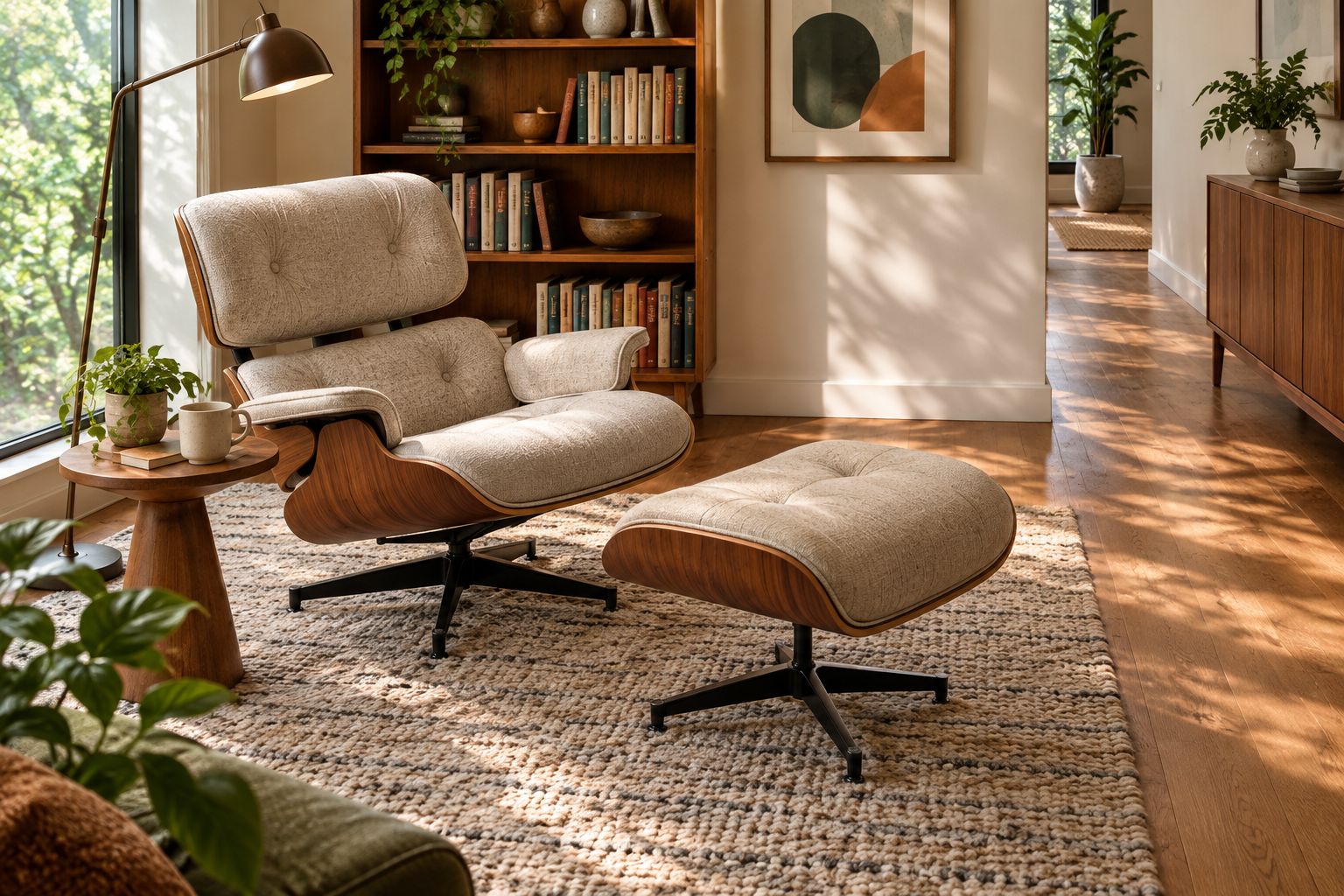 Plan the chair around the activity and keep the route beside it clear.
If several people share the chair, test the arrangement with each regular user. The preferred ottoman distance or cushion position does not have to be identical, but everyone needs a workable way to sit and stand.
At Sohnne, approach lounge seating with the same checklist: body fit, activity, care, and room clearance. The appeal is a defined mid-century modern direction; the limitation of choosing online is that photographs cannot establish personal comfort.
Can I use a mid-century lounge chair all day?
A mid-century lounge chair suits daily leisure, but one comfortable position is not a reason to remain in it all day. Change position and get up regularly rather than treating a chair as a solution to every activity.
For sustained computer work, choose seating and a work surface that suit that task. A reclined lounge arrangement is not equivalent to a desk setup simply because you can balance a laptop on it.
Is a low lounge chair difficult to get out of?
A low lounge chair is a poor everyday choice if you struggle to rise from it. Seat height, cushion compression, seat depth, and the placement of supportive arms all deserve a standing test.
If mobility is a concern, prioritize a chair you can enter and leave confidently. Do not choose a lower seat on the assumption that the movement will become easier with familiarity.
Do I need an ottoman for everyday comfort?
An ottoman is useful when you prefer resting with your feet supported, but it is not essential to every lounge chair. Test the chair on its own before deciding that another piece will fix an uncomfortable seat.
For a small room, compare comfort with the space the ottoman occupies during use. A clear walking route matters more than completing a matching arrangement.
FAQ
Is a mid-century lounge chair comfortable enough to use every day?
Yes, when the individual chair fits your body and supports your usual activity. Check seat depth, back support, arm position, and the effort required to stand rather than relying on appearance.
What’s the best lounge chair configuration for everyday reading?
An upright configuration is best for readers who prefer sitting up; a reclined configuration suits readers who prefer leaning back. Test the chair while holding a book in your usual position.
Can I use a lounge chair instead of an office chair?
A lounge chair is not a direct substitute for a task chair used for sustained desk work. Its resting angle and fixed geometry need to be assessed separately from your desk requirements.
Is leather better than fabric for a daily lounge chair?
Neither material is automatically better for every household. Compare the exact upholstery, permitted cleaning methods, construction, and the way you use the chair.
Does a lounge chair need an ottoman?
A lounge chair does not need an ottoman unless you want separate support for your feet. Check the complete arrangement in its used position so the footrest does not obstruct a walking route.
What should I check before ordering a lounge chair online in 2026?
Check the chair’s published dimensions, materials, care instructions, assembly requirements, and applicable return terms. Compare the seat measurements with a chair you already find comfortable.
What policies should I review when choosing Sohnne furniture?
Sohnne offers 60-day returns and a 5-year warranty. Read the applicable terms before ordering and assess comfort separately from policy coverage.
One last thing
Test the movement you are least likely to see in a furniture photograph: standing up. A chair can look balanced and feel inviting at first contact yet still be awkward to leave.
If sitting down, settling in, reaching, or standing up requires a workaround, keep looking. Everyday comfort is the ease of using the whole arrangement, not just the softness of the cushion.
Related guides
- How to choose a lounge chair for a tall person
- How to position a lounge chair for natural-light reading
- Can an oversized lounge chair fit through a standard doorway?
Stay connected with us!
Keep in touch with what’s new and next. Subscribe for weekly insights, product launches, and community news!