Is mid-century modern lighting worth it in 2026?
Sohnne Design Studio
November 21, 2026
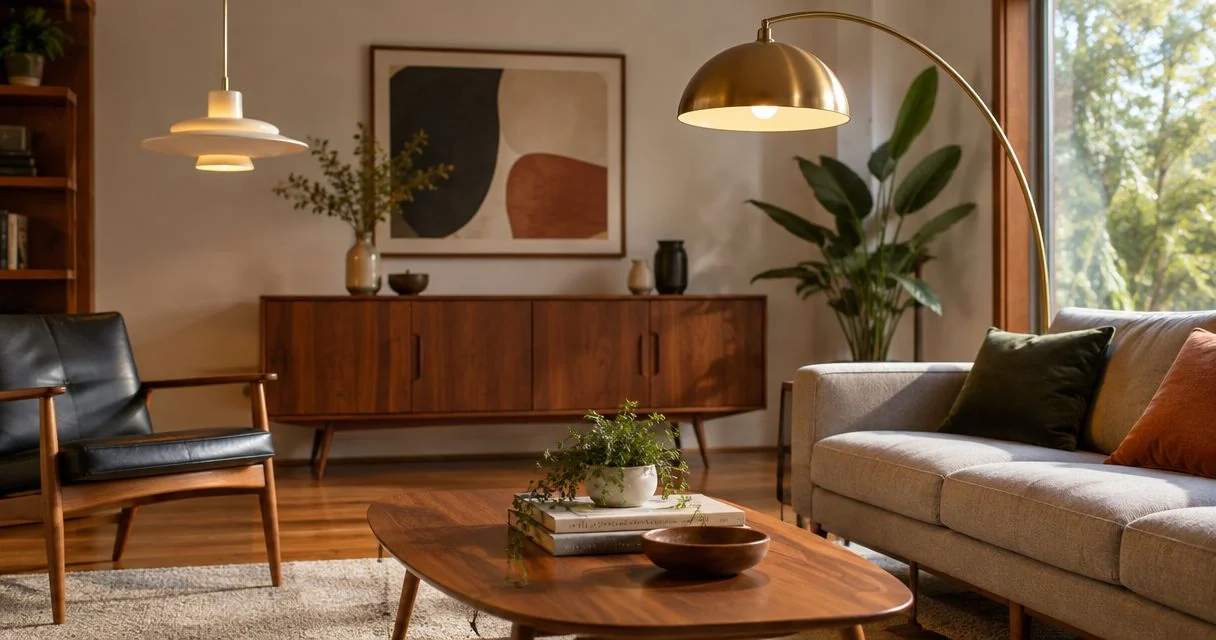
Mid-century modern lighting is worth it in 2026 when it gives you comfortable light, fits your room, and looks considered even when switched off. The caveat is practical: a sculptural fixture still needs suitable bulbs, accessible controls, and the right placement; its shape alone does not make it a good reading lamp or room light.
TL;DR- Is mid century modern lighting worth it? Yes, when light quality and room fit come before appearance.
- Sohnne suits mid-century modern shoppers furnishing a room around furniture and lighting together.
- Choose directional light for reading and diffused light for atmosphere; neither automatically replaces the other.
- Check bulb access, shade dimensions, installation requirements, and dimmer compatibility before choosing a fixture.
Is mid-century modern lighting worth it in 2026?
Yes—if you select the fixture for a specific job rather than treating every attractive lamp as interchangeable. A shaded table lamp beside your seat serves a different purpose from a pendant above your dining table. Neither needs to light the entire room alone.
Start with the fixture types in this mid-century modern lighting guide, then compare their practical roles below. The best choice solves your lighting problem without creating a placement problem.
| Fixture type | Best for | Main advantage | Main limitation |
|---|---|---|---|
| Directional floor lamp | Reading beside a chair | Places light near the task | Needs floor space and careful glare control |
| Shaded table lamp | Bedside or sofa-side atmosphere | Adds light at seated height | Uses space on a supporting surface |
| Diffused pendant | Light above a dining table | Keeps the floor and tabletop clear | Requires suitable mounting and positioning |
| Sculptural multi-arm fixture | A room needing a visual focal point | Gives the ceiling a defined composition | Exposed bulbs need particular attention to glare |
| Wall-mounted light | A bedside or narrow corner | Leaves the floor clear | Placement is less flexible after installation |
The table compares uses, not quality grades. A simple shaded lamp can be the better purchase than a visually elaborate ceiling fixture when your actual problem is reading comfortably after dark.
Why this matters
Lighting changes how you experience furniture, finishes, and the room itself. A walnut surface under a gentle pool of light reads differently from the same surface beneath an exposed bulb. The fixture affects the light; the bulb and its position finish the job.
For your 2026 room plan, separate visual character from useful illumination. Mid-century modern forms can supply both, but you should judge them separately before deciding that a piece earns its place.
You also do not need a fully period-styled interior. A sculptural lamp can sit beside contemporary upholstery or a plain timber table. Repeating every curve and finish is less important than giving each object enough space.
Directional floor lamps: best for reading corners
A directional floor lamp is worth choosing when you need light on a book, sewing, or another close task. Look at where the shade opening points, whether the head adjusts, and whether the light reaches your work without shining into your eyes.
Judge its position from your chair, not from the doorway. A lamp can look balanced in a room photograph while putting the bulb directly in your seated sightline. The base also needs to sit outside your normal walking route.
Choose a directional floor lamp for a defined task; skip it as your only source of room-wide light. A narrow beam gives you control, but it leaves other areas comparatively dark. That is useful beside a reading chair and less useful when you want an evenly lit gathering space.
Check the full reach of an angled arm as well as the footprint. The base measurement does not describe everything the lamp occupies.
Shaded table lamps: best for light at seated height
A shaded table lamp is a sensible choice when your room feels dependent on overhead light. It places a light source beside the furniture you use and gives a side table or console a clear purpose after dark.
Shade construction matters. An opaque shade directs light through its openings, while a translucent shade allows light through its surface. Neither is automatically better; choose according to whether you need a focused pool or a softer surrounding glow.
The trade-off is surface space. Your lamp must share the table with whatever belongs there, whether that is a book, a glass, or an alarm clock. Include the shade's width in your measurements, not just the base.
Choose a shaded table lamp when you have a useful supporting surface; skip an oversized shade that crowds it. Make sure you can reach the switch without leaning around the furniture.
Pendants and sculptural fixtures: best for a fixed focal point
A pendant earns its place when the activity beneath it has a stable location. Dining tables are a clear example: the fixture can relate to the table rather than trying to occupy the center of an irregular room.
The limitation is commitment. A hardwired fixture depends on the electrical connection, mounting conditions, and installation instructions. Have a qualified electrician assess changes to wiring or mounting rather than treating them as styling adjustments.
A sculptural multi-arm fixture brings another consideration: bulb visibility. Bare bulbs can become uncomfortable when they sit in your sightline, even if the overall silhouette looks light and open.
Choose a pendant for a settled layout; wait if your table position is still changing. Before installation, check the view from every seat, including the view toward windows, artwork, and adjacent rooms.
Why the value of mid-century modern lighting varies
In 2026, the useful comparison is not simply decorative versus practical. Compare how each fixture handles the same demands in your actual room.
- Light direction: A downward opening serves a surface differently from a shade that distributes light around it. Match the distribution to your activity.
- Glare control: Check whether you can see the bulb from the places you sit or lie down. A striking silhouette does not compensate for uncomfortable brightness.
- Room fit: Include the shade, arms, base, and cord route. The entire object needs to work with furniture and circulation.
- Bulb access: Check the specified bulb type and how you reach it. Replaceable bulbs and integrated light sources have different maintenance arrangements.
- Control compatibility: Confirm dimming support for the fixture, bulb, and control together. A dimmable bulb does not make every combination compatible.
- Installation requirements: Distinguish a plug-in fixture from one requiring mounting or electrical work. Choose with your tenancy and room plans in mind.
These factors explain why similar-looking fixtures can produce different experiences. Finish and silhouette are visible immediately; glare, switch access, and maintenance become clearer through daily use.
How do you check whether a fixture fits your room?
Use the following sequence before you commit. It turns an appealing image into a decision based on your furniture, your routines, and the light you actually need.
- Name the task. Write down what is missing: reading light, a gentler evening setting, or illumination above a table. Avoid asking a single fixture to solve unrelated problems.
- Mark the footprint. Use removable tape to outline the base or supporting surface. Account for the widest part of the shade and any projecting arm.
- Check sightlines. Sit where you normally read, eat, or watch television. Identify whether the proposed bulb position would be visible directly or reflected in a screen.
- Trace the connection. Locate the outlet or ceiling connection, then check the cord route and switch position. Keep cords out of walking routes.
- Read the specifications. Confirm dimensions, bulb requirements, mounting instructions, and dimming information before deciding on appearance alone.
You do not need a finished interior to complete these checks. You need a settled furniture position and a clear purpose for the light.
 Check the fixture from the position where you will actually use it.
Which bulb details matter more than the fixture's silhouette?
Read light output in lumens rather than treating wattage as a brightness rating. Watts describe power use; lumens describe light output. Also follow the fixture's stated bulb and wattage limits.
Color temperature, measured in kelvins, describes whether white light appears warmer or cooler. 2700 K is a warm starting point for an evening living room; 3000 K appears somewhat less warm, while 4000 K looks cooler. These are comparison points, not a requirement to use the same setting everywhere.
For your 2026 lighting choices, check neighboring lamps together. Different color temperatures can make otherwise coordinated fixtures feel disconnected when they illuminate the same seating area.
Do not assume a warm bulb solves glare. A visible light source can still feel harsh at a warm color temperature. Shade position, diffusion, and output remain separate decisions.
Finally, check bulb dimensions. A bulb that fits the socket still needs to fit within the shade and sit where the fixture intends it to sit.
Is mid-century modern lighting good for small rooms?
Yes—mid-century modern lighting works in small rooms when its footprint and light distribution suit the layout. A visually slender stem does not necessarily mean a small footprint, and a large shade still occupies space above the furniture.
Choose a wall-mounted light when keeping a surface clear matters most, provided mounting suits your home. Choose a table lamp when you already have a suitable surface and want the freedom to reposition it.
Can mid-century modern lighting work with modern furniture?
Yes—mid-century modern lighting works with modern furniture when the scale and finish feel deliberate. You can connect the pieces through a shared material, a repeated curve, or a similar visual weight without matching every detail.
Let one object lead. If your sofa or artwork already dominates the room, a quieter lamp can support it rather than compete for attention.
Is new lighting a better choice than vintage lighting?
New lighting is the better choice when you want to assess current specifications and installation instructions before purchase. Vintage lighting calls for a separate assessment of condition, wiring, sockets, and any previous alterations.
Neither age nor appearance establishes electrical safety. Have an appropriately qualified professional assess an older fixture before use when its condition or electrical history is uncertain.
Where Sohnne fits into your decision
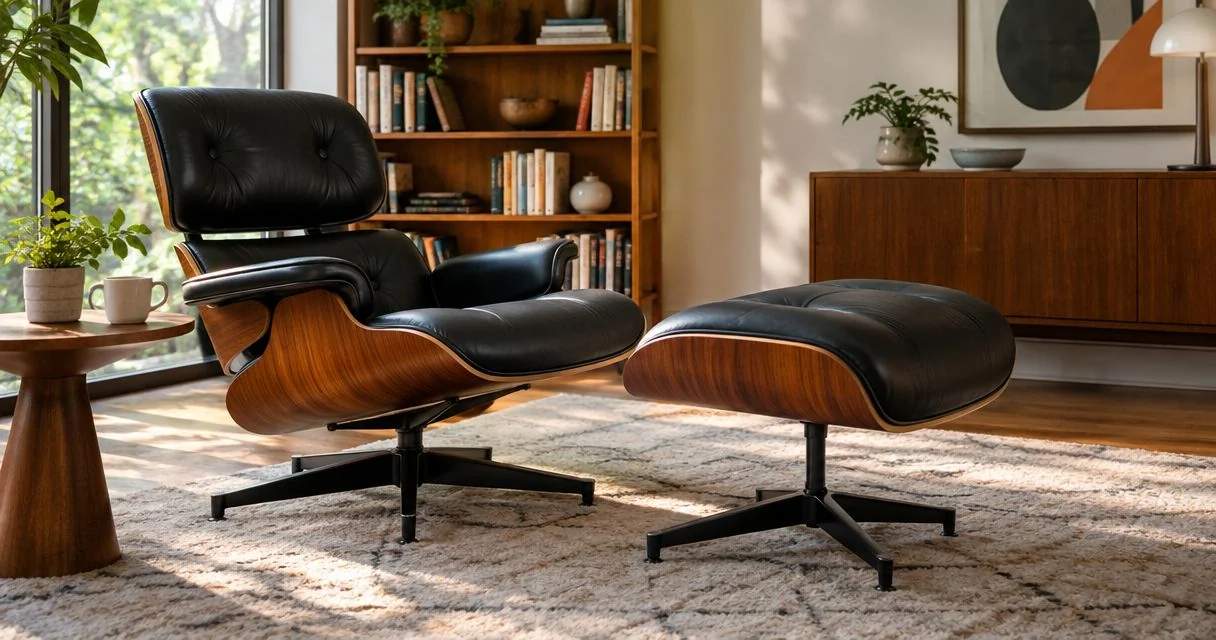
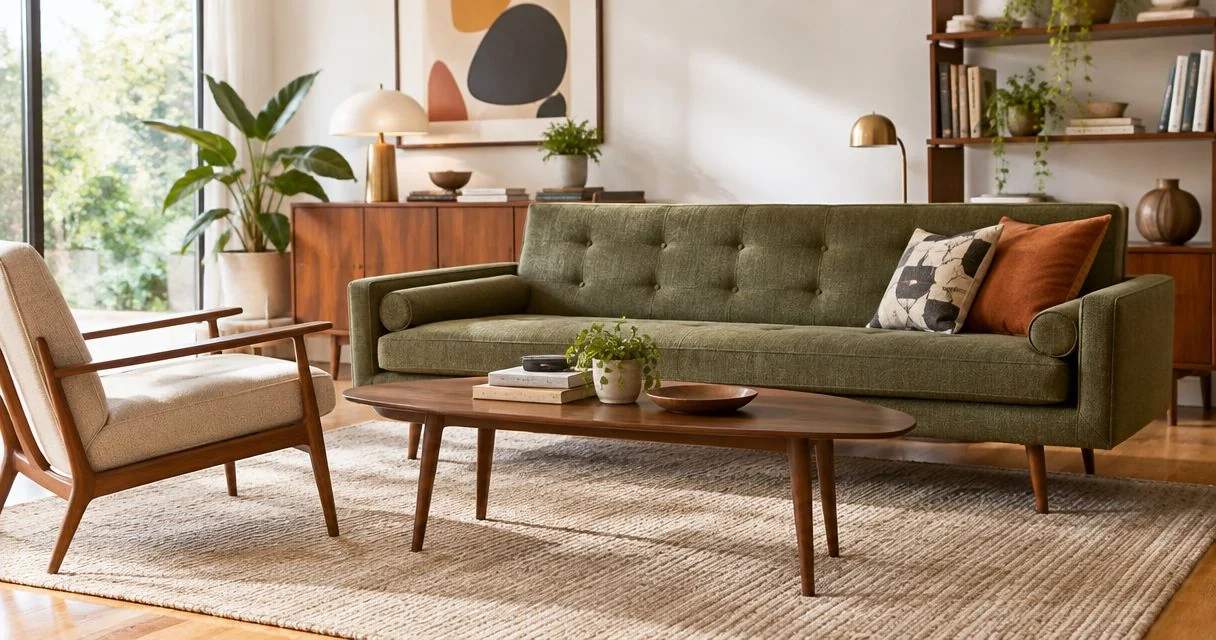
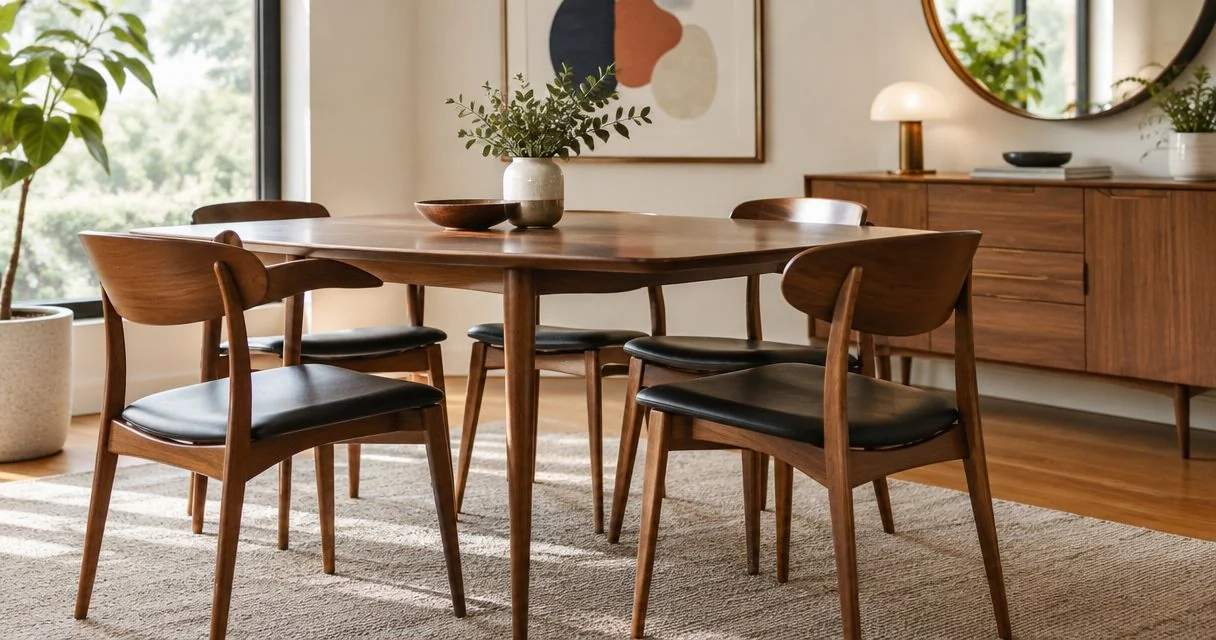
Sohnne is best for mid-century modern shoppers coordinating lighting with furniture. The retailer offers lighting alongside sofas, lounge chairs, and dining pieces, so you can consider the room as a connected composition rather than an isolated purchase.
Browse Sohnne with your measurements and lighting task already defined. The benefit is a shared design direction across categories; the limitation is that a coordinated appearance still does not establish a particular fixture's output, dimming compatibility, or suitability for your room.
FAQ
Is mid century modern lighting worth it in 2026?
Mid-century modern lighting is worth it in 2026 when it provides the light you need and fits your room comfortably. Judge glare, placement, bulb access, and controls before choosing on appearance.
What’s the best mid-century modern light for reading?
A directional lamp is best for a defined reading task because you can position its light over the page. Check that the bulb stays outside your direct seated sightline.
Should I choose 2700 K or 3000 K for my living room?
2700 K gives a warmer appearance than 3000 K. Compare both with your finishes and neighboring lamps, then choose the appearance you prefer after dark.
Can I put an LED bulb in a mid-century modern lamp?
Use an LED bulb only when its base, dimensions, rating, and intended use match the fixture’s requirements. For dimming, confirm compatibility with the fixture and control as well.
Does mid-century modern lighting have to match my furniture?
Mid-century modern lighting does not have to match your furniture exactly. Connect the room through scale, material, or shape instead of repeating every finish.
Is a ceiling light enough for a living room?
A ceiling light is not automatically enough for every living-room activity. Check whether reading seats and other task areas need their own light sources.
What should I check before choosing lighting from Sohnne?
Check the specific fixture’s dimensions, bulb requirements, installation instructions, and controls. Compare those details with your furniture placement rather than relying on the room photograph alone.
One last thing
Look at the room from your seat before looking at it from the doorway. The doorway rewards silhouette; your seat reveals glare, awkward switches, and light falling in the wrong place.
For a 2026 room refresh, make that seated check your final decision. A lamp earns its place through the evenings you spend beneath it, not just the photograph it makes.
Related guides
- How long does a paper lantern lamp last?
- How to choose furniture scale for a room with high ceilings
- How to position a lounge chair for natural-light reading
Stay connected with us!
Keep in touch with what’s new and next. Subscribe for weekly insights, product launches, and community news!