Return request to refund: complete 2026 workflow
Sohnne Design Studio
November 20, 2026
Instead of repeatedly chasing updates, organize your furniture return refund process around a written request, confirmed return instructions, a documented handover, and a verified refund. For a Sohnne order, keep those records together so you can identify the next action without confusing a return approval with money back in your account.
TL;DR- For Sohnne furniture returns, keep the request, return authorization, shipment evidence, and refund confirmation together.
- The furniture return refund process ends when you verify the credit, not when the carrier collects the furniture.
- Confirm the return destination and packing instructions before arranging transportation.
- Separate a room-fit return from a damage report; describe the actual reason and request written instructions.
Why this matters
A furniture return involves both a physical object and a financial transaction. Moving the chair or sofa out of your home does not, by itself, establish that the retailer has received it or issued a refund.
Sohnne is best for mid-century modern furniture shoppers who want to buy directly from the retailer. The benefit is a direct point of contact; the limitation is that you still need order-specific instructions before sending furniture back.
For a return started in 2026, use the order confirmation and applicable terms as your reference. Send questions through Contact Us and retain the written response with your order records.
Treat every change of status as something to document, not something to assume. A request, approval, collection, receipt, and refund are separate events.
Before you start
- Gather your order materials. Have your order confirmation, delivery date, item description, payment record, and relevant correspondence ready. Keep access to the email account used for the purchase.
- Check eligibility before moving anything. Sohnne describes a 60-day return policy. Confirm which event starts that period, which conditions apply to your order, and whether your requested action must occur before a particular deadline; the return-window guide addresses that subject.
- Resolve the destination gotcha first. Do not assume the address on the delivery paperwork is the authorized return address. Ask for the destination, packaging requirements, transportation arrangements, and any applicable deductions in writing before dispatch.
You do not need special software for this workflow. An email folder and a simple document are enough. The labels below describe your own tracking record, not buttons or fields in a retailer portal.
Your return record
Build the case file
- Create an order folder. Put the order confirmation, delivery documentation, and messages in one place. Include the item description exactly as it appears on your order so similar pieces do not become confused.
- Write the reason plainly. State whether the furniture does not fit, differs from what you ordered, arrived damaged, or has another issue. Describe what you observed rather than guessing at the cause.
- Photograph the current condition. As a practical starting set, take 3 photographs: the complete item, the relevant detail, and the packaging. Add further views when the issue cannot be understood from that set.
- Start a dated action log. Record the delivery date, request date, latest response, and action you are waiting for. Use full dates with 2026 included rather than undated notes such as last Tuesday.
Expected result: You have a self-contained record that explains what you bought, what happened, and what resolution you are requesting.
Keep the original image files. A cropped close-up can explain a mark, but a wider photograph establishes where it sits on the furniture. Do not alter the item to make the issue more visible.
Draft the request
Use a short factual message rather than a long account of your shopping experience. Include:
- Order reference and item description.
- Delivery date and return reason.
- Photographs or other relevant evidence.
- Your requested resolution.
- A request for eligibility confirmation and written next steps.
Ask about any point that affects your ability to comply, including missing packaging, stairs, or a large item you cannot safely move. Raising those constraints now is better than discovering them during collection.
Return authorization
Confirm the return route
- Submit the request through the retailer's stated contact route. Keep a copy of the message and any acknowledgment. An acknowledgment establishes that a message was received; it is not automatically permission to ship.
- Request a clear decision. Ask whether the specific item is approved for return and what conditions attach to that approval. If the reply only asks for more information, supply it before treating the request as authorized.
- Confirm the physical instructions. Establish the destination, packing method, any required reference, and who arranges transportation. Ask what to do if the original carton is unavailable.
- Confirm the financial instructions. Request the expected refund amount, any deductions, the payment destination, and the event that starts refund processing. Ask for the applicable timing rather than substituting a general internet estimate.
Expected result: You have written instructions that connect the correct item, return destination, transportation method, and proposed refund treatment.
Do not book transportation solely because the return request has been submitted. Authorization should settle where the furniture goes and how the handover works.
For your 2026 tracking document, use plain status labels: Request sent, Return approved, Handover recorded, Receipt confirmed, and Refund verified. Update a label only when supporting evidence exists.
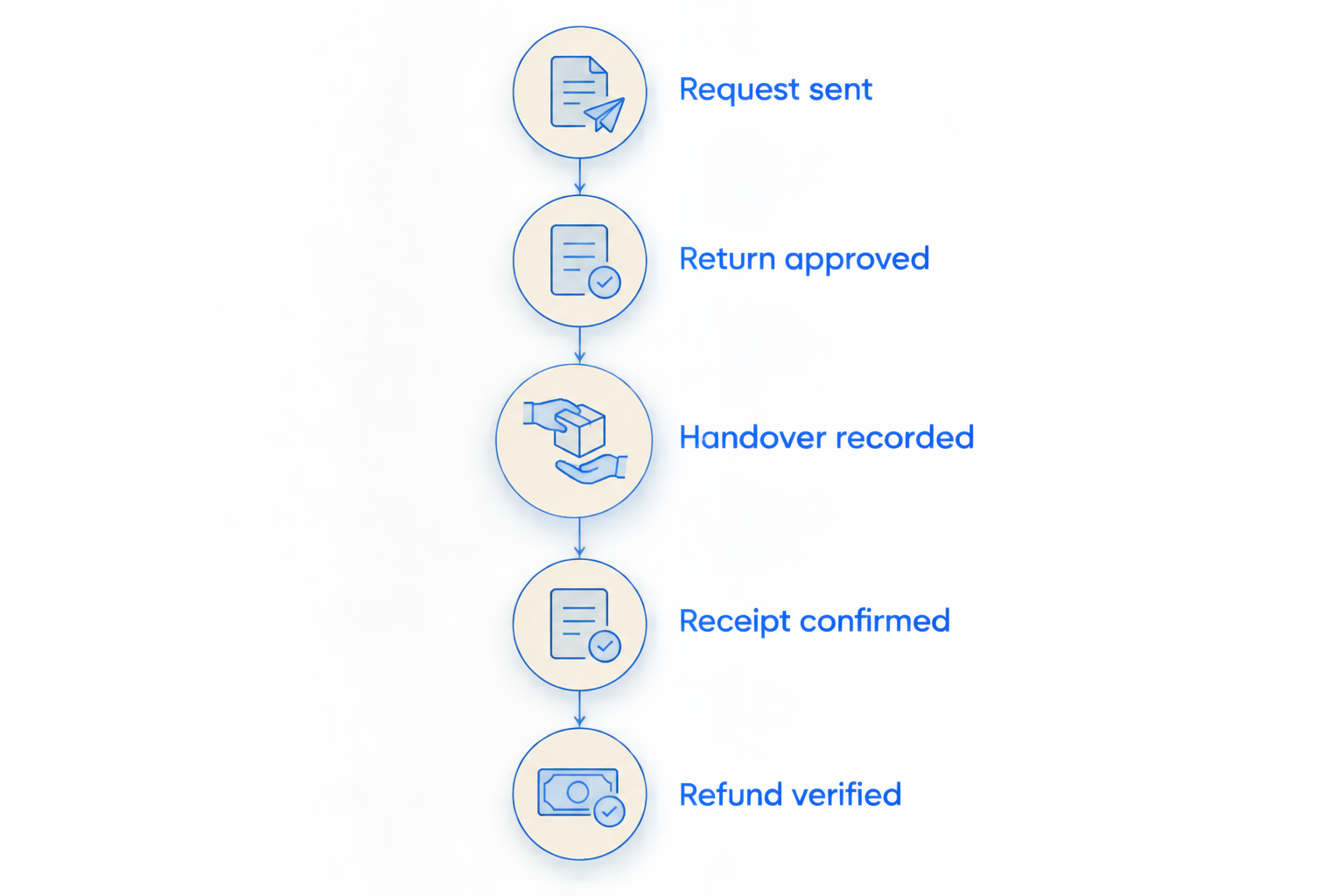 Each stage needs its own evidence before you move to the next.
Packing and handover
Prepare the furniture
- Follow the approved packing instructions. Keep hardware and removable components together using the method specified for your return. Do not dismantle a piece beyond the instructions simply to reduce its size.
- Document the packed condition. Photograph protected surfaces, included components, and the closed package where applicable. Keep identifying references readable without publicly sharing your personal details.
- Check the collection arrangements. Confirm access requirements, the handover location, and who is responsible for moving the furniture. Arrange appropriate help rather than attempting an unsafe lift.
- Retain proof of handover. Save the collection receipt, tracking information, or other carrier documentation supplied. Record what was collected, particularly when an order contains several pieces.
Expected result: The furniture has entered the agreed return route, and your records show its condition and the handover.
A label being created is not the same event as a carrier taking possession. Likewise, a booked collection is not evidence that collection occurred. Track the physical event rather than the booking alone.
If the driver cannot accept the item, ask for the reason and document the failed handover. Return to the retailer with that information before arranging a different transport method.
Receipt and refund verification
Close the financial loop
- Check the shipment evidence. Save the carrier's delivery record when it becomes available. If tracking stops changing, use the existing return correspondence to ask who should investigate.
- Request retailer receipt confirmation. Ask Sohnne to confirm that the returned item has been matched to your order and whether anything remains outstanding. Carrier delivery and order reconciliation answer different questions.
- Obtain the refund record. Keep the refund confirmation and reconcile the amount against the agreed treatment. Ask for an explanation of any difference rather than assuming it is a processing error.
- Verify the payment account. Check the account or payment arrangement used for the purchase. Mark the case closed only when the financial result matches the confirmed resolution.
Expected result: You have 2 financial records to reconcile: the retailer's refund confirmation and the corresponding credit or adjustment in your payment account.
There is no single refund duration established by this guide. For a 2026 return, record the timing communicated for your order and ask which event starts it. A processing estimate is not useful unless you know whether it runs from collection, receipt, inspection, or another specified event.
When the return reason changes
A room-fit problem and delivery damage require different explanations, even when both begin with the same order number. Report the actual issue; do not select a different reason because it sounds easier to approve.
| Request route | Best for | Advantage | Limitation |
|---|---|---|---|
| Room-fit return | Furniture that does not work in the intended space | Keeps the request focused on fit and eligibility | Fit alone does not establish approval or transport terms |
| Damage report | Visible damage discovered with delivery or unpacking | Gives the retailer evidence of the specific condition | You need instructions before repair, disposal, or return |
| Incorrect-item report | An item that differs from the order | Connects the discrepancy to the purchase record | Similar-looking pieces require clear identifying details |
Update an existing request
If you discover damage after opening a room-fit request, reply within the same correspondence and explain what changed. Attach wider and close-up photographs, state when you noticed the issue, and ask whether the return instructions need to change.
Keep the original request date and the later discovery date as separate entries. Do not overwrite the first explanation. A clear sequence lets the person handling the case understand both events without reconstructing them from scattered messages.
Ask before attempting a repair or accepting a different resolution. A refund request, replacement request, and repair discussion are different outcomes; your record should state which one you have agreed to pursue.
Troubleshooting
The request has no clear decision
Reply to the existing correspondence with the order reference, request date, and the unanswered question. Ask directly whether the return is approved and what information is still required. Avoid opening parallel conversations that leave different people with incomplete records.
The original packaging is gone
Stop before improvising a shipment. Describe the packaging you still have and request an approved packing method. Do not assume that wrapping the furniture in household blankets satisfies the return requirements.
Tracking says delivered, but the refund is unresolved
Send the tracking reference and delivery evidence, then ask whether the item has been matched to your order. Request the current stage and the next required action. Delivery evidence is useful, but it does not establish that a refund has been issued.
The confirmed refund differs from your expectation
Compare the confirmation with the written return agreement and original payment record. Ask for an itemized explanation of the difference. Keep the discussion tied to the order rather than relying on another customer's experience.
The payment account has changed
Explain the change to the retailer and contact your payment provider for instructions relevant to your account. Do not send full card details by ordinary email or request an unfamiliar payment route without verifying it through the established contact channel.
Customize your workflow
For a multi-item order, give each item its own status within the same order folder. Record which pieces were approved, collected, received, and financially resolved. This prevents a completed chair return from hiding an unresolved sofa return.
The same recordkeeping discipline matters when buying a vanity table online: save the order description and applicable return terms before delivery, then compare the delivered furniture with those records. Evidence should connect the purchase, the object, and the requested outcome.
For a fit-related return, record the measurement that caused the problem. Separate the room footprint from the delivery route; a piece can suit the room but fail to pass through an entrance.
For future Sohnne purchases in 2026, preserve the product information and relevant terms alongside the confirmation. That gives you a dated reference without relying on memory or a page you revisit later.
Use calendar reminders based on the deadlines actually communicated for your order. Do not invent a follow-up interval and mistake it for a retailer commitment. The strongest workflow is a small, accurate record with a clear next action.
FAQ
How do I start the furniture return refund process?
Start with your order reference, delivery date, return reason, and relevant photographs. Submit a written request through the retailer’s stated contact route and ask for eligibility confirmation before arranging transportation.
Does a return approval mean my refund has been issued?
No. Return approval, physical receipt, and refund issuance are separate events. Keep evidence for each stage and verify the final credit or adjustment in your payment account.
Can I return furniture without the original box?
Confirm the packaging requirements with the retailer before sending furniture without its original box. Describe what packaging remains and request written instructions for an acceptable alternative.
What photographs should I take before returning furniture?
Photograph the complete item, the relevant issue, and the packaging. Add images of included components and the packed condition so your record explains both the return reason and the handover condition.
How long does a furniture refund take in 2026?
Use the timing confirmed for your specific return rather than a general estimate. Ask which event starts processing and distinguish the retailer’s refund confirmation from the credit appearing in your payment account.
What should I do if returned furniture shows delivered but I have no refund?
Send the delivery evidence through the existing return correspondence and request confirmation that the furniture has been matched to your order. Ask what stage remains and whether any further action is required from you.
Should I start a new request if I discover damage later?
Update the existing request with the newly discovered issue and supporting photographs. Preserve both dates and ask whether the return instructions or requested resolution need to change.
One last thing
The last document to save is not the collection receipt. It is the payment record showing the agreed resolution. Before closing the folder, write a short final note identifying the returned item, the refund confirmation, and the matching account entry. Your furniture return is then documented from request to financial completion.
Related guides
- Can you return furniture that does not fit your space?
- How to measure a room before buying a modular sofa
- How long is the furniture warranty?
Stay connected with us!
Keep in touch with what’s new and next. Subscribe for weekly insights, product launches, and community news!