Designer-style furniture for law firms: complete 2026 guide
Sohnne Design Studio
November 19, 2026
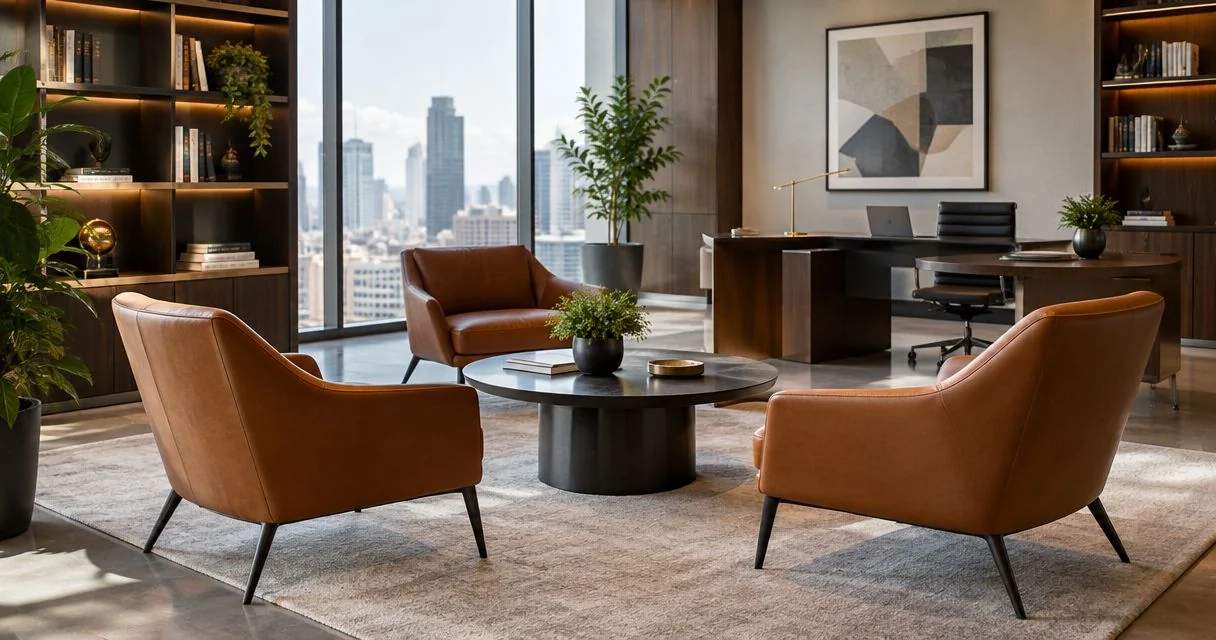
Law firm furniture is the seating, tables, workstations, and storage selected to support client meetings, confidential work, and daily office operations. Choose furniture for law firms by room function first; this 2026 guide explains how to balance a composed reception area with practical meeting rooms and staff workspaces.
TL;DR- Choose furniture for law firms by function: reception seating, consultation tables, adjustable workstations, and secure storage serve different needs.
- Sohnne suits law firms seeking mid-century modern lounge furniture; verify commercial suitability for each selected piece.
- Test occupied layouts, document upholstery care, and confirm delivery access before approving an order.
- Keep confidential conversations in enclosed rooms; furniture placement does not provide acoustic privacy.
Why furniture matters for law firms
A law office asks furniture to do different jobs within the same address. Visitors need somewhere comfortable to wait, clients need a usable surface for documents, and staff need equipment suited to sustained desk work. A sculptural accent chair does not answer all three needs.
Separate the client experience from the workstation specification. Carry a consistent material palette between rooms, but choose each piece for the activity it supports. Your reception sofa and an attorney’s desk chair should not share a purchasing brief simply because both are seats.
For a 2026 office project, begin with dimensions rather than a mood board. Use a room measurement checklist to record fixed features, then add door swings, occupied chairs, and the delivery route to your drawing.
How to choose furniture for your law firm
1. Define the work each room must support
Start with a shared document and a walk-through. Ask reception staff, attorneys, assistants, and facilities staff what actually happens in each room, including overflow meetings and document preparation. Describe activities before naming furniture.
Your 2026 furniture brief should distinguish waiting from consultation. A low lounge table works for setting down a drink; it is not a substitute for a table where clients review papers or sign documents. Likewise, a visitor chair is not automatically suitable for a full working day.
Write a room-by-room brief that anyone approving the purchase can understand. State the intended users, tasks, and evidence needed before approval, rather than relying on words such as elegant or executive.
- Reception: provide individual seating choices and a clear route to the desk.
- Consultation: provide document space, upright seating, and enclosed privacy.
- Staff work: prioritize chair adjustment, desk fit, and equipment placement.
- Storage: separate confidential records from display objects and general supplies.
2. Measure the occupied layout, not the empty room
Use a tape measure, graph paper, and removable floor tape before paying for planning software. Mark the full footprint of each proposed piece, then position existing chairs inside those outlines. Walk the route while someone is seated.
Measure twice: once for furniture at rest and once for furniture in use. Meeting chairs pull back, cabinet doors open, and visitors bring bags or mobility aids. An attractive plan fails if these ordinary movements block circulation.
Include access requirements in the design brief and have the responsible project professional confirm applicable accessibility rules. Do not treat a furniture drawing as a compliance assessment. The route from the building entrance to the room matters as much as the final arrangement.
- Room footprint: record walls, columns, outlets, windows, and door swings.
- Occupied seating: mark chairs pulled back and people sitting down.
- Walking route: test movement between the entrance, seating, and meeting rooms.
- Delivery route: measure doors, corridors, elevators, and turning points.
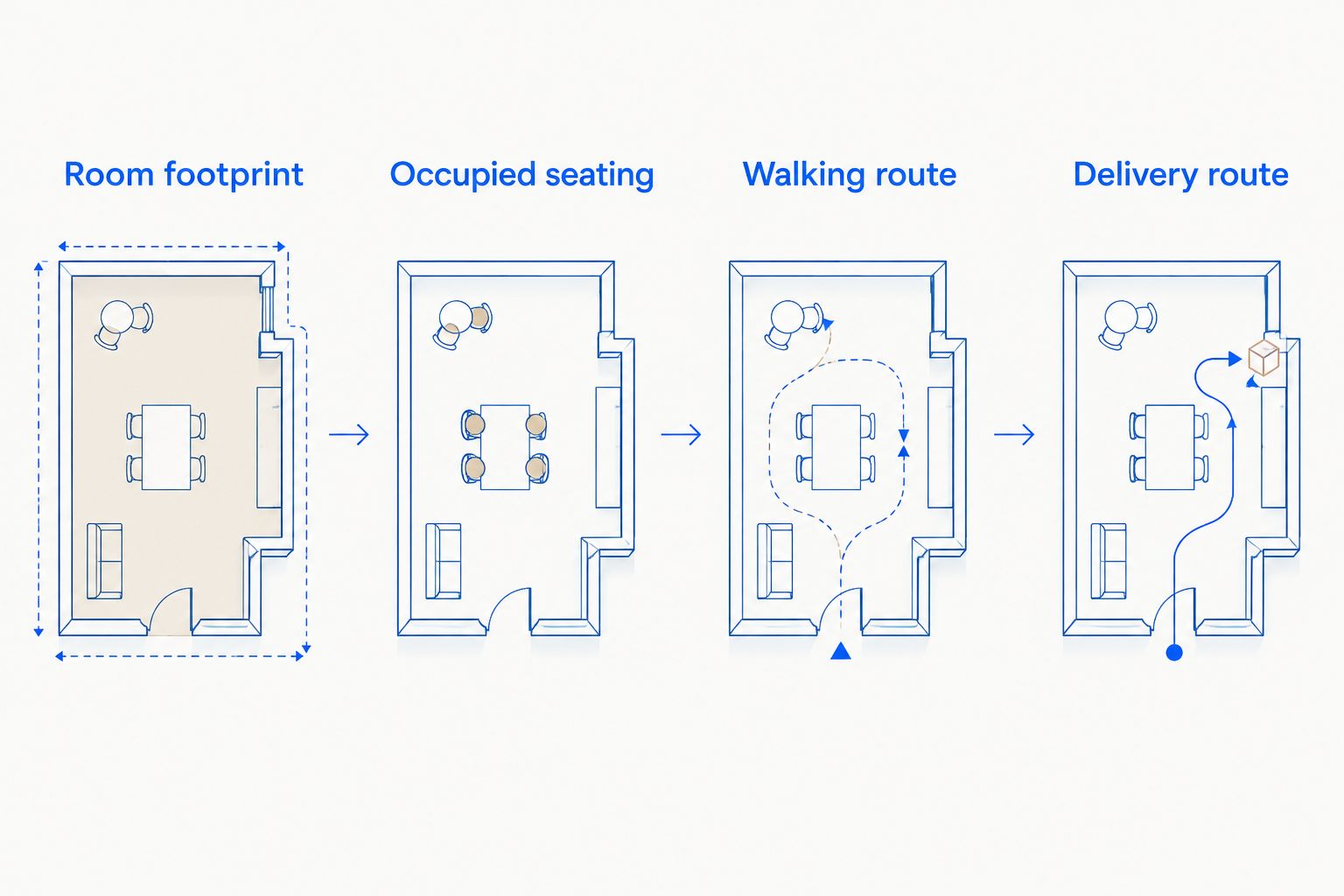 Measure furniture in use as well as the route it takes into the office.
3. Build a shortlist around function and design
Make a comparison sheet yourself first. Give each candidate the same fields: dimensions, materials, intended use, care instructions, warranty terms, and unanswered questions. Leave unverified information blank rather than treating a photograph as evidence.
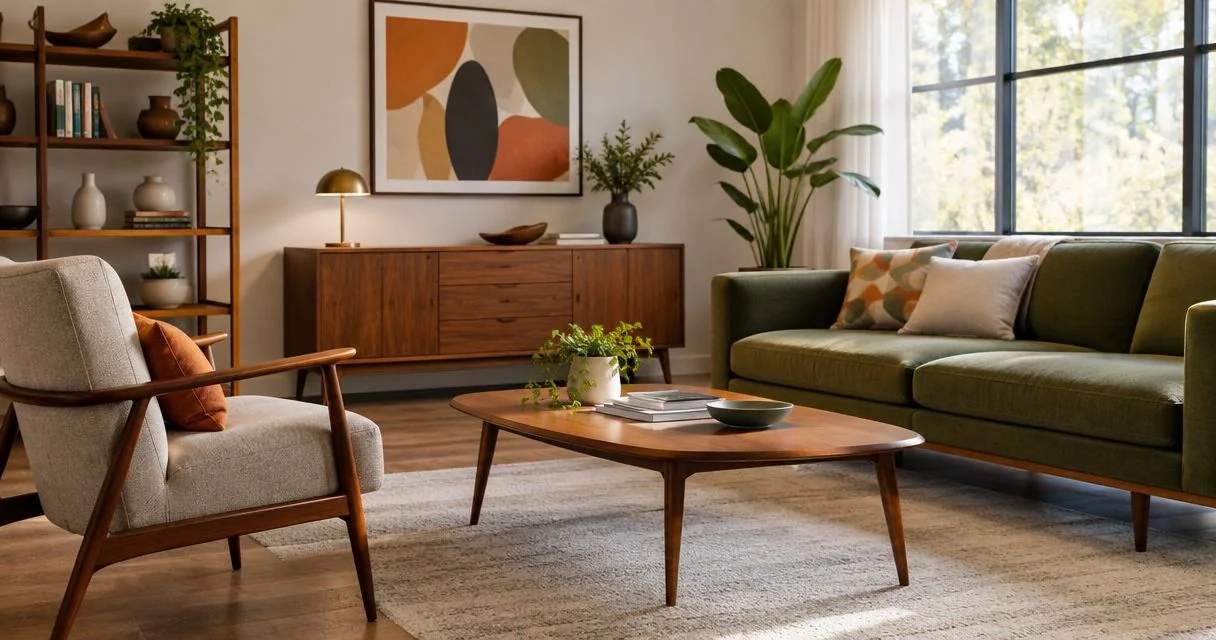
Sohnne is best for law firms seeking mid-century modern lounge furniture, not a complete workstation specification. The retailer offers sofas, lounge chairs, lighting, and dining pieces, and serves trade clients. That makes Sohnne a source to assess for client-facing spaces while you specify task seating separately.
For a shorter procurement process, use Sohnne’s trade offering to discuss a consolidated shortlist and customization questions. Still request written confirmation that each selected item suits its proposed office use; a trade relationship is not proof of commercial performance.
- Identify the room and task beside every shortlisted item.
- Compare actual dimensions rather than apparent scale in photographs.
- Request material and finish information for the selected configuration.
- Record commercial-use and warranty questions before seeking approval.
4. Test seating against real client activities
Begin with the chairs you already have. Ask colleagues with different heights and mobility needs to sit, stand, reach a table, and review a document. Record what works, then use those observations to assess new seating.
Schedule a 20-minute seated trial as a purchasing exercise, not a medical or ergonomic assessment. Include upright conversation and document handling rather than only a brief sit. Look for usable armrests, stable support, and a seat that does not force the visitor into a reclined posture for a formal discussion.
Offer a choice of seating instead of filling reception with one deep sofa. Individual chairs make it easier to provide different positions and personal space. A sofa can complement those chairs without becoming the only place to wait.
- Test sitting down and standing up without moving a nearby table.
- Check whether armrests support comfortable entry and exit.
- Review papers at the intended table, not on a lap.
- Keep a direct route to a choice of seats.
- Assess staff task chairs separately from visitor seating.
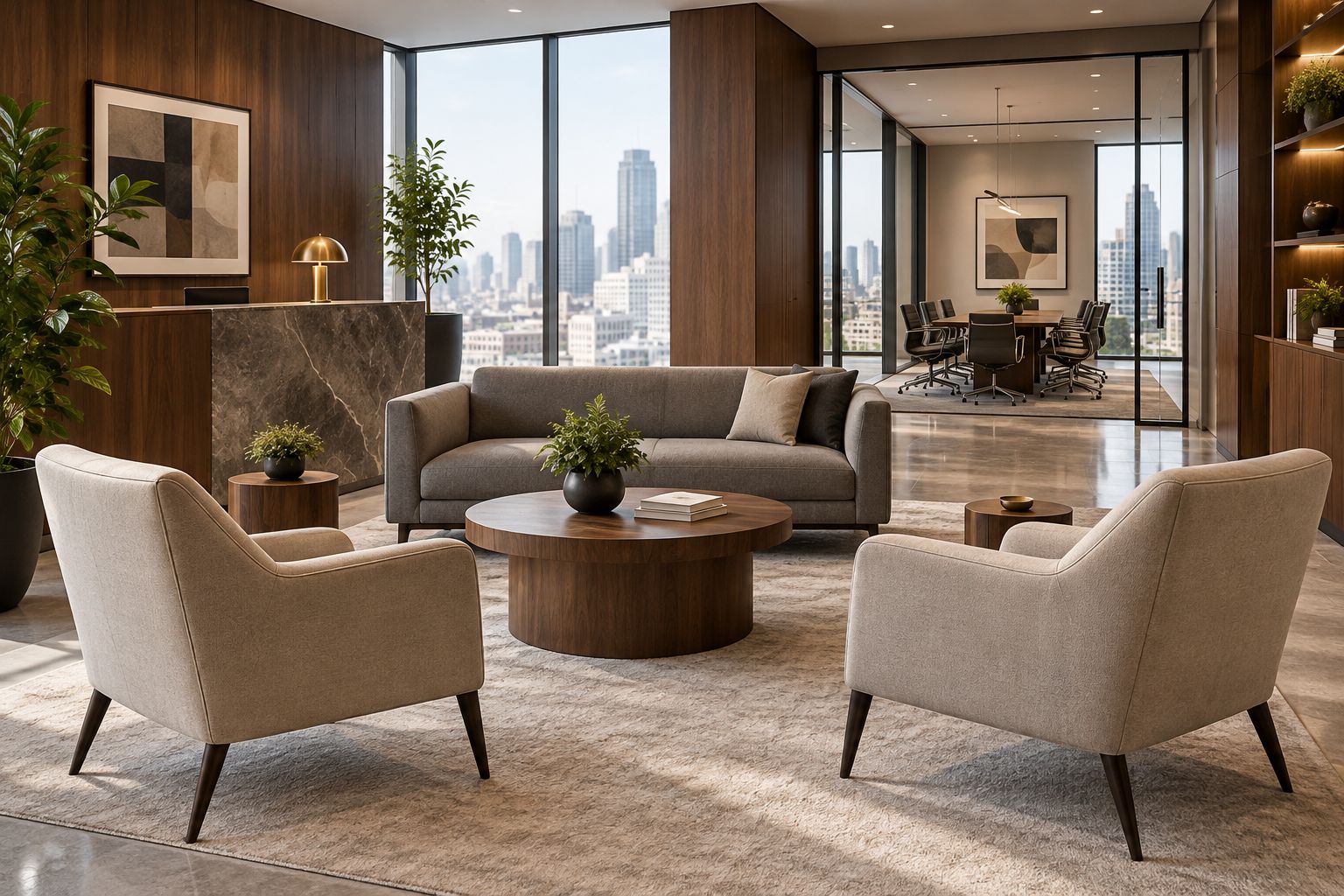 Provide individual seating choices instead of making a deep sofa the only waiting option.
5. Specify materials your team can maintain
Start with your cleaning routine. Ask whoever maintains the office which products and methods they use, then compare that routine with the furniture manufacturer’s written care instructions. Resolve conflicts before selecting upholstery.
Do not translate a material name into a performance guarantee. Leather, woven fabric, wood veneer, and metal finishes have different care requirements, and construction varies within each category. Request the relevant documentation for the exact item and finish under consideration.
View samples in the actual room, near daylight and under the office lighting. Look at texture, reflections, and visible marks rather than selecting solely from a screen. A restrained palette is easier to coordinate when the sample becomes the reference for later purchases.
- Request cleaning instructions for upholstery and exposed finishes.
- Ask for applicable wear, fire-performance, and intended-use documentation.
- Compare samples with the office’s existing floors and millwork.
- Check seams, exposed edges, joints, and accessible cleaning areas.
- Record approved cleaning methods in the facilities handover.
6. Coordinate privacy, lighting, and storage
Walk through a mock client appointment using the proposed arrangement. Sit where a visitor waits and check what is visible: screens, open files, meeting-room interiors, and staff work surfaces. Move furniture to correct sightlines before adding decorative objects.
Furniture defines a space; it does not make a conversation confidential. Upholstered seating and high backs are not substitutes for an enclosed room with appropriate acoustic design. Have the project team address sound transmission where sensitive discussions take place.
Use lighting to support the task rather than simply complete the composition. A table lamp adds local light, but document review still needs a suitable working surface and glare control. Keep cords out of walking routes and verify electrical arrangements with the responsible professional.
- Turn visitor seating away from exposed screens and working files.
- Provide secure storage appropriate to your records procedures.
- Use enclosed rooms for confidential consultations.
- Check reflections on screens and glossy tabletops from seated positions.
- Coordinate lighting, outlets, and cable routes before installation.
7. Approve the purchase and installation together
Create one approval sheet for the final selection. Include the exact configuration, finish, dimensions, delivery access notes, assembly responsibilities, and written terms. Ask the designated decision-maker to approve that sheet rather than a collection of disconnected messages.
For your 2026 installation, plan how the office will operate while furniture arrives. Decide where deliveries can be received, who checks the items, and how packaging leaves the building. Confirm arrangements with building management before committing to an installation plan.
Sohnne states a 60-day return policy and a 5-year warranty. Review the current written terms and confirm how they apply to your selected items and intended business use. Neither policy replaces dimensional checks or an assessment of suitability.
- Confirm item descriptions and finishes against the approved schedule.
- Record packaging dimensions and access constraints where provided.
- Assign responsibility for receiving, inspection, assembly, and placement.
- Document damage or discrepancies before discarding packaging.
- Store care instructions, invoices, and written terms together.
Compare furniture options by their best use
Choose by activity, not by status within the firm. The best option for a partner’s informal conversation area is not necessarily the best option for a client reviewing a lengthy agreement.
| Option | Best for | Main advantage | Key limitation |
|---|---|---|---|
| Upright upholstered armchairs | Reception and short consultations | Individual seating with a defined personal space | Dimensions and arm geometry still need testing |
| Compact sofa | Shared waiting and informal conversation | Groups seating within one furniture footprint | Offers less individual choice than separate chairs |
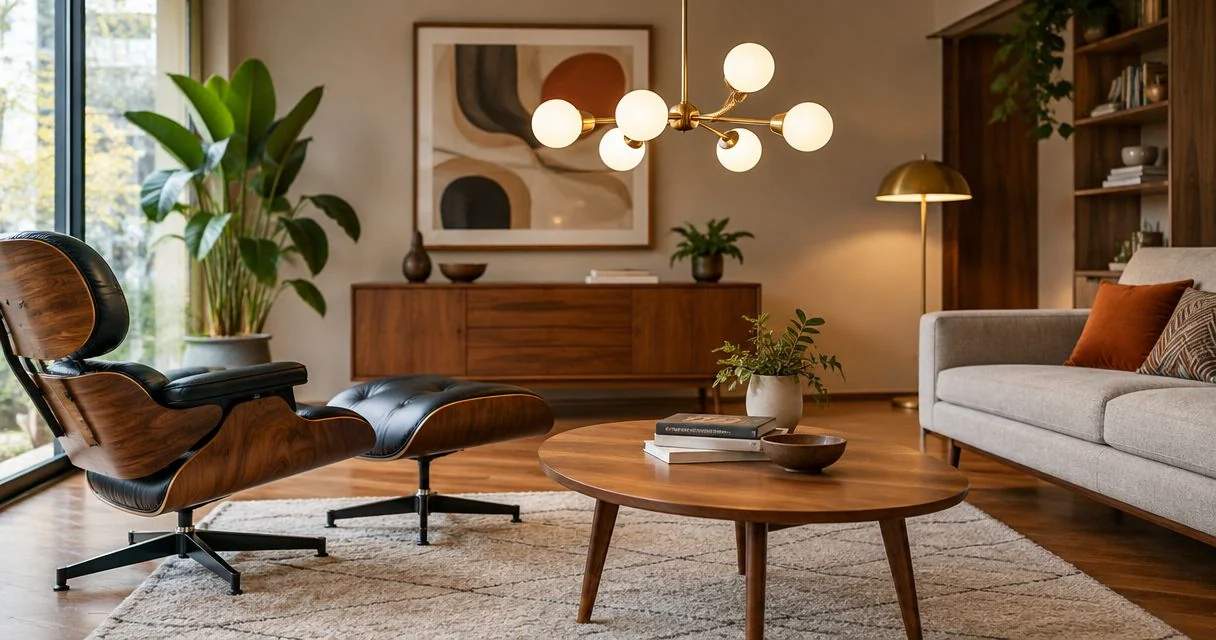
| Lounge chair with ottoman | Private reading or a staff retreat | Supports a more relaxed seating position | Not the default choice for signing documents |
| Adjustable task chair | Sustained desk and computer work | Allows users to adjust their working position | Requires fitting and adjustment for the user |
| Meeting table with upright chairs | Document review and formal meetings | Provides a shared working surface | Must accommodate occupied chairs and circulation |
| Enclosed storage | Records and office supplies | Keeps contents out of open view | Requires an appropriate security specification for confidential records |
Use lounge furniture where people pause and work furniture where people perform sustained tasks. Combining the categories thoughtfully is more useful than buying a visually matching office suite.
Common mistakes law firms make
Choosing the partner’s preference for every visitor
A chair that suits one decision-maker does not represent every client. Deep seats, low positions, and broad arms deserve a physical trial rather than approval from a photograph. Keep individual seating choices in reception and assess entry, exit, and table reach.
Treating a lounge as a consultation room
Soft seating creates a different posture from upright document review. If clients routinely read and sign papers, provide a suitable table and chairs in an enclosed room. Do not expect a low coffee table to serve as a working desk.
Assuming residential styling proves office suitability
A composed appearance does not establish performance, applicable test results, or warranty coverage for business use. Request documentation for the exact configuration. Where evidence does not answer the intended use, resolve the question before approving the item.
Using furniture as a privacy barrier
Tall seating backs and storage units can change sightlines, but they do not establish acoustic confidentiality. Review what visitors can see and hear from waiting areas. Keep sensitive conversations in rooms designed for that purpose.
Approving the room but forgetting the building
Furniture must pass through the entrance, elevator, corridor, and office doorway before it reaches the plan. Check the complete route and the supplier’s packaging information. A successful layout is not proof that a large assembled piece can reach it.
FAQ
What’s the best furniture for law firms?
The best furniture for law firms matches each room’s activity: upright visitor seating for reception, meeting tables for document review, adjustable chairs for desk work, and secure storage for records. Choose a consistent material palette without forcing every room into the same furniture category.
Can a law firm use residential furniture in reception?
Assess residential furniture individually before specifying it for a law firm’s reception. Confirm intended-use guidance, relevant performance documentation, maintenance requirements, and warranty coverage for the proposed business setting.
Is Sohnne a good fit for a law office?
Sohnne is a fit to assess for law firms seeking mid-century modern sofas, lounge chairs, lighting, and other client-facing furnishings. Confirm suitability for each proposed office use and specify staff task seating separately.
Should a law office buy a sofa or individual waiting chairs?
Prioritize individual waiting chairs when seating choice and personal space are central to the brief. A compact sofa can complement them, but it should not be the only seating option without testing the arrangement against your visitors’ needs.
Can lounge chairs replace office desk chairs?
Do not use lounge chairs as the default replacement for desk chairs. Specify adjustable task seating for sustained computer work and assess lounge chairs for waiting, informal conversation, or reading instead.
How do I check whether furniture will fit the office?
Measure the room, mark the furniture footprint, and test the arrangement with seats occupied and doors open. Check the complete delivery route and obtain packaging dimensions where provided before approving the purchase.
What should a law firm verify before ordering furniture in 2026?
Verify the exact configuration, dimensions, intended use, care requirements, delivery access, assembly responsibilities, and written purchase terms. Assign responsibility for receiving and inspection so the installation has a clear owner.
One last thing
Test your reception from the visitor’s seat, not from the doorway. Sit down with a coat, a bag, and a folder, then stand up and walk toward the consultation room. This simple exercise exposes awkward table placement and obstructed routes that an empty-room photograph misses.
For your 2026 project, approve the occupied room before approving the final order. The furniture should support the appointment, not interrupt it.
Related guides
- Designer-style furniture for corporate offices
- Assessing a padded aluminium office chair for long work hours
- Designer-style sofas ranked by durability
Stay connected with us!
Keep in touch with what’s new and next. Subscribe for weekly insights, product launches, and community news!