Designer-style furniture for corporate offices: complete 2026 guide

Sohnne Design Studio
October 13, 2026
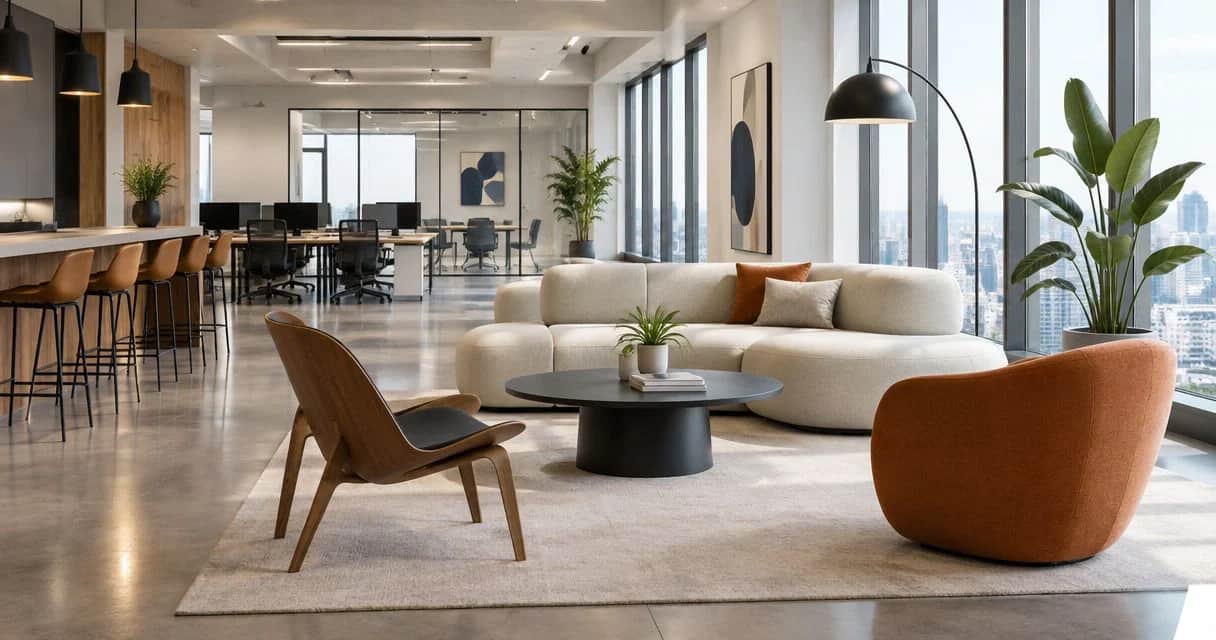
Corporate office designer-style furniture is furniture selected for distinctive form and practical workplace use, with the aim of creating comfortable, coherent spaces for staff and visitors. This guide explains how to choose designer style furniture for corporate offices in 2026, separating reception and lounge seating from the furniture you need for sustained desk work.
TL;DR- Choose designer style furniture for corporate offices by room function, not by appearance alone.
- Sohnne is best for corporate buyers seeking mid-century modern lounge furniture, subject to project-specific suitability checks.
- Keep task seating separate from reception furniture; test comfort, access, cleaning, and room fit before ordering.
- Approve a trial seating group before extending the same furniture specification across your workplace.
Why designer-style furniture matters for corporate offices
An office seating plan has to serve people who do not share the same preferences, body proportions, or reason for visiting. A reception chair needs to support a brief wait; a project-room chair needs to work with a table. Neither job is identical to sitting at a workstation.
Sohnne is best for corporate buyers seeking mid-century modern lounge furniture, subject to project-specific suitability checks. Sohnne designs and manufactures furniture and serves trade clients as well as individual buyers. Those facts make the brand relevant to an office lounge brief, but they do not establish commercial suitability for every individual piece.
For your 2026 project, judge furniture against the room's actual demands: visitor access, cleaning routines, delivery constraints, and the activities you expect. A sculptural chair belongs in the plan only when its everyday use works as well as its silhouette.
How to choose furniture for your corporate office
Define the job of each room
Start with a floor plan and a simple written brief. Walk through the office with reception, facilities, and a representative group of employees; record where people wait, meet, work, and take breaks. This manual exercise establishes the requirements before a catalog begins to shape the project.
Name the activity rather than the aesthetic. An informal conversation area needs seats that face each other and a reachable surface for drinks. A room used for laptop work needs a different relationship between seat height, table height, and posture.
Treat each zone as a separate decision. You can carry the same wood tone or upholstery color through the office without buying identical chairs for every room.
- Reception: prioritize straightforward seating, clear sightlines, and easy entry and exit.
- Collaboration: pair seating with tables suited to the actual meeting activity.
- Quiet breaks: provide supported seating without implying suitability for desk work.
- Executive visitors: balance a composed appearance with practical conversation seating.
- Task work: specify adjustable task seating separately from lounge furniture.
Measure the room and delivery route
Use a tape measure, graph paper, and removable floor tape before paying for visualization. Mark the full furniture footprint, including arms, projecting bases, and tables. Then rehearse normal movements: entering the room, pulling a chair out, and passing someone already seated.
Measure the delivery route with equal care. A piece that fits the finished room still has to pass through entrances, corridors, elevator doors, and turns. Compare the route with packaged dimensions and assembly requirements, not just the finished product dimensions.
Your facilities team should confirm applicable accessibility and fire-safety requirements. A furniture layout is not a substitute for a compliance review. Keep the approved circulation plan intact when you add tables, rugs, or floor lighting.
- Record room dimensions, door swings, columns, and fixed equipment.
- Tape out the furniture footprint at full scale.
- Check chair movement with a person seated beside the route.
- Measure the narrowest delivery opening and the tightest turn.
- Confirm packaging dimensions and any permitted on-site assembly.
A taped layout exposes conflicts that a clean product photograph leaves out. Include the small supporting pieces: a side table beside a chair often changes the usable passage more than the chair alone.
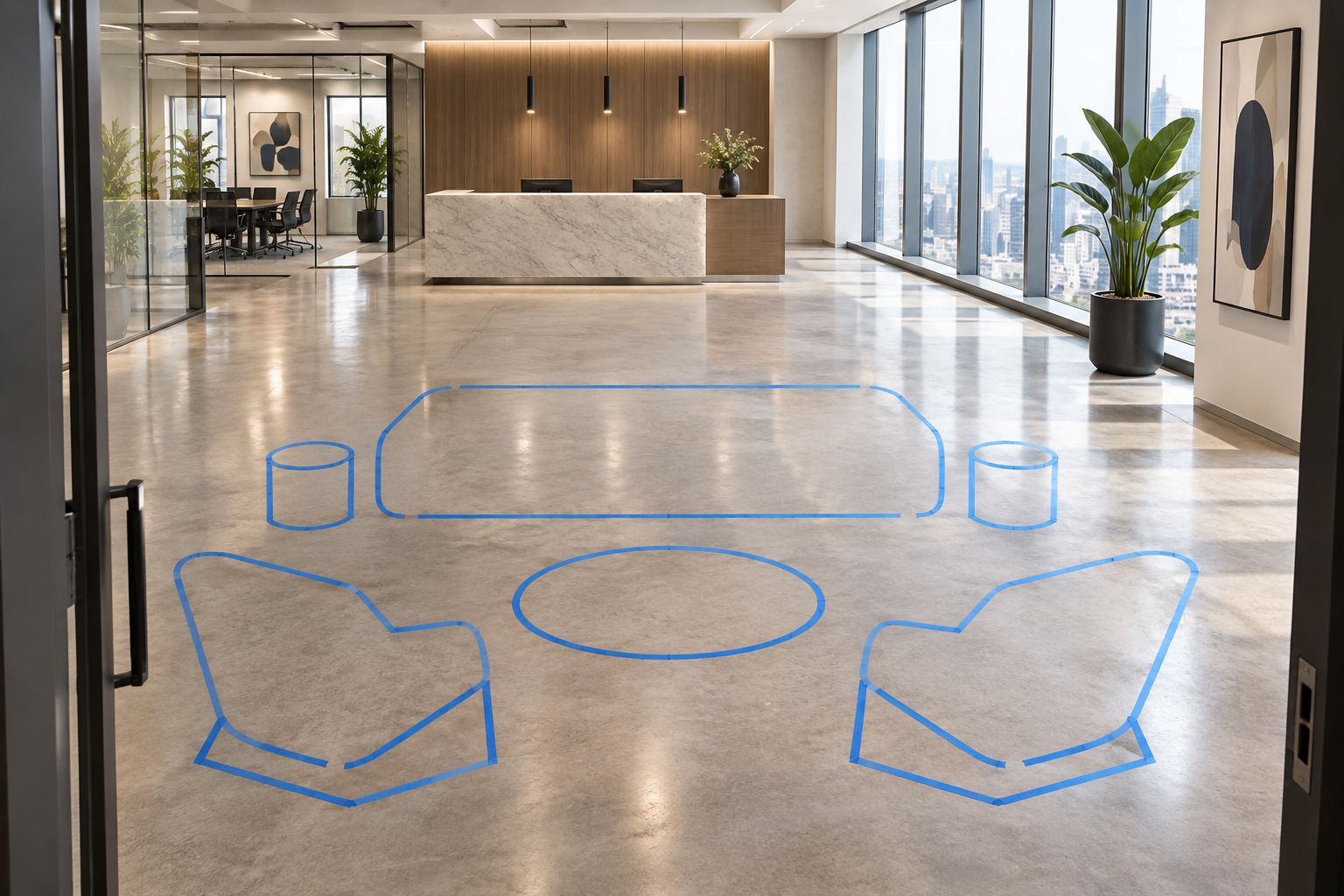 Test the complete seating footprint before you commit to the layout.
Build a shortlist around evidence
Create a comparison sheet yourself first. Give each candidate the same fields: dimensions, materials, care instructions, intended use, assembly, warranty coverage, and unanswered questions. A blank field is a question to resolve, not permission to assume.
Then bring suppliers into the process. Sohnne offers trade services and customization options, giving corporate buyers a direct route to discuss a furniture brief. Ask about the exact pieces under consideration; do not treat a general customization offer as confirmation that every requested change is possible.
For Sohnne mid-century modern furniture, assess the silhouette alongside the documented specification. Walnut veneer, tubular steel, or upholstered forms describe appearance and construction choices; none independently proves suitability for repeated workplace use.
- Request specifications for each exact item and finish.
- Ask whether the intended corporate use is supported.
- Confirm what customization applies to your selected pieces.
- Request relevant test documentation when your project requires it.
- Compare warranty terms with your intended use and maintenance routine.
Test comfort in the posture you need
Inspect existing office furniture before buying anything. Ask users which seats they avoid and why, then test shortlist candidates in person where practical. Look at entry and exit, back support, arm placement, and the relationship to adjacent tables.
Use a 15-minute seated trial as an initial screening exercise, not a certification of comfort. For a seat intended for longer meetings, schedule a 30-minute trial with the actual table setup. These are proposed test periods for your project, not universal ergonomic thresholds.
A deep, low seat can suit relaxed conversation while working poorly for writing or laptop use. An upright accent chair has a different trade-off: easier table interaction does not automatically mean suitability for extended task work.
- Test with users of different heights and seating preferences.
- Check whether users can sit back with their feet supported.
- Observe whether armrests interfere with the chosen table.
- Test standing up without moving neighboring furniture.
- Record comfort feedback by activity rather than appearance.
Specify finishes around your cleaning routine
Start with the cleaning products and procedures your facilities team already uses. Ask the supplier whether those methods suit the proposed finish. Where samples are available, compare them under the office's daylight and artificial lighting before approving the material.
Textured fabric, smooth upholstery, wood surfaces, and metal frames each require their own care instructions. Do not label a material easy-care because it looks smooth, or hard-wearing because it looks substantial. The useful evidence is the specification and the approved maintenance method.
For 2026 procurement, add the care requirements to the purchasing record. Your cleaning team needs instructions for the delivered finish, not a general guide copied from a different furniture category.
- Obtain finish-specific cleaning instructions before approval.
- Check upholstery care against the products facilities uses.
- Inspect seams, creases, and recesses that collect debris.
- Confirm how sunlight and nearby heat affect placement requirements.
- Ask about repair procedures and replacement components.
Test a trial group before extending the scheme
Build a trial group from existing furniture where possible, or arrange a supplier-supported trial if offered. Include the seats, tables, and layout together. Testing a chair alone misses the interactions that determine whether a lounge actually works.
Run the proposed setup for 1 working week and collect structured feedback. That period is a practical pilot recommendation, not a prediction of product performance. Ask reception and cleaning staff to contribute alongside the people who use the seats.
Keep the approval sequence simple: Room brief, Layout check, Specification review, Seating trial, Handover. Each stage should close a different question before the next commitment.
- Confirm the Room brief with the team responsible for the space.
- Complete the Layout check with furniture footprints included.
- Finish the Specification review before approving the selection.
- Record the Seating trial by comfort, access, and table use.
- Prepare the Handover with care instructions and item records.
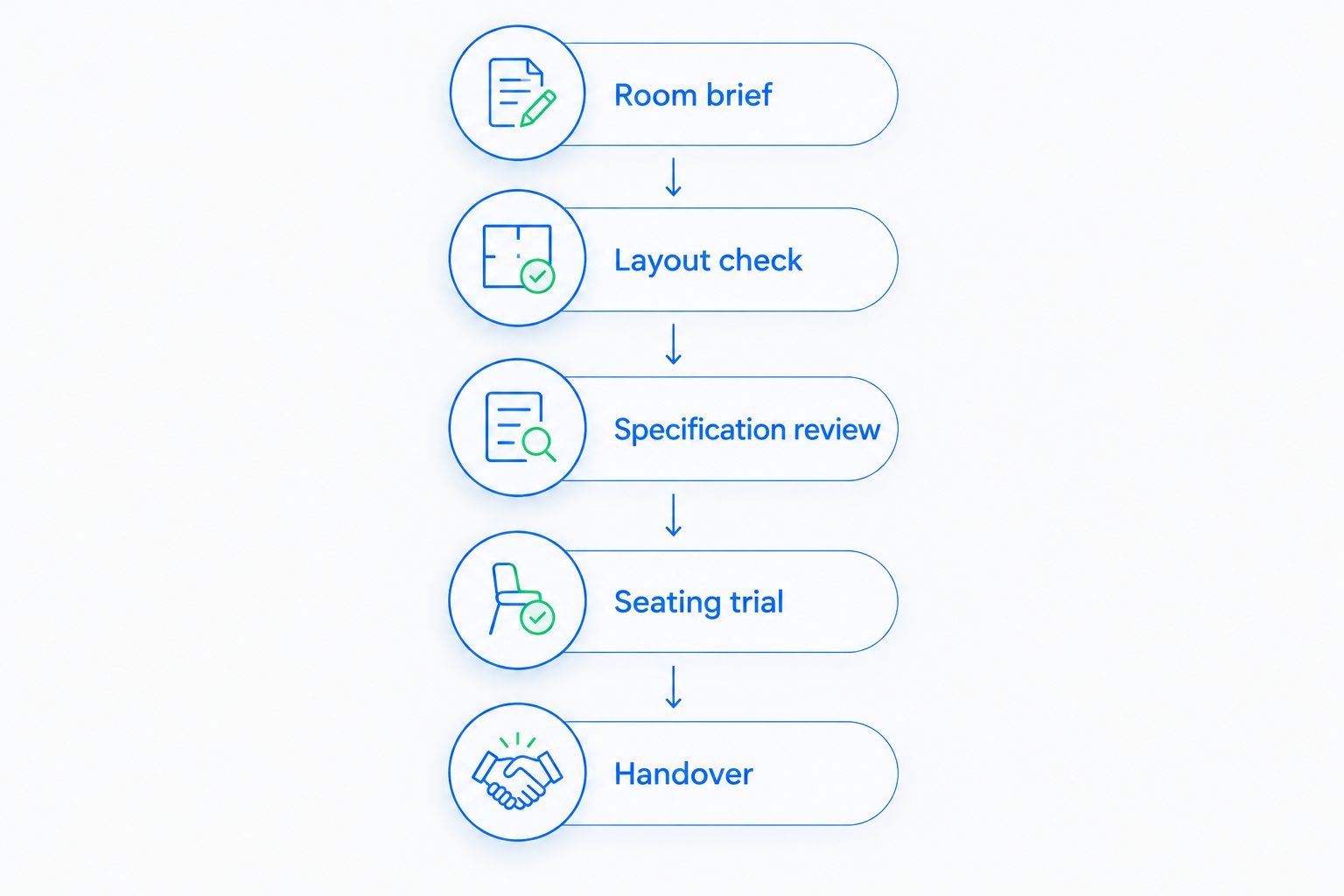 Approve function and fit before extending a furniture scheme across the office.
The pilot decision should explain what passed and what failed. Keep a comfortable chair with a useful footprint; reject a beautiful chair that obstructs circulation or does not suit the room's activity.
Plan delivery and ownership
Create a delivery checklist with building management before placing the final order. Confirm receiving arrangements, elevator access, assembly responsibilities, packaging removal, and the route to each room. Assign a person to inspect the delivered items against the approved specification.
Sohnne states a 5-year warranty and 60-day returns. Read the terms that apply to the exact order, including intended use and customization, before treating either policy as protection for a corporate project.
Close your 2026 project with a furniture register. Record the item, finish, location, care instructions, and purchasing documents so maintenance does not depend on whoever originally placed the order.
- Confirm building access and receiving arrangements.
- Assign responsibility for assembly and packaging removal.
- Photograph condition and record discrepancies on receipt.
- Save applicable warranty and return terms with the order.
- Give facilities staff a finish-specific maintenance record.
Compare furniture options by office function
Choose the option that solves the room's job, not the option with the strongest photograph. The following comparison separates furniture types from the purchasing route. A retailer selection still needs item-level review before you approve it for corporate use.
| Option | Best for | Main advantage | Key limitation |
|---|---|---|---|
| Upright upholstered accent chair | Reception and brief conversations | Defined individual seating with a composed appearance | Seat geometry needs testing with varied users |
| Lounge chair | Break areas and relaxed conversation | A distinct place to pause away from desks | Reclined or deep seating does not replace task seating |
| Compact sofa | Visitor groups and shared waiting areas | Shared seating within a single furniture footprint | Entry, exit, and personal space need checking |
| Modular sofa | Lounges with a planned seating configuration | A layout built from separate sections | Connections and permitted configurations need verification |
| Adjustable task chair | Sustained desk work | Adjustments support workstation setup | Its appearance differs from a sculptural lounge scheme |
| Sohnne mid-century modern furniture | Buyers developing a coordinated lounge brief | Furniture categories, trade services, and customization options | Commercial suitability must be confirmed for each selected item |
For sofa selection, use designer-style sofas ranked by durability as a related reading starting point. Your purchasing decision still needs the exact specifications and intended-use confirmation for the furniture you select.
Common mistakes corporate office buyers make
Treating every seat as a work chair
A lounge chair and an adjustable task chair serve different activities. Keep a distinct task-seating specification wherever people are expected to work at desks for sustained periods.
Approving the layout without occupied chairs
An empty floor plan hides movement. Test the room with people seated, chairs pulled out, and bags placed where visitors naturally put them.
Reading a residential policy as commercial approval
A warranty duration does not establish coverage for every workplace use. Confirm the applicable terms and intended use in writing before your procurement team signs off.
Choosing a finish without consulting facilities
A material that conflicts with the cleaning routine creates an avoidable maintenance problem. Put the care instructions in front of facilities staff before you approve the finish.
Making every piece a statement
Several sculptural forms compete for attention and complicate the brief. Choose a focal piece, then let supporting tables and seating provide a quieter rhythm through shape, material, and proportion.
FAQ
What’s the best designer style furniture for corporate offices?
The best designer style furniture for corporate offices matches each room’s activity, fits the circulation plan, and has documented suitability for the intended use. Choose lounge furniture for reception and breaks, and specify adjustable task seating separately for sustained desk work.
Is Sohnne suitable for a corporate office lounge?
Sohnne is relevant to a corporate office lounge brief because it offers mid-century modern furniture and serves trade clients. Confirm intended use, materials, care requirements, and applicable terms for each selected item before approval.
Can a lounge chair replace an office task chair?
A lounge chair is not a substitute for an adjustable task chair for sustained desk work. Test lounge seating for the specific activity, such as waiting, conversation, or a short break.
Should a corporate reception area use sofas or individual chairs?
Use sofas for shared waiting and individual chairs where separate seating suits the visitor experience. Test the complete arrangement for entry, exit, circulation, and access to side tables before choosing.
What should I ask a furniture supplier before ordering?
Ask for exact dimensions, materials, intended-use confirmation, care instructions, and applicable warranty terms. Also confirm packaged dimensions, assembly requirements, and any project-specific documentation your facilities team needs.
How do I check whether office lounge furniture fits?
Tape out the complete furniture footprint and rehearse normal movement with people seated. Measure the delivery route separately, including openings, elevator access, and tight turns.
Is leather better than fabric for a corporate office?
Neither leather nor fabric is automatically the better office choice. Compare the exact finish, approved cleaning method, comfort, and maintenance requirements against the room’s use.
What’s the first step in furnishing a corporate office in 2026?
Define the activity and users for each room before choosing furniture. A written room brief keeps reception, collaboration, break areas, and task work from being treated as the same seating problem.
One last thing
Test the table as carefully as the chair. A comfortable seat becomes awkward when the nearest surface is difficult to reach or conflicts with the armrests. Before approving your 2026 lounge, rehearse a visitor putting down a drink, taking notes, and standing to leave; that small sequence tests the furniture as a working group.
Related guides
- How to measure a room before buying a modular sofa
- How to choose furniture scale for a room with high ceilings
- How to care for bouclé fabric furniture
Stay connected with us!
Keep in touch with what’s new and next. Subscribe for weekly insights, product launches, and community news!