How to Choose a Lounge Chair for a Tall Person in 2026

Sohnne Design Studio
July 27, 2026
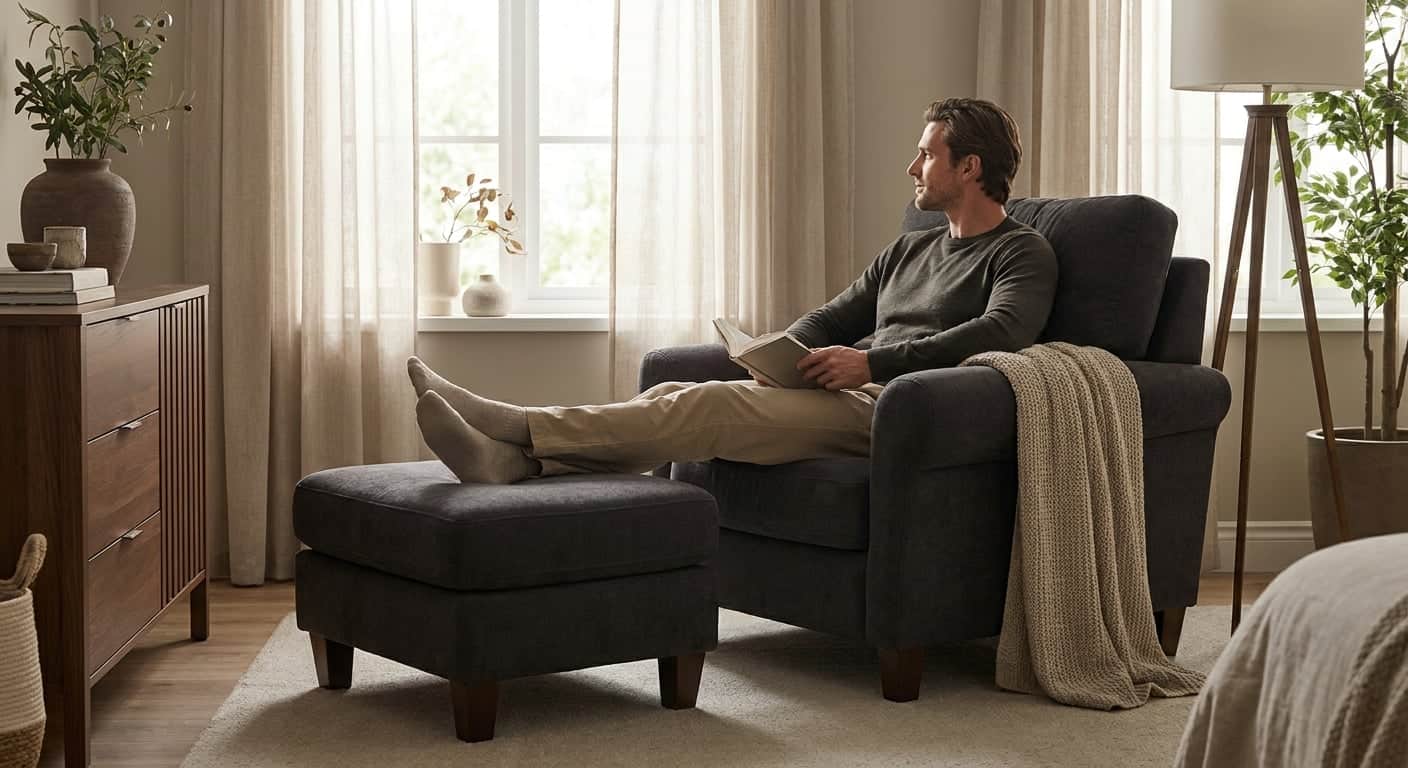
Six-foot-two and taller changes the math on lounge chair comfort — seat depth, back height, and recline angle all have to scale up or the chair fights your frame instead of holding it.
TL;DR- A lounge chair for a tall person needs 22-24 inches of seat depth, not the standard 19-21 inches.
- Back height of 32-34 inches keeps your head supported instead of the headrest hitting mid-shoulder.
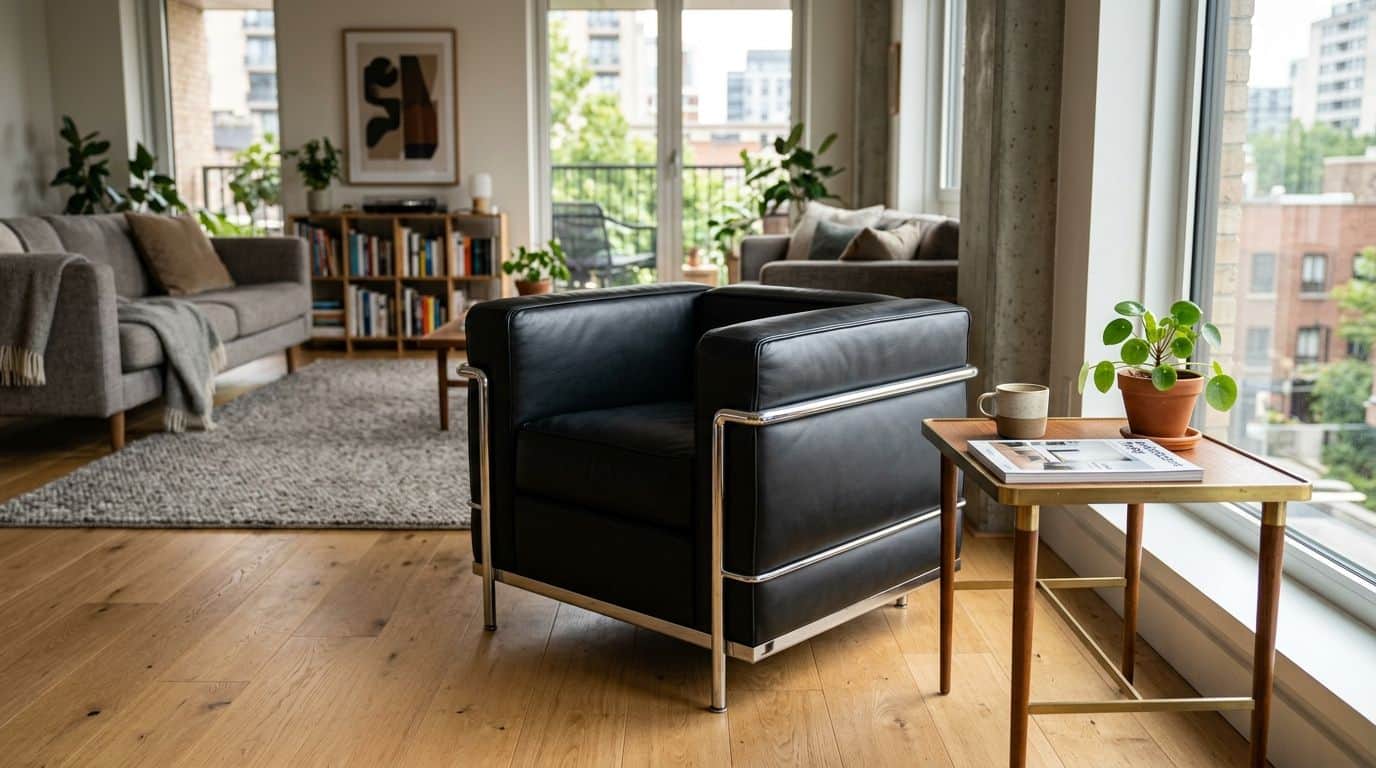
- The Eames Lounge Chair replica and Tired Man lounge chair and ottoman both scale well past 6’2" frames.
- Seat height around 17-18 inches keeps knees level with hips instead of pointing skyward.
- Skip anything under 300 lb frame capacity if you’re broad-shouldered as well as tall.
Why this matters
Most lounge chairs on the market in 2026 are still built around a 5'9" average sitter. That means seat depth, armrest height, and back height are all calibrated a few inches short for anyone over 6 feet.
Sit in a chair that's too shallow and your knees ride up past your hips. Sit in one with a low back and the headrest lands between your shoulder blades instead of behind your skull. Neither is a style problem — it's a measurement problem, and it's fixable before you buy.
What you'll need
- A tape measure and 10 minutes
- Your seated height (sit on a hard chair, measure floor to top of head)
- Your inseam length, measured while standing
- The room dimensions where the chair will sit, including clearance for recline
- A notepad or phone to record seat depth, seat height, and back height for each chair you're comparing
If you're shopping the Eames Lounge Chair replica or a similar mid-century piece, pull the published dimensions before you shop rather than after — return windows on large furniture run 30-60 days depending on retailer, and you want the numbers checked up front.
The steps
1. Measure seated height, not standing height
Standing height tells you almost nothing about how a chair will feel. What matters is the distance from the seat to the top of your head when you're sitting upright, plus your torso length.
Sit on any hard dining chair, measure floor to crown, and write it down. A reading of 36-38 inches seated usually means you need a back height in the 32-34 inch range to get real head support. Common mistake: shoppers measure standing height and assume a chair rated for "tall" fits — it often doesn't, because torso-to-leg ratio varies by several inches person to person.
2. Check seat depth before anything else
Seat depth is the single most-ignored spec on a lounge chair listing, and it's the one that decides whether your knees sit level with your hips or point up toward the ceiling.
Standard lounge chairs run 19-21 inches of seat depth. At 6'2" and above, look for 22-24 inches. Expected outcome: thighs fully supported to the knee, feet flat on the floor without pressure behind the knee. Common mistake: buyers fixate on seat width and skip depth entirely, ending up with a chair that looks right in photos and feels wrong in five minutes.
3. Confirm back height covers shoulder blades to skull
A back height under 30 inches lands the headrest at mid-back for anyone over 6 feet, which forces the neck forward instead of supporting it.
Look for 32-34 inches of overall back height on chairs marketed for taller sitters. If the listing doesn't state it, ask before ordering — this single number decides whether the chair reads as a reading chair or a napping chair for your specific height. Common mistake: assuming a "high-back" label means tall-person-high; it's a relative term with no fixed threshold.
4. Test armrest height against your natural elbow bend
Sit with arms relaxed at your sides, elbows bent 90 degrees. The armrest should meet your forearm at that height, not below it.
For taller frames, that's typically 9-11 inches above the seat, a couple inches higher than standard. Expected outcome: shoulders stay level, no hunching to reach the armrest. Common mistake: shoppers test armrest height standing next to the chair instead of seated in it — the two measurements rarely match.
5. Match recline angle to leg length
A fixed recline that puts your knees higher than your hips at full recline signals the seat depth or footrest length is too short for your leg proportions.
If the chair has an ottoman or footstool, check that its height plus the seat height roughly equals your lower leg length from knee to heel. Common mistake: buying the chair without the matching ottoman, then discovering the standalone footstool options don't reach.
6. Shortlist chairs designed with generous original dimensions
Some mid-century designs were built oversized from the start and scale better to tall frames than pieces designed for average 1950s-60s sitters. The Tired Man lounge chair and ottoman was drawn as a deep-seat lounge piece from the outset, and the Papa Bear Chair replica carries a wide, deep profile with wing sides built for full-body lean-back.
Both run deeper in seat and taller in back than a typical accent chair, which is exactly the gap a 6'3" or 6'4" sitter needs closed. Expected outcome: full thigh support and a headrest that actually reaches your head.
7. Verify weight capacity and frame construction
Height and weight often scale together, so a tall frame paired with broader shoulders needs a chair rated well past the 250 lb minimum most budget chairs list.
Look for solid hardwood or steel internal framing rather than particleboard, and a stated capacity of 300 lb or higher if you're over 220 lb. Common mistake: trusting a weight rating that isn't disclosed anywhere on the product page — ask directly before you order.
Browse lounge chairs built for scale
Compare seat depth, back height, and frame details before you buy.
Browse lounge chairsTroubleshooting
Feet dangle or barely touch the floor. The seat height is too tall for your leg length — look for 17-18 inches instead of the 15-16 inch range common on classic mid-century designs, or add a low footstool matched to the seat height.
Knees sit higher than hips. Seat depth is too short. Move to a chair rated 22-24 inches of depth rather than the 19-21 inch standard.
Headrest hits mid-back, not your head. Back height is under 30 inches. You need 32-34 inches minimum for a 6'2" or taller frame.
Armrests dig into your forearms. Armrest height sits below your natural elbow bend. Recheck seated, not standing, and look for 9-11 inches above the seat.
Chair feels unstable when you recline fully. Base or leg spread is too narrow relative to your body length. Wider bases and lower centers of gravity handle full recline better for taller, heavier frames.
Fabric or leather pulls at the seams within months. This is a build-quality issue, not a sizing one — check stitching and frame joinery before buying, since taller frames put more sustained load on every seam.
Tools and resources
- Tape measure for seat depth, back height, and armrest height
- Your seated-height and inseam measurements from step one
- A guide on picking a lounge chair for neck pain if you're also dealing with neck strain alongside sizing issues — the back-height math overlaps directly
- Room measurements including recline clearance, since taller chairs often need 6-8 inches more depth behind the frame
What to do next
Once seat depth and back height are locked in, the next decision is upholstery and how the chair reads in the room. If you're still narrowing down which design fits a tall frame best, start with the two picks named above and compare their published dimensions side by side before ordering either one.
FAQ
What’s the best lounge chair for a tall person over 6’4"?
A lounge chair with 22-24 inches of seat depth and 32-34 inches of back height fits a 6’4" frame best in 2026. The Tired Man lounge chair and ottoman and the Papa Bear Chair replica both run deeper and taller than standard accent chairs.
Is seat depth or seat height more important for tall people?
Seat depth matters more for tall people because shallow seats push the knees up regardless of seat height. Check depth first, then confirm seat height keeps feet flat on the floor.
How much does a lounge chair sized for tall people cost?
Pricing varies widely by material and design pedigree, so check current listings directly. Deeper, taller-back chairs generally cost more than standard accent chairs due to added frame material.
Does the Eames Lounge Chair work for someone 6’3"?
It can, but check seat depth and back height against your seated measurements first since the original design was scaled to a 1950s average sitter, not a modern 6’3" frame.
What seat height is best for a tall person’s lounge chair?
17-18 inches typically keeps knees level with hips for anyone over 6’2", compared to the 15-16 inch standard on many classic designs.
Can an ottoman fix a lounge chair that’s too short?
A matched ottoman can fix leg-length mismatch but won’t fix a shallow seat or low back height. Those require a different chair, not an accessory.
How do I know if a lounge chair’s back is tall enough?
Measure your seated height from floor to crown, then look for a chair back within 2-4 inches of that number. Anything shorter forces your neck forward instead of supporting your head.
Are wingback chairs better for tall people than lounge chairs?
Not inherently — depth and back height still decide fit regardless of style. A wingback with shallow seat depth fails a tall sitter the same way a standard lounge chair does.
One last thing
The gap between a chair that fits and one that doesn't is rarely more than 2-3 inches of seat depth or back height — small enough that most people never think to check it, and exactly why so many tall buyers end up returning a chair that looked perfect in photos.
Related guides