Best Lounge Chair for Neck Pain 2026: Buying Guide

Sohnne Design Studio
July 12, 2026
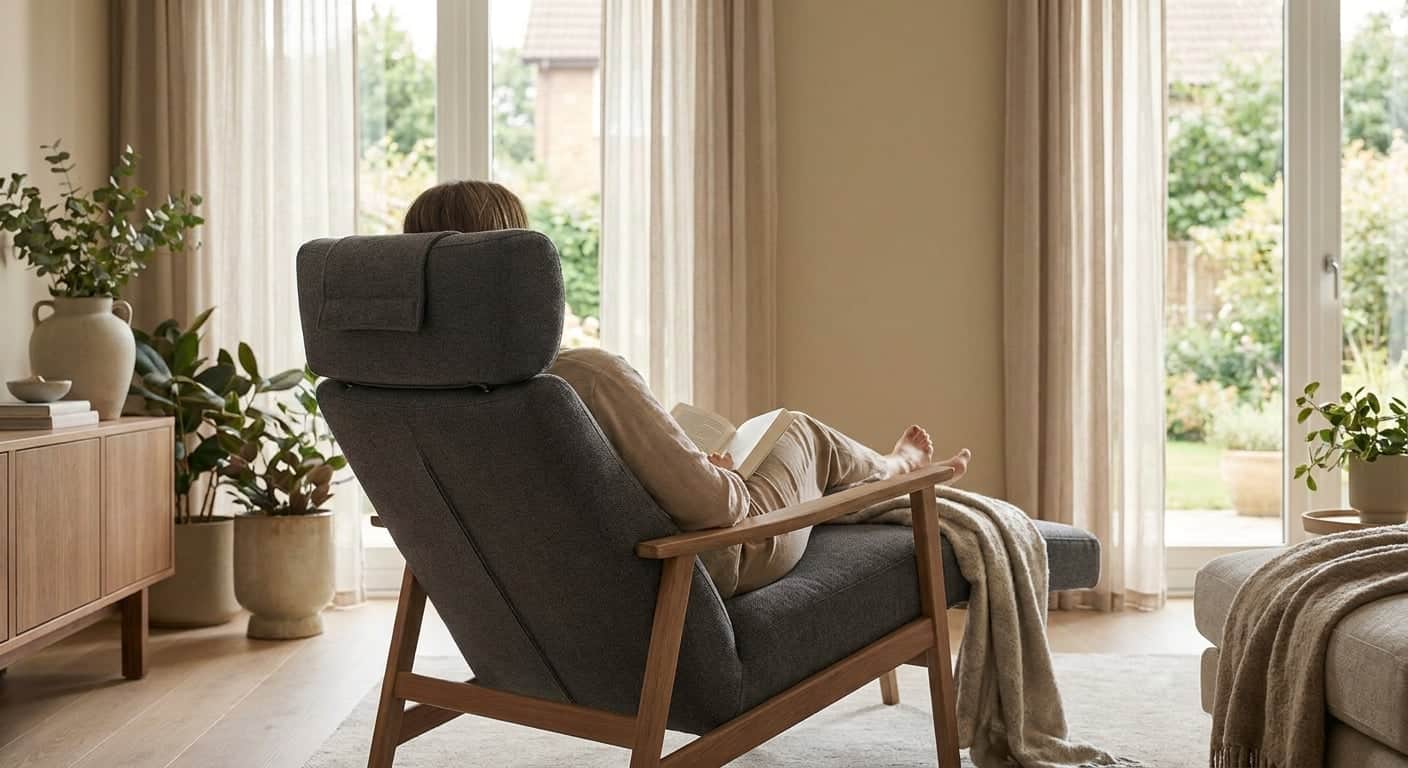
Neck pain from a lounge chair usually comes down to one thing: the headrest angle doesn't match your seated recline, and no amount of cushion softness fixes that mismatch.
This guide walks through how to test, measure, and choose a lounge chair that actually supports your neck instead of forcing it forward for hours at a time.
TL;DR
The best lounge chair for neck pain has an adjustable or correctly angled headrest, a seat-to-backrest recline between 100 and 110 degrees, and a headrest depth that meets the base of your skull, not your upper back. The Eames Lounge Chair replica is a strong Buy for most home offices and reading rooms in 2026 because its curved headrest shell was engineered around cervical support, not just aesthetics. If you sit reclined for naps or TV, the Swan Chair replica is a solid Consider with its wing-back head support. Skip anything with a flat, unshaped headrest cushion regardless of price.
Why this matters
A chair that looks ergonomic in a showroom photo can still tip your chin forward 15-20 degrees once you sit in it for 45 minutes. That forward tilt loads the cervical spine the same way scrolling on a phone does, and it compounds over a workday.
Most neck pain complaints tied to lounge chairs trace back to three measurable issues: recline angle too shallow, headrest sitting too low, or seat depth too long for the sitter's torso. Fix those three and the chair does the work instead of your neck muscles.
Sohnne builds its lounge seating to 1:1 original dimensions from mid-century references, which matters here because those original designs (Eames, Jacobsen's Swan, Corbusier's chaise) were drafted with specific recline geometry in mind. Reproductions that alter proportions to cut cost often lose that geometry first.
What you'll need
- A tape measure (for seat height, seat depth, and headrest position)
- 10-15 minutes to sit and test each chair candidate, not just look at it
- A notepad or phone to log recline angle by eye or with a protractor app
- Your current pain triggers written down (looking down at a laptop, TV height, nap position)
- A target lounge chair, such as the Eames Lounge Chair replica or Papa Bear Chair replica, to measure against
The steps
1. Measure your current pain pattern first
Before shopping, figure out when the pain shows up. Is it after 20 minutes of reading, or only during a nap when your head rolls to one side? This tells you whether you need a fixed headrest angle or a chair with side wings that cradle the head laterally.
Write down the activity and the approximate time before discomfort starts. A pattern under 30 minutes usually points to headrest height being wrong; a pattern that only appears when reclined fully points to insufficient neck support at rest.
Common mistake: blaming the cushion firmness when the real issue is headrest geometry. Softer padding rarely fixes an angle problem.
2. Check the recline angle, not just the look
Sit in the chair and have someone eyeball the angle between your seat and backrest, or use a protractor app against the backrest. A recline between 100 and 110 degrees keeps your head naturally over your spine without craning forward or tipping back too far.
Anything under 95 degrees pushes your chin down toward your chest over time. Anything past 115 degrees without a headrest that follows the angle leaves your neck unsupported and your head drifting backward.
Expected outcome: your ear should sit roughly above your shoulder when relaxed in the chair, not in front of it.
3. Test headrest contact at the base of the skull
Sit all the way back and let your head fall naturally against the headrest. The contact point should land at the base of your skull (occipital region), not your upper back or shoulders.
If you have to tilt your chin up to touch the headrest, it sits too low for your height. If your neck stays unsupported while your shoulders touch first, the headrest is either too shallow or the recline angle is wrong.
The Swan Chair replica uses a continuous wing-to-headrest curve that adapts to a range of heights better than a fixed pillow-style headrest.
Common mistake: buyers pick a chair based on standing height alone and skip this seated test entirely.
4. Measure seat depth against your thigh length
Sit back fully and check the gap behind your knees. You want two to three finger-widths of space. A seat that's too deep forces you to either slouch forward (losing headrest contact) or sit on the front edge (losing back support altogether), both of which drag your neck forward to compensate.
This is a common failure point in oversized lounge chairs bought for their look rather than their fit. A chair scaled for a 6'2" frame will consistently mispositio a 5'4" sitter's neck against the headrest.
Expected outcome: your lower back stays against the backrest and your head reaches the headrest at the same time, without leaning forward.
5. Factor in armrest height for shoulder tension
Armrests that sit too low make you shrug or lean to reach them, which pulls the trapezius and indirectly strains the neck. Armrests that sit too high push your shoulders up toward your ears.
The correct height lets your forearms rest flat with your shoulders relaxed and level, elbows near a 90-degree bend. This step gets skipped constantly because people assume the seat and headrest are the only variables that matter.
Common mistake: ignoring armrest height and only adjusting a separate ottoman or footrest to compensate.
6. Decide between fixed and reclining mechanisms
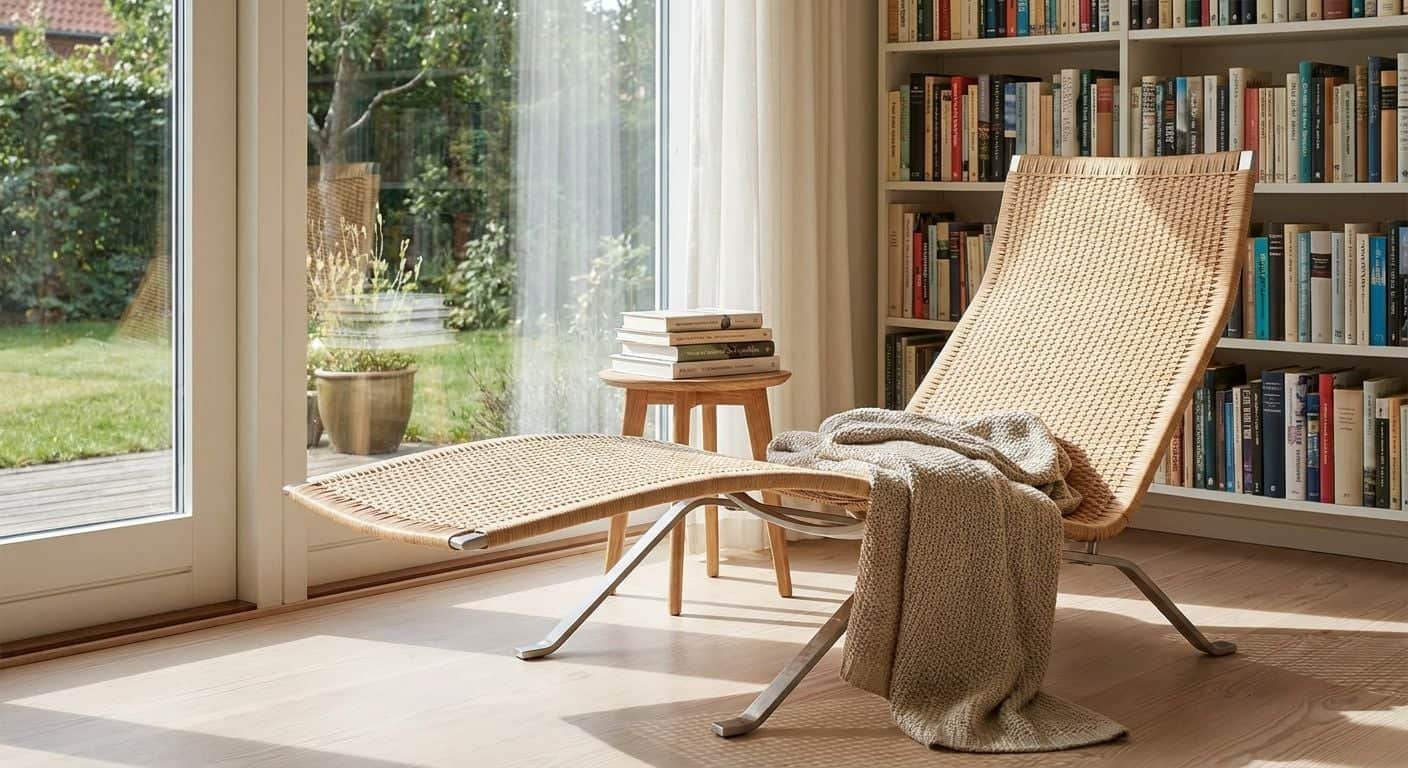
A fixed-angle lounge chair, like a classic wingback or the Corbusier LC4 chaise lounge replica, works well if you use it for one primary activity (reading, resting) at a consistent posture. A chair with a reclining mechanism gives you flexibility across activities but needs to hold its angle firmly, not sag over the first 6-12 months of use.
If your pain shows up specifically during naps or extended reclining, prioritize a chaise-style piece with a longer seat pan that supports the full length of your legs and torso, taking pressure off the neck as the anchor point.
Expected outcome: you should be able to name the one or two activities the chair needs to support before buying, not shop for a generic "comfortable chair."
7. Sit for a full 20 minutes before deciding
Showroom testing for 90 seconds tells you almost nothing about neck strain, which builds gradually. If you're buying in person, sit through an actual reading session or a video on your phone for 20 minutes minimum.
If you're buying online without a showroom visit, lean on return policies. A 60-day return window, for example, gives enough time to notice whether pain returns after a week of regular use, not just a first impression.
Common mistake: trusting a five-minute test sit and skipping the return-window safety net entirely.
Troubleshooting
- Neck pain only during naps, not upright sitting: the headrest angle is likely wrong for a reclined position specifically. Look at wing-back designs like the Papa Bear Chair replica that cradle the head at multiple angles.
- Pain on one side only: you're likely leaning or rolling your head to one side, often because the headrest is too narrow. A wider headrest shell or wings prevent the lateral roll.
- Pain after long reading sessions but not TV: your neck is craning forward toward the book or device. Raise the book to eye level with a stand, or pick a chair with a slightly more upright recline for reading specifically.
- Chair felt fine in-store but hurts after a week at home: cushions compress and soften with regular use, which changes the effective headrest position. This is where a return window matters.
- Pain returns even with correct measurements: the underlying issue may not be the chair. Persistent neck pain unrelated to a specific posture change is worth mentioning to a physical therapist rather than solving through furniture alone.
Tools and resources
- Tape measure and a protractor app for angle checks
- The Eames Lounge Chair replica guide for dimension and finish specifics
- The Corbusier LC4 chaise lounge replica page if a reclined chaise fits your space better than an upright lounge chair
- The best replica lounge chairs for a reading nook roundup if you're comparing multiple upright options side by side
What to do next
Once you've narrowed down the recline angle and headrest style that works for your body, compare specific models against each other rather than shopping by price alone. The Swan Chair replica features and finish guide breaks down the wing-back headrest option in more detail if that's the direction your testing points you toward.
FAQ
What's the best lounge chair for neck pain in 2026?
There's no single universal answer, but chairs with a curved or wing-style headrest and a 100-110 degree recline consistently perform best for cervical support. The Eames Lounge Chair replica and Swan Chair replica are two shapes that address this directly through headrest geometry rather than added padding.
Is a reclining chair better than a fixed-angle chair for neck pain?
A reclining chair is better if you use it for multiple activities at different postures, since you can adjust the angle to match. A fixed-angle chair, like the Corbusier LC4 chaise, works well if you consistently use it for one activity like resting or reading in the same position.
How much does a good ergonomic lounge chair cost?
Pricing varies by material, size, and brand, so check current pricing directly on the retailer's site rather than relying on a fixed figure. Focus the budget conversation on headrest design and recline angle, not just upholstery quality.
Can a cushion or neck pillow fix a bad headrest angle?
A pillow can help temporarily, but it doesn't correct a fundamentally wrong recline angle or seat depth. It's a stopgap, not a fix, and often just shifts the strain to a different point in the neck.
Does seat depth actually affect neck pain?
Yes. A seat too deep for your torso forces you to either slouch forward or perch on the edge, both of which pull your head out of alignment with the headrest.
How long should I test a lounge chair before deciding?
Sit for a minimum of 20 minutes doing the activity you'll actually use the chair for. Neck strain builds gradually, so a 90-second showroom sit won't reveal it.
Is a wingback chair better than an open lounge chair for neck support?
A wingback style offers lateral head support that an open lounge chair without wings doesn't, which matters if you tend to roll your head to one side while resting.
What's the difference between a lounge chair and a chaise for neck pain relief?
A chaise supports the full length of your legs and torso in a reclined position, taking pressure off the neck as the sole support point. A standard lounge chair keeps you more upright and relies more heavily on the headrest alone.
One last thing
The detail most buyers skip: check whether the headrest height is fixed or the whole chair shell adjusts to your seated position, because a headrest that's off by even 2 inches changes the contact point at the base of your skull enough to reintroduce forward tilt. Measure that one number before anything else in 2026.