Eames Rocking Chair Replica in a Nursery: 2026 Guide

Sohnne Design Studio
August 21, 2026
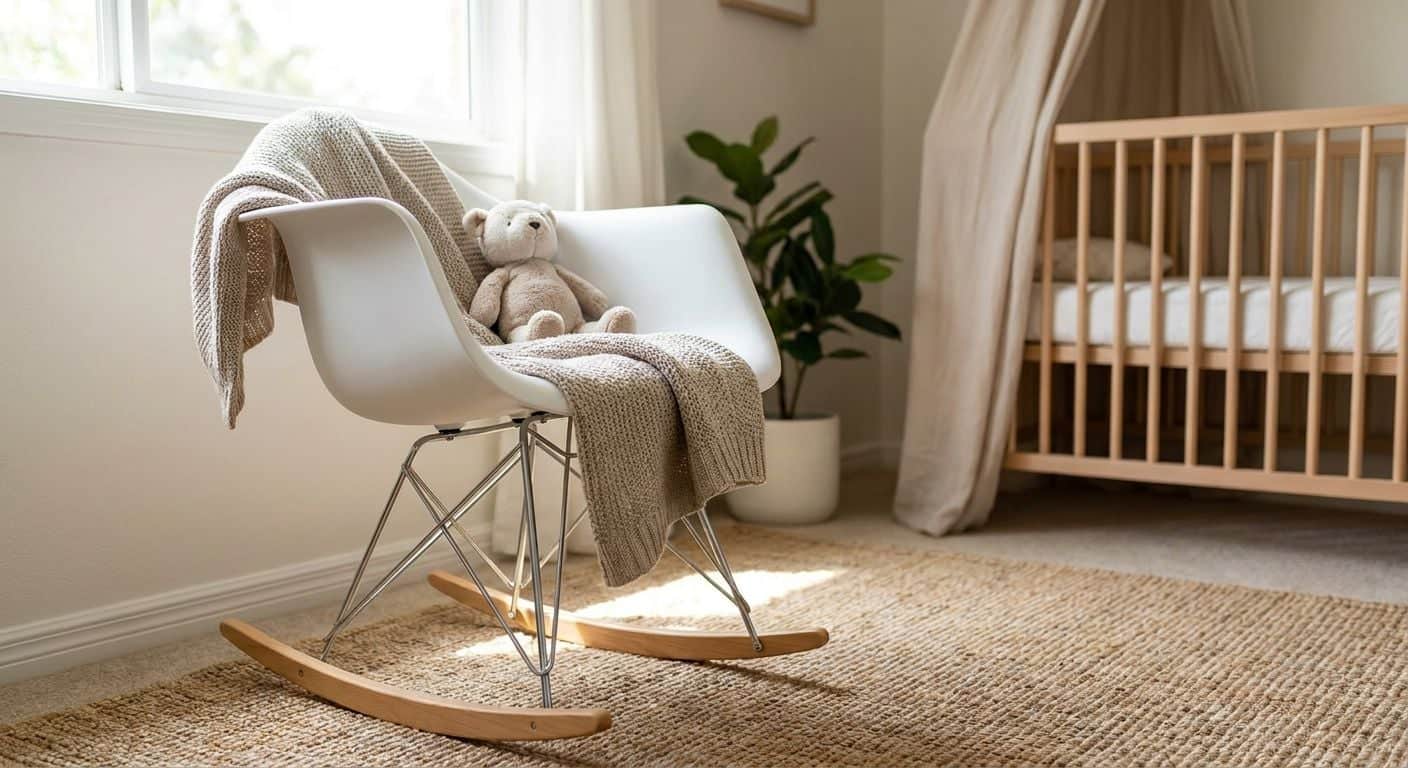
An Eames rocking chair replica brings a slow, sculptural motion into a nursery, but the same fiberglass shell that reads as gallery-ready in a living room needs different placement rules once a crib, a rug, and a half-asleep parent share the floor. This guide covers clearance measurements, base selection, and lighting placement built specifically for nursery use in 2026.
TL;DR- An eames rocking chair replica needs 24 inches of clear rocking arc on all sides in a nursery.
- Wood rocker bases run quieter on hardwood than wire bases — pick wood for a sleeping baby nearby.
- Seat height under 14 inches keeps a caregiver’s feet flat for safer infant transfers. Buy verdict.
- Matte shell finishes cut glare near a crib better than glossy fiberglass under overhead light.
- Break in the rocking motion for two weeks before the due date so the glide feels familiar at 3 a.m.
Why this matters
Nursery furniture decisions tend to get made once and then live in the room for two to four years without a redo. The molded shell on a rocker base has been in continuous production since Charles and Ray Eames introduced it in the early 1950s, and Herman Miller marketed that rocker variant specifically as a nursing and nursery chair at launch — it was never just a living-room object.
That history matters for how you place one in 2026. The shell curve was engineered to cradle a seated adult through repetitive motion, which is exactly what a 2 a.m. feed requires. Get the clearance and base material wrong, though, and the same chair becomes the thing that clicks against the wall and wakes the baby.
What you'll need
- An Eames rocking chair replica — shell seat plus rocker base
- A tape measure (clearance is the first thing to get wrong)
- A low-pile rug, or no rug directly under the rocker path
- A nursing pillow or lumbar cushion for extended feeding sessions
- A reading lamp with a warm-temperature bulb, not overhead lighting
- Felt or rubber furniture pads if the floor is hardwood
For background on shell materials and shell-and-base pairings before you buy, the Eames lounge chair replica buying guide covers the same shell-quality checks that apply to a rocker.
The steps
1. Measure your rocking clearance zone
A rocking base needs open floor front and back, not just where the chair sits static. Measure 24 inches in front of the rocker's forward point and 24 inches behind its rear point — that's the arc a full rock actually travels. Common mistake: measuring only the footprint of the chair at rest, then finding the rocker clips a crib rail or a dresser corner on the first full swing.
2. Pick a wood rocker base over wire for quiet nights
Wire-base and rod-base variants read leaner visually, but wood rockers glide with less resonance on hardwood and laminate floors. In a room where a sleeping infant is 6 to 8 feet away, that difference in noise transfer matters more than it does in a living room. Buy verdict: wood base for nurseries; wire base for living rooms or studies where sound isn't a concern. Common mistake: choosing the base purely on room color-matching and skipping the acoustic test — rock the chair on the actual floor type before committing.
3. Match shell finish to the room's light levels
A glossy fiberglass shell throws reflected light back at whoever's holding the baby, which is unhelpful during a night feed when eyes are already light-sensitive. A matte or fabric-shell finish absorbs more of that glare. Common mistake: choosing the shell finish under bright showroom lighting, then discovering the glare problem only after the nursery's own fixtures go in.
4. Position the chair relative to crib and window
Set the chair at a diagonal to the crib rather than directly facing it — this lets you see the crib while rocking without twisting your neck through every session. Keep at least 18 inches between the chair's back and any window to avoid draft exposure in colder months. Common mistake: placing the chair directly under a window for natural light, then discovering the draft in January.
5. Layer textiles without blocking the rocker
A rug under a rocking chair has to be low-pile — anything shag or high-loop will drag against the rocker arc and eventually fray at the same two points, every time. If you want a rug in the room, run it beside the chair's clearance zone, not underneath it. Common mistake: centering a plush area rug directly under the chair for softness, then wondering why the rocker sticks after a few weeks.
6. Set up task lighting for night feeds
Overhead lighting is too harsh for 3 a.m. use and too dim for daytime reading in the same fixture. A dimmable floor lamp positioned to the side of the chair, out of the rocking arc, solves both. Common mistake: relying on a nightlight alone — it's fine for navigation but not enough to check on a feeding latch.
7. Childproof the moving parts
Once the baby becomes mobile, a rocking chair's under-seat gap and rocker arc turn into a pinch hazard. Add corner guards to the rocker's forward tips and keep the chair's resting position away from crawling paths. Common mistake: treating this as a toddler-stage problem — most babies start pulling up on furniture by 9 to 12 months, earlier than parents plan for.
8. Break in the rocking motion before the due date
A new rocker base can feel stiff for the first few weeks of use. Rock it daily for 10 to 15 minutes over two weeks before the due date so the motion feels automatic when you're running on no sleep. Common mistake: unboxing the chair and leaving it unused until week one postpartum, then learning the rocking rhythm during the hardest possible week to learn anything new.
Browse Eames replica seating
Mid-century designs with free insured shipping and a 5-year warranty.
Shop the collectionTroubleshooting
- Rocker clicks against a hardwood floor: add felt pads to the rocker's contact points, or place a thin low-pile rug just under the rocker's resting position, not its full arc.
- Chair feels too low for a nursing pillow: add a firm seat cushion to raise effective height by 1 to 2 inches rather than swapping the whole chair.
- Fiberglass shell feels cold against bare arms: a wool or boucle seat pad solves this without changing the chair's silhouette.
- Glare off the shell under nursery lighting: switch to a warm 2700K bulb and move the reading lamp off-axis from the shell's curve.
- Chair drifts out of position over months of use: check that all four rocker-to-shell bolts are torqued — a loose base is the most common cause of gradual creep across a hardwood floor.
- Rocking motion feels too aggressive for slow feeds: a shorter rocker radius reduces swing distance per push; check the base's arc length before buying if slow, controlled motion is the priority.
Tools and resources
- Wood base vs. aluminum base guide for a closer look at how base material affects sound and feel
- How to verify quality before buying replica furniture for a shell-and-base inspection checklist
- A tape measure and painter's tape to mark the 24-inch clearance zone on the floor before the chair arrives
What to do next
Once the rocking chair is placed and broken in, the rest of the nursery layout follows the same clearance logic — crib, dresser, and any additional seating all need their own buffer zones. If the room will double as a play space once the baby grows past infancy, plan that transition now rather than re-measuring in a year.
FAQ
Is an eames rocking chair replica safe for a nursery?
Yes, when it has at least 24 inches of clear rocking arc and a stable, bolted rocker base. Add corner guards once the baby starts crawling, typically around 9 to 12 months.
What’s the best base material for a nursery rocking chair?
A wood rocker base runs quieter than a wire or rod base on hardwood and laminate floors. That matters more in a nursery than in a living room, where noise isn’t a concern.
How much clearance does a rocking chair need?
Plan for 24 inches of open floor in front of and behind the rocker’s resting position. That’s the space the chair actually travels through, not just its static footprint.
Is a fiberglass shell or fabric shell better for a nursery?
A matte or fabric-covered shell reflects less light than a glossy fiberglass shell, which helps during low-light night feeds. Fabric shells also feel warmer against bare skin.
Should the rocking chair face the crib?
Position it at a diagonal rather than head-on so you can see the crib without twisting your neck through a full rocking session.
Can I put a rug under a rocking chair?
Only a low-pile rug placed beside the rocker’s arc, not underneath it. A thick or shag rug drags against the rocker and wears unevenly at the two contact points.
How long does it take to break in a new rocking chair?
Plan on roughly two weeks of daily 10 to 15 minute use before the motion feels automatic. Doing this before a due date beats learning the rhythm during a newborn’s first week.
What seat height works best for nursing in a rocking chair?
Around 13.5 inches keeps an adult’s feet flat on the floor, which makes standing up with a baby safer. Add a firm cushion if the chair sits lower than that.
One last thing
The rocker-base version of the molded shell chair wasn't an aesthetic afterthought — Herman Miller positioned it as nursery and family seating when the shell line launched, decades before "nursery styling" became a design category on its own. That's worth remembering the next time a showroom tries to sell the rocker as a purely decorative statement piece: the base was engineered for exactly the use you're putting it to in 2026.
Related guides