Eames Lounge Chair Base Options: Wood vs Aluminum 2026

Sohnne Design Studio
July 17, 2026
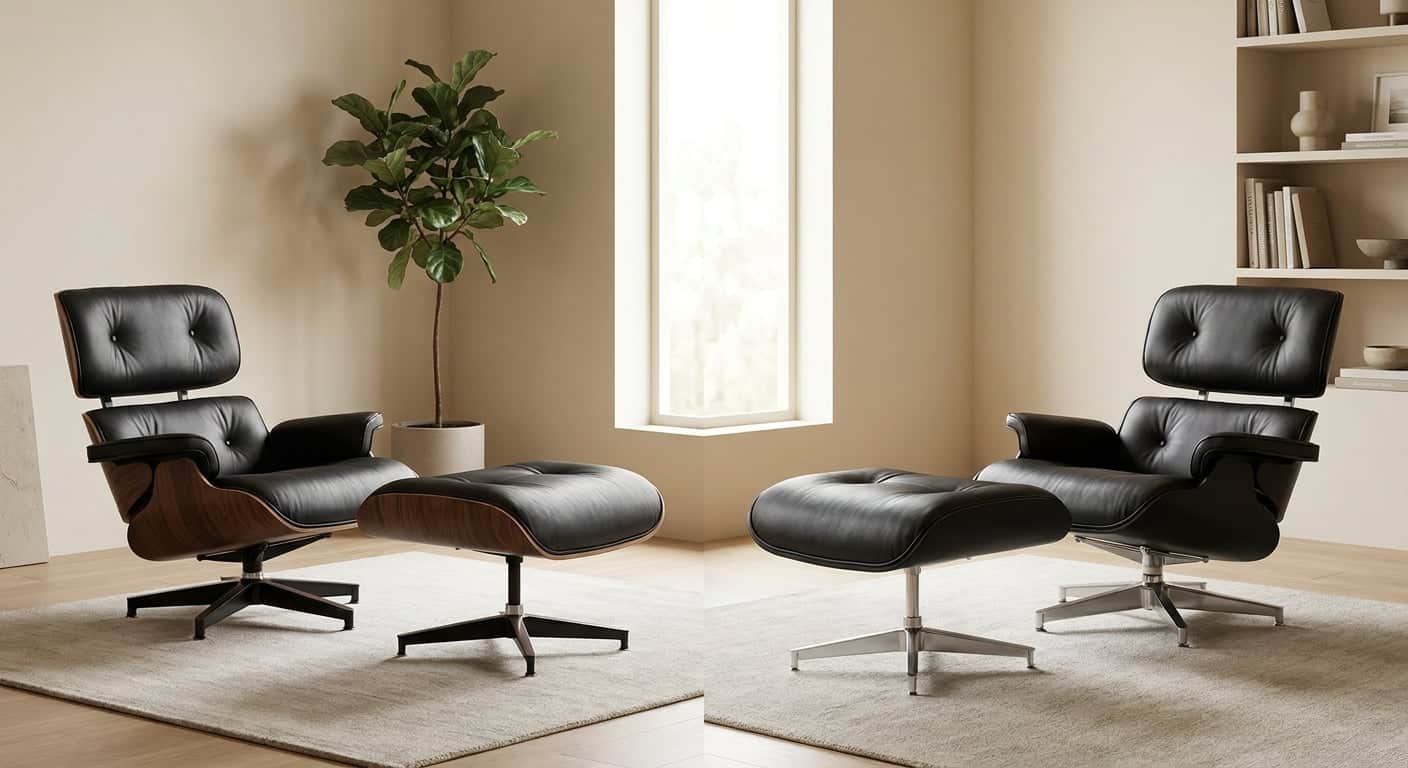
Choosing between a wood base and an aluminum base is the one decision that changes how an Eames lounge chair replica reads in a room, and most buyers get it backwards by picking on looks alone instead of matching it to their space and budget.
TL;DR
Wood bases (walnut, rosewood-tone, black ash) read warmer and suit traditional or mid-century-heavy rooms, while aluminum bases (polished or black powder-coat) look leaner and fit modern, minimalist, or office-adjacent spaces. For most living rooms in 2026, a walnut wood base is the safer buy because it hides scuffs and pairs with more upholstery colors; a polished aluminum base is the wildcard that photographs better but shows fingerprints and scratches faster. Check the Eames lounge chair replica buying guide before you commit to a finish, since base choice also affects how the chair sits with the ottoman. Bottom line on eames lounge chair base options: wood wins on warmth and forgiveness, aluminum wins on a sharper, more industrial look.
Why this matters
The original 1956 Herman Miller design shipped with a molded plywood shell and a five-star base, and the base material was never just decorative — it set the weight distribution and the visual weight of the whole chair. A replica with the wrong base for your room won't just look off, it'll fight your other furniture for attention. Get the base wrong and you're stuck with a chair that either disappears into a busy room or sticks out like a showroom prop in a minimal one.
Base choice also affects long-term maintenance. Wood needs occasional conditioning and is more forgiving of dust and light scratches. Aluminum, especially polished finishes, shows every fingerprint and requires more frequent wiping to stay presentable. If you have kids, pets, or just don't want another surface to maintain in 2026, that's not a small detail.
Who this is for
This guide is for anyone replacing a single accent chair or building a reading nook who has already decided on an Eames lounge chair replica and is stuck on the finish. It's for buyers furnishing a living room with existing wood furniture (wood base, almost always), and for buyers in a loft, home office, or gallery-style space leaning modern (aluminum base, usually). It's also useful if you're buying for resale value or a rental property, where the more neutral wood base tends to hold broader appeal.
What to look for in eames lounge chair base options
Room undertone
Match the base to the undertone already in your room, not the trend of the year. A room with warm oak floors, brass fixtures, or leather furniture pulls toward a walnut or rosewood-tone wood base. A room with concrete, black steel, or cool-gray tones pulls toward aluminum. Fighting the undertone makes the chair look like an afterthought instead of a centerpiece.
Finish durability
Wood veneer bases resist minor bumps and hide dust better than polished metal, which is worth weighing if the chair sits in a high-traffic living room. Black powder-coated aluminum splits the difference: it hides fingerprints better than polished aluminum but still reads more industrial than wood. If you're buying for a rental or a household with young kids, durability under daily wear should outrank pure aesthetics.
Weight and stability
Aluminum bases tend to sit lower to the ground with a flatter profile, which changes how the chair recline feels and how it looks from a seated angle across the room. Wood bases have more visual mass at the base, which grounds the chair in larger rooms but can look bulky in a small nook. If your space is under 120 square feet, test how each base looks against your existing footprint before you buy.
Color and upholstery pairing
A wood base gives you more upholstery flexibility because warm tones neutralize bolder fabric colors like deep green or burnt orange. Aluminum bases pair best with neutral leathers or wool blends — black, cognac, or oatmeal — because bright upholstery against metal can look mismatched rather than intentional. If you already know your upholstery color, pick the base second, not first.
Maintenance routine
Wood needs a light conditioning pass every few months to keep the veneer from drying out, especially in rooms with forced-air heating. Polished aluminum needs a microfiber wipe-down weekly if fingerprints bother you, while black aluminum hides smudges longer between cleanings. Neither is high-maintenance, but they're not identical, and the difference matters if you're not the type to dust furniture often.
Resale and long-term value
Wood-base Eames lounge chair replicas tend to have broader resale appeal because they photograph well in more listing styles and suit more buyers' existing decor. Aluminum bases sell faster in cities with a strong modern/industrial rental market but can sit longer in traditional suburban listings. If resale is a real consideration for you, wood is the more liquid choice.
Top picks by base type
Walnut wood base — the warm pick. Walnut veneer over a five-star base is the most common wood option and pairs with almost any warm-toned room. One spec that matters: walnut's grain pattern varies chair to chair, so no two look identical, which some buyers love and others find inconsistent. Buy if you want the chair to anchor a room with existing wood furniture.
Rosewood-tone wood base — the classic pick. This is the closest visual match to the original 1956 rosewood veneer, before rosewood became a restricted material industry-wide. It reads slightly darker and more formal than walnut. Buy if you're chasing the most traditional, museum-adjacent look.
Black ash wood base — the stealth pick. A darker, more neutral wood tone that reads almost as dark as black aluminum but keeps the tactile warmth of a veneer finish. It's the option most buyers overlook because it doesn't photograph as dramatically as walnut or polished aluminum. Consider if you want wood's forgiveness without the visual weight of a lighter tone.
Polished aluminum base — the modern pick. The sharpest, most reflective option and the closest to a design-showroom look. It shows fingerprints within days in a household with regular traffic. Consider for a low-traffic office or a room where the chair won't get daily contact.
Black powder-coated aluminum base — the wildcard. Industrial without the maintenance headache of polished metal, and it hides scuffs better than either polished aluminum or lighter wood tones. Buy if your room already leans modern and you want a base that won't need constant wiping.
For a deeper look at what separates a well-made replica from a poor one, the replica furniture quality guide covers joinery, veneer thickness, and finish checks worth running before you buy any base type.
What to avoid
- Mismatched ottoman base. Buying a wood-base chair with an aluminum-base ottoman (or vice versa) is a common mistake that looks unintentional rather than eclectic — match the pair.
- Cheap laminate posing as veneer. A thin laminate wrap on the wood base will chip at the edges within a year or two of normal use, unlike a real veneer that ages evenly.
- Unfinished or raw aluminum. Raw aluminum without a proper anodized or powder-coated finish will oxidize and dull faster than either polished or black-coated versions, especially in humid climates.
Verdict comparison table
| Criteria | Wood base (walnut/rosewood/black ash) | Aluminum base (polished/black) |
|---|---|---|
| Room fit | Traditional, warm, mixed-wood rooms | Modern, industrial, minimalist rooms |
| Maintenance | Occasional conditioning, forgiving of dust | Weekly wipe-down for polished; less for black |
| Durability under wear | Hides scuffs, resists minor bumps | Polished shows fingerprints fast; black holds up better |
| Visual weight | Heavier, grounds larger rooms | Leaner, better in small or open-plan spaces |
| Resale appeal | Broader, more universal | Stronger in modern/urban markets |
| Overall verdict | Buy for most living rooms | Consider for offices and modern lofts |
FAQ
What's the best Eames lounge chair base option for a small apartment?
A black powder-coated aluminum base or a black ash wood base both work well in small apartments because they read as neutral rather than bulky. Avoid polished aluminum in tight spaces since reflections can make the room feel busier, not larger.
Is a wood base better than an aluminum base for daily use?
For daily, high-traffic use, a wood base is generally the more forgiving choice because it hides dust, scuffs, and minor bumps better than polished metal. Aluminum, particularly polished finishes, needs more frequent cleaning to stay presentable.
How much does an Eames lounge chair replica base type affect the price?
Base material and finish can shift price within a given collection, with wood veneer options often priced differently than aluminum finishes depending on the retailer. Check current pricing directly on the product page since base and shell material both factor in.
Can I mix a wood-base chair with an aluminum-base ottoman?
Technically yes, but it's not recommended — mismatched bases read as an error rather than a design choice in most rooms. Keep the chair and ottoman base material matched for a cohesive look.
Does the base material affect chair comfort or recline?
The base affects stability and how low the chair sits relative to the floor, which can slightly change recline feel, but the shell and cushioning drive comfort more than the base material. Focus on cushion fill and shell curve for comfort, and base for look and durability.
Which base ages better over 5 years?
A well-finished wood veneer base with a proper 5-year warranty behind it tends to age more gracefully in visible wear, while polished aluminum can dull or show fine scratches sooner without regular care. Black powder-coat aluminum ages closer to wood in visible wear resistance.
Is rosewood-tone or walnut more historically accurate?
Rosewood-tone is closer to the original 1956 Herman Miller finish, since rosewood was the standard veneer before international trade restrictions limited its use. Walnut became the more common modern substitute and is now the most widely available option.
Do aluminum bases work with bold upholstery colors?
Aluminum bases generally look best with neutral upholstery — black, cognac, oatmeal — because bold colors against metal can clash rather than complement. Save bolder fabric choices for a wood-base chair, which neutralizes color better.
One last thing
The detail most buyers skip: check the base finish under the exact lighting your room actually gets, not showroom lighting. Polished aluminum under warm bulb lighting can look almost gold-toned instead of silver, and walnut under cool LED lighting can read gray instead of warm — bring a swatch or photo home before you decide, not after delivery. Sohnne backs its lounge chair replicas with free insured shipping, 60-day returns, and a 5-year warranty, so testing the base finish in your actual room and returning it if the light betrays you isn't a risk in 2026.