Fritz Media Console Replica: How to Style It in 2026

Sohnne Design Studio
August 5, 2026
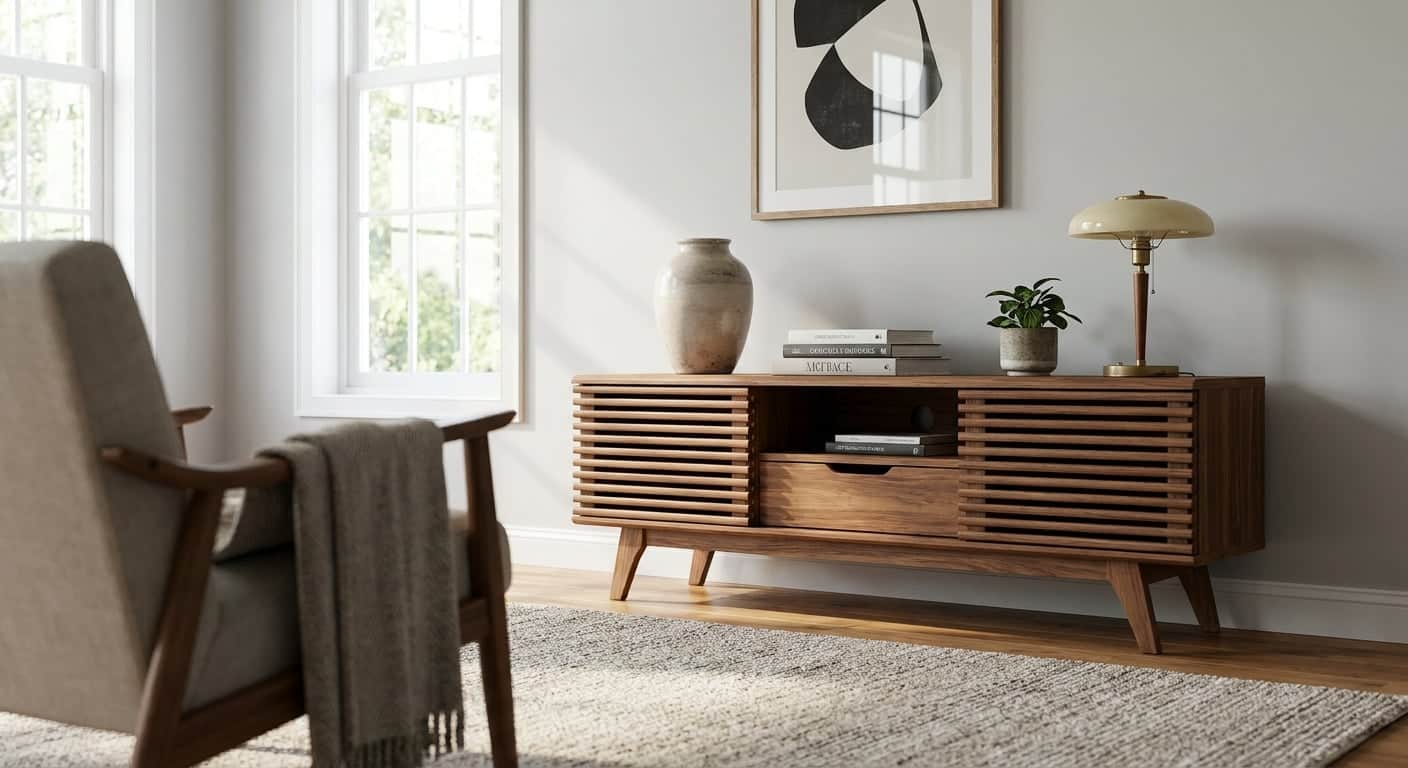
Styling a Fritz media console replica comes down to three decisions: what goes above it, what sits beside it, and how much you leave empty. Get those right and the console becomes the quiet anchor of a mid-century living room in 2026 instead of just a place to hide cables.
TL;DR- The Fritz media console replica works as the room’s anchor when styled with restraint, not clutter.
- Leave 4 to 6 inches of clearance between the console top and a mounted TV for cable routing.
- Pair walnut or teak-toned consoles with warm brass or matte black hardware, never both.
- Buy verdict: fits open-plan and media-wall layouts; skip it in rooms under roughly 120 square feet.
Why this matters
A media console is the one piece of furniture in a living room that has to do two jobs at once: hold the electronics and look intentional when the TV is off. Most people solve the first problem and ignore the second, which is how a great mid-century piece ends up buried under remotes and cable boxes.
The Fritz media console replica has clean horizontal lines, tapered legs, and a low profile that reads as sculptural on its own. That profile only holds up if you style around it deliberately. Skip the styling step and even a well-built mid-century modern replica starts to look like generic storage furniture.
What you'll need
- The Fritz media console replica itself, positioned before you plan anything else in the room
- A TV or media setup, if the console is doubling as a media stand
- 2 to 3 decor objects: a ceramic vase, a small sculpture, a stack of books
- A rug that extends at least 6 inches past the console's front edge if it anchors a seating area
- Cable management clips or a channel to keep cords off the visible face of the console
- A tape measure — sightlines and clearances matter more than instinct here
The steps
1. Set the console height relative to seating, not the wall
Measure from the seat cushion of your sofa to eye level while seated, then aim for the console top to sit no more than 4 inches above or below that line. This keeps the console from visually competing with seated sightlines.
Most media consoles run low by design — that's part of the mid-century silhouette. If your sofa seat sits unusually high, compensate with taller decor objects on top rather than swapping the console.
Common mistake: placing the console dead-center under a TV mounted at standard eye-level height, which pushes the screen 8 to 10 inches higher than comfortable viewing allows.
2. Mount or place the TV with 4 to 6 inches of clearance
If you're wall-mounting a TV above the console, leave 4 to 6 inches between the console top and the bottom of the screen. Less than that and cable clutter becomes visible; more than that and the two pieces stop reading as a set.
Route cords through a rear channel or adhesive clips rather than letting them hang down the back face — this matters more on a low, open-base console where the back is visible from the side.
3. Split the top into three zones
Divide the console surface into thirds: one third for the TV or a media box, one third for a lamp or tall object, one third left empty. This mirrors how mid-century designers actually composed sideboards and credenzas — asymmetry with breathing room, not a symmetrical display case.
The empty third is not optional. A fully loaded top makes the piece look like storage; a third left bare makes it look designed.
4. Match wood tone to floor, not to other furniture
Walnut and teak consoles read best against warm oak or medium-toned floors. On darker floors, the console can disappear visually unless you separate it with a lighter rug or a contrasting wall color behind it.
Don't force every wood tone in the room to match exactly. A guide to mixing wood tones with replica furniture covers how much variation actually works in a mid-century room — usually two tones within one warmth family, not an exact match.
5. Anchor the console with a rug, even if it's against a wall
If the console sits behind a seating group, run the rug at least 6 inches past its front edge. This ties the console into the seating arrangement instead of leaving it floating as a separate wall piece.
Skip the rug entirely only if the console is in a hallway-style position with no adjacent seating — in that case, a runner under 24 inches wide works better than a full area rug.
6. Add height variation on top, not width
A low, horizontal piece like the Fritz console needs vertical breaks on top to avoid a flat silhouette. One object should be at least 12 inches tall — a table lamp, a tall vase, or a small sculpture. Everything else should sit under 8 inches.
Common mistake: lining up three or four objects of the same height across the top. It reads as a display shelf, not styled decor.
7. Leave the legs visible
The tapered legs are part of what makes the piece look mid-century rather than generic. Don't push it flush against a rug edge or behind a low-pile carpet that swallows the leg line. A few inches of visible floor under the console keeps the silhouette light.
Shop the Fritz media console replica
Browse the full mid-century collection built to 1:1 original dimensions.
Shop the collectionTroubleshooting
The console looks empty and unfinished. Add one taller object — a lamp or vase over 12 inches — to break the horizontal line. A completely flat top is the most common reason a styled console still looks unfinished.
Cables are visible from the seating area. Reroute them through the back channel or a cord cover strip rather than letting them drape across the open-base legs. Open-leg mid-century consoles show more of the back than closed-cabinet pieces.
The console competes visually with the TV above it. Reduce the clearance to closer to 4 inches, or add a piece of wall art beside the TV to break up the negative space instead of leaving a wide gap.
The wood tone clashes with the flooring. Introduce a rug in a neutral or contrasting tone to separate the two surfaces rather than trying to match them exactly.
The room feels too matchy. If every wood surface in the room is the same tone, swap one accent piece — a side table or shelving unit — for a different finish family. The Haller shelving system replica sizing and configuration guide is a useful reference if you're adding a second storage piece nearby and want the finishes to vary intentionally.
The console feels too low next to a tall sofa. Compensate with a floor lamp beside the console rather than raising the piece itself — mid-century consoles are meant to sit low.
Tools and resources
- Tape measure for clearance and sightline checks
- Cord management clips or an under-console cable channel
- A rug sized to extend past the console's front edge by at least 6 inches
- Reference the Haller shelving system replica sizing and configuration guide if you're pairing the console with additional storage
What to do next
Once the console and TV wall are set, the rest of the room needs to follow the same restraint — one focal piece, everything else supporting it. If the seating area still feels unresolved, the next move is usually the sofa or accent chair, not another shelf.
FAQ
How high should a media console sit relative to the TV?
Leave 4 to 6 inches of clearance between the top of the console and the bottom of a wall-mounted TV in 2026 layouts. Less clearance hides cables poorly; more makes the two pieces look unrelated.
What wood tone works best with a Fritz media console replica?
Walnut and teak tones pair best with medium oak or warm-toned flooring. On dark floors, add a lighter rug to keep the console from disappearing visually.
Should a media console match the coffee table wood tone exactly?
No — an exact match reads flat in a mid-century room. Two tones within the same warmth family, one lighter and one darker, works better than a perfect match.
Can a low mid-century console work in a small living room?
It works in most layouts, but rooms under roughly 120 square feet often do better with a narrower footprint console to preserve walking space.
How do I hide cables on an open-leg media console?
Route cords through a rear cable channel or adhesive clips rather than letting them hang across the visible leg structure. Open-base consoles show more of the back than closed cabinets.
What should go on top of a media console besides the TV?
Split the surface into thirds: media equipment, one taller decor object over 12 inches, and one section left empty. A fully loaded top looks like storage, not styling.
Is a rug necessary under a media console?
Only if the console sits behind a seating group. Extend the rug at least 6 inches past the console’s front edge; skip it for hallway placements.
One last thing
The detail most people skip is the empty third of the console top. It feels wrong to leave a surface bare, but that gap is what separates a styled mid-century piece from a cluttered media shelf — designers left negative space on purpose, and it still reads as intentional in 2026.
Related guides
- How to mix wood tones with replica furniture
- How to decorate a living room with a statement sofa
- Best mid-century modern replica furniture for living rooms
- Haller shelving system replica sizing and configuration guide
Stay connected with us!
Keep in touch with what’s new and next. Subscribe for weekly insights, product launches, and community news!