Mixing Wood Tones with Furniture: 2026 Guide

Sohnne Design Studio
August 2, 2026
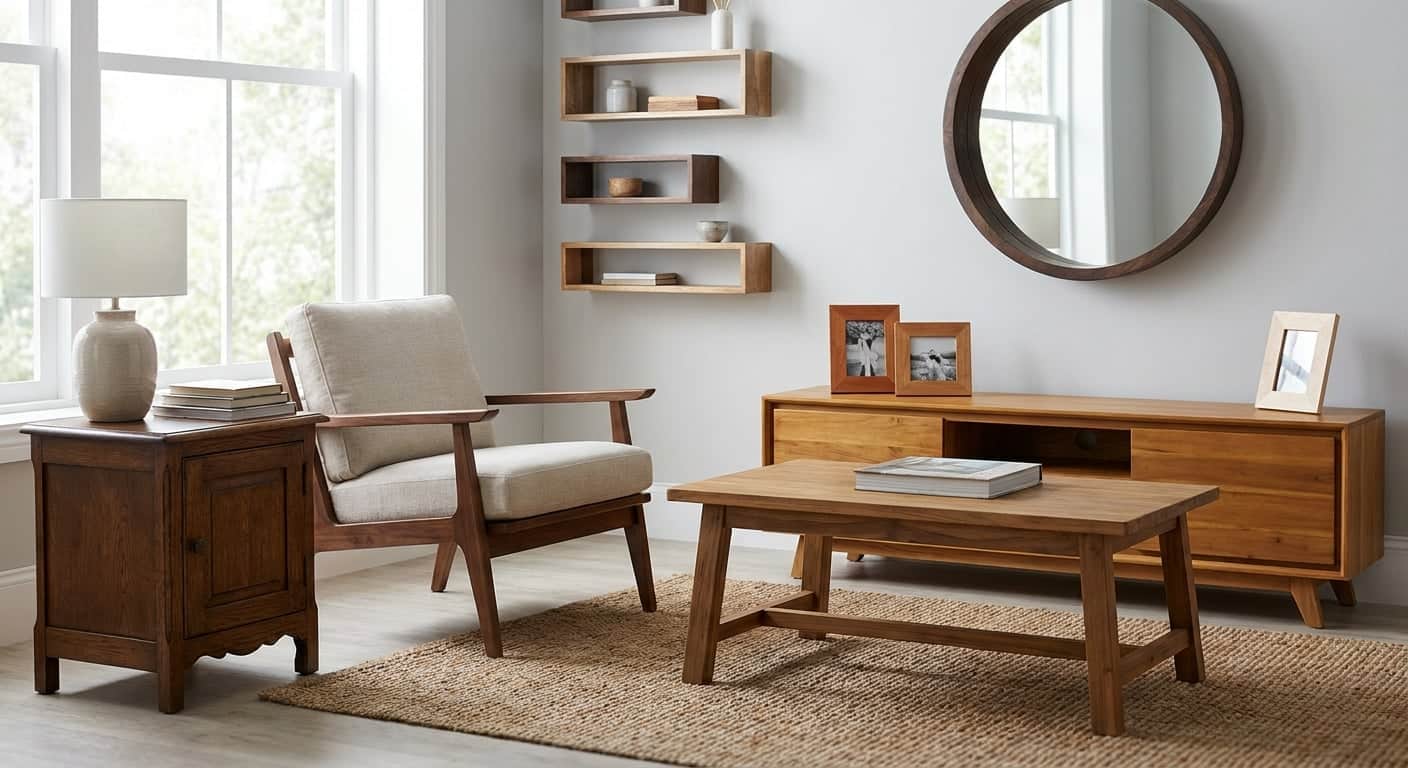
Mixing wood tones with replica furniture is the fastest way to make a room feel collected instead of showroom-matched, and it works whether you're pairing a walnut Eames Lounge Chair replica with an oak dining set or blending five different finishes across one living room.
TL;DR- Mixing wood tones with furniture works when one tone dominates at 60% and two others support at 20% each.
- Match undertones, not species — warm walnut and warm oak blend; cool ash fights orange-toned teak.
- The Eames Lounge Chair replica in walnut anchors a room; pair it with lighter oak or ash, not another dark wood. Buy.
- Metal and black-finish pieces like the Haller Shelving System replica reset a room so wood tones stop competing.
- Rooms with more than three wood tones in 2026 need a neutral rug or painted wall to keep it from reading as clutter.
Why this matters
Matchy wood furniture reads dated fast — a living room where every surface is the same honey oak or the same espresso finish looks like a 2009 furniture showroom, not a considered space. Mixing wood tones with furniture correctly is what makes a room look like it was built over time, even when every piece shipped in the same month.
The risk is the opposite mistake: throw four unrelated wood tones into one room with no plan and it reads chaotic instead of eclectic. The difference between "curated" and "mismatched" comes down to undertone matching and a ratio rule, not luck.
What you'll need
- A dominant wood tone already in the room (flooring, a large cabinet, or a dining table)
- 2-3 furniture pieces in secondary wood tones — a lounge chair, side table, or shelving unit
- A fabric or rug sample to test warm vs. cool undertones against natural light
- One neutral or black-finish piece to act as a visual break between wood tones
- Natural daylight for at least 20 minutes to judge true color (lamp light distorts wood undertone badly)
The steps
1. Identify your dominant wood tone first
Walk the room and name the wood tone that already covers the most square footage — usually flooring or a large case good. This becomes your 60% baseline; everything else gets built around it, not against it.
If your floor is a mid-brown oak, that's your anchor. A replica piece like the Scando Table in a similar oak tone reinforces the anchor instead of competing with it. Skipping this step is the number one reason mixed-wood rooms feel accidental instead of intentional.
Common mistake: picking the wood tone you love most for a small accent piece, then wondering why the room feels off — the dominant tone has to be the biggest surface, not the favorite piece.
2. Sort every wood by undertone, not color name
All wood tones lean warm (red, orange, yellow) or cool (grey, ash-toned). "Walnut" and "teak" both read warm-dark but at different depths; "ash" and "whitewashed oak" read cool-light. Mixing within the same undertone family is nearly foolproof; crossing undertones is where 2026 room photos on design forums go wrong most often.
Hold two wood samples next to each other in daylight. If one looks orange next to the other, they're fighting. A walnut Le Corbusier LC2 Armchair replica sits fine next to warm oak but clashes hard against cool grey-toned ash.
3. Apply the 60-30-10 wood ratio
Sixty percent dominant wood tone, 30% a complementary secondary tone, 10% a contrast accent (often the darkest or lightest piece in the room). This ratio keeps the eye moving without losing a sense of order.
A living room with warm oak flooring (60%), a walnut coffee table (30%), and a single blackened-wood accent chair (10%) reads considered. Flip those percentages and the room feels unbalanced.
Common mistake: treating every wood tone as equal weight — three pieces at 33% each with no clear dominant tone is what makes a room feel busy.
4. Use metal, black finish, or upholstery as a buffer
When two wood tones have to sit close together and don't share an undertone, put a non-wood material between them. A black-frame shelving piece, a metal-leg side table, or an upholstered lounge chair breaks the visual line so the wood tones never touch directly.
The Haller Shelving System replica in a matte black frame works exactly this way — it lets you keep a walnut dining set and an oak console in the same open-plan space in 2026 without them ever competing for attention.
5. Test under real daylight before committing
Wood undertone shifts dramatically between warm bulb light and daylight. A tone that looks neutral under a 2700K lamp can read orange or pink in direct sun. Move any sample piece — a swatch, a small stool, a chair — into the room and check it at both 10am and 6pm before finalizing a purchase.
Common mistake: ordering a second piece based on a product photo alone. Product lighting is calibrated to flatter, not to match your room's actual light temperature.
6. Repeat each wood tone at least twice
A single outlier wood tone reads like a mistake; the same tone appearing twice reads like a decision. If you introduce a lighter ash tone via a side table, echo it somewhere else — a picture frame, a lamp base, a second small piece — so the eye reads it as intentional.
See how the pieces look together
Browse Sohnne’s replica collection to plan your wood-tone mix before you buy.
Shop the collectionTroubleshooting
- The room feels too busy after adding a third wood tone. Pull one piece out or swap it for a black or upholstered alternative — three wood tones is the practical ceiling for most living rooms.
- A new piece looks orange next to my existing furniture. You've crossed undertones. Return or relocate the piece to a room where it stands alone rather than forcing a match.
- Everything looks fine in photos but off in person. Check your bulb temperature — anything warmer than 3000K will push every wood tone toward orange and hide real mismatches.
- The dark wood piece disappears into a dark floor. Increase contrast, not wood variety — a lighter rug or wall color solves this faster than changing furniture.
- My space only has one wood tone and feels flat. Add a single secondary tone at low volume first — one accent table or lamp base — before committing to a full second furniture piece.
- Two pieces from different collections don't read as a pair. That's expected; mixed wood tones aren't supposed to match, they're supposed to relate through undertone and ratio.
Tools and resources
- How to mix replica furniture with vintage pieces covers the same undertone logic applied to inherited or secondhand furniture.
- Eames Lounge Chair replica: wood base vs. aluminum base breaks down how base material changes which wood tones a chair pairs with.
- Scando Table replica: Scandinavian dining table guide is useful if your dominant wood tone is a light Scandinavian oak.
- How to add texture to a neutral living room with furniture for buffering wood tones with fabric and material contrast.
- A daylight-balanced lamp (5000K) for testing swatches indoors after dark, since 2026 LED bulbs vary widely in true color rendering.
What to do next
Once the wood tones are settled, layer in soft materials to finish the balance — how to layer rugs and replica furniture for a warm living room walks through rug and textile choices that support a mixed-wood palette instead of competing with it.
FAQ
How many wood tones can you mix in one room?
Most living rooms handle two to three wood tones well in 2026 — one dominant at roughly 60% of the visible wood, one secondary, and an optional dark or light accent. Beyond three, the room starts to read as cluttered rather than curated.
Do warm and cool wood tones ever work together?
Rarely without a buffer. Warm woods like walnut and oak blend easily with each other, while cool-toned woods like ash clash with them unless separated by metal, black finish, or upholstery.
Is it okay to mix replica furniture wood tones with original vintage pieces?
Yes, undertone matching matters more than whether a piece is new or vintage. A walnut replica lounge chair pairs with a vintage walnut table the same way it would pair with a new one, as long as the undertones align.
Should flooring or furniture set the dominant wood tone?
Flooring almost always wins because it covers the most surface area. Choose furniture wood tones that complement the floor rather than trying to match a large floor to a smaller furniture piece.
What wood tone hides mismatches best?
Mid-brown oak and walnut are the most forgiving tones because they sit in the middle of the warm spectrum and blend with both lighter and darker woods. Very pale or very dark tones show contrast mistakes faster.
Can black-finish furniture replace a wood tone entirely?
Yes, a black or matte-metal piece works as a neutral reset between two competing wood tones, which is why pieces like a black-frame shelving unit show up often in rooms mixing three or more wood finishes.
How do I test wood tones before buying furniture?
Bring a physical swatch or small sample piece into the room and view it in daylight at two different times of day. Product photos and lamp light both distort true wood undertone.
Does mixing wood tones with furniture lower resale value?
No — a well-balanced mixed-wood room is a design choice, not a flaw, and has no measurable effect on furniture resale value in 2026. Poor undertone matching is a styling issue, not a value issue.
One last thing
The undertone test takes 30 seconds and prevents most mixed-wood mistakes: hold your new piece next to your dominant wood tone in daylight and squint. If one looks distinctly orange or pink against the other, they don't belong in the same sightline — no ratio or buffer piece fixes a genuine undertone clash, only distance does.
Related guides
- How to mix replica furniture with vintage pieces
- Eames Lounge Chair replica: wood base vs. aluminum base
- Scando Table replica: Scandinavian dining table guide
- How to add texture to a neutral living room with furniture
- How to layer rugs and replica furniture for a warm living room