Texture in a Neutral Living Room: 2026 Furniture Guide

Sohnne Design Studio
August 1, 2026
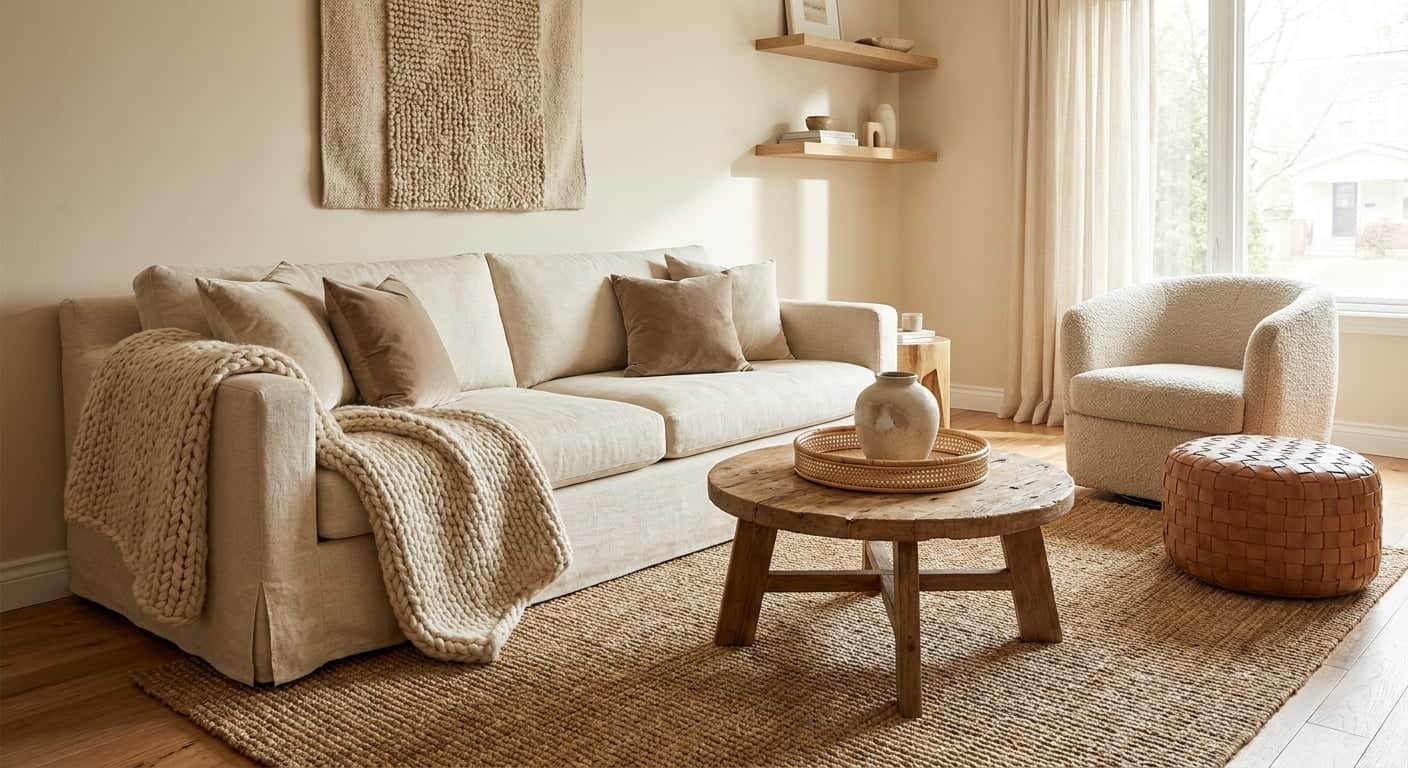
A neutral living room reads flat the moment every surface bounces light the same way — texture in a neutral living room fixes that through furniture choices alone, no new paint required.
TL;DR- Layering bouclé, leather, and cane furniture builds texture in a neutral living room in 2026 without adding color.
- Pair a nubby-weave sofa with a woven cane or rattan accent chair for the fastest visual contrast.
- Mix at least three fabric or material families per room — matching sets read flat, not calm.
- A jute or wool rug under mid-century modern furniture adds ground-level texture cheaper than reupholstering a sofa.
- Raw wood, stone, or blackened metal accents finish a neutral palette without introducing pattern.
Why this matters
Greige, oat, and ivory living rooms dominate 2026 because they resell well and pair with almost any accent color later. The tradeoff: the same three neutral tones without surface variation reads sterile, not calm.
Paint and rugs can only carry so much of that job — they're flat planes. Furniture is where texture actually lives, because a sofa, chair, or side table has a surface you touch and a shadow it casts. Get the material mix right on three or four pieces and the whole room reads layered instead of beige-on-beige.
What you'll need
- One high-texture anchor piece — a bouclé or nubby-wool sofa
- One hard-material counterpoint — cane, rattan, travertine, or blackened wood
- A leather or aniline-finish lounge chair for sheen contrast
- A textured rug — jute, wool, or high-low pile, solid color
- Throw pillows and a throw in at least two different weaves
- 20 to 30 minutes to test placement before you commit to anything
Start layering rugs and replica furniture for a warm living room before you buy a single new textile — the rug decision affects every other choice in this list.
The steps
1. Start with the sofa's base texture
The sofa is the largest surface in the room, so its texture sets the baseline for everything else. A bouclé weave with a 5 to 8mm pile height throws visible shadow even in cream or oat colorways, which is what separates "textured neutral" from "flat beige."
If your current sofa is a smooth linen or cotton blend, don't replace it yet — that's your calm layer. The goal here is knowing what you're contrasting against, not swapping the anchor piece.
Common mistake: choosing a second texture that's also smooth (velvet next to linen looks like one soft blob from across the room).
2. Add one hard-material counterpoint
Soft furniture alone still reads flat because every surface absorbs light the same way. A cane-backed accent chair, a travertine side table, or a blackened-wood console breaks that pattern by reflecting and casting shadow differently than fabric.
Wabi-sabi replica furniture leans hard into this — raw wood grain, unglazed ceramic, and stone finishes are built specifically to contrast soft upholstery. One hard-material piece per seating cluster is enough; two starts to feel like a showroom.
Expected outcome: the eye now has two distinct surfaces to travel between instead of one continuous fabric field.
3. Layer a rug with a different weave than your upholstery
If your sofa is bouclé, put a flatweave jute rug underneath it, not another nubby wool one. Repeating the same texture at floor and seat level cancels out the contrast you just built in step 2.
A high-low wool pile also works if you want more cushion underfoot — the point is the weave has to read differently than the furniture sitting on it.
Common mistake: picking a rug for its pattern instead of its texture, which competes with the furniture instead of grounding it.
4. Introduce sheen contrast with a lounge chair
Matte and glossy surfaces next to each other do more work than two different colors ever will. A leather or aniline-finish lounge chair beside a matte bouclé sofa creates depth you can see from across the room, even in 2026's flattest neutral palettes.
Set the chair at an angle to the sofa rather than parallel — the light hits the leather differently at each angle, which amplifies the contrast further.
Common mistake: choosing a faux-leather chair with a uniform, plastic-looking sheen. Real or aniline leather has natural variation; the cheap version looks like one flat surface, defeating the purpose.
5. Mix at least three fabric families in your soft furnishings
Throw pillows and throws are the cheapest way to add texture without committing to new furniture. Combine bouclé, linen, and wool on the same sofa — three fabric families reads intentional, not mismatched.
Caring for bouclé fabric furniture matters here specifically because it's the highest-maintenance texture in most rooms; know the upkeep before you commit to it as your anchor fabric.
Expected outcome: even a single-color sofa now has three distinct surfaces sitting on top of it.
6. Anchor the room with one raw or organic material
A stone side table, a woven rattan pendant, or a blackened-wood coffee table finishes the palette without adding a new color or pattern. This is the piece that makes the room feel designed rather than assembled from a catalog.
One raw-material accent per room is the ceiling — more than that and the neutral palette starts competing with itself instead of feeling grounded.
7. Test the mix under both daylight and lamp light
Texture reads differently under 2700K warm lamp light than under daylight. Bouclé shows more shadow at night; cane and rattan lose definition under flat overhead light. Walk the room at 8am and again at 8pm before deciding the mix is finished.
Common mistake: finalizing a texture plan during a single afternoon walkthrough and being surprised when the room looks flat again after sunset.
Build the texture plan around real pieces
Browse mid-century modern furniture built for layered, neutral rooms.
Shop furnitureTroubleshooting
- Room still feels flat after adding pieces — you added contrast in color, not sheen or material. Swap one fabric piece for leather, cane, or stone instead of another soft textile.
- Space feels cluttered or busy — you're likely running more than four distinct textures. Cut back to three core materials (soft, hard, sheen) and remove the rest.
- Bouclé shows dust and pet hair fast — vacuum weekly with a brush attachment; this is the tradeoff for the texture it adds, and it's worse in high-traffic rooms.
- Cane or rattan pieces look too rustic against your other furniture — pair them with a polished metal or glass accent to pull the look back toward mid-century modern rather than boho.
- Rug pattern clashes with the furniture texture — drop the patterned rug for a solid-color textured one and move any pattern you want to throw pillows instead.
- The room looked right in the store but flat at home — home lighting is almost always warmer and dimmer than showroom lighting; recheck the mix under your actual lamps before returning anything.
Tools and resources
- A tape measure and a floor plan sketch (even a rough one) before buying anything
- Fabric swatches held against your actual wall color, not a screen
- How to mix replica furniture with vintage pieces if you're adding texture to an already-furnished room rather than starting fresh
- A lint roller and upholstery brush for bouclé and wool maintenance
- Reference photos saved by material name (bouclé, cane, travertine) rather than by "style," which keeps the shopping list concrete
What to do next
Once the texture mix is set, color becomes the next lever — a single warm-toned leather sofa can shift the entire room's temperature without touching the neutral wall color, which is worth reading up on before your next furniture purchase in 2026.
FAQ
How do you add texture to a neutral living room with furniture?
Combine at least three material families across your seating — a bouclé or wool sofa, a leather or cane accent chair, and one raw material like stone or wood. Layer a textured rug underneath in a different weave than the sofa fabric.
What is the fastest way to add texture without buying new furniture?
Add throw pillows and a throw in two or three fabric families (linen, wool, bouclé) on your existing sofa. This adds three visible textures for the cost of soft furnishings instead of a new piece.
Does bouclé work in a small neutral living room in 2026?
Yes, bouclé’s shadow depth is especially useful in small rooms because it adds visual interest without adding a new color that could make the space feel busier.
How many textures is too many in one living room?
More than four distinct material families in one seating area usually reads cluttered rather than layered. Three core textures — soft, hard, and sheen — is the practical ceiling for most rooms.
Is cane or rattan furniture too rustic for a mid-century modern neutral room?
Cane and rattan read mid-century when paired with polished metal or glass accents. Without that contrast, they can drift toward a boho look instead.
What rug texture pairs best with a bouclé sofa?
A flatweave jute or a high-low wool pile pairs best with bouclé because it contrasts the sofa’s nubby texture rather than repeating it at floor level.
Does leather furniture clash with a neutral color palette?
No, leather in cognac, black, or cream tones works within a neutral palette and adds sheen contrast against matte fabrics like linen or bouclé.
How do you test if a texture mix is working before committing?
Walk the room under daylight and again under evening lamp light. Bouclé and leather show more shadow and sheen contrast at night, so a mix that looks flat in daylight may still work after dark.
One last thing
The cheapest fix most people skip: swap one throw pillow cover for a different fabric family before buying anything new. A single bouclé or wool pillow on a linen sofa adds more visible texture in 2026 living rooms than most people expect from a $40 swap, and it tells you fast whether the bigger furniture change is even necessary.
Related guides
Stay connected with us!
Keep in touch with what’s new and next. Subscribe for weekly insights, product launches, and community news!