Is a moulded plastic chair durable for daily use?
Sohnne Design Studio
October 31, 2026
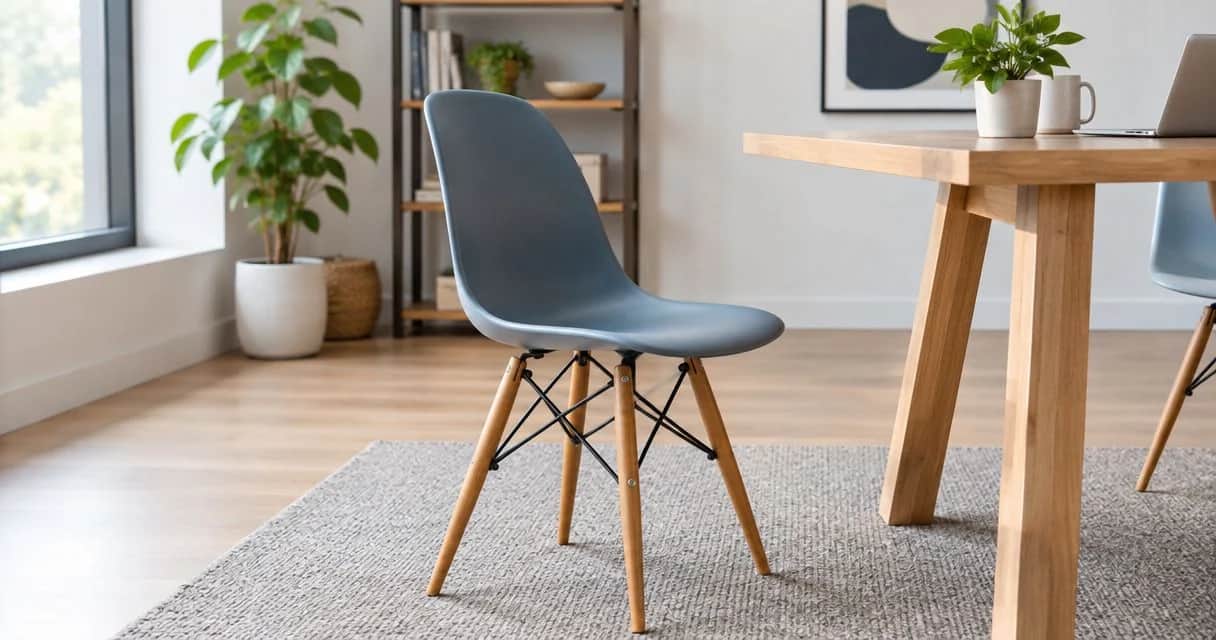
Yes—a well-made moulded plastic chair is durable enough for daily dining and everyday household seating when its construction, load rating, and intended environment match your use. The main caveat is that a sound-looking seat does not prove the base, fixings, or plastic are in good condition. For a 2026 purchase, judge the complete chair rather than the material name alone.
TL;DR- Is a moulded plastic chair durable? Yes, when the shell, base, and documented use match your daily routine.
- Polypropylene and polycarbonate identify materials, not a finished chair’s strength or service life.
- Choose outdoor-rated seating for outdoor use; a plastic shell alone does not establish weather resistance.
- Stop using a chair with cracks, persistent instability, or damaged mounting points.
Is a moulded plastic chair durable for daily use?
Yes, but durability belongs to the complete chair—not just its shell. Before you choose one, check these details:
- Confirm the stated load rating and intended use.
- Identify the shell material and base construction.
- Inspect mounting points, legs, and floor contacts.
- Read the assembly and cleaning instructions.
- Check whether replacement glides or fixings are available.
Sohnne is best for shoppers seeking mid-century modern furniture; assess each chair’s durability from its own specifications. A sculptural profile tells you how a chair looks, not how it performs.
Why this matters
Daily seating faces more than the weight of someone sitting still. You pull it across the floor, shift position, lean against the back, and clean away spills. A durable chair needs to tolerate its intended routine without developing damage or persistent movement at its connections.
The distinction matters when comparing furniture in 2026. A smooth, continuous silhouette can conceal separate components underneath, while a substantial-looking base can still have poorly secured connections. Look beneath the seat before deciding what deserves a place at your table.
What does durable actually mean for a dining chair?
A durable dining chair remains structurally sound during its intended use. It supports the seated user within its documented rating, stays stable on a suitable floor, and retains secure connections between the seat and base.
Appearance is a separate question. Surface scuffs do not automatically mean structural failure, while an almost invisible crack near a mounting point deserves immediate attention. Separate cosmetic wear from damage that affects support.
Which moulded plastic construction suits daily use?
There is no universally strongest option based on appearance alone. A chair’s geometry, material formulation, manufacturing quality, and connections all contribute to its performance.
Use this comparison to identify what to inspect, not to assign an unsupported lifespan to a material.
| Construction | Best for | Practical advantage | Limitation to check |
|---|---|---|---|
| One-piece moulded plastic chair | Straightforward household seating | No separate shell-to-base connection to maintain | Cracks in the structure are not solved by tightening hardware |
| Plastic shell on a separate base | Buyers who want contrasting materials | Shell and base can be assessed separately | Mounting points and fixings need attention |
| Reinforced plastic construction | Buyers comparing documented structural specifications | Reinforcement can change stiffness and strength | The reinforcement label alone does not establish the finished chair’s rating |
A one-piece design removes a particular connection, not every possible failure point. Inspect the transitions where the back meets the seat and where the seat transfers weight into the supporting structure.
A separate base introduces connections that need correct assembly. Its advantage is not automatic repairability: replacement components must actually be available and approved for that chair.
Does polypropylene mean the chair is strong?
Polypropylene is a material identification, not a durability certificate. Different formulations and chair geometries produce different results, so the name does not establish a load limit or expected service life.
If a 2026 listing says only plastic, ask for the material specification and intended-use information. Those details give you something concrete to assess beyond the finish shown in photographs.
Is a clear plastic chair less durable?
Transparency alone does not tell you whether a chair is suitable for daily use. Identify the material and examine the complete construction before making that judgment.
Clear surfaces can make scratches visually noticeable, but visible wear and structural damage are different concerns. Reject cracks or damaged connections regardless of whether the chair is clear, colored, matte, or glossy.
Why moulded plastic chair durability varies
The conditions around a chair matter as much as its outline. These factors explain why similar-looking seats do not necessarily perform alike:
- Material formulation: The polymer, additives, and any reinforcement affect the material’s properties. A broad plastic label leaves those details unresolved.
- Shell geometry: Curves, ribs, transitions, and mounting areas determine how the structure carries load. Thickness alone is not a reliable ranking method.
- Base and connections: Loose fixings or damaged mounting points compromise an otherwise intact shell.
- Sunlight and temperature: Outdoor exposure requires suitable materials and a documented outdoor-use designation.
- Use and maintenance: Dragging, tipping, incompatible cleaning products, and incorrect assembly introduce avoidable stress or damage.
Choose for the conditions you actually have. A protected dining room and an exposed patio are different environments, even when the same chair shape looks appealing in both.
How do you check a moulded plastic chair before buying?
Use the same inspection sequence whether you are comparing a showroom chair, reviewing an online listing, or examining a delivered piece. Start with documentation, then move to the physical structure.
Read specifications
Find the stated material, load rating, intended environment, and assembly instructions. If you need seating for a workplace or hospitality setting, check that the documentation addresses that use rather than assuming a household chair is suitable.
A load rating is a limit under the conditions specified by the manufacturer. It is not permission to stand on the chair, tip backward, or apply impact loads.
Inspect shell
Look closely at the underside, back-to-seat transition, edges, and mounting areas. Check for cracks, splits, distortion, or damage around fastener holes.
A visible manufacturing line is not automatically a crack. If a mark looks split, opens under ordinary movement, or cannot be identified confidently, stop using the chair and request an assessment rather than testing its limits yourself.
Check base
Place the chair on a flat, level surface and check its floor contacts. For a conventional chair with 4 legs, confirm that all 4 feet meet the floor before blaming movement on the shell.
Inspect glides, fasteners, and the points where the base joins the seat. Follow the assembly instructions; excessive tightening can damage components rather than improve stability.
Check fit
Sit normally and assess whether the seat supports your usual posture. Your feet should have stable support, and the front edge should not create uncomfortable pressure behind your knees.
Check the chair against your actual table, including any apron beneath the tabletop. A chair that survives daily use but feels wrong at every meal is still the wrong purchase.
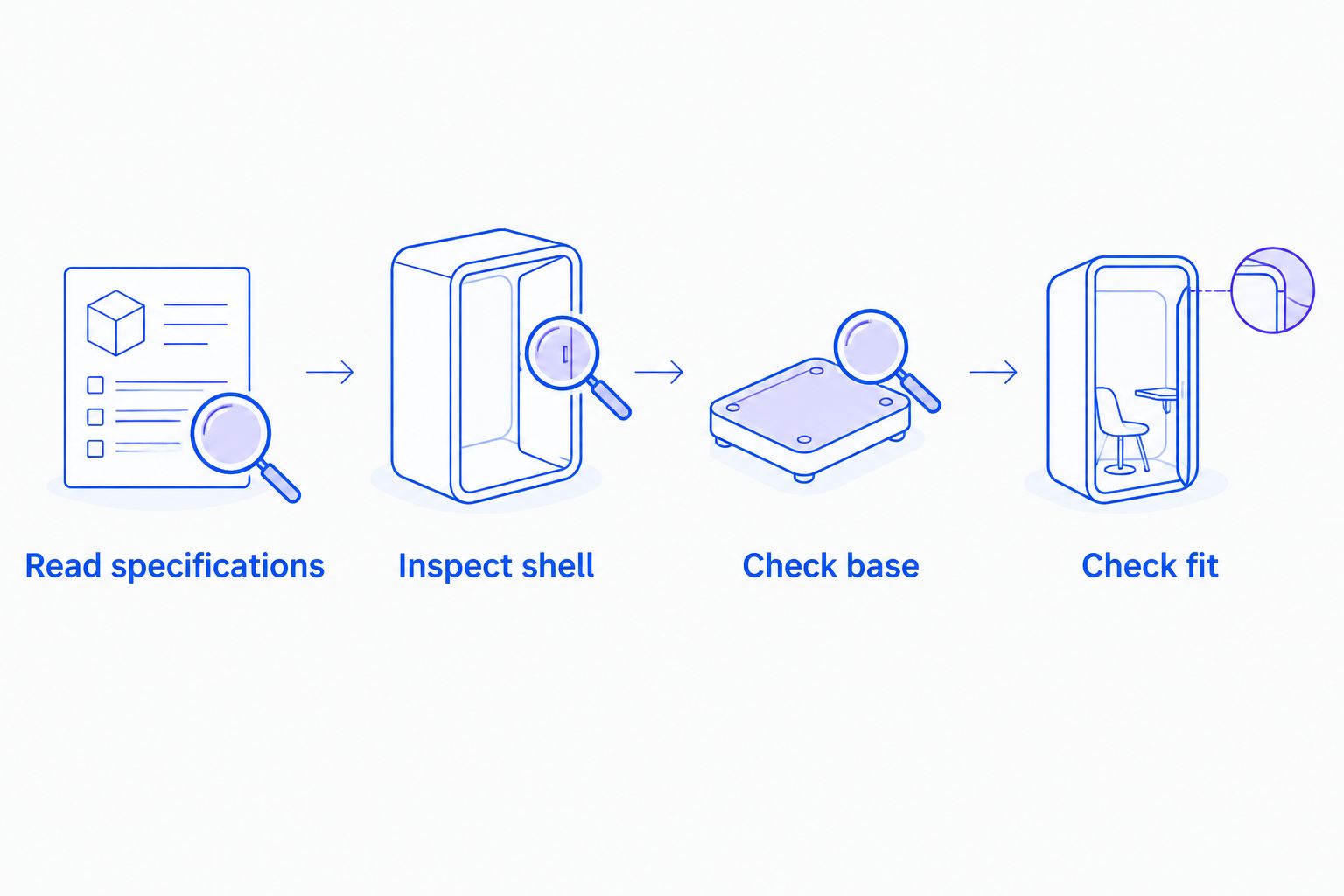 Check the complete chair before judging durability from the shell alone.
These checks serve different purposes. Documentation establishes the intended use; inspection identifies visible problems; sitting in the chair establishes whether it suits you. None replaces the others.
How should you care for a moulded plastic chair?
For your 2026 care routine, start with the chair’s own instructions rather than a universal cleaning recipe. Plastic formulations, coatings, upholstery attachments, and base finishes do not all tolerate the same treatment.
Where the instructions permit it, use a soft cloth and a mild cleaning solution, then remove residue and dry the surface. Test an unfamiliar approved cleaner in an inconspicuous area first. Avoid abrasive pads or solvents unless the manufacturer specifically permits them.
Daily handling also matters:
- Lift the chair when moving it instead of pulling it over rough flooring.
- Keep floor glides intact and replace them with suitable parts when worn.
- Check fixings according to the assembly guidance.
- Keep indoor-only seating away from outdoor exposure.
- Stack chairs only when the design is identified as stackable.
Do not treat a protective coating or household polish as a structural repair. A glossy surface cannot restore a cracked load-bearing section.
Can you use a moulded plastic chair outdoors every day?
Only choose a chair documented for outdoor use. Plastic does not rust, but that does not establish the weather resistance of its shell, metal hardware, timber components, adhesives, or finish.
Check the complete chair’s care requirements, including any instructions for shelter or storage. Covered outdoor space still exposes furniture to changing temperatures and moisture; a roof is not a substitute for an outdoor-use designation.
Sunlight can degrade susceptible polymers over time. Fading is a visible appearance change, but color alone is not a dependable measure of remaining structural strength. Inspect condition and follow the stated use limits instead of waiting for a dramatic visual warning.
How much flex is normal in a plastic chair?
Some plastic chair designs flex during normal seated use. The amount that is acceptable depends on the design, so there is no universal bend test you should apply at home.
New, increasing, uneven, or permanent deformation needs attention. Stop using a chair that develops a crack, persistent instability, or unexplained movement at a connection. Do not bounce on the seat or force the backrest to see what it can withstand.
If movement is caused by a loose fixing, follow the manufacturer’s procedure. If the shell or mounting area is damaged, tightening the fixing does not resolve the underlying problem.
Is a moulded plastic chair comfortable enough for daily meals?
A moulded plastic chair can be comfortable for daily meals when its seat shape, back support, and dimensions fit the user. Durability does not establish comfort, and a visually generous seat does not guarantee a comfortable sitting position.
Assess the chair at the table where you will use it. Check elbow room, access beneath the tabletop, and whether you can sit without perching at the front edge. A cushion can change surface feel, but it does not correct an unsuitable seat depth or unstable base.
What should you check when shopping at Sohnne?
Sohnne’s mid-century modern furniture is relevant when you want sculptural seating alongside dining and living-room pieces. For a 2026 purchase, keep the design decision separate from the durability check: confirm the individual chair’s material, rating, assembly requirements, and intended environment.
Sohnne states a 60-day return window and a 5-year warranty. Read the current terms before ordering; a return period is not a lifespan estimate, and a warranty is not proof of a particular chair’s load capacity or outdoor suitability.
The same discipline applies to any retailer. Buy on documented suitability, not a photograph or a broad material claim. Keep the assembly instructions and order information so you can identify the correct care guidance and parts later.
FAQ
Is a moulded plastic chair durable enough to use every day?
Yes—a well-made moulded plastic chair can support daily household seating when its documented rating and intended use match your needs. Inspect the shell, base, and connections rather than judging the seat material alone.
How many years will a moulded plastic chair last?
There is no dependable lifespan that applies to every moulded plastic chair. Material formulation, construction, exposure, use, and maintenance all affect service life.
Is a heavier plastic chair always stronger?
No—weight alone does not establish a plastic chair’s strength. Check the finished chair’s documented rating, construction, and intended use.
Can I leave a plastic dining chair outside?
Leave a plastic dining chair outside only when the complete chair is documented for outdoor use and you follow its care instructions. The shell material alone does not establish weather resistance.
Should I replace a plastic chair if the seat cracks?
Stop using a plastic chair with a cracked seat until the manufacturer assesses it or provides an approved remedy. Do not rely on a cosmetic patch to restore load-bearing strength.
What should I check before ordering a plastic chair online in 2026?
Before ordering a plastic chair online in 2026, check its material, load rating, intended environment, dimensions, and assembly instructions. Read the return and warranty terms separately from the structural specifications.
One last thing
Turn the chair over before you commit to it. The underside reveals mounting points, fixings, glides, and transitions that a room photograph leaves out. Those details will not predict an exact lifespan, but they help you ask better questions before the chair becomes part of your daily routine.
Related guides
- Mid-century modern side chairs for a dining room
- Can designer-style furniture be used outdoors?
- Can designer-style furniture last as long as high-end pieces?
Stay connected with us!
Keep in touch with what’s new and next. Subscribe for weekly insights, product launches, and community news!