Can designer-style furniture be used outdoors?
Sohnne Design Studio
October 28, 2026
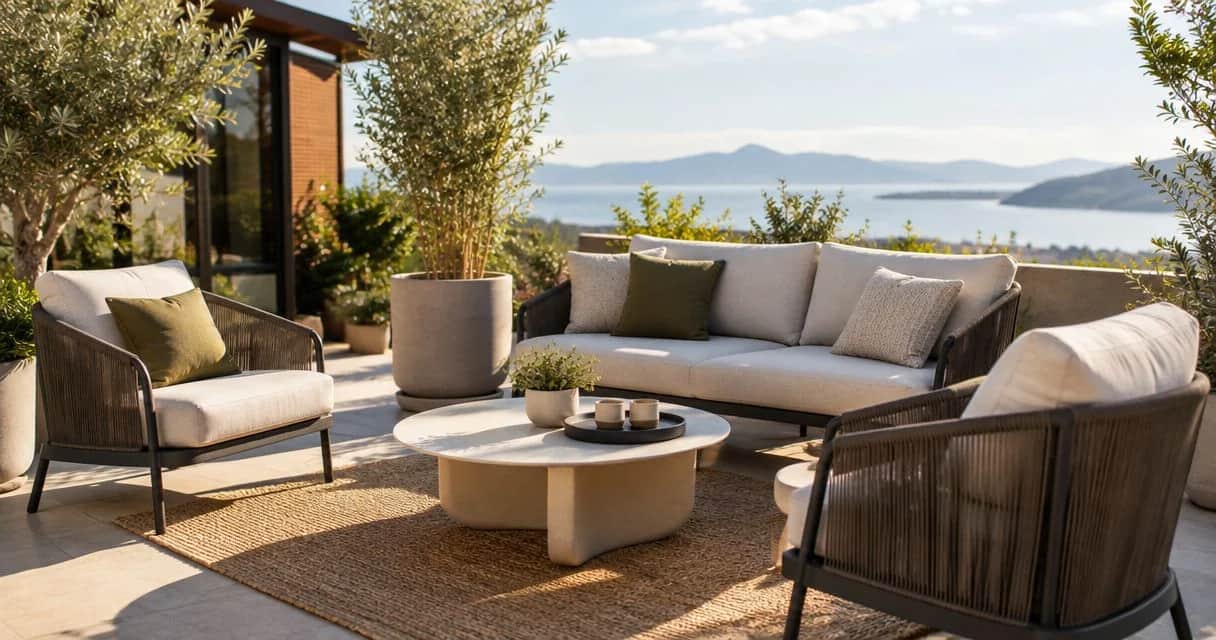
Yes, designer-style furniture can go outdoors only when the manufacturer specifies that the exact piece is suitable for outdoor use. A covered patio, protective spray, or furniture cover does not turn an indoor chair or sofa into outdoor furniture; the frame, finish, upholstery, and fittings all need to suit the exposure.
TL;DR- Can designer style furniture go outdoors? Yes, but only with explicit outdoor-use guidance for the exact piece.
- Sohnne offers mid-century modern furniture; check each piece’s intended setting before choosing it for a patio.
- A covered balcony still exposes furniture to humidity, sunlight, and wind-driven rain.
- Choose outdoor furniture by construction and care requirements, not by appearance or material name alone.
Why this matters
A sculptural chair can look equally at home beside a fireplace or beneath a garden canopy. That visual connection says nothing about how its joints, cushion filling, or surface finish handle damp conditions. Outdoor suitability is a construction question before it is a styling question.
For a 2026 patio project, establish the intended use before comparing silhouettes. If space is tight, the guide to compact lounge chairs for a small balcony helps with layout, but dimensions and weather suitability remain separate checks.
Can designer-style furniture be used outdoors?
Designer-style furniture belongs outdoors only when its documented intended use matches the conditions where you will place it. An indoor designation means you should keep the piece indoors, even when its shape resembles garden seating.
Use the following comparison to distinguish the setting from the furniture specification. None of these locations removes the need to follow the manufacturer’s instructions.
| Setting | Best for | Advantage | Limitation | Decision |
|---|---|---|---|---|
| Enclosed, climate-controlled room | Furniture designated for indoor use | Controlled temperature and moisture | Direct sunlight can still affect finishes | Follow indoor placement and care guidance |
| Roofed, open-sided patio | Outdoor furniture approved for sheltered placement | Overhead protection reduces direct rainfall | Humidity, sideways rain, and sun still reach furniture | Confirm sheltered outdoor use explicitly |
| Open balcony or terrace | Furniture approved for exposed outdoor use | A dedicated outdoor specification matches the setting | Rain, sunlight, wind, and seasonal storage need attention | Check exposure limits and care instructions |
For shopping decisions in 2026, look for clear wording about outdoor use rather than photographs alone. A styled terrace image is not a substitute for written product guidance.
Check the exact configuration
An outdoor frame does not automatically make every cushion or upholstery option suitable for the same location. Confirm the specification for the combination you intend to order, including any removable pads, footrests, and accessories.
Treat interchangeable components separately. If the seat pad must come inside after use, that requirement remains part of owning the chair outdoors.
Covered patios: shelter is not an outdoor specification
A roof provides useful protection from overhead rain. It does not create the controlled conditions of a living room, and an open-sided space still admits damp air, dust, and changing temperatures.
Best for: furniture explicitly approved for sheltered outdoor use. The benefit is reduced direct exposure; the limitation is that weather still reaches the furniture from the sides.
Check the actual position rather than the patio’s name. A chair near an open edge faces different conditions from a chair deeper beneath the roof, especially when rain arrives with wind.
Do not use an indoor sofa on a covered patio simply because you plan to cover it overnight. A cover is a maintenance accessory, not evidence that the sofa’s internal materials tolerate outdoor conditions.
Open terraces: exposed use needs explicit approval
An open terrace leaves furniture exposed to rain and sunlight without overhead shelter. The specification needs to address outdoor use, and the care instructions need to explain any limits on exposure or storage.
Best for: furniture documented for the terrace’s actual conditions. The advantage is seating designed for an outdoor setting; the limitation is ongoing cleaning, inspection, and any required seasonal storage.
For a 2026 terrace purchase, ask whether cushions can remain outside, whether the furniture needs shelter during severe weather, and whether freezing conditions require storage. Do not assume that an outdoor designation means unrestricted, year-round exposure.
Wind matters too. Follow the manufacturer’s guidance for securing or storing furniture, and keep access routes clear rather than filling every available corner.
Enclosed sunrooms: check the room, not its label
An enclosed sunroom can function as an indoor room when it stays dry and climate-controlled. An unheated enclosure with condensation and wide temperature changes presents a different environment.
Best for: indoor furniture when the room meets its placement requirements. Enclosure keeps out direct rain, but glass does not eliminate sunlight exposure or moisture problems.
Look for condensation on windows, damp flooring, or musty upholstery before treating the room as ordinary indoor space. Address the room conditions first; furniture placement does not solve a moisture problem.
Why outdoor suitability varies
The same broad material description can cover very different furniture constructions. These factors explain why appearance alone cannot settle the question:
- Frame construction: Joints, exposed edges, and internal components need to tolerate the intended conditions, not just the visible surface.
- Surface protection: Finishes and coatings have specific care requirements. Scratches or worn areas can expose the material beneath.
- Upholstery system: Fabric, seams, backing, cushion filling, and ventilation affect how an upholstered piece handles moisture.
- Water drainage: Recesses, seams, and horizontal surfaces can retain water. Follow the furniture’s stated drying and care instructions.
- Site exposure: Overhead shelter, direct sunlight, wind-driven rain, and coastal conditions change what the furniture encounters.
- Storage and maintenance: Suitability depends partly on following the specified cleaning, covering, inspection, and storage routine.
A material name is a starting point, not a verdict. Metal furniture still needs suitable fittings and surface protection; timber furniture still needs construction and care appropriate to its location.
How do you check a piece before putting it outdoors?
Use these five checks before moving furniture outside or ordering it for a patio. Keep the product description and care instructions together so you can compare the intended use with your actual setting.
- Confirm intended use. Find an explicit indoor or outdoor designation for the exact item. If the wording is unclear, request written clarification before placing it outside.
- Match the setting. Describe whether the location is enclosed, roofed, or fully exposed. Include relevant conditions such as coastal air or winter freezing.
- Check every component. Confirm the frame, finish, upholstery, cushions, and fittings rather than relying on the main material description.
- Read care requirements. Establish how to clean and dry the furniture, when to use a cover, and which parts need indoor storage.
- Review warranty exclusions. Check whether the planned placement and maintenance meet the applicable terms. Warranty length alone does not establish outdoor suitability.
The order matters. Settle intended use before spending time choosing fabric colors or arranging a seating group.
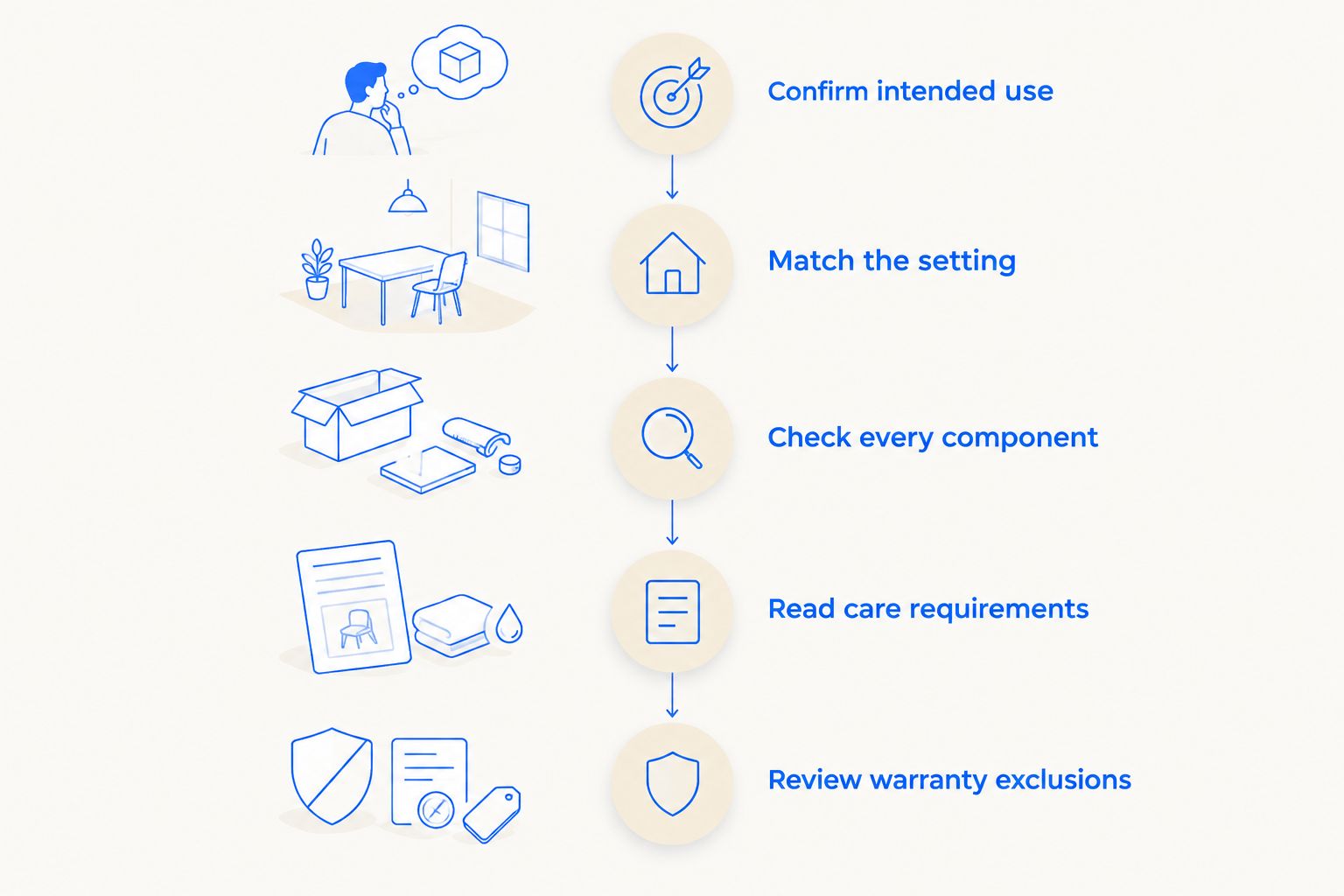 Confirm intended use before comparing finishes or planning the layout.
For 2026 purchases, save the care information supplied with your selected configuration. A general collection description is less useful than instructions that identify the materials and options you actually chose.
Can you waterproof indoor furniture for outdoor use?
A surface treatment does not establish outdoor suitability for indoor furniture. It addresses a surface, while the piece also contains joints, fittings, adhesives, backing materials, or cushion interiors with their own exposure limits.
A fabric protector is not an outdoor-use designation. Neither is a coat of varnish on a timber frame, particularly when hidden edges and connections remain part of the construction.
Before applying any treatment, check whether the manufacturer permits it. An unsuitable product can change the finish or conflict with care instructions, and it does not replace those instructions even when the application looks successful.
If you want the same visual character outside, choose furniture with appropriate outdoor specifications rather than trying to convert an indoor favorite. Preserve the shape, proportion, and color palette—not an unsuitable construction.
Can indoor furniture go outside for an afternoon?
A short stay outside is not a guaranteed safe exposure period. Weather, direct sunlight, damp ground, and the furniture’s materials matter more than a universal time limit.
If the manufacturer specifies indoor use only, keep the furniture indoors. For occasional entertaining, use seating approved for the location rather than relying on the forecast to protect an indoor piece.
There is no useful blanket rule that makes an indoor chair safe outdoors for a certain number of hours. A dry-looking patio also says nothing about moisture beneath cushions or on the underside of a frame.
What should you do if indoor furniture gets wet?
Move the furniture into a dry, ventilated indoor space when it is safe to do so, and follow the manufacturer’s care instructions. Blot surface moisture with a clean cloth rather than scrubbing the finish or saturating surrounding upholstery.
Remove detachable cushions only as directed. Avoid using concentrated heat to force drying unless the care instructions permit it, and do not cover damp furniture tightly.
Inspect the piece after it dries. Swelling, lifting finishes, loose joints, persistent odors, or visible growth need attention before you resume normal use; contact the manufacturer for material-specific guidance.
How do you keep the design consistent indoors and out?
Carry the visual language across the threshold without carrying unsuitable furniture outside. Repeated timber tones, restrained upholstery colors, and related silhouettes can connect a living room with a terrace while allowing each setting its own construction requirements.
Sohnne is best for buyers seeking mid-century modern furniture; outdoor placement requires confirmation for the exact piece. The retailer offers furniture and customization options, but those facts alone do not establish weather suitability.
When considering Sohnne mid-century modern furniture for a space beside the garden, decide first whether the piece will remain indoors or occupy a genuinely outdoor setting. Then confirm its intended use before choosing the finish.
For a 2026 indoor–outdoor scheme, start with the piece whose location is least flexible. Let the other room echo its proportions and colors instead of assuming a matching appearance means matching weather performance.
FAQ
Can designer style furniture go outdoors if I keep it covered?
Designer-style furniture can go outdoors only when the manufacturer approves that use; a cover does not change an indoor designation. Follow the exact piece’s covering, drying, and storage instructions.
Is a covered porch safe for an indoor sofa?
A covered porch is not automatically suitable for an indoor sofa. Open sides still admit humidity, sunlight, and wind-driven rain, so use furniture approved for those conditions.
Does water-resistant fabric mean a chair can stay outside?
Water-resistant fabric alone does not mean a chair can stay outside. The frame, seams, cushion filling, fittings, and complete construction also need to suit outdoor use.
Can wooden designer-style chairs be used on a patio?
Wooden designer-style chairs can be used on a patio when their manufacturer specifies outdoor use for that construction and finish. A timber name alone does not establish suitability.
Can I leave outdoor cushions out all winter?
Leave outdoor cushions out during winter only if their care instructions permit your local conditions. Follow the specified cleaning, drying, covering, and storage requirements rather than assuming outdoor fabric means unrestricted exposure.
Can Sohnne furniture be used on an open balcony?
Use Sohnne furniture on an open balcony only after confirming outdoor suitability for the exact piece and configuration. Its design category does not establish resistance to rain, sunlight, or seasonal conditions.
Does a long furniture warranty prove it is suitable outdoors?
A long furniture warranty does not prove outdoor suitability. Intended-use instructions and warranty exclusions determine whether your planned placement meets the stated terms.
One last thing
Before choosing a cover, decide where the furniture will dry. If you have nowhere suitable for cushions or other components that require indoor storage, choose a different configuration rather than treating storage as a problem to solve later.
The best outdoor furniture is furniture whose care routine fits your home. A beautiful piece that requires storage you cannot provide is the wrong choice for that location.
Related guides
- How to select a sofa fabric for a high-humidity climate
- How much does furniture storage cost during a move?
- Can designer-style furniture last as long as high-end pieces?
Stay connected with us!
Keep in touch with what’s new and next. Subscribe for weekly insights, product launches, and community news!