Sofa Fabric for Humid Climate: 2026 Buying Guide

Sohnne Design Studio
August 3, 2026
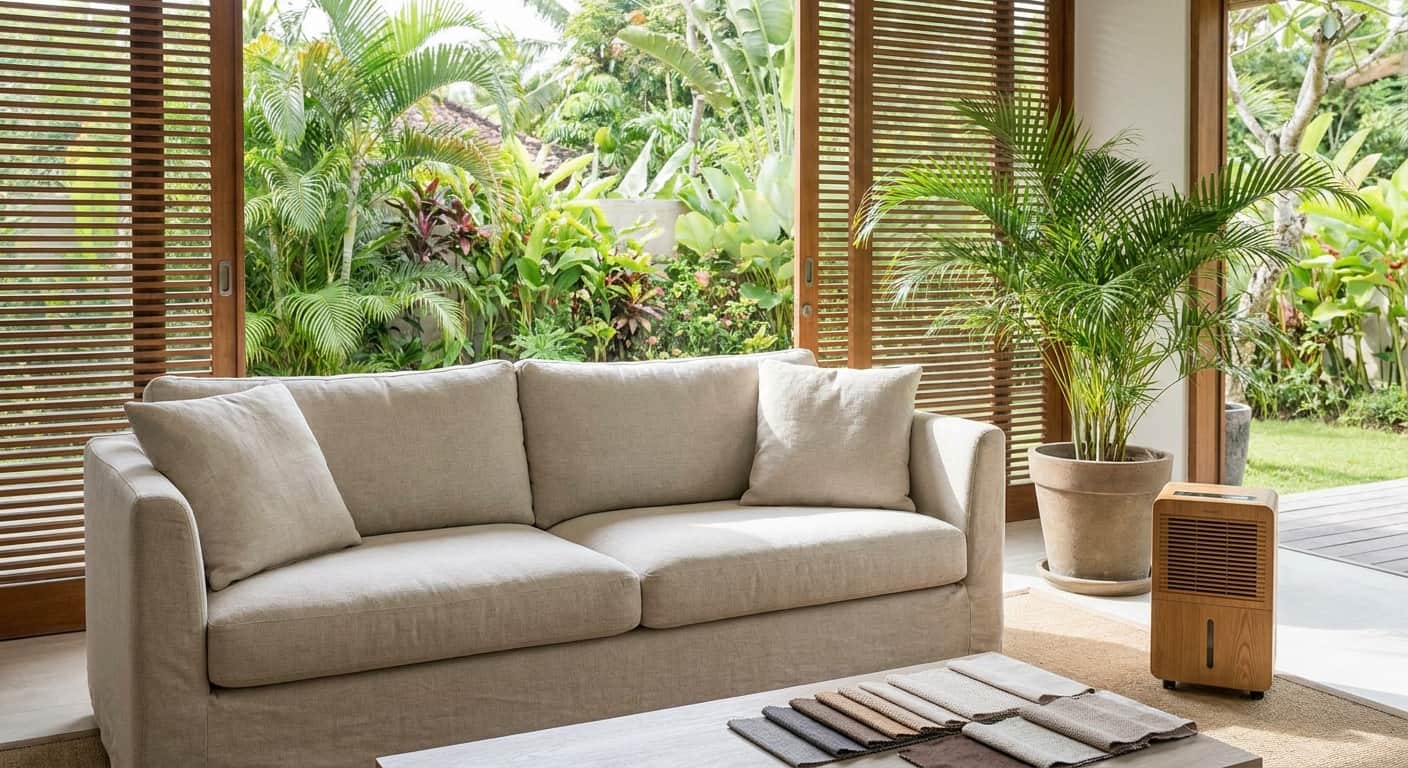
A sofa in a humid climate fights mold, odor, and fabric breakdown before it fights wear and tear, so the fabric you pick has to handle moisture first and style second. This guide covers what to prioritize, which materials to skip, and how to keep a sofa fabric for humid climate conditions looking new past year three.
TL;DR- Solution-dyed polyester and olefin resist mildew better than cotton or linen in humid rooms.
- Relative humidity above 60% breeds mold on upholstery within 24-48 hours of a spill.
- Boucle and leather need specific humidity care routines or they degrade faster than woven synthetics.
- A 30,000+ double-rub Wyzenbeek rating signals a fabric built for daily use in damp air.
- Skip natural linen and raw cotton blends in coastal or tropical rooms – they hold moisture and smell musty.
Why this matters
Humidity above 60% relative humidity turns any absorbent fabric into a slow-growing mold problem, and most homeowners don't notice until the musty smell shows up. Coastal cities, bathrooms-adjacent living rooms, and un-air-conditioned spaces in the Gulf South or Pacific Northwest all sit above that threshold for weeks at a time during 2026's humid seasons.
The fix isn't a different sofa. It's picking a fabric structure and fiber that doesn't hold water in the first place, then pairing it with cushion construction that lets air move through instead of trapping it. Get this right once and you skip the re-upholstery bill three years from now.
What you'll need
- A hygrometer (under $15) to confirm your room's actual humidity, not a guess
- Fabric swatch samples from at least two vendors before you commit
- A spec sheet showing Wyzenbeek double-rub count and fiber content
- A dehumidifier rated for your room's square footage if humidity regularly tops 55%
- A basic upholstery cleaning kit (enzyme cleaner, microfiber cloths, soft brush)
- 20 minutes to test-dry a fabric sample with a damp cloth before buying
If you're deciding between leather and fabric altogether, the comparison in how to choose between leather and fabric replica sofas walks through how each holds up once humidity becomes a factor, not just a style preference.
The steps
1. Measure your room's actual humidity baseline
Don't guess. A $15 hygrometer left in the room for 48 hours tells you whether you're dealing with occasional dampness or a sustained problem. Anything averaging above 55% relative humidity changes which fabrics are safe to buy.
Common mistake: relying on regional averages instead of your specific room. A basement or a room with a window AC unit that cycles on and off can swing 20 points from the rest of the house.
2. Rule out high-absorption natural fibers
Raw linen, unblended cotton, and jute-backed weaves absorb ambient moisture and release it slowly, which is exactly the wrong behavior in a humid room. These fibers can hold up to 20% of their dry weight in water before they even feel damp to the touch.
This doesn't mean skip natural fibers entirely – a cotton-poly blend at 60/40 or higher poly content behaves very differently than 100% linen. Check the blend ratio on the spec sheet, not just the marketing copy.
Common mistake: assuming performance fabric always means synthetic. Some performance-labeled fabrics are natural-fiber blends treated with a topical finish that wears off after repeated cleaning.
3. Prioritize solution-dyed synthetics
Solution-dyed acrylic and olefin (polypropylene) resist moisture at the fiber level because color is baked into the fiber itself, not applied as a surface coating that can trap dampness underneath. These fabrics also resist fading from the extra sun exposure that often comes with the ventilation you'll need in a humid room.
Polyester microfiber sits a step below solution-dyed acrylic for humidity resistance but still outperforms any natural weave. It's also the most common fabric across mid-priced sofas in 2026, so availability and swatch selection are wide.
4. Check the weave density and rub count
A Wyzenbeek rating of 30,000+ double rubs signals a tight, durable weave that resists the fiber breakdown humidity accelerates. Anything under 15,000 rubs is considered light-duty and will show wear faster in a damp room than the same fabric would in a dry one.
Tight weaves also matter because they slow moisture penetration into the cushion foam underneath, which is where mildew actually starts, not on the visible fabric surface.
5. Test dry time before you buy
Press a damp cloth against the fabric swatch and time how long it takes to feel dry again. Synthetic performance fabrics typically dry within 2 to 4 hours at room temperature; natural fiber blends can take 8 hours or longer. That gap is the difference between a fabric that shrugs off a spilled drink and one that grows a mildew ring.
If you're set on a boucle texture for 2026's design trends, know that boucle's looped construction traps moisture longer than a flat weave. The care routine in how to care for boucle fabric furniture covers the extra ventilation steps boucle needs in humid rooms specifically.
6. Match cushion construction to airflow
High-density foam wrapped tightly in fabric with no venting holds moisture against itself, which is where hidden mold starts even when the visible fabric looks fine. Look for cushions with a breathable inner liner or a foam core rated for open-cell construction, which lets air pass through instead of sealing moisture in.
Common mistake: buying a sofa based on the showroom fabric alone without asking what's inside the cushion. Two sofas with identical fabric can perform completely differently in a humid room based on foam construction alone.
7. Set a maintenance routine before problems start
Vacuum upholstery weekly with a brush attachment to pull surface dust before it mixes with ambient moisture and forms a paste that feeds mold. Run a dehumidifier to keep the room under 50% relative humidity whenever practical, and treat any spill within an hour rather than letting it air-dry on its own.
Compare fabric options before you buy
Browse Sohnne’s mid-century sofa collection and fabric finishes online.
Shop sofasTroubleshooting
Musty smell after a few months. This usually means moisture got into the cushion foam, not just the fabric surface. Pull the cushion cover if removable and check the foam directly; a persistent smell after airing out for 24 hours means the foam needs replacing.
Visible mildew spots on the fabric. Treat immediately with a diluted white vinegar solution and a soft brush, then dry the spot with a fan for at least 4 hours. Waiting longer than 48 hours after spotting mildew lets it spread into the fiber structure permanently.
Fabric feels damp to the touch even without a recent spill. Your room's ambient humidity is likely above 60% consistently. A dehumidifier is the fix here, not a fabric replacement, since almost any fabric will feel damp under those conditions.
Color fading faster than expected. This points to a piece-dyed rather than solution-dyed fabric reacting to the extra light and ventilation a humid room typically needs. Solution-dyed synthetics resist this; piece-dyed fabrics don't.
Leather cushions stiffening or cracking. Leather needs conditioning more frequently in humid climates because moisture cycles dry the surface oils out faster than in stable conditions. The routine in how to clean and maintain replica leather furniture covers the conditioning schedule that prevents this in damp rooms.
Pilling or fuzzing on synthetic fabric. Light pilling is normal wear on lower rub-count fabrics; a fabric shaver handles it in under 10 minutes. Heavy pilling within the first year points to a fabric rated well under the 30,000 double-rub benchmark for daily-use furniture.
Tools and resources
- Hygrometer for ongoing humidity monitoring in the room
- Enzyme-based upholstery cleaner for organic stains and odor
- Portable dehumidifier sized to the room's square footage
- Fabric swatch kits from any retailer before a full purchase
- The longevity checklist in how to choose a replica sofa that lasts for construction details beyond fabric alone
What to do next
Once the fabric and cushion construction are settled, durability against daily use matters just as much as humidity resistance, especially with pets in the house. The fabric breakdown in cat scratch resistant couches fabric and style guide covers which weaves hold up against both moisture and claws, which overlaps more than most buyers expect since tight, durable weaves solve both problems at once.
FAQ
What is the best sofa fabric for a humid climate?
Solution-dyed acrylic and olefin are the best sofa fabric for humid climate rooms because color and moisture resistance are built into the fiber, not a surface coating. Polyester microfiber is a solid second choice with wider availability in 2026.
Is leather or fabric better in humidity?
Fabric generally handles ambient humidity better than leather, which needs regular conditioning to prevent cracking as moisture cycles dry out surface oils. Leather can still work in humid rooms with a conditioning routine every 3 to 4 months.
How much does mold damage on a sofa cost to fix?
Reupholstering a full sofa in 2026 typically runs several hundred to over a thousand dollars depending on fabric and size, far more than the cost of a dehumidifier or a fabric swap upfront. Spot mildew treatment done within 48 hours avoids that cost entirely.
Does boucle fabric work in a humid room?
Boucle can work in a humid room but needs more ventilation than a flat weave because its looped texture traps moisture longer. Pair it with a dehumidifier keeping the room under 50% relative humidity for best results.
What humidity level causes mold on furniture?
Relative humidity above 60% sustained for more than a day or two creates conditions where mold can start on upholstery, especially after a spill or spot of dampness. Keeping a room under 50% relative humidity is the safer target.
Are performance fabrics worth it for humid rooms?
Yes, performance fabrics rated for at least 30,000 Wyzenbeek double rubs resist both moisture penetration and daily wear better than standard weaves. The upfront cost difference is usually smaller than one reupholstery job.
How often should you clean a sofa in a humid climate?
Vacuum weekly and treat any spill within an hour in humid climates, since surface dust mixed with ambient moisture accelerates mildew growth. A deeper enzyme clean every 3 to 6 months keeps odor from building up in the fibers.
Can you use a dehumidifier to protect a fabric sofa?
Yes, a dehumidifier keeping the room under 50% relative humidity protects any fabric sofa from mold and musty odor regardless of fiber type. It’s often more effective than switching fabrics alone if the room’s baseline humidity is the real problem.
One last thing
The fabric matters less than most buyers assume – the cushion foam underneath is where mildew actually starts in humid rooms, and it's the part nobody checks before buying. Ask about foam construction and ventilation before you ask about fabric color, and you'll solve the problem that actually causes replacement, not just the one that's visible in the showroom.
Stay connected with us!
Keep in touch with what’s new and next. Subscribe for weekly insights, product launches, and community news!