Leather vs Fabric Replica Sofa: 2026 Verdict

Sohnne Design Studio
July 21, 2026
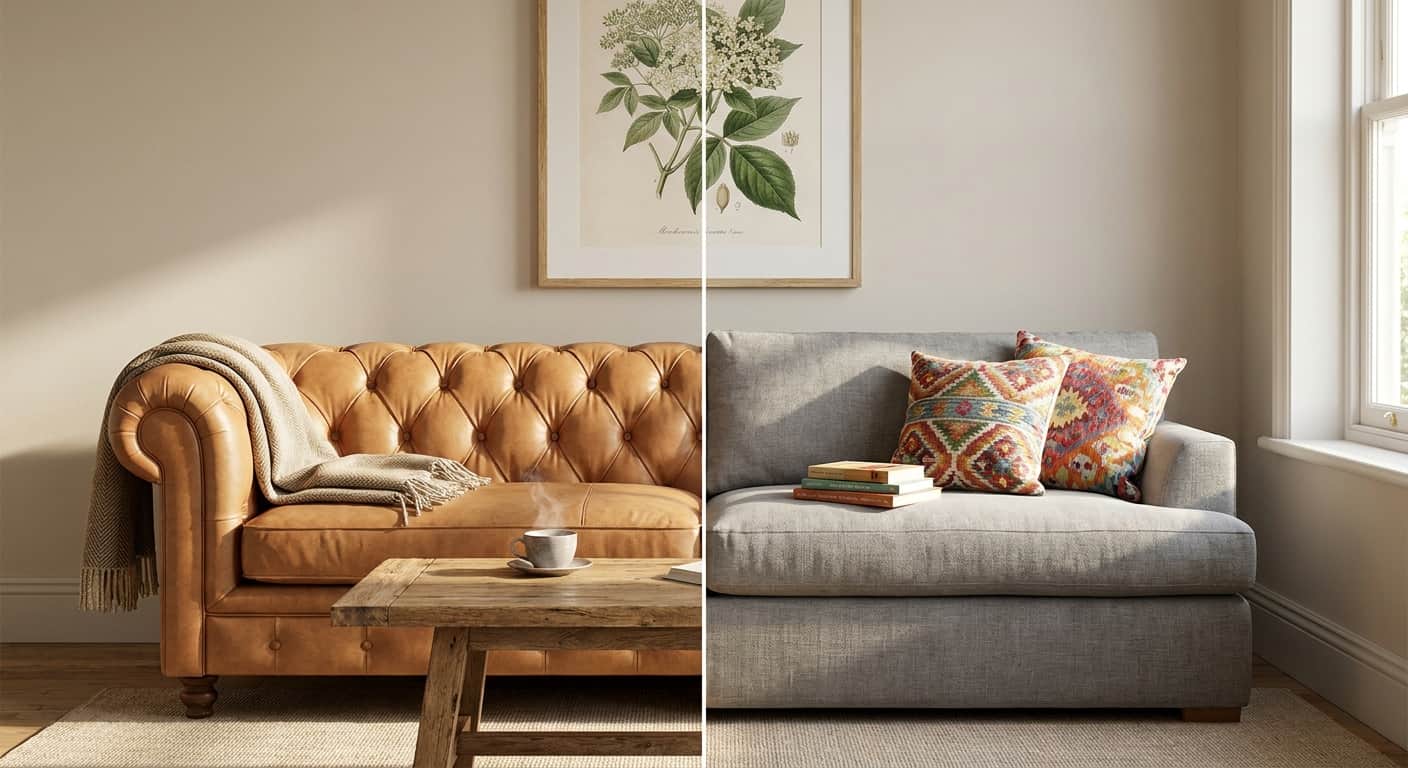
Leather and fabric replica sofas solve different problems. This guide breaks down how to pick between the two based on your household, your climate, and the specific mid-century design you're eyeing in 2026.
TL;DR
Leather wins on cleanup and lifespan under heavy daily use; fabric wins on comfort, color range, and price flexibility. For a leather vs fabric replica sofa decision, go leather (top-grain or full-aniline) if you have pets that shed but don't claw, or if you want a piece that ages instead of wearing out — think a Florence Knoll sofa replica or an LC3 sofa replica. Go fabric, especially bouclé or performance weaves, if you want softness, a wider palette, or you're furnishing an organic shape like a Togo sofa replica or Camaleonda sofa replica. Verdict: fabric for comfort-first households, leather for durability-first households — there is no universal winner in 2026.
Why this matters
A sofa upholstery choice locks you in for years, and reupholstering a mid-century modern replica isn't a weekend project — it's a specialty job that can cost more than the original piece. Get the material wrong and you're either scrubbing wine stains out of bouclé every month or sitting on leather that's too stiff for a household with toddlers.
The stakes are higher with replica furniture specifically. A 1:1 reproduction of a Pierre Paulin or Mario Bellini design holds its value and its look only if the upholstery matches the intent of the original — organic curved forms were built for fabric, tailored geometric shapes were built for leather. Before you shop, verify quality before buying replica furniture so you know what you're actually comparing.
What you'll need
- A tape measure and photos of your room's natural light exposure
- A list of household stress factors: kids, pets, guests, direct sun
- Fabric and leather swatches from the retailer if available
- A cleaning-time budget — be honest about how much upkeep you'll actually do
- A target sofa model in mind (Togo, Camaleonda, Marenco, Tufty Time, DS-600, or a tailored piece like Florence Knoll)
The steps
1. Define your household stress test
Count the daily hits your sofa will take: pets, kids under 10, and guest frequency above twice a week all push you toward leather or a performance fabric. A single-person or couple household with no pets can go with almost any fabric, including delicate bouclé.
Common mistake: people underestimate pet shedding. Fabric traps hair; leather wipes clean in under a minute.
2. Check the climate and room exposure
Leather cracks faster in dry, low-humidity climates and fades unevenly in direct sun over 4-6 hours a day. Fabric handles temperature swings better but bleaches out under UV just as fast, so a south-facing window with no curtains is a problem for both materials.
If your living room gets strong afternoon light, rotate cushions every 2-3 months regardless of material.
3. Compare the real cleaning routine
Leather needs a wipe-down with a damp cloth and a conditioner pass every 6 months. Fabric — especially bouclé — needs a vacuum weekly and a professional steam clean once a year for stains that don't lift with a damp cloth.
Specific to bouclé: it snags on rings, buckles, and pet claws, so bouclé fabric care is worth reading before you commit to a textured weave.
4. Test the feel in person or through a swatch
Leather runs cooler in winter and warmer in summer relative to skin contact, and it softens over 12-18 months of use. Fabric feels consistent year-round but varies wildly by weave — a tight weave like linen-cotton blends feels different from a looped bouclé.
Order a swatch before buying if the retailer offers one. A photo on a screen tells you nothing about hand-feel or pile depth.
5. Match the material to the design's intent
Organic, curved silhouettes — the Togo sofa replica, the Marshmallow sofa replica, the Dune sofa replica by Pierre Paulin — were designed around soft upholstery and read wrong in leather. Tailored, structured pieces — the Florence Knoll sofa replica, the LC3 sofa replica, the Marenco sofa replica — were built with leather in the original spec and hold their line better in it.
This isn't a hard rule, but going against the grain of the original design usually shows in the finished silhouette.
6. Run the long-term cost math
Leather costs more upfront but typically outlasts fabric by several years under identical use, which changes the per-year cost even when the sticker price is higher. Fabric costs less initially but you may face a reupholstery bill or a full replacement sooner if the household is hard on furniture.
Factor in financing if it changes your monthly comfort with the higher leather price point — Affirm financing is available on Sohnne orders if that shifts your decision.
7. Confirm the warranty and return terms before you order
A 5-year warranty and 60-day return window take the risk out of testing a material you're unsure about. Order the piece, live with it for a few weeks, and use the return window if the leather feels too formal or the fabric shows wear faster than expected.
Expected outcome: by step 7 you should have a single material decision, not a maybe.
Troubleshooting
Leather feels stiff and cold when it arrives. This is normal for top-grain leather in the first few weeks — it softens with body heat and use over 1-2 months.
Fabric already shows pilling after a few months. Low-grade polyester blends pill fast; a fabric shaver handles it in under 10 minutes, but this is a sign to look at performance weaves next time.
Pets are scratching the fabric arms. Switch cushion covers to a tighter weave or check a scratch-resistant fabric guide before assuming you need to replace the whole sofa.
Leather is cracking near the seat edge. This usually means low humidity or missed conditioning — apply a leather conditioner every 6 months and keep the piece 3+ feet from direct heating vents.
Fabric holds odors after spills. Baking soda left on the fabric for 20-30 minutes before vacuuming pulls most odors; recurring odor issues point to a fabric that's too absorbent for a household with young kids or pets.
Tools and resources
- A fabric shaver for pilling maintenance
- Leather conditioner rated for aniline or top-grain leather
- A soft-bristle vacuum attachment for bouclé and looped weaves
- Bouclé fabric care reference for weekly and seasonal maintenance
- A room humidity gauge if you're in a dry climate and leaning leather
What to do next
Once the material is decided, the next filter is longevity — frame construction, cushion fill, and stitching quality matter as much as the upholstery. Read how to choose a replica sofa that lasts before you finalize the specific model.
FAQ
Is leather or fabric better for a replica sofa? Leather wins for durability and cleanup in high-traffic households; fabric wins for comfort and color range. Neither is universally better — it depends on your household's daily use in 2026.
Does leather crack faster than fabric wears out? Leather cracks mainly from dry air and missed conditioning, not age alone; well-maintained leather often outlasts budget fabric by several years.
Is bouclé fabric hard to maintain on a replica sofa? Bouclé needs weekly vacuuming and snags on claws and rings more than tight-weave fabrics, but it holds up fine with routine care and a fabric shaver for pilling.
Can I get a leather look with fabric durability? Performance fabrics with a leather-like finish exist but don't fully replicate leather's wipe-clean surface; they're a middle option, not a direct substitute.
How much does a leather replica sofa cost compared to fabric? Leather sits at a higher upfront price point than most fabric options on comparable models, though the per-year cost can even out if leather lasts longer for your household.
Is fabric better for pet owners? Only if pets shed without clawing — for scratching cats, leather or a scratch-resistant weave holds up better than standard fabric.
Which material suits organic mid-century shapes like the Togo or Camaleonda? Fabric, typically bouclé or a soft weave, matches the original design intent of curved, cushion-heavy silhouettes better than leather.
Do replica sofas come with a warranty regardless of material? Sohnne backs its pieces with a 5-year warranty and a 60-day return window, which applies whether you choose leather or fabric.
One last thing
Most buyers assume leather is the "safe" choice because it's easier to wipe down, but full-aniline leather actually shows scratches and sun fading more visibly than a tight-weave fabric — it's low-maintenance for spills, not scuff-proof. If your household skews toward keys, belt buckles, and restless kids more than actual liquid spills, fabric is the safer bet in 2026, not leather.