Cat Scratch Resistant Couch Fabrics: 2026 Buying Guide

Sohnne Design Studio
July 13, 2026
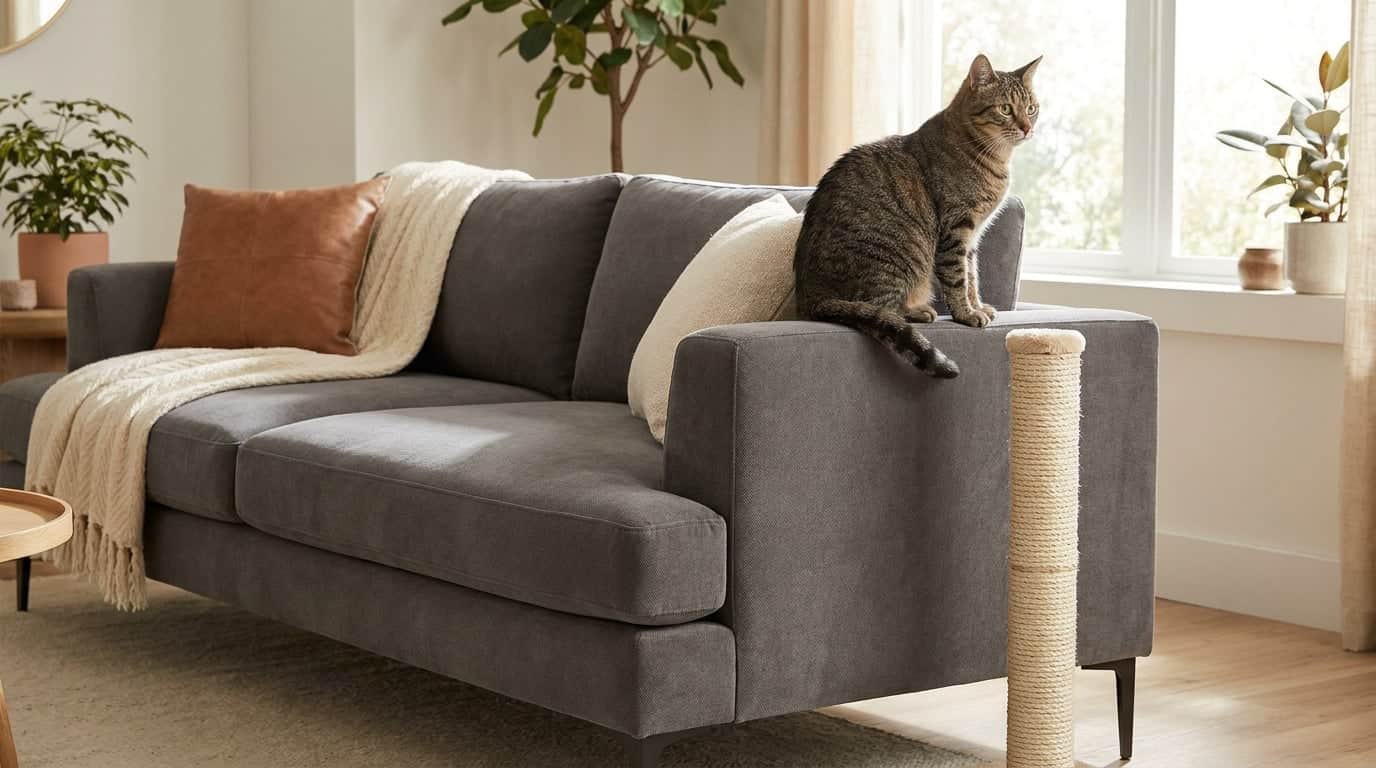
A cat scratch resistant couch isn't one product — it's a fabric decision, and getting it wrong means a $2,000 sofa with shredded arms inside six months. This guide ranks the fabric and weave types that actually hold up against claws, tells you which look chic doing it, and flags the trendy options that fail fast.
TL;DR
The cat scratch resistant couch conversation comes down to weave tightness and fiber type, not marketing labels. Top-grain leather and tightly woven performance velvet top the list for 2026, chenille sits in the middle, and loose-weave linen or silk blends are a Skip if you own a cat. Boucle, done right, is a Consider — dense loop weaves like the kind used on Sohnne's Togo sofa replica resist snagging better than open bouclé knits. If you're shopping now, prioritize double-rub rating over color or trend.
Why this matters
Cat claws don't cut fabric so much as hook individual fibers and pull them loose, which is why loosely woven or long-pile fabrics fail first. A fiber's resistance comes down to weave density, not thickness — a thin, tight weave can outlast a thick, loose one. Households that skip this step end up replacing upholstery within 18-24 months instead of the 5-10 years a well-matched fabric should last, which is exactly the gap covered in how to choose a replica sofa that lasts. Getting the fabric right once beats reupholstering twice.
How we ranked
Fabrics and finishes are ranked on three factors: documented abrasion resistance (Martindale or Wyzenbeek double-rub counts, the textile industry's standard durability test), how visibly claw marks show on the surface, and cleaning difficulty after a scratch or snag happens. Style versatility for mid-century modern and contemporary living rooms is weighted in, since a scratch-resistant fabric that clashes with your room isn't a real solution. Rankings reflect aggregated textile industry data as of 2026, not lab results from a single test batch.
The ranked list
1. Top-grain leather — the workhorse pick
Leather doesn't snag because there are no loose threads to catch — claws leave surface marks that often buff out with a damp cloth. A quality top-grain hide typically shows scratch resistance equivalent to 100,000+ double rubs in abrasion testing, well above most fabric alternatives. It patinas with age instead of looking worn, which is why it's the default recommendation for households with multiple cats. Buy.
2. Performance velvet (Crypton-treated or similar) — the low-maintenance pick
Treated performance velvets use a tight pile plus a stain and moisture barrier that also reduces fiber snagging. Double-rub ratings on Crypton-style performance fabrics regularly clear 100,000, putting them in the same durability tier as leather. The texture reads soft and inviting, not clinical, which matters if you don't want your living room to look like a vet clinic. Buy.
3. Dense bouclé and tight-loop weaves — the style-forward compromise
Not all bouclé is equal — the trendy, chunky loop knits popular since 2023 snag easily, but a tight, low-loop bouclé behaves more like a durable tweed. This is the category where a sofa like Sohnne's Togo sofa replica earns its reputation, since the low-profile weave resists claw hooking better than the oversized loop textures flooding the market in 2026. Ask for the weave density before buying any bouclé piece. Consider.
4. High-quality vegan (PU) leather — the budget alternative
Vegan leather resists claws in the same way real leather does, no loose fibers to catch, but cheaper PU formulations crack and peel within 2-3 years of regular use. Look for a rated thickness above 1.0mm and a matte, textured finish rather than high-gloss, which shows scuffs less. It's a reasonable middle ground if leather is outside budget. Consider.
5. Canvas and outdoor-grade fabric — the durable underdog
Solution-dyed acrylic and canvas weaves, the kind built for outdoor furniture, routinely test above 30,000 double rubs and shrug off scratching because the fibers are woven under high tension. The tradeoff is a slightly stiffer hand-feel than indoor upholstery fabric. For a high-traffic household room, that tradeoff is worth it. Consider.
6. Chenille — the middle-of-the-road option
Chenille's short, twisted pile resists snagging better than long-pile fabrics but worse than tight weaves, landing around 15,000-25,000 double rubs depending on grade. It looks plush and reads well in mid-century modern spaces, but claws can still pull individual tufts loose over time. Fine as a secondary piece, riskier as the primary sofa in a cat household. Wait.
7. Loose-weave linen and cotton blends — the popular mistake
Linen looks effortless in every design magazine spread for 2026, but its open weave is exactly the structure a claw hooks into. Snags pull threads and create runs that don't self-repair the way a leather scuff does. Unless treated with a tight backing weave, skip this for any room your cat has access to. Skip.
8. Silk and silk-blend upholstery — the one to avoid entirely
Silk fibers are fine and delicate, tearing rather than resisting under claw pressure, and abrasion ratings sit well under 10,000 double rubs in most testing. There's no styling reason to choose this if cats live in the home. Skip.
Comparison table
| Fabric type | Double-rub range | Claw visibility | Cleaning ease | Verdict |
|---|---|---|---|---|
| Top-grain leather | 100,000+ | Low (buffs out) | Easy | Buy |
| Performance velvet | 100,000+ | Low | Easy | Buy |
| Tight bouclé/tweed | 40,000-80,000 | Medium | Moderate | Consider |
| Vegan (PU) leather | 30,000-50,000 | Low | Easy | Consider |
| Canvas/outdoor-grade | 30,000+ | Low | Moderate | Consider |
| Chenille | 15,000-25,000 | Medium-High | Moderate | Wait |
| Loose linen/cotton | 10,000-20,000 | High | Difficult | Skip |
| Silk/silk-blend | Under 10,000 | High | Difficult | Skip |
Where to buy
- Ask for the double-rub number before the swatch color. Any retailer that can't produce an abrasion rating is guessing along with you.
- Order a physical swatch and test it with a nail, not a photo. Screens flatten texture, and texture is the whole scratch-resistance story.
- Check the warranty terms, not just the marketing copy. A 5-year warranty on the frame and fabric, the kind Sohnne includes on its replica sofas, signals a manufacturer confident in how the material ages under real household use — including a cat's daily routine.
FAQ
What is the most cat scratch resistant couch fabric?
Top-grain leather and treated performance velvet lead in 2026, both regularly testing above 100,000 double rubs in abrasion ratings. Tight-loop bouclé and canvas-grade fabric are reasonable runners-up if leather isn't the look you want.
Is microfiber good for cats?
Microfiber's tight synthetic weave resists snagging reasonably well, similar to performance velvet, though it can pill under repeated claw contact over several years. It's a solid mid-tier choice, not a top pick.
Does leather scratch easily with cats?
Leather shows surface marks from claws but rarely tears, and most scuffs on top-grain leather buff out with a damp cloth or light conditioner. Bonded or heavily coated leather is more vulnerable and shows permanent marks faster.
Are velvet couches bad for cats?
Untreated decorative velvet snags easily, but performance velvet with a Crypton-style protective treatment is one of the more durable options tested in 2026. The difference is entirely in the treatment, not the velvet itself.
How much does a scratch-resistant sofa cost compared to a regular one?
Performance fabrics and leather typically carry a premium over standard cotton-linen blends, though the gap has narrowed as more manufacturers build performance fabric into standard lines this year. Financing options like Affirm make the up-front difference easier to absorb.
Can you make a regular fabric couch more scratch-resistant?
A fabric protector spray adds marginal resistance but doesn't change the underlying weave density, so it's a stopgap, not a fix. Nail caps and consistent scratching-post training reduce damage more reliably than any spray-on treatment.
Do darker or patterned fabrics hide scratches better?
Dark, textured, or patterned fabrics camouflage light surface scuffs better than solid pale colors, but they don't change actual scratch resistance. Weave density still does the real work.
Is bouclé a bad choice if I have cats?
Oversized, chunky bouclé knits snag easily and are a Skip, but tight, low-loop bouclé performs closer to a durable tweed and is a reasonable Consider. Ask about loop height before buying any bouclé piece in 2026.
One last thing
The detail most buyers miss: it's not the fabric family that matters most, it's the backing weave underneath it. A performance fabric bonded to a loose backing will still snag at the seams, even if the surface fiber tests well, so ask about backing construction, not just face fabric, before you commit to a cat scratch resistant couch.
Related guides
Stay connected with us!
Keep in touch with what’s new and next. Subscribe for weekly insights, product launches, and community news!