How to Choose a Replica Sofa That Lasts (2026 Guide)

Sohnne Design Studio
July 9, 2026
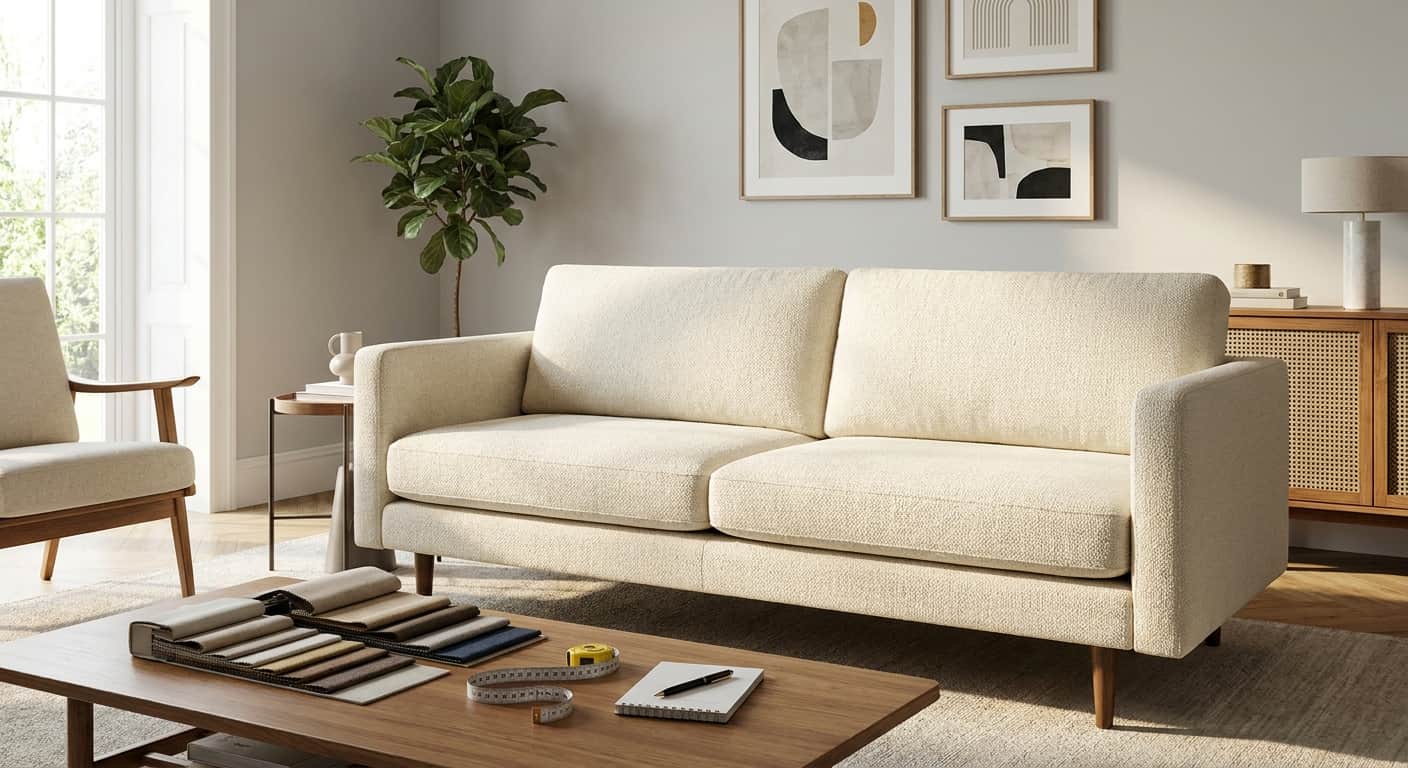
A replica sofa can look identical to the original in a photo and fall apart in eighteen months if the frame, foam, and upholstery underneath don't hold up. This guide walks through exactly what to check before you buy, in what order, so your sofa still looks right in 2031, not just in 2026.
TL;DR
Choosing a replica sofa that lasts comes down to five checks: frame material, foam density, upholstery grade, dimensional accuracy, and what happens after the sale (returns, warranty, financing). The Sohnne Togo sofa replica and the Sohnne Dune sofa replica both pass all five because they're built at 1:1 original dimensions in-house rather than outsourced to a low-cost factory. If a listing can't answer basic construction questions, treat that as your answer: skip it. For 2026 buyers replacing a fast-furniture couch, the frame and foam matter more than the fabric color.
Why this matters
Most replica sofa complaints aren't about style, they're about collapse. Foam that flattens within a year, frames that creak and separate, cushions that lose shape after three months of normal sitting. These failures trace back to two or three decisions made before manufacturing even started: what wood went into the frame, what density foam got specified, and whether the piece was actually built to the original's dimensions or just eyeballed to look similar in photos.
A sofa is a piece of furniture you sit on daily for years, not a decorative object you glance at. The buying criteria below are the ones that actually predict longevity, in the order you should check them.
What you'll need
- A tape measure (for your space, not just the listing's dimensions)
- The manufacturer's material spec sheet, or a direct answer from customer service if it's not listed
- A sense of your household's actual use case: kids, pets, daily lounging, occasional guests
- 20-30 minutes to compare 2-3 listings side by side before deciding
- If available, a warranty and return policy document to read before checkout, not after
The steps
1. Check the frame material first
The frame is the skeleton. If it fails, everything else on the sofa fails with it. Kiln-dried hardwood frames resist warping and joint separation far better than particleboard or unspecified "engineered wood," which is common in budget replica sofas sold under $800.
Look for listings that name the wood species or at minimum say "solid hardwood frame." If a product page only shows a finished photo and never mentions what's inside, that's a gap worth asking about directly before you buy. A frame built to last should outlive at least one full reupholstery cycle, which typically falls somewhere in the 7-10 year range for a well-used piece.
Common mistake: buying based on the shape alone and assuming all replicas of the same design use the same frame. They don't. Two visually identical Togo-style sofas can have completely different internal construction.
2. Check foam density, not just thickness
Thickness sells the cushion in photos. Density is what determines whether it holds its shape after six months of daily sitting. High-resilience foam in the 1.8-2.5 lb/ft³ range with a supportive core holds up under regular use; cheaper low-density foam compresses and flattens fast, sometimes within the first year.
The Togo sofa's signature quilted, no-frame silhouette depends entirely on foam quality since there's no rigid structure doing the work. That makes foam spec more important on a Togo-style replica than on almost any other sofa shape. Read a breakdown of sizing and specs in this Togo sofa replica pricing and sizing guide before comparing listings.
Common mistake: judging comfort from a showroom or unboxing video. New foam always feels good. The real test is how it feels after 90 days.
3. Verify upholstery grade and stitching
Fabric and leather grades vary enormously even within the same product line. Ask what the base material is (top-grain leather versus bonded leather, for instance) and look closely at stitching in product photos: uneven seams or visible glue lines are early signs of rushed manufacturing.
For a modular piece like the Camaleonda, upholstery consistency across modules matters even more, since mismatched dye lots or fabric batches become obvious once the sections are assembled together. This Camaleonda sofa replica modular configuration guide covers how the sections connect and what to check before ordering multiple pieces.
4. Confirm dimensional accuracy against the original
"Inspired by" and "1:1 replica" are not the same claim. A true 1:1 reproduction matches the original's seat depth, arm height, and overall footprint down to the inch, which matters for both how the piece looks in a room and how it actually feels to sit in.
Measure your space first, then compare against the listed dimensions rather than trusting a rendered room photo for scale. Off-dimension replicas often compensate with cheaper foam or a shortened frame to hit a lower price point, which shows up later as comfort and durability problems.
5. Check what happens after you buy
A lasting sofa needs a policy that backs it up. Look for three things specifically: a real warranty (5 years is a meaningful benchmark for furniture, not a marketing number), a return window long enough to actually live with the piece before deciding (60 days is standard for a considered purchase like this), and manufacturer support if a part needs replacing.
Sohnne pieces ship with free insured shipping, a 60-day return window, and a 5-year warranty, with Affirm financing available if you're spreading the cost. Those terms matter more on a sofa than almost any other furniture category, because you can't fully evaluate comfort and build quality until you've lived with it for a few weeks.
6. Decide based on your actual space, not the showroom photo
A Dune sofa's low, sculptural profile reads differently in a compact apartment than in an open-plan living room. Before finalizing, walk through how the piece will function in your specific layout, foot traffic, and seating needs. This Dune sofa replica by Pierre Paulin breakdown covers proportions and placement if you're considering that silhouette for 2026.
Troubleshooting
The cushions already look flat after a few months. That's a foam density problem, not a normal wear pattern. Check the return window immediately; a 60-day policy exists exactly for catching this kind of early failure.
The frame creaks when you sit down. Creaking usually means loose joinery or a lower-grade wood frame flexing under weight. This rarely self-corrects and tends to get worse, not better, with continued use.
The color doesn't match the listing photos. Fabric dye lots vary by batch. Request swatches before ordering if color accuracy matters for your room, especially for bold upholstery colors that photograph differently under different lighting.
It doesn't fit the space the way you expected. This traces back to skipping step 4. Always measure against listed dimensions before ordering, not after delivery.
You're not sure if a listing's "replica" claim is accurate. Ask directly whether dimensions match the original 1:1. A manufacturer confident in their construction will answer specifically; vague answers are a signal to keep looking.
You want a similar look for less but don't want to sacrifice durability. Not every alternative is a downgrade. This cloud couch dupe guide for 2026 covers where corners get cut on lower-cost alternatives and where they don't.
Tools and resources
- Sohnne for factory-made mid-century replicas built to 1:1 original dimensions
- Togo sofa replica pricing, colors, and sizes for spec comparison before you buy
- Camaleonda sofa replica modular configurations explained if you're considering a sectional build
- A tape measure and your room's floor plan, measured before checkout, not after delivery
What to do next
Once the frame, foam, and upholstery check out, the next decision is fit: how the piece sits in your specific room. Read the Dune sofa styling guide for layout and placement guidance before you finalize color and configuration.
FAQ
What makes a replica sofa last longer than a fast-furniture couch? Frame material and foam density are the two biggest factors. A kiln-dried hardwood frame paired with high-resilience foam in the 1.8-2.5 lb/ft³ range will outlast a particleboard frame with low-density foam by years, regardless of how similar the two look on delivery day.
Is a 1:1 replica actually different from a general "inspired by" design? Yes. A 1:1 replica matches the original's exact seat depth, arm height, and proportions, while an "inspired by" piece often adjusts dimensions to cut material costs, which changes both comfort and long-term structural integrity.
How much does a quality replica sofa cost in 2026? Pricing varies by design and configuration, so check current listings directly, but generally the lowest-priced options in any category cut corners on frame or foam first, since those costs are invisible until months later.
Is the Togo sofa replica worth it for small apartments? Its low-profile, frameless design works well in compact spaces since it doesn't visually block sightlines the way a boxier sofa does. Read the Togo sofa for small apartments breakdown for specific size recommendations.
How do I know if a warranty is actually meaningful? Compare the term length against the category standard. A 5-year furniture warranty signals the manufacturer expects the piece to perform well past the first year or two, unlike shorter 90-day or 1-year terms common on budget imports.
Should I buy a modular sofa like the Camaleonda if I might move soon? Modular pieces actually travel better than one-piece sofas since sections disassemble for transport, but confirm the module connectors and upholstery consistency before ordering multiple pieces.
What's the biggest mistake people make buying a replica sofa? Deciding on look alone before checking frame and foam specs. The shape sells the sofa; the internal construction determines whether it's still comfortable in 2028.
Does return policy length actually matter for a sofa purchase? It matters more than almost any other spec, because comfort and foam performance only become clear after weeks of real use, not a five-minute showroom sit.
One last thing
The detail most buyers skip: ask whether the frame joints are glued, screwed, or doweled, since this single spec predicts creaking and separation better than almost anything else on a listing. A doweled and glued joint outlasts a screw-only connection by a wide margin under daily use, and it's rarely mentioned unless you ask directly.