How to Style the Dune Sofa in a Living Room (2026)

Sohnne Design Studio
July 8, 2026
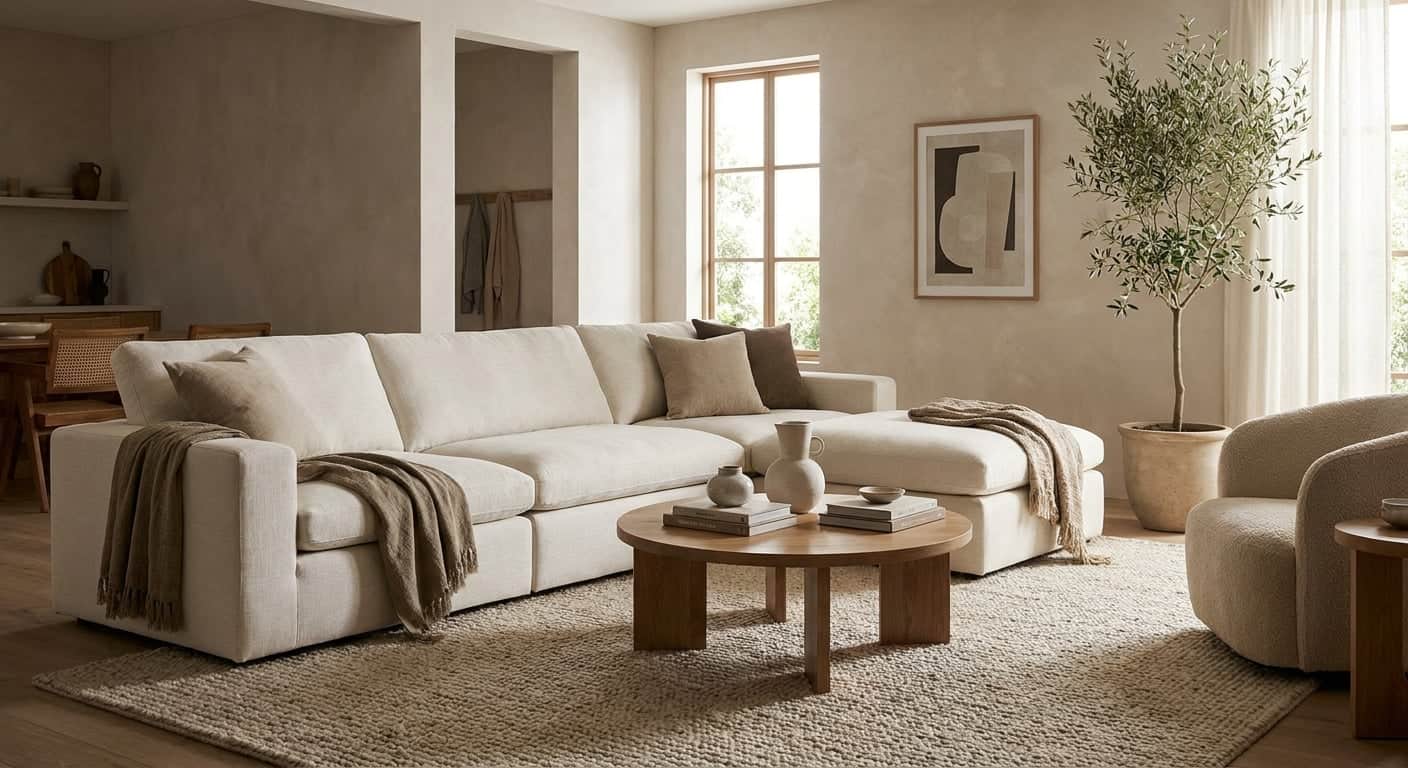
The Dune sofa — Pierre Paulin's 1971 low-profile masterpiece — rewards careful placement and a restrained hand with accessories. This guide walks you through exactly how to style the Dune sofa in a living room, from floor treatment to lighting, so the piece reads the way Paulin intended: architecturally grounded, visually airy, and unmistakably considered.
TL;DR: Styling a Dune sofa in 2026 means working with its sculptural silhouette, not against it. Keep the floor plan open, choose a rug with enough surface area to anchor the piece, pair it with low-profile furniture at a similar seat height (typically 13–15 inches), and let one dominant material — bouclé, velvet, or leather — carry the room's texture story. The sofa's curved, ground-hugging form does the heavy lifting; your job is to clear the way.
Why This Matters in 2026
The Dune sofa has moved from cult reference to mainstream living room centerpiece over the past few years. That popularity brings a real risk: pairing a genuinely sculptural piece with generic accessories until it looks like every other living room on a mood board. The guidance below is specific to the Dune's geometry — its long, low seat, continuous wrapped back, and platform silhouette — so each decision connects to the physical reality of the piece rather than generic decorating advice.
What You'll Need
- A Dune sofa (fabric or leather version — the approach differs slightly between the two)
- A large-format area rug: minimum 8 × 10 ft for most rooms, ideally 9 × 12 ft
- A coffee table no taller than 14 inches (to match the sofa's seat height)
- 1–2 accent chairs at 15 inches seat height or lower
- A floor lamp or articulating wall sconce — ceiling-only lighting flattens the sofa's curves
- Side table or tray: low, maximum 18 inches tall
- 2–4 throw pillows (the sofa's own back cushion is integral — don't bury it)
- Optional: a single large-scale artwork or textured wall panel as a backdrop
Step 1: Anchor the Sofa on a Properly Scaled Rug
The Dune sofa sits very low — typically around 13 inches at the seat — which means a small rug makes it look like it's floating in dead space. The rug needs to extend at least 18 inches beyond each side of the sofa and sit fully under the front legs. An 8 × 10 ft rug is the minimum for a standard living room; in a room over 200 square feet, move to 9 × 12 ft.
Texture matters here more than pattern. A flat-weave or low-pile rug (jute, sisal, or a wool flatweave) keeps the sofa's own texture as the focal point. A high-pile shag competes with the sofa's upholstery and makes the low seat feel even lower. If the sofa is in bouclé, lean toward a smooth-weave rug. If it's in leather or a flat fabric, a subtly textured wool is fine.
Common mistake: Placing only the coffee table on the rug and leaving the sofa floating on bare floor. All primary seating and the coffee table should share the rug plane.
Step 2: Choose a Coffee Table at the Right Height
The Dune sofa's seat height (approximately 13–14 inches) means a standard 18-inch coffee table reads as a countertop from seated eye level — too high, and functionally awkward. The target is a coffee table between 11 and 14 inches tall, keeping it within 1–2 inches of the seat height.
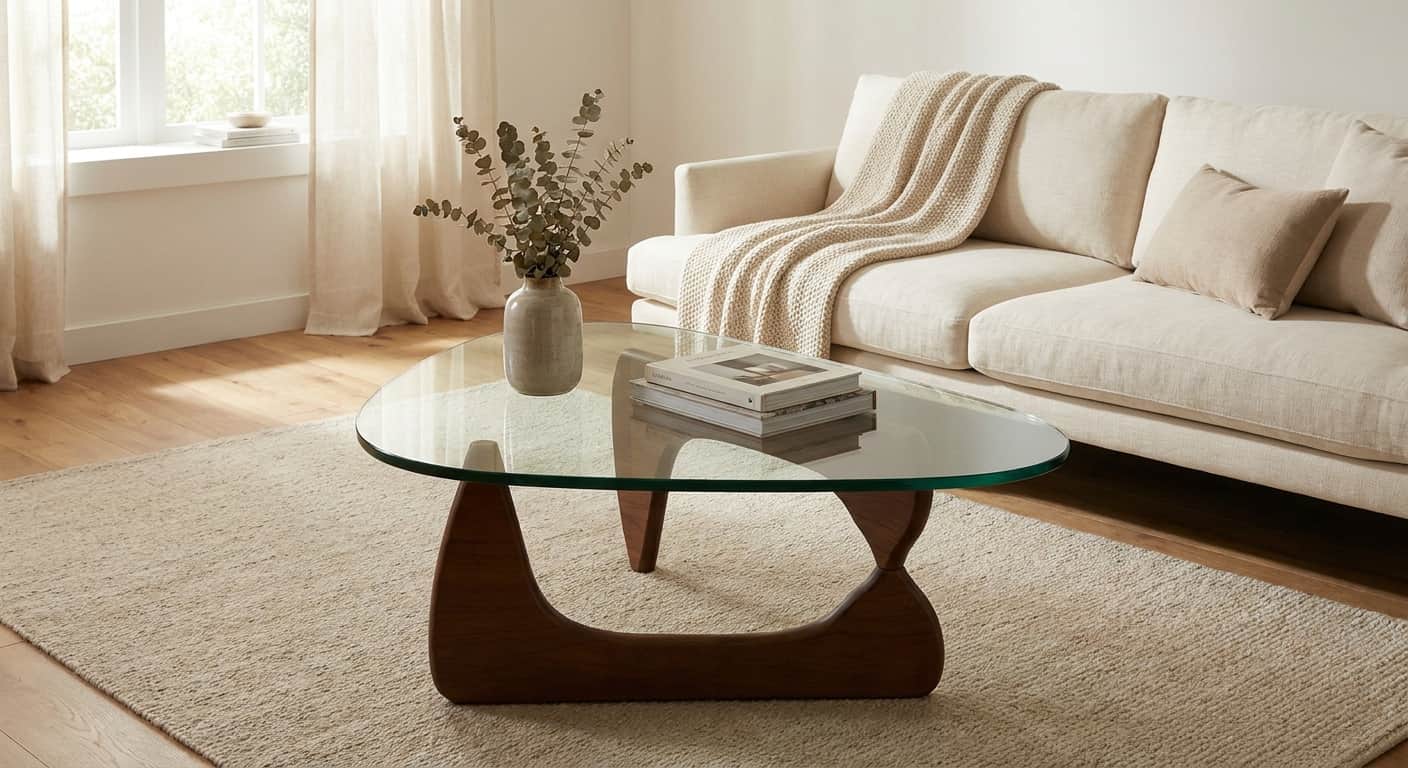
In 2026, travertine and honed marble tabletops in oval or organic shapes work particularly well against the Dune's curved silhouette. Avoid hard-edged rectangular tables in dark wood — they read as visually heavy against the sofa's soft form. A smoked-glass top on a low metal frame is a clean alternative that doesn't compete for visual weight.
Leave 16–18 inches of clearance between the table edge and the sofa's front. The Dune's seat is deep (typically 35–38 inches), so the sofa already consumes a lot of floor real estate — a table too close makes the seating zone feel compressed.
Common mistake: Using a drum-style or pedestal table taller than 16 inches. It interrupts the sofa's horizontal line and breaks the room's low, calm silhouette.
Step 3: Set the Floor Plan — Open Space Is the Point
Pierre Paulin designed the Dune to be seen from multiple angles. The worst thing you can do is push it against a wall. Position the sofa at least 24 inches from any wall, allowing the wrapped back — which is as designed as the front — to read in the room.
For 2026 living rooms, the floating arrangement works best: sofa centered on the rug, coffee table forward, and accent seating (a pair of Tolix-style chairs, a low armchair, or a chaise) completing the conversation group. Keep the sightline from the room's entry point clear so the full length of the Dune reads as you walk in — that first view is part of the design experience.
If the room is under 150 square feet, a single accent chair at a 45-degree angle is enough. Do not fill both sides with accent chairs — the Dune's horizontal scale does not need to be boxed in.
Common mistake: Centering the sofa against the longest wall. This reduces it to generic sofa placement and eliminates the sculptural read from multiple angles.
Step 4: Layer Lighting — Low and Directional
Flat overhead lighting is the fastest way to erase the Dune's three-dimensional form. The sofa's continuous curves and upholstery texture need directional light — either from the side or slightly above at an angle — to show up properly.
A floor lamp placed 18–24 inches to the side and slightly behind the sofa creates the right effect: the curve of the back catches light, the seat is gently lit, and the room gains depth. Articulating wall sconces at 58–62 inches from the floor (mid-wall, not ceiling-height) are the cleanest option in 2026 interiors where cords are not ideal.
Avoid pendant lights hung directly over the sofa — they work over dining tables, not low seating where the fixture competes with the sofa's upper silhouette. If the room has recessed lighting, set it to a warm 2700K–3000K color temperature and dim it to 50–60% when the sofa zone is in use.
Common mistake: Relying on a single overhead fixture and no secondary lighting. The sofa flattens and loses its profile entirely.
Step 5: Edit the Accessories — The Sofa Is Not a Display Surface
The Dune sofa has an integral back cushion that forms the sofa's silhouette. Loading it with 6–8 throw pillows destroys the line Paulin drew. Use 2 pillows maximum — placed at each end, not stacked in the middle. Choose solid colors or a single subtle texture; pattern on the pillows fights the sofa's own surface.
A single throw draped casually over one arm is enough textile layering. In 2026, a chunky-knit or waffle-weave throw in an earth tone (warm ochre, terracotta, or stone) reads well against both bouclé and leather versions.
For the side table: one object, not a collection. A ceramic vase, a short candle, or a single architectural book. The Dune is already the most complex visual element in the room — the accessories should step back.
Common mistake: Styling the sofa like a standard sectional with full pillow stacking. It obscures the back cushion's integral shape and makes the piece unrecognizable.
Troubleshooting
The sofa looks too low in the room. The issue is usually ceiling height or furniture scale, not the sofa itself. Hang artwork higher than instinct suggests — 60–66 inches to center, rather than the standard 57 inches — to pull the eye upward and create vertical balance.
The bouclé version looks dirty or flat quickly. Bouclé traps dust in its loops. Brush it weekly with a soft upholstery brush in one direction. Avoid steam cleaning — it can mat the loops permanently.
The leather version feels cold in the room. Add one warm-toned textile — a wool throw or a jute rug — and swap any metal accents to brushed brass or aged bronze. Cold leather plus chrome reads as clinical.
The room feels cramped even with the right rug size. The Dune's depth (35–38 inches) means it needs more clearance than a standard sofa. Measure 18 inches from the front of the sofa to the coffee table, and 30 inches from the coffee table to opposite seating. If either clearance is less than this, remove a piece rather than squeeze.
The sofa looks disconnected from the rest of the furniture. The Dune reads best with furniture that shares at least one design era — 1960s–1970s organic modernism. Mix in one piece that clearly belongs to that lineage and the room coheres.
The accent chairs look too tall. The Dune's 13-inch seat makes anything above 16 inches look like it belongs to a different room. Stick to low-profile seating — sling chairs, low lounge chairs, or a bench at seat height.
Tools and Resources
- Area rug: 8 × 10 ft minimum, low-pile wool or flatweave
- Coffee table: 11–14 inches tall, organic or oval form in travertine, marble, or smoked glass
- Floor lamp: articulating arm or arc style, warm bulb at 2700K–3000K
- Throw: wool or waffle-weave in a solid earth tone, 50 × 70 inches
- 2 throw pillows: solid or single-texture, matching or tonal to the sofa
- Accent chair: seat height 15 inches or lower
- For background on the Dune sofa's design history and specifications, the Dune sofa replica guide by Pierre Paulin covers the original dimensions and the design decisions behind the piece
- Sohnne's collection is at sohnne.com
What to Do Next
Once the Dune is placed and the room is styled, the next decision is usually the accent chair. A low-profile lounge chair that shares the Dune's organic modernist lineage will close the room. The Eames lounge chair replica — what to know before buying guide covers exactly how to evaluate options in 2026, from seat angle to upholstery grade, so you are not guessing when you add the second major piece.
If you are weighing the Dune against other statement sofas before committing, the cloud couch dupe guide for 2026 and the Togo sofa replica overview — colors, sizes, and pricing give direct comparisons on form, scale, and how each piece behaves in a living room.
FAQ
What's the best rug size for a Dune sofa?
An 8 × 10 ft rug is the minimum. In any room over 200 square feet, use a 9 × 12 ft rug. The sofa's front legs and all primary seating should sit on the rug.
What coffee table height works with the Dune sofa?
Between 11 and 14 inches tall. The Dune's seat sits at approximately 13–14 inches, so a standard 18-inch table reads as too high from a seated position and disrupts the sofa's horizontal profile.
How many throw pillows should you use on a Dune sofa?
Two, maximum — one at each end. The Dune has an integral back cushion that defines its silhouette. Stacking pillows obscures that form and makes the piece look like a standard sofa.
Can you push a Dune sofa against the wall?
No. The wrapped back is a designed surface. Position it at least 24 inches from any wall so the back reads in the room and the piece can be seen from multiple angles as intended.
What accent chairs go with a Dune sofa in 2026?
Chairs with a seat height of 15 inches or lower and an organic or modernist profile. Sling chairs, low lounge chairs, and platform-style armchairs from the same 1960s–1970s design era read as coherent. Avoid upright dining-height chairs.
How do you keep bouclé on a Dune sofa looking clean?
Brush it weekly with a soft upholstery brush in one direction. Vacuum on low suction with an upholstery attachment. Avoid steam cleaning — it mats the loops. Spot-clean with a dry cloth and mild upholstery cleaner.
Is the Dune sofa good for small living rooms?
The Dune is a long, deep piece — typically 35–38 inches deep and 90–100 inches wide in standard configurations. It can work in a smaller room if the floor plan stays open, the coffee table is small, and accent seating is limited to one chair. Rooms under 120 square feet will feel compressed.
What lighting works best above or near a Dune sofa?
Floor lamps with an arc or articulating arm placed 18–24 inches to the side, or wall sconces at 58–62 inches from the floor. Avoid pendants directly overhead and rely on overhead recessed lighting at no more than 50–60% output at 2700K–3000K.
One Last Thing
Pierre Paulin originally called the Dune a "landscape sofa" — he thought of it as terrain, not furniture. That framing is the most useful design instruction you can carry into the styling process. The piece is not the backdrop for other objects; it is the ground the room is built on. In 2026, the living rooms that photograph best around the Dune are the ones where the owner removed things, not added them.