Leather Sofa Warm Interior Styling: 2026 Guide

Sohnne Design Studio
July 31, 2026
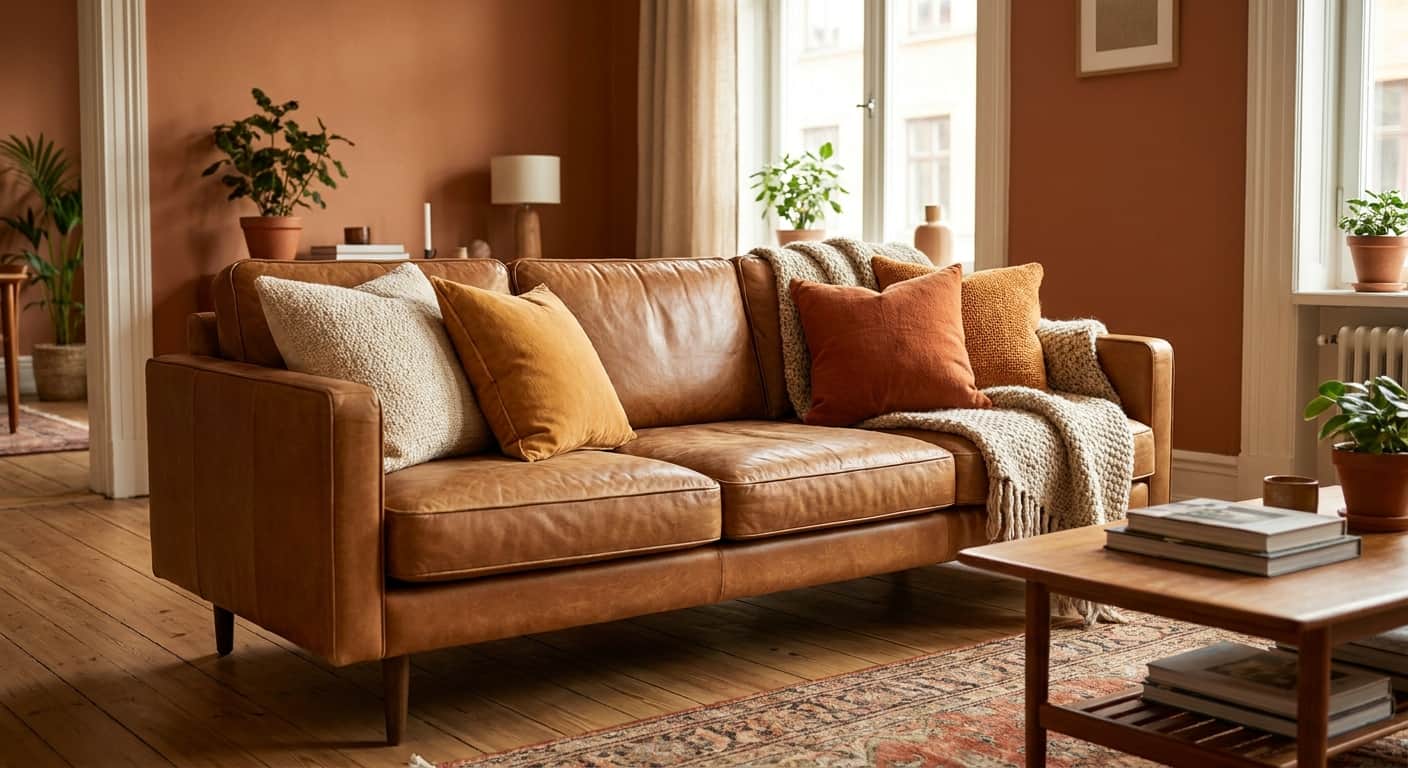
A leather replica sofa can anchor a warm-toned room or fight it, depending on the leather's undertone and what sits around it. This guide walks through the exact sequence for pairing leather seating with terracotta walls, walnut floors, and low-glare lighting so the room reads intentional, not accidental.
TL;DR- Cognac and camel leather sofas suit leather sofa warm interior styling; charcoal or black leather reads cold against terracotta or rust walls.
- Pair leather with at least two natural textures – wool, jute, or oak – to keep a warm room from feeling like a showroom.
- 3000K bulbs or lower keep leather grain warm at night; anything above 4000K flattens the tone toward gray.
- Rotate leather away from direct south-facing sun in 2026 builds with floor-to-ceiling glass; UV fading shows up within 12-18 months.
Why this matters
Leather behaves differently under warm light than fabric does. A camel or cognac hide picks up amber tones from incandescent and low-Kelvin LED lighting, which is exactly why leather reads richer in a room with warm walls and wood floors than it does in a stark white loft.
Get the undertone wrong, though, and a leather sofa fights everything around it. Black or slate leather next to terracotta or rust paint creates a temperature clash that no amount of styling fixes – the eye keeps landing on the mismatch instead of resting in the room. Getting this right at the start saves a return or a reupholster later.
What you'll need
- A leather replica sofa in a warm hide color (cognac, camel, tobacco, or chestnut) – if you're deciding between materials first, the guide on leather vs fabric replica sofas breaks down which holds up in high-use rooms.
- Two to three textiles in complementary warm tones: a wool or jute rug, a boucle or linen throw pillow set, one heavier throw blanket.
- A wood tone reference – walnut, oak, or teak – either from existing floors or a coffee table, so the leather isn't the only warm material in the room.
- Lighting at 2700K-3000K color temperature (check the bulb packaging; this is non-negotiable for leather).
- Leather conditioner rated for aniline or semi-aniline hides, applied every 3-4 months in 2026 to prevent cracking near heat vents.
- A tape measure and a rug at least 8 inches wider than the sofa on each side.
The steps
1. Confirm the leather's undertone before you commit to wall color
Hold a fabric swatch or cushion sample against your wall paint in daylight, not under a store's fluorescent lighting. Cognac and chestnut leathers carry red-orange undertones that harmonize with terracotta, rust, and warm taupe walls. Tobacco and dark caramel lean more neutral-brown and work against olive or warm gray.
Expected outcome: you'll see within seconds whether the leather reads warm-compatible or if it's pulling gray, which signals a cooler hide better suited to a different room.
Common mistake: judging leather color under a phone's camera or store LED lighting, which shifts warm tones toward gray and makes almost every hide look neutral.
2. Anchor the sofa with a rug that bridges leather and floor
A rug in rust, ochre, or warm terracotta pulls the leather's undertone down into the floor plane instead of leaving it floating as the only warm object in the room. Size the rug so all four sofa legs sit on it, or at minimum the front two – anything smaller makes the seating area look unmoored.
Why it matters: leather without a grounding textile underneath reads like a showroom display rather than a lived-in room. For layout specifics on rug sizing against replica seating, the guide on layering rugs in a warm living room covers proportion rules by room size.
Common mistake: choosing a rug that matches the leather color exactly – contrast within the same warm family (rust rug, cognac sofa) reads more intentional than a monochrome match.
3. Layer in one cool-neutral to stop the room from feeling flat
All-warm rooms fatigue the eye fast. Introduce one cool-neutral element – a slate side table, a black metal floor lamp, or a stone coffee table top – to give the warm tones something to push against.
Expected outcome: the leather sofa reads richer, not muddier, because it's no longer competing with five other warm-toned pieces for attention.
Common mistake: skipping this step entirely and ending up with a room that photographs warm but feels heavy to sit in for more than twenty minutes.
4. Set lighting temperature before you finalize bulb purchases
Swap every bulb within view of the sofa to 2700K-3000K. Anything at 4000K or higher (common in kitchen-adjacent fixtures) casts a blue-white light that desaturates leather and makes cognac read closer to dull brown.
This single change affects the leather more than any pillow or throw decision, because leather's surface reflects ambient light more directly than woven fabric does.
Common mistake: matching bulb wattage but ignoring Kelvin rating – a 60-watt bulb at 5000K still washes out warm leather.
5. Add texture contrast through pillows and throws, not color repetition
Instead of matching pillow color to the leather, vary the material: a boucle pillow, a linen pillow, and one patterned textile in a complementary warm tone (rust, mustard, or burnt orange) at low volume. Three textures on two to three pillows is the ceiling before it looks cluttered.
Expected outcome: the sofa gains dimension without the room reading like a single-tone showroom vignette.
Common mistake: over-pillowing a leather sofa with five or more cushions, which hides the hide's grain – the entire reason for choosing leather in the first place.
6. Position the sofa so leather catches indirect light, not direct sun
Direct south- or west-facing sun accelerates leather fading and, over 12-18 months, can shift a cognac hide noticeably lighter on the sun-facing arm compared to the shaded side. Position the sofa perpendicular to large windows rather than facing them directly, or use sheer curtains to diffuse the light.
Why it matters: replica leather furniture holds its finish longer with indirect exposure, and an uneven fade is one of the most common complaints in year-two ownership.
Common mistake: placing the sofa directly under a skylight for the photo-ready look, then noticing uneven fading within a year.
7. Maintain the leather so the warm tone holds
Condition the hide every 3-4 months, more often if the sofa sits within a few feet of a radiator or floor vent – dry heat pulls oils out of leather faster than ambient room temperature. Wipe with a slightly damp microfiber cloth first, then apply conditioner in small sections.
Expected outcome: the leather stays supple and the color stays even instead of developing dry, lighter patches near heat sources. Full product and frequency guidance is in the piece on maintaining replica leather furniture.
Common mistake: using an all-purpose furniture polish instead of a leather-specific conditioner, which can leave a tacky residue on aniline hides.
Browse leather replica sofas
See cognac, camel, and chestnut hides sized for warm-toned living rooms.
Shop sofasTroubleshooting
- The leather looks gray instead of warm under my lighting. Check bulb Kelvin rating first – anything above 3500K flattens warm hides. Swap to 2700K-3000K before assuming the leather color is wrong.
- The room feels too monochrome and heavy. Add one cool-neutral material (stone, black metal, or slate) to break up the warm palette instead of adding another warm textile.
- The sofa has developed a lighter patch near a window. That's UV fading, not a defect. Reposition out of direct sun and use conditioner on the faded area to even the sheen, though color won't fully reverse.
- Pillows are hiding the leather grain. Drop to two or three cushions maximum and vary material rather than color to keep the hide visible.
- The rug and sofa read as matchy rather than styled. Choose a rug in a related but distinct warm tone – rust against cognac, not cognac against cognac.
- Leather feels stiff or dry within the first year. Increase conditioning frequency to every 8-10 weeks if the sofa sits near a heat vent or radiator.
Tools and resources
- Leather conditioner rated for aniline or semi-aniline hides
- A rug in rust, ochre, or terracotta, sized to fit under all four sofa legs
- 2700K-3000K bulbs for every fixture within view of the seating area
- A microfiber cloth for wipe-downs between conditioning sessions
- If you're still deciding on the hide itself, the guide on verifying quality before buying covers what separates a well-made replica from a hide that won't hold color evenly
What to do next
Once the leather sofa and lighting are settled, the next decision is what surrounds it. A single leather statement piece against a warm wall can carry a room on its own, but most warm interiors benefit from one or two vintage or mixed-era accents to keep the space from looking like a single catalog page.
“A leather sofa without a grounding rug and warm-temperature light will always read colder than the hide actually is.”
FAQ
What color leather sofa works best for leather sofa warm interior styling?
Cognac, camel, and chestnut leather hold the most warmth against terracotta, rust, or warm taupe walls in 2026 interiors. Charcoal and black leather tend to read cold in the same rooms unless balanced with heavy warm textiles.
Does leather fade faster than fabric in a sunny room?
Leather shows uneven fading more visibly than fabric because the surface reflects light directly rather than absorbing it evenly. Direct south- or west-facing sun can create a noticeable tone shift within 12-18 months if the sofa isn’t repositioned.
What bulb temperature keeps leather looking warm at night?
2700K to 3000K keeps cognac and camel leather looking rich under artificial light. Bulbs above 4000K cast a blue-white tone that flattens warm hides toward gray.
How often should I condition a leather replica sofa?
Condition every 3-4 months under normal use, and every 8-10 weeks if the sofa sits near a radiator or heat vent. Dry heat pulls oils from the hide faster than typical room conditions.
Should the rug match the sofa’s leather color exactly?
No – a rug in a related but distinct warm tone, like rust against a cognac sofa, reads more intentional than an exact color match. Exact matching tends to flatten the room into one tone.
How many pillows should go on a leather sofa?
Two to three pillows is the ceiling before they start hiding the leather’s grain, which is the visual reason for choosing leather in the first place. Vary material – boucle, linen, one patterned textile – rather than repeating the same fabric.
Is a leather sofa a good choice for a small warm-toned living room?
Yes, as long as the hide tone stays warm and the room includes one cool-neutral element to prevent it from feeling flat. A single leather statement piece can carry a small room without needing multiple warm textiles.
One last thing
The detail most people skip is checking bulb Kelvin rating before blaming the leather itself – a cognac hide under 5000K light can look almost indistinguishable from a neutral brown, and swapping to 2700K often does more for warm interior styling than any pillow or rug change.
Related guides
Stay connected with us!
Keep in touch with what’s new and next. Subscribe for weekly insights, product launches, and community news!