Moller Model 77 Chair Replica: Dining Room Styling 2026

Sohnne Design Studio
August 5, 2026
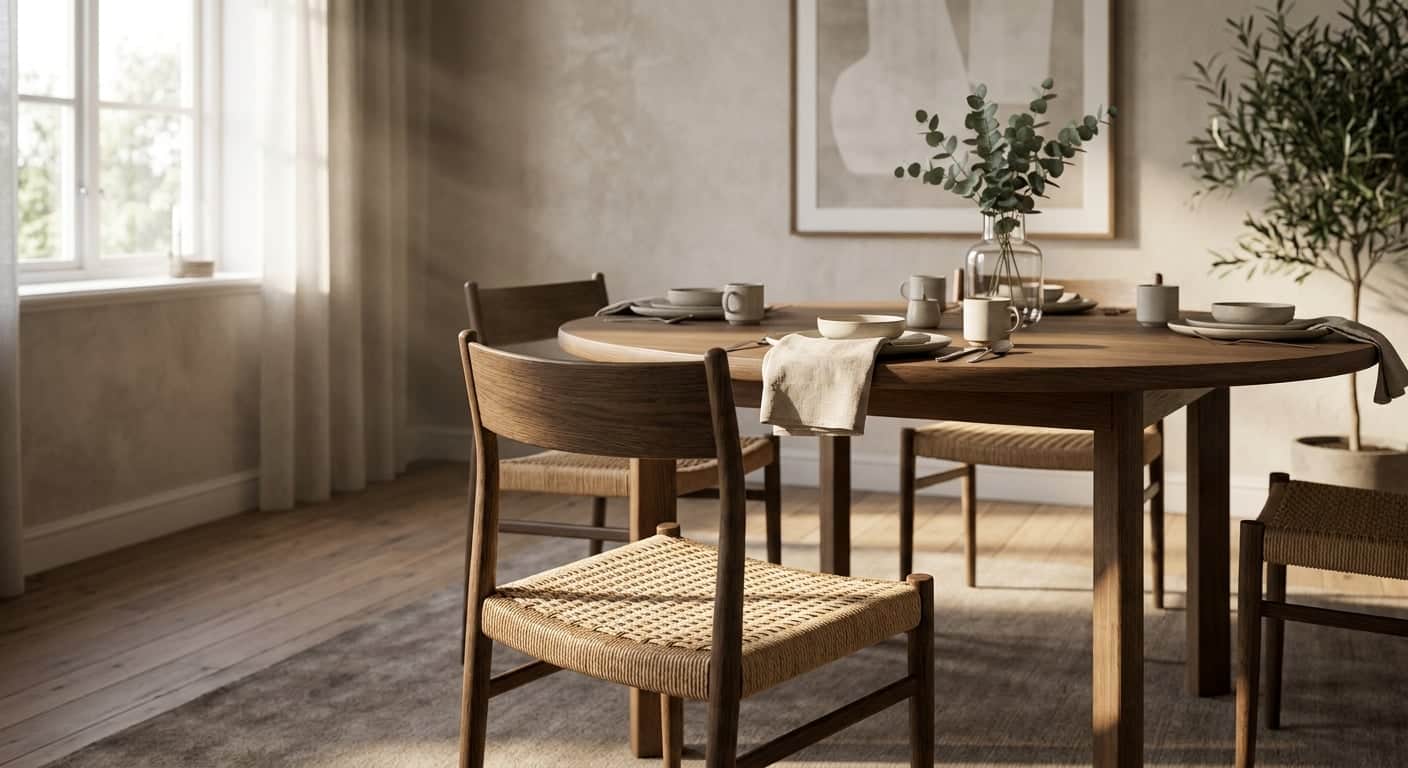
The Moller Model 77 chair reads as a dining chair built for actual dinners, not for photographs, and this guide covers the table pairings, wood tones, and seating layouts that let a Moller Model 77 chair replica hold its own in a real dining room in 2026.
TL;DR- A Moller Model 77 chair replica pairs best with tables 28-30 inches high and at least 36 inches wide per seat position.
- Mixing the chair with a lighter or darker wood table works if the tones sit at least two shades apart – matching grain too closely reads flat.
- Seat height on the Model 77 runs close to 18 inches, so verify your table’s underside clearance before ordering four or six.
- Buy: the Moller Model 77 chair replica for a dining room that wants Danish proportions without a boxy silhouette.
Why this matters
A chair this specific – tapered legs, a curved backrest, a seat that's narrower at the front than most mid-century seating – fails fast in the wrong room. Get the table height wrong and the armrests catch the apron every time someone sits down. Get the wood tone wrong and the chair disappears into a table that was never designed to sit next to it.
The upside is that the mid-century modern dining room look this chair belongs to is forgiving once the basics are right – proportion, wood contrast, and seating count matter more than matching every finish in the room.
What you'll need
- A tape measure and 10 minutes with your existing table (or the one you're about to buy)
- Four or six Moller Model 77 chair replicas, depending on table length
- A table between 28 and 30 inches tall, with at least 24 inches of clear width per seat
- A rug rated for dining use if your floor is hard surface
- A reference photo of your table's wood tone, taken in daylight, not under a warm bulb
- 30 minutes to test-sit before finalizing chair count
The steps
1. Measure clearance before you commit to a table
The Model 77's seat sits close to 18 inches off the floor, which is standard, but its curved arm detail adds roughly an inch of width that flat-armed chairs don't have. Slide a chair under your current table and check the gap between armrest and apron – you want at least 1 inch of daylight there. Under that, the chair scrapes every time someone pushes back from the table. Expected outcome: a chair that tucks flush without the arm catching wood.
Common mistake: measuring the tabletop overhang instead of the apron. The overhang is irrelevant here – the apron (the frame just under the tabletop) is what the armrest has to clear.
2. Pair the chair with a table built at the right scale
The Model 77 has presence – it's not a minimal stacking chair – so an oversized table swallows it visually, and a table under 60 inches long crowds four chairs. A Scando table built to the same Scandinavian proportions gives the chair a table it was designed to sit next to, with matching leg tapers that echo the chair's own lines.
Expected outcome: chair and table read as a set even though they're two separate pieces. Common mistake: choosing a table on width alone and ignoring leg placement – splayed table legs and splayed chair legs can collide under the surface.
3. Mix wood tones on purpose, not by accident
Matching the chair's wood exactly to the table's wood is the single most common styling mistake in a room like this. Two wood tones that are nearly identical but not quite read as a mismatch rather than a match. Push the contrast instead: pair a lighter oak or walnut Model 77 with a darker walnut table, or vice versa, with at least two visible shade steps between them.
If you want a second chair silhouette in the mix – at the ends of a longer table, say – the Model 45 chair shares enough Danish DNA with the Model 77 to sit at the same table without a style clash. Expected outcome: a table that looks curated instead of matched from a single catalog page. Common mistake: introducing a third, unrelated wood tone (like a cool gray-washed oak) that fights both the chair and the table.
4. Decide who sits where before you buy count
A rectangular table seating six typically needs four Model 77 chairs along the sides and either two matching chairs or a pair of end chairs with arms at the heads. If your table is round or oval, four chairs is often the right number before the spacing gets tight – measure 24 inches of shoulder room per seat and count backward from there.
Expected outcome: no elbow-to-elbow crowding at a full table. Common mistake: buying chairs to match the table's stated seating capacity on a listing page instead of measuring actual shoulder room.
5. Add a cushion if the chair is in daily rotation
The Model 77's seat is shaped, not flat, which reads well but softens fast with daily use. A low-profile cushion in a neutral boucle or wool extends comfort without hiding the seat's curve. Expected outcome: a chair that still photographs like the original but survives a Tuesday night dinner. Common mistake: choosing a thick, tufted cushion that raises effective seat height above the 18-inch mark and throws off the table clearance you measured in step one.
6. Light the table, not just the room
A pendant at 30 to 34 inches above the tabletop puts light exactly where the Moller Model 77 chair replica and its table need it, without glare in anyone's eyes at seated height. Expected outcome: a dining area that photographs and functions the same way. Common mistake: hanging the fixture at ceiling-recommended height rather than tabletop height, which leaves the chairs in shadow.
Style your dining room right
Browse the full mid-century dining lineup at Sohnne before you finalize chair count.
Shop dining chairsTroubleshooting
The chair looks too small next to the table. This is almost always a table-width problem, not a chair problem – a table over 72 inches needs a visual anchor like a runner or centerpiece to keep the Model 77's smaller footprint from getting lost.
Wood tones clash instead of contrast. Pull one piece – usually the rug – into a tone that bridges the two woods. A jute or wool rug in a warm neutral does this without introducing a third competing wood color.
Armrests catch the table apron. Revisit step one. If the clearance is under an inch, the fix is a taller table, not a shorter chair – the Model 77's proportions are fixed by design.
The wall above the table feels bare once the chairs are in. A dining room built around a strong chair silhouette needs something on the vertical plane too, since the eye goes straight to seating and then hits empty wall – working through dining room wall art choices for the space above the table is the same layering logic as picking the wood contrast below it, matching scale and tone rather than matching style exactly.
Seat height feels off after switching tables. Recheck your new table's apron height against the 18-inch seat mark before blaming the chair – a half-inch table height difference is often the entire problem.
Tools and resources
- A tape measure and a level, for apron height and pendant drop
- Daylight photos of your existing wood tones before ordering anything new
- A guide to verify quality before buying replica furniture if this is your first replica purchase, covering joinery and finish checks that matter more than photos on a listing page
- A rug pad rated for the traffic pattern under a dining table, not a living room pad
“If the armrest clears the tabletop apron by less than an inch, the fix is a taller table, not a shorter chair.”
What to do next
Once the table and chair count are settled, the next decision is finish consistency across the rest of the room – sideboards, shelving, and any secondary seating. A guide to mixing wood tones with replica furniture walks through the same contrast principle used in step three, applied to the rest of the space instead of just the dining set.
FAQ
What table height works best with a Moller Model 77 chair replica?
A table between 28 and 30 inches tall works best with a Moller Model 77 chair replica, with at least 1 inch of clearance between the armrest and the table apron. Anything under 28 inches crowds the chair’s arm detail.
How many Moller Model 77 chairs fit a standard dining table?
Four chairs fit a table up to 60 inches long, and six fit tables between 72 and 84 inches, assuming roughly 24 inches of shoulder room per seat. Round tables typically hold four comfortably before spacing gets tight.
Should the chair match the table’s wood tone exactly?
No – matching the wood tone exactly usually reads as a near-miss rather than a match. A contrast of at least two shade steps between chair and table wood looks intentional in 2026 dining rooms built around this style.
Is a Moller Model 77 chair replica comfortable for daily dinners?
Yes, with a low-profile cushion added over time as the shaped seat softens with daily use. Skip thick tufted cushions, which raise seat height and throw off table clearance.
What other chairs pair well with a Model 77 at the same table?
A Model 45 chair shares enough Danish design language to sit at the head of a table alongside Model 77 side chairs without a style clash. Both use tapered legs and similar proportions.
Does the Model 77 work with a round table?
Yes, and it tends to suit round tables under 54 inches particularly well, seating four with enough shoulder room. Larger round tables need six chairs spaced at 24 inches per seat.
What rug size works under a Model 77 dining set?
Size the rug so all four chair legs stay on it even when pulled back from the table, typically 24 to 30 inches beyond the table’s edge on each side. A rug too small leaves back legs catching bare floor when someone sits down.
How high should a pendant hang over a table with Model 77 chairs?
Hang the pendant 30 to 34 inches above the tabletop, not measured from the ceiling. This keeps light on the table surface and out of seated eye line.
One last thing
The detail that trips up most buyers isn't the wood or the table – it's the armrest clearance, and it's the one measurement almost nobody checks before ordering four or six chairs at once. Measure the apron gap first, choose the table second, and the rest of the styling decisions get easier fast.
Stay connected with us!
Keep in touch with what’s new and next. Subscribe for weekly insights, product launches, and community news!