Papa Bear Chair Replica: Buying Guide & Verdicts 2026

Sohnne Design Studio
July 11, 2026
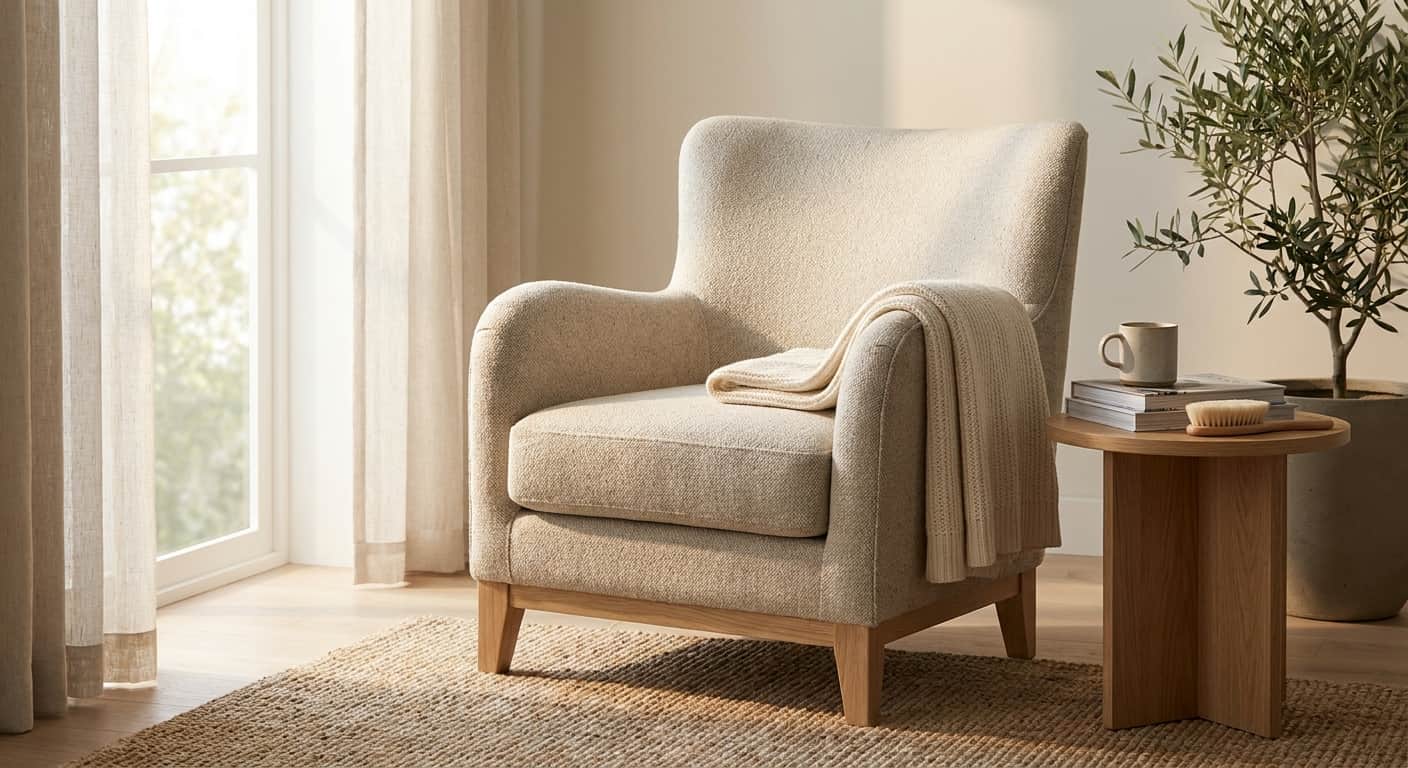
A Papa Bear chair replica brings Hans Wegner's 1951 lounge chair design into a 2026 living room without the six-figure auction price tag of an original AP19 — this guide ranks the configurations that matter and tells you how to keep one looking right for decades.
TL;DR
The full-grain leather version on an oak base is the safe pick for anyone buying a Papa Bear chair replica in 2026 — it ages well, hides wear, and matches Wegner's original tan leather intent. The wool bouclé upholstery is the wildcard, adding texture but demanding more upkeep. Skip the no-ottoman "compact" version if you actually plan to lounge in it; the ottoman is structurally part of the sitting posture, not an accessory. Search interest for papa bear chair replica sits around 1,152 monthly searches in 2026, and difficulty to rank for it is low — meaning most buyers are still comparing options manually rather than trusting the first result they see.
Why this matters
Wegner designed the original for AP Stolen in 1951, nicknaming it "Papa Bear" because the curved armrests looked like a bear hugging its paws around the seated body. That silhouette is instantly recognizable, which is exactly why the replica market for it is crowded with versions that get the proportions wrong — arms too narrow, seat too shallow, base too flimsy to hold the cantilevered weight distribution the design depends on.
Getting the proportions right matters more here than with a simpler mid-century piece. A shed a few inches on the wrong dimension and the chair stops reading as "Papa Bear" and starts reading as a generic wingback with a wooden base. Sohnne builds its mid-century modern replica line in-house at 1:1 original dimensions, which is the baseline you should be checking against any replica you're considering in 2026, not just this one.
How we ranked
Each configuration below is scored on four things: fidelity to Wegner's 1951 proportions, upholstery durability under daily use, base construction (oak and walnut are the two finishes worth debating), and how well it performs in the room type buyers most often place it in — a reading nook, a den, or a formal living room. Configurations that compromise on seat depth or armrest curvature to cut cost get marked down regardless of price point. The goal is a chair you'd still want in your living room in 2036, not just 2026.
The ranked configurations
1. Full-grain leather, oak base — the classic pick
This is the closest match to Wegner's original 1951 spec and the configuration most buyers land on. Full-grain leather develops a patina over roughly 3 to 5 years of regular use, which is part of the appeal — the chair looks better broken in than brand new. Oak grounds the piece with a warmer tone than walnut, which reads more traditional in a den or study.
The why-now case: leather ages, so buying earlier in 2026 means more patina by 2030 than if you wait. Verdict: Buy.
2. Wool bouclé upholstery — the texture pick
Bouclé swaps the leather sheen for a nubby, tactile surface that photographs well and softens a room dominated by hard surfaces. It's the configuration most requested for a reading nook or a room already heavy on leather sofas, where a second leather piece would flatten the palette. The tradeoff is maintenance — bouclé shows crumbs and pet hair faster than leather and needs a fabric-safe vacuum attachment weekly in high-traffic homes.
If your Papa Bear chair replica is going in a low-traffic formal room, this is one of the best replica lounge chairs for a reading nook precisely because bouclé rewards a chair that gets used gently. Verdict: Consider.
3. With matching ottoman — the lounge upgrade
Wegner's original was conceived as a lounge chair, and the ottoman isn't a bolt-on accessory — it's part of how the seat height and recline angle were engineered to work together. Buying the chair without it changes the sitting posture the design was built around, not just the footprint.
The number that matters here: a properly proportioned ottoman sits close enough to the chair's seat height that your knees stay roughly level, not elevated or dropped, when your feet are up. Verdict: Buy, and treat it as one purchase, not two separate decisions.
4. Walnut base — the frame choice
Walnut runs darker and reads more contemporary than oak, which matters if the rest of your room leans toward black metal, dark wood, or a moodier palette rather than a warm mid-century one. Structurally the two are comparable when built to the original weight-bearing spec — the difference is entirely visual and how it plays against your existing furniture.
Compare this against Le Corbusier-style lounge seating if you're torn between design eras — the Le Corbusier LC2 armchair replica buyer's guide covers a base-and-frame decision with similar tradeoffs. Verdict: Consider, based on your existing wood tones, not on any structural difference.
5. No-ottoman "compact" version — the space saver
Some sellers offer the chair without the ottoman to shave off floor space, marketed toward smaller apartments. It solves a real problem — the full set with ottoman needs roughly the footprint of a loveseat — but it changes what the chair is for. Without the ottoman, you're buying an armchair with a Papa Bear silhouette, not a Papa Bear lounge chair.
If square footage is the real constraint, a genuinely compact silhouette design will serve you better than a Papa Bear chair with its function removed. Verdict: Skip unless the room truly can't fit the ottoman and you're buying the chair for its look alone.
6. Vintage-patina finish — the collector's pick
A handful of replica makers offer a pre-aged or distressed leather finish meant to mimic decades of wear from day one. It's a niche choice — most buyers in 2026 are still choosing new leather and letting it age naturally — but it appeals to anyone furnishing a space meant to look collected rather than newly furnished.
The risk is inconsistency: distressed finishes vary more between units than a uniform new leather run does, so what you see in a product photo may not match what arrives. Verdict: Consider, and confirm return terms before ordering sight-unseen.
Comparison table
| Configuration | Best for | Upholstery upkeep | Verdict |
|---|---|---|---|
| Full-grain leather, oak base | Traditional dens, living rooms | Low — wipe and condition every 3-6 months | Buy |
| Wool bouclé | Reading nooks, low-traffic rooms | Medium — weekly vacuum | Consider |
| With matching ottoman | Anyone using the chair for actual lounging | Same as chosen upholstery | Buy |
| Walnut base | Darker, contemporary rooms | Same as chosen upholstery | Consider |
| No-ottoman compact version | Small apartments, display-only use | Same as chosen upholstery | Skip |
| Vintage-patina finish | Collected, lived-in aesthetics | Medium — inconsistent between units | Consider |
Where to buy
Buy from a maker that publishes exact dimensions against the 1951 original rather than approximate measurements — a Papa Bear chair replica that's off by even 2 inches in seat depth loses the lounging posture the design depends on. Check the return window before ordering, especially for leather or a patina finish you haven't seen in person; a 60-day return window gives you time to actually live with the chair before deciding. Financing through a service like Affirm is worth checking if you're buying the chair and ottoman together, since that's the higher-ticket configuration on this list.
Care tips that actually extend the chair's life
- Leather: condition every 3 to 6 months with a leather-specific product, never a household furniture polish. Keep it out of direct sun exposure longer than a few hours a day — UV is what causes uneven fading, not normal use.
- Bouclé: vacuum weekly with an upholstery attachment; spot-clean spills immediately with a dry cloth before they set into the fibers.
- Base (oak or walnut): dust monthly and avoid placing the chair directly over a heat vent or in a room with swinging humidity — wood joints loosen faster under repeated expansion and contraction.
- Cushions: rotate seat and back cushions every few months if they're reversible, so wear distributes evenly instead of concentrating in one sitting spot.
For a longer view on what separates a replica that lasts a decade from one that doesn't, the guide on how to choose a replica sofa that lasts applies to lounge chairs too — the construction principles are the same.
FAQ
What is a Papa Bear chair replica?
It's a reproduction of Hans Wegner's 1951 AP19 lounge chair, nicknamed "Papa Bear" for its curved, bear-paw-like armrests. A faithful replica matches the original's seat depth, armrest curve, and base proportions rather than approximating the silhouette.
Is a Papa Bear chair replica worth it in 2026?
Yes, for buyers who want the design without the cost of an original vintage AP19, which typically requires auction sourcing. The value depends entirely on whether the replica hits the original's proportions and uses full-grain leather or comparable upholstery.
How much does a Papa Bear chair replica cost?
Pricing varies by upholstery choice, base finish, and whether the ottoman is included — check current listings for exact figures rather than relying on outdated price references. Full-grain leather with the ottoman sits at the higher end of any replica lineup.
What's the difference between a Papa Bear chair and a Wegner original?
A true original was made by AP Stolen starting in 1951 and is now a vintage or auction piece. A replica is a new-build reproduction — quality depends entirely on whether the maker matches the original's 1:1 dimensions.
Leather or fabric for a Papa Bear chair replica?
Leather is the safer, lower-maintenance choice and matches Wegner's original intent. Bouclé or wool fabric works better in low-traffic rooms where texture matters more than durability.
Does a Papa Bear chair replica come with an ottoman?
Many configurations sell the chair and ottoman as a set, and that's the recommended way to buy it — the ottoman is part of the seating posture the design was engineered around, not a separate accessory.
How do you clean a leather Papa Bear chair replica?
Wipe with a dry or slightly damp cloth for daily dust, then condition with a leather-specific product every 3 to 6 months. Avoid all-purpose furniture cleaners, which strip natural oils from full-grain leather.
Is the Papa Bear chair replica good for small spaces?
The chair with ottoman needs close to the footprint of a loveseat, so it's not the first choice for a small apartment. A no-ottoman version saves space but sacrifices the lounging function the design is known for — weigh that tradeoff before buying.
One last thing
The detail most buyers miss: Wegner's armrests on the original 1951 design were shaped to actually cradle the forearm at a slight downward angle, not sit flat — it's a small geometry choice that's easy for a replica maker to flatten out to simplify manufacturing. Run your hand along the armrest before buying, in photos or in person; if it's a flat plane rather than a gentle curve, you're not looking at a faithful Papa Bear chair replica no matter what the listing calls it.
Related guides
Stay connected with us!
Keep in touch with what’s new and next. Subscribe for weekly insights, product launches, and community news!