Utrecht Chair Replica: Style It in a Bauhaus Room (2026)

Sohnne Design Studio
August 19, 2026
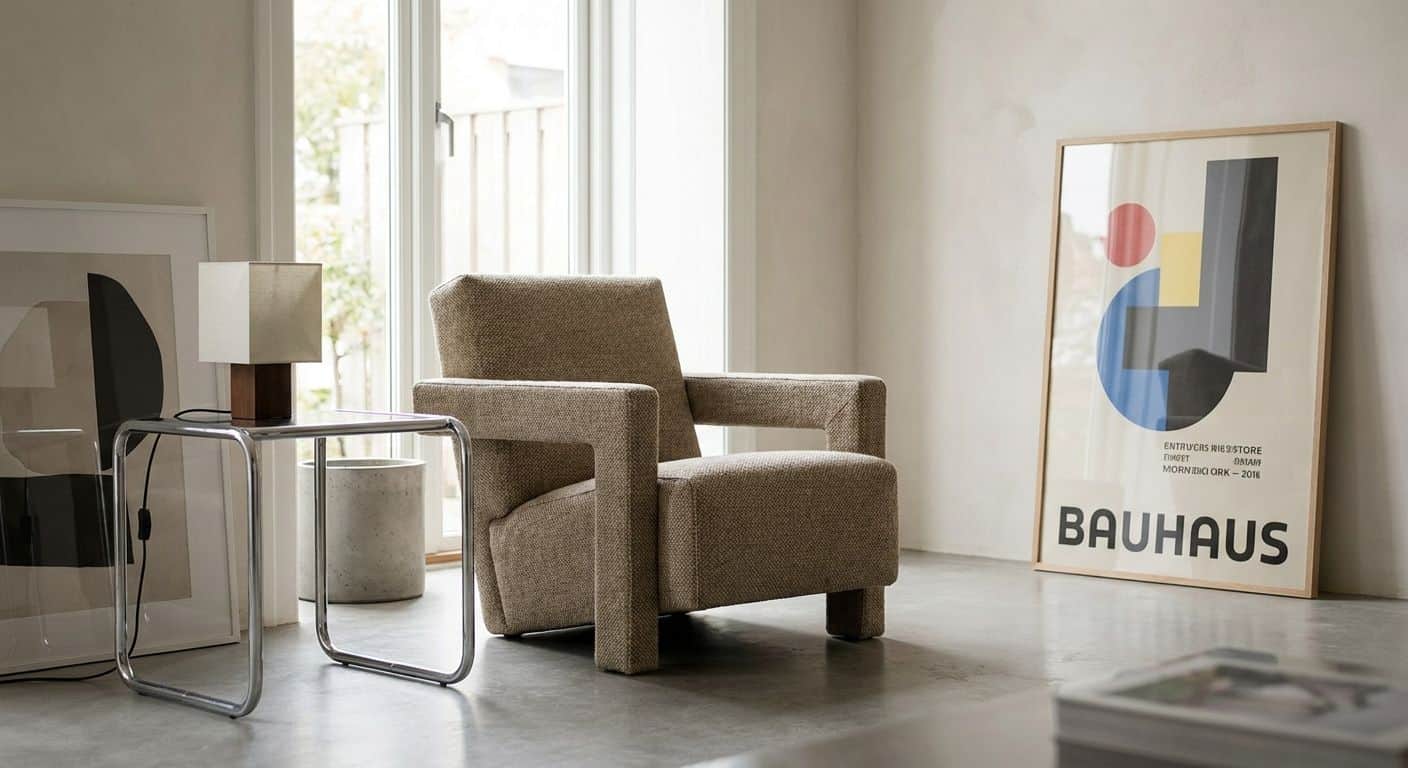
A Utrecht chair replica reads as sculpture as much as seating, and in a Bauhaus room that's exactly the point: the chair's blocky upholstery and visible frame turn function into a geometry lesson you sit in.
TL;DR- A Utrecht chair replica anchors a Bauhaus room when placed against a plain wall with no competing pattern nearby.
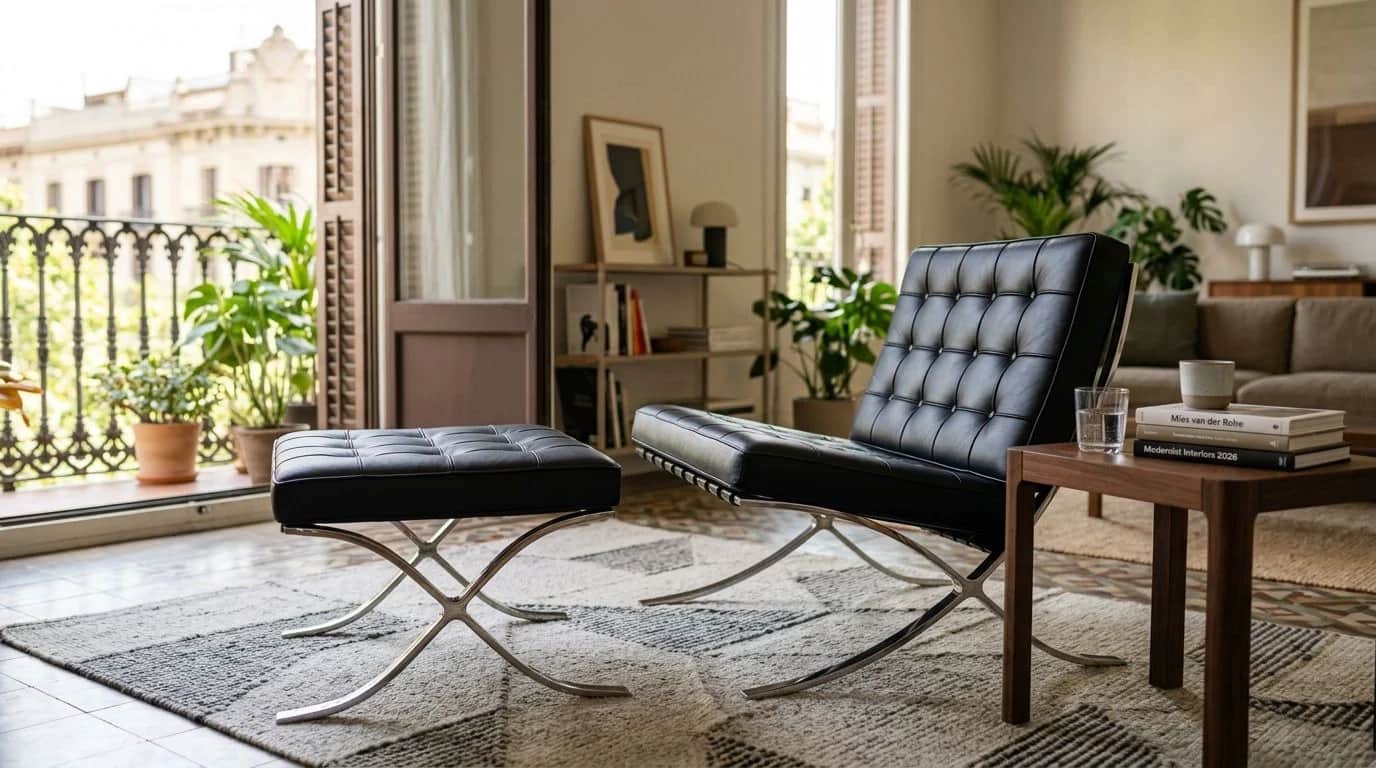
- Pair it with tubular steel pieces like a Barcelona chair replica or Le Corbusier LC2 armchair for material contrast that reads as intentional, not accidental.
- Stick to primary-color blocks (red, yellow, blue) plus black and white — Bauhaus rooms fail when more than three accent colors compete.
- Skip busy rugs and floral textiles; the Utrecht chair’s boxy silhouette needs flat, geometric ground cover to stay legible.
Why this matters
Gerrit Rietveld designed the Utrecht chair in 1935, late in the De Stijl movement and squarely in the visual language Bauhaus designers were codifying across Europe at the same time: exposed structure, primary color, no ornament. Drop that chair into a room full of curved mid-century walnut and floral throws and it looks like a mistake. Drop it into a room built on grid, plane, and restraint and it becomes the focal point the whole space was waiting for.
The difference between those two outcomes is almost entirely styling decisions you make in the first hour of setting up the room, not furniture budget. Get the wall treatment, the color count, and the neighboring pieces right and a single Utrecht chair replica carries a living room. Get them wrong and even a well-made piece looks like clutter.
What you'll need
- A Utrecht chair replica in a solid-color upholstery — avoid patterned or tonal-blend fabrics for this look
- One plain wall, ideally white, grey, or black, with no gallery wall or textured wallpaper behind the chair
- At least one tubular steel or chrome-frame companion piece — a Barcelona chair replica or a Le Corbusier LC2 armchair both work
- A flat-weave or geometric-pattern rug, low pile, no shag or floral motifs
- A limited palette: black, white, one warm wood tone, and one or two primary accent colors
- 30 minutes to test placement before committing to final furniture positions
The steps
1. Pick your wall before you pick your spot
The Utrecht chair's block upholstery needs negative space to read as geometry rather than bulk. Set it against a plain wall — white, light grey, or matte black — with nothing hung directly behind the backrest. A gallery wall or textured brick backdrop competes with the chair's own lines and flattens the effect you're going for.
If your room only has patterned or busy walls, angle the chair 30-45 degrees off the wall instead of flush against it, so the eye reads it as a standalone object rather than part of the wall composition. Common mistake: placing the chair in a corner with two busy walls meeting behind it — the chair disappears into visual noise instead of standing apart from it.
2. Choose one accent color and repeat it exactly twice
Bauhaus interiors run on primary color used sparingly, not everywhere. If your Utrecht chair replica comes in red, don't also add a red rug, red art, and red throw pillow — pick one other spot in the room (a single lamp shade, one book spine on a shelf, a slim vase) and stop there.
This restraint is what separates a Bauhaus room from a generic colorful modern room in 2026. Two repetitions of the accent color create rhythm; five create clutter. Buy into the discipline before you buy more accent pieces.
3. Add one tubular-steel companion piece, not three
The Utrecht chair's wood-and-fabric mass needs a lighter counterpoint nearby to keep the seating area from feeling heavy. A Barcelona chair replica or a Le Corbusier-era piece introduces chrome and leather in thin, exposed lines that contrast the Utrecht's boxy upholstery without fighting it for attention.
Resist adding a second and third steel-frame piece in the same sightline — one is contrast, three is a showroom. Place the companion chair at a 90-degree angle to the Utrecht rather than facing it directly; a straight-on face-off makes the room feel staged rather than lived in.
4. Ground the arrangement with a flat, geometric rug
Bauhaus rooms sit on grid, not texture. A low-pile rug with a simple geometric print — a grid, a color block, a stripe — reinforces the room's underlying logic instead of introducing a new pattern language. Shag pile and floral or paisley rugs both undercut the effect immediately, no matter how well the furniture is placed above them.
Size the rug so all four legs of the Utrecht chair sit on it, with at least 8-10 inches of rug visible beyond the chair's front edge. A rug that only catches the back two legs makes the whole grouping look unanchored.
5. Layer horizontal storage to balance the chair's vertical mass
The Utrecht chair reads tall and blocky on its own. A low, modular shelving unit with an open grid structure — the kind of horizontal, repeating-module piece Bauhaus and De Stijl designers both favored — balances that verticality and gives the eye a second geometric reference point in the room.
Keep the shelving mostly empty or styled with three objects maximum per shelf. A fully stocked bookshelf behind a Utrecht chair competes with the chair's clean lines instead of supporting them.
6. Light the chair, don't light the room around it
A single directional floor lamp or an articulated wall sconce aimed at the Utrecht chair creates a reading or conversation nook that feels intentional. Avoid a central overhead fixture as the only light source — flat, even lighting kills the shadow definition that makes the chair's exposed frame and fabric blocks visible as separate planes.
Position the light source at a 45-degree angle to the chair's front edge in the evening for the strongest shadow contrast. Common mistake: placing a warm-toned Edison bulb near the chair when the rest of the room runs cool white — mismatched color temperature breaks the Bauhaus room's disciplined feel faster than almost any other single error.
7. Test the full arrangement before you commit
Live with the placement for at least three days before hanging art or bolting shelving to the wall. Bauhaus styling depends on precise sightlines, and a chair that looks right from the doorway can look wrong from the seat itself.
Walk the room at three points — entry, seated in the Utrecht chair, and from the opposite side — and check that no two patterned or brightly colored objects sit in the same sightline. If two colors clash in one of those views, remove one rather than adding a third to balance it.
Troubleshooting
The chair looks isolated in an otherwise busy room.
Move one nearby patterned object (a throw, an art piece, a rug) out of the sightline rather than adding more furniture near the chair. Isolation usually comes from visual noise elsewhere in the room, not from the chair's placement.
The room feels cold and unlived-in.
Add exactly one warm wood element — a side table or a wood-frame companion piece — near the chair. Bauhaus rooms use warmth sparingly, but zero warmth reads as sterile rather than disciplined.
Two accent colors are competing for attention.
Pick the color closer to the room's light source and drop the other to a neutral. In 2026 color-blocking trends, restraint reads more current than a full primary-color wall.
The Utrecht chair and its steel-frame companion look like they're from two different rooms.
Match them through the rug or a shared accent color instead of trying to match materials directly — a wood-frame chair and a chrome-frame chair were never going to match on material alone.
The space feels like a showroom, not a home.
Remove one piece. Bauhaus rooms fail toward over-styling more often than under-styling; three strong pieces beat six good ones.
Build your Bauhaus seating area
Browse mid-century replica pieces designed at 1:1 original dimensions.
Shop SohnneTools and resources
- A tape measure and painter's tape for testing rug and chair placement before committing
- A reference guide on verifying quality before buying replica furniture — frame construction and fabric weight matter more in a Utrecht-style chair than in most upholstered pieces because the boxy shape shows every sag
- A read on mixing replica furniture with vintage pieces if you're combining a new Utrecht chair replica with inherited or thrifted Bauhaus-adjacent pieces
- A color swatch card limited to the primary palette plus black, white, and one wood tone
What to do next
Once the Utrecht chair and its companion piece are placed, the fastest way to round out a Bauhaus-inspired room is to check a dedicated roundup of Bauhaus-inspired accent chairs for a second or third seat that keeps the same geometric discipline rather than introducing a softer, curved silhouette that undoes the work you just did.
FAQ
What makes a chair Bauhaus style versus mid-century modern?
Bauhaus style prioritizes exposed structure, primary color, and geometric form over decoration, while broader mid-century modern allows curved silhouettes and organic shapes. A Utrecht chair replica sits on the Bauhaus-adjacent De Stijl side of that spectrum because of its blocky, grid-based form.
Is a Utrecht chair replica comfortable for daily use?
The boxy upholstery gives firm, structured support rather than a deep lounge feel, which suits reading and conversation seating better than all-day lounging. Fabric weight and foam density affect comfort more than the frame shape, so check construction details before buying.
What colors work best with a Utrecht chair in a Bauhaus room?
Stick to one primary color (red, yellow, or blue) plus black, white, and a single warm wood tone. Repeating the accent color exactly twice in the room keeps the look disciplined instead of scattered.
Can I pair a Utrecht chair replica with curved mid-century pieces?
Sparingly — one curved piece can soften an otherwise rigid room, but more than one starts to blur the Bauhaus grid logic the Utrecht chair depends on. Keep curved pieces to secondary roles like a side table rather than the main seating.
What rug works with a Bauhaus-style living room?
A low-pile, geometric or grid-patterned rug works best; shag and floral rugs undercut the room’s structured look. Size the rug so all four chair legs sit on it with 8-10 inches of rug showing beyond the front edge.
Where should a Utrecht chair go in a small living room?
Place it against a plain wall with clear sightlines from the room’s entry point, angled slightly if the wall behind it isn’t neutral. Avoid corners where two busy walls meet, since that placement flattens the chair’s geometric presence.
What’s the difference between Bauhaus and De Stijl design?
Bauhaus originated in Germany in 1919 and focused on function-driven design education, while De Stijl started in the Netherlands around the same era and leaned harder into primary-color grid compositions. Rietveld’s 1935 Utrecht chair sits on the De Stijl side but reads as visually compatible with Bauhaus interiors.
How many accent chairs does a Bauhaus living room need?
Two is usually the ceiling — one Utrecht-style chair plus one tubular-steel companion like a Barcelona chair replica or Le Corbusier LC2 armchair. A third accent chair typically pushes the room toward showroom territory rather than a lived-in space.
One last thing
The detail that separates a convincing Bauhaus room from a themed one is shadow, not color: a single angled light source on the Utrecht chair's exposed frame does more to sell the geometry than any amount of primary-color styling around it, and it costs nothing but a lamp you probably already own.
Related guides
- Best replica accent chairs for a Bauhaus-inspired room
- How to verify quality before buying replica furniture
- How to mix replica furniture with vintage pieces
- Le Corbusier LC2 armchair replica buyer's guide
- Barcelona chair replica for a minimalist office