How to Choose Sofa Seat Depth for Comfort (2026)

Sohnne Design Studio
July 25, 2026
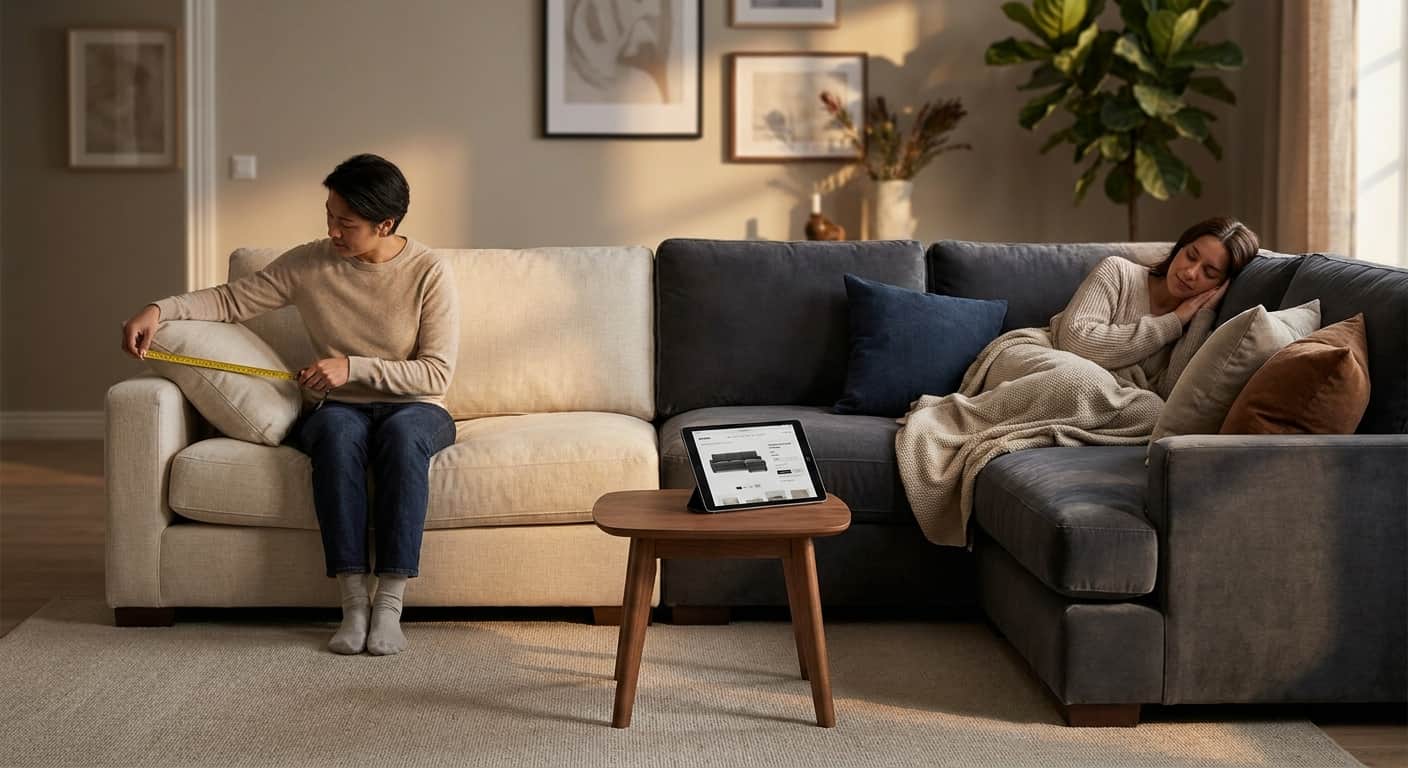
Seat depth decides whether a sofa lets you sink in for a Sunday movie marathon or just perches you upright for polite conversation — get it wrong and even a beautiful sofa feels unusable.
TL;DR- Standard seat depth runs 20-24 inches; deep-seat comfort starts at 24 inches and goes up to 28-30 inches for loungers.
- Match seat depth to your height: under 5’6" stop at 22 inches, over 6 feet go 26 inches or more.
- Leave 14-18 inches of clearance between the sofa front edge and any coffee table.
- Test depth with a cardboard mockup for 48 hours before buying — showroom sitting for 5 minutes lies.
- Sohnne’s Florence Knoll sofa replica and modular pieces list exact seat depth in the spec sheet, so measure before you shop in 2026.
Why this matters
Most sofa returns in 2026 trace back to fit, not fabric or color. A seat that's 4 inches too deep forces short sitters to either perch on the edge (defeating the whole point of a lounge sofa) or use extra throw pillows as a hack fix that never looks intentional.
Getting seat depth right also protects your back. A seat too shallow leaves your thighs unsupported past the knee; one too deep leaves your lower back floating with nothing behind it. Neither is comfortable for more than twenty minutes, which is the opposite of what a deep-seat sofa promises. If back support is your main concern, the best couches for back pain breakdown covers lumbar support separate from depth, but depth is the first filter.
What you'll need
- A fabric or metal tape measure (12 feet minimum)
- Painter's tape or masking tape for floor mockups
- Two cardboard boxes or moving boxes to simulate seat height and depth
- A notepad or phone to log measurements from 2-3 sofas you already like sitting on
- Room dimensions, especially the distance from your intended sofa wall to the coffee table or walkway
The steps
1. Measure a sofa you already like sitting on
Start with data, not guesswork. Measure seat depth on any chair or sofa you already find comfortable — from the front edge of the cushion to the point where the backrest begins, not the outer frame.
Most measure between 20 and 24 inches for a standard sit, while genuine deep-seat models run 24 to 28 inches. Anything past 28 inches edges into lounger territory, built for reclining rather than sitting upright.
Common mistake: measuring the outside frame depth instead of the usable cushion depth. Frame depth includes the backrest thickness, which can overstate usable space by 3-4 inches.
2. Match depth to your height and leg length
Seat depth should let your knees bend naturally at the front edge with your back against the cushion. If you're under 5'6", a seat past 22 inches will leave your feet dangling or force you to sit forward, losing the back support entirely.
If you're over 6 feet, anything under 24 inches will cut off circulation behind your knees within the hour. Buy 26-28 inches if you're tall and want to actually use the backrest.
Common mistake: buying based on a partner's or roommate's comfort test alone. Depth is personal — measure for the shortest and tallest regular user of the piece.
3. Test back support alignment, not just depth
Sit all the way back so your spine touches the backrest, then check where your knees land. Your thighs should be fully supported with a 1-2 inch gap behind the knee — not pressed against the cushion edge, not floating in open air.
This is why two sofas with an identical 24-inch depth can feel completely different: backrest angle and cushion firmness change how far back you actually sit. The Florence Knoll sofa replica sizing and materials guide lists both seat depth and backrest recline angle together, which is the combination that actually predicts comfort.
4. Factor in cushion fill and break-in
High-density foam and down-wrapped cushions compress differently over time. A foam cushion measured at 22 inches in the showroom stays close to 22 inches for years.
A down-blend cushion at the same spec can compress to an effective 20 inches within six months of daily use, changing how deep the seat feels. If you want consistent depth over the 2026-2030 ownership window, ask about fill density before assuming showroom measurements hold.
Common mistake: ignoring fill type and blaming the frame when a sofa feels shallower a year in.
5. Check clearance against your coffee table and walkways
Deep seating eats floor space fast. A 28-inch seat depth plus a typical 34-inch overall sofa depth can leave less than a foot of clearance to a coffee table in a small room.
Leave 14 to 18 inches between the sofa's front edge and any table for comfortable leg room and safe walking clearance. In tight layouts, this measurement matters more than the sofa's style — check the best sofas for small living rooms in 2026 guide if your room runs under 200 square feet.
6. Decide how you actually sit
Be honest about behavior, not aspiration. If you mostly perch for conversation or work from a laptop on the sofa, 20-22 inches serves you better than a deep-seat model that forces slouching just to reach the desk.
If your sofa is the primary spot for movies, reading, or naps, 24-28 inches earns its keep. Modular sofas complicate this because different modules can carry different depths — the modular sofa styling guide for open-plan spaces shows how chaise sections often run deeper than the straight seating modules next to them.
7. Mock it up before you buy
Tape off the exact footprint on your floor, then stack two boxes to roughly seat height (17-19 inches) at your target depth. Sit in it for real activities — reading, a movie, working — for at least two days before ordering.
A five-minute showroom sit cannot replicate two hours on a Tuesday night. This single step prevents most seat-depth returns.
Troubleshooting
- The sofa feels too deep after a month: cushion fill is compressing unevenly. Rotate and fluff cushions weekly; if depth still feels off past 90 days, the fill density was likely too soft for your usage.
- You keep sliding forward on the cushion: the seat pitch (backward tilt) is too flat for the depth. Look for a 3-5 degree seat pitch on deep models — flat seats at 26+ inches push you forward constantly.
- Your feet don't reach the floor: the seat is too deep relative to your height, not your seat height. Reducing seat height won't fix a depth problem; you need a shallower cushion or a footstool.
- Two people share the sofa differently: one person perches, one sinks in. Consider a sectional or modular layout where depth varies by module, like the Alterra modular sofa configuration and fabric guide covers.
- The room feels cramped after delivery: you skipped the clearance math. Re-measure from the sofa's actual front edge, not the listed "overall depth," which sometimes includes bolster pillows.
Tools and resources
- Tape measure and painter's tape for the mockup test
- A written log of 2-3 comfortable seat depths from sofas you've already sat in
- Sohnne's product spec sheets, which list seat depth separately from overall sofa depth on every listing
- The how to choose a replica sofa that lasts guide for frame and fill quality checks that affect depth retention over time
What to do next
Once depth is settled, cushion fill and fabric decide long-term comfort. Read the leather vs fabric replica sofa comparison to pair the right material with your new depth measurement before you finalize the order.
FAQ
How do I choose sofa seat depth?
Measure a chair or sofa you already sit comfortably on, then match that depth to your height: under 5’6" stay at 20-22 inches, over 6 feet go 26-28 inches. Confirm with a two-day cardboard mockup before ordering.
What is a good seat depth for a deep-seat sofa?
Deep-seat sofas run 24 to 28 inches measured from the front cushion edge to the backrest. Past 28 inches, the piece functions more like a lounger than a sitting sofa.
Is 22 inches a deep sofa seat?
No, 22 inches is standard seat depth, suited for upright sitting and shorter users. Deep-seat comfort typically starts at 24 inches.
How much space should be between a sofa and coffee table?
Leave 14 to 18 inches between the sofa’s front edge and the coffee table for comfortable leg room and safe walking clearance in 2026-standard living room layouts.
Does seat depth affect back pain?
Yes, a seat too deep leaves the lower back unsupported while one too shallow cuts off thigh support at the knee. Both force poor posture within twenty minutes of sitting.
Can I fix a sofa that’s too deep?
A firm lumbar pillow can shift effective seat depth back by 2-3 inches, but it won’t fully correct a seat that’s more than 4 inches too deep for your height.
Do modular sofas have consistent seat depth?
No, chaise and lounge modules on a modular sofa often run 4-6 inches deeper than the straight seating sections next to them. Check each module’s spec separately before ordering.
How long does it take cushions to break in and change depth?
Down-blend cushions can compress to an effective depth 1-2 inches shallower within six months of daily use, while high-density foam holds its original measurement for years.
One last thing
The cardboard-box mockup test sounds low-tech, but it catches more sizing mistakes than any showroom visit — two days of real sitting reveals what five minutes never will, and it costs nothing but a little patience before you commit to a sofa you'll own well past 2026.
Related guides
- Best sofas for small living rooms in 2026
- How to choose a replica sofa that lasts
- Florence Knoll sofa replica sizing and materials guide
- How to style a modular sofa replica in an open-plan space
- Best couches for back pain: what to look for