Lounge Chair Home Library: 2026 Styling Guide

Sohnne Design Studio
July 29, 2026
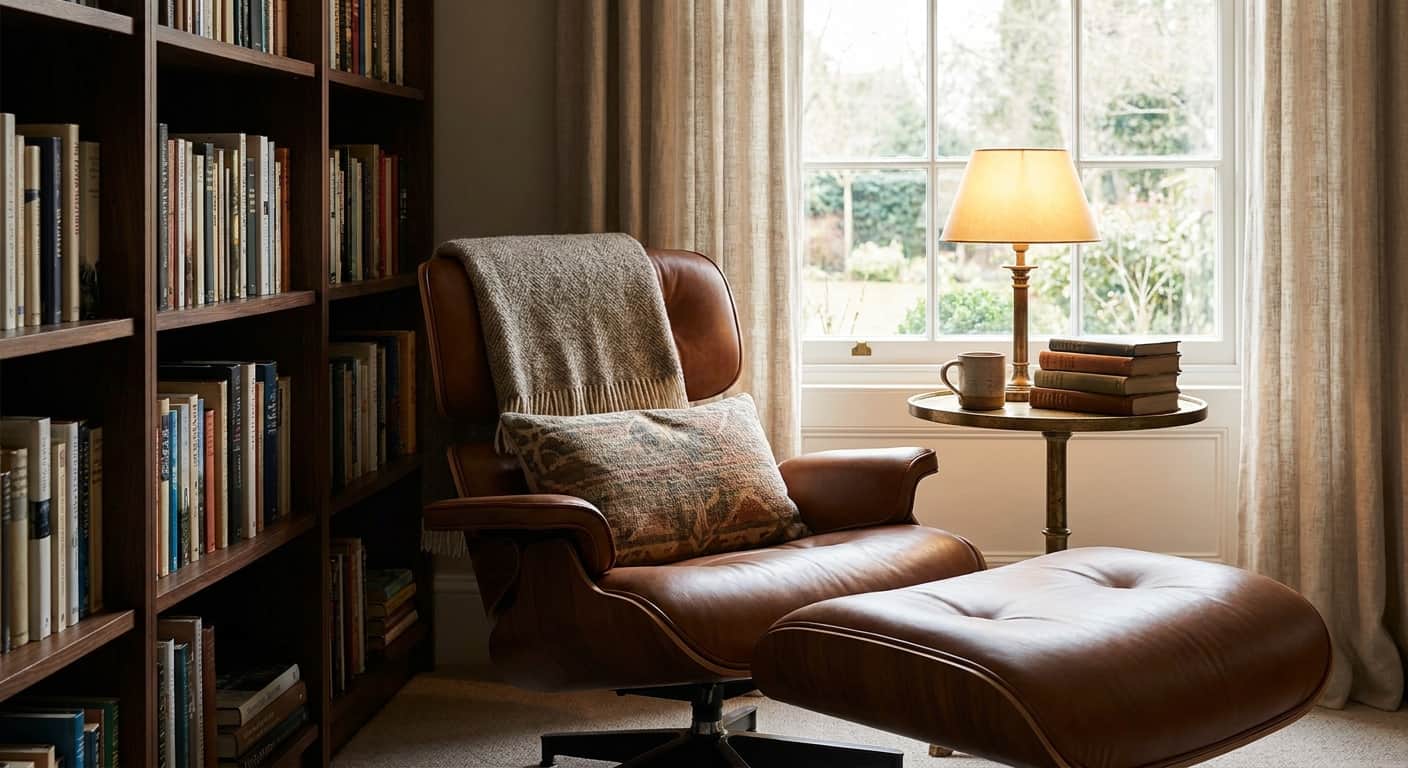
A lounge chair in a home library works only when the seat, the light, and the shelving all agree on scale — get that wrong and the room reads like a furniture showroom instead of a place to read for two hours straight.
TL;DR- Pair a lounge chair home library setup with a side table under 20 inches tall so a mug or stack of books sits at armrest height.
- The Ox Chair replica works for libraries under 120 square feet because its 33-inch depth doesn’t crowd a shelving wall.
- Task lighting at 400-450 lumens beats ambient overhead light for reading without eye strain in 2026 interiors.
- Leave 36 inches of walking clearance between the chair and the nearest shelf — tighter spacing makes the corner feel like storage, not a seat.
Why this matters
A library corner gets used or it doesn't, and the difference almost always comes down to comfort geometry, not book count. Most home libraries fail as reading spaces because the chair gets picked for how it looks against the shelves, not for how the body sits in it after 45 minutes.
Sohnne sells lounge chairs built to original 1:1 dimensions from mid-century references, which matters here specifically: proportions that were designed for actual reading postures — reclined back angle, supported lumbar, armrests at elbow height — read differently once you sit in them versus scroll past them. The chair is the anchor of a home library, and everything else in the corner should be sized around it.
What you'll need
- One lounge chair with a back recline between 95 and 105 degrees — anything more upright fatigues the neck within 20 minutes
- A side table or shelf ledge within arm's reach, ideally under 20 inches tall
- A dedicated light source rated 400-450 lumens for close reading, separate from ceiling ambient lighting
- 36 inches of clear floor space between the chair and the nearest bookshelf
- A rug or floor anchor at least 6 inches wider than the chair's footprint on all sides
- Optional: a low ottoman or footstool if the chair doesn't already include one
If you're shopping before you style, start with the home reading corner options built specifically around these proportions — it narrows the list before you touch a tape measure.
The steps
1. Measure the corner before you measure the chair
Getting this backward is the single most common mistake in library styling. Walk the room with a tape measure and mark the actual footprint available — most home libraries have 6 to 8 feet of usable wall run once you account for shelving depth.
A typical lounge chair needs 30 to 34 inches of depth and 28 to 32 inches of width, plus swing clearance if it reclines. Skip this step and you'll buy a chair that looks right in a photo and fights the room in person.
2. Pick the chair for posture, not silhouette
A library chair gets sat in longer than a living room accent chair, so recline angle and seat depth matter more than shape. The Ox Chair replica was designed around exactly this brief — a reading-room chair with a back that supports a reclined posture without forcing the sitter flat.
Common mistake: choosing a low-slung lounge chair meant for a living room centerpiece. Those chairs prioritize a dramatic silhouette over the upright-but-relaxed angle a library needs for actual page-turning.
3. Set the light before you set the furniture
Overhead ambient lighting in the 100-150 lumen range is fine for walking through a room — it's not enough for reading text without eye strain. A dedicated reading lamp at 400-450 lumens, positioned over the shoulder rather than in front of the face, solves this in one move.
Expected outcome: no shadow falls across the page, and the light pool covers roughly a 3-foot radius around the chair. Skipping this step is why so many "library corners" only get used during the day.
4. Anchor the chair with a rug, not a bookshelf wall
Pushing the chair flush against shelving looks tidy in a rendering and feels claustrophobic in real life. Instead, pull the chair 8 to 12 inches off the shelf line and define the seating zone with a rug that extends 6 inches past the chair's footprint on every side.
This single move is what separates a library that reads as "furnished storage" from one that reads as a room. The rug does the work of telling the eye where the reading zone starts.
5. Add a surface within arm's reach
A side table under 20 inches tall keeps a mug, a stack of books, or a pair of reading glasses at a height you can reach without leaning forward out of the recline. If floor space is tight, a shelf ledge at the same height works as a substitute — the goal is proximity, not a matching furniture set.
Common mistake: using a coffee table sized for a sofa grouping. Those sit too low and too far away for a single reading chair.
6. Layer in a footstool or ottoman if the chair lacks one
A chair without leg support forces a shortened session — most readers shift position or stand up within 30 minutes without one. If your chair doesn't come with a matching stool, a low ottoman at roughly seat height keeps the recline usable for longer stretches.
Expected outcome: a full recline posture that holds for an hour or more without the legs going numb or the sitter sliding forward.
7. Finish with shelving proportioned to the chair, not the wall
A shelving unit sized to fill an entire wall can visually overpower a single reading chair. The Haller shelving system works well here because its modular configuration lets you match shelf width to the seating zone rather than the full wall run, keeping the chair as the visual anchor instead of an afterthought in front of a wall of spines.
Troubleshooting
- The chair feels tipped forward or too upright — check the recline angle again; anything under 95 degrees reads as a desk chair, not a reading chair.
- Glare on the page from a window — reposition the chair so the light source comes from behind the shoulder, not the front; a 90-degree angle to the window usually fixes it.
- The corner feels cramped even with the right chair — you're likely missing the 36-inch clearance rule; pull the chair away from the shelf line before blaming the furniture.
- The reading lamp casts a shadow across the book — the lamp is positioned too far forward; move it directly over the shoulder line instead of in front of the face.
- The chair gets used for five minutes and abandoned — check for a missing footrest or ottoman; legs without support cut reading sessions short.
- The rug looks like an afterthought — it's too small; a rug under the chair's footprint reads as clutter instead of a defined zone.
Find the right library chair
Browse lounge chairs built to original 1:1 dimensions for reading spaces.
Browse lounge chairsTools and resources
- A tape measure and painter's tape to mock up the chair footprint before committing
- A lumen-rated reading lamp (400-450 lumens for close text work)
- A rug sized at least 6 inches beyond the chair's footprint on every edge
- The Ox Chair replica as a reference point for reading-specific proportions
- The Haller shelving system guide for sizing shelving to the seating zone
What to do next
Once the chair and light are set, the next decision is usually whether to match the chair to the room's broader style or let it stand apart as a single statement piece — that's a separate call worth making deliberately rather than by accident.
FAQ
What’s the best lounge chair for a home library?
The best lounge chair for a home library has a recline between 95 and 105 degrees and a seat depth of 30-34 inches, since reading sessions run longer than typical living room seating. The Ox Chair replica is built specifically around this reading-room brief.
How much clearance does a lounge chair need near bookshelves?
Leave at least 36 inches between the chair and the nearest shelf. Less than that makes the corner feel like storage overflow rather than a seating zone.
Is task lighting better than overhead lighting for a reading chair?
Yes — task lighting at 400-450 lumens positioned over the shoulder beats ambient ceiling light, which usually sits at 100-150 lumens and isn’t enough for close reading without eye strain.
How tall should a side table be next to a library lounge chair?
Keep it under 20 inches so a book or mug sits within arm’s reach from a reclined position. Anything taller forces the sitter to lean forward out of the chair’s recline.
Does a lounge chair need a matching ottoman in a library?
Not always, but a footstool at roughly seat height extends comfortable reading time past 30 minutes by supporting the legs. Without one, most readers shift position or get up sooner.
Should shelving fill the entire wall behind a reading chair?
No — size the shelving to the seating zone instead of the full wall run. A modular system like the Haller shelving replica lets you match shelf width to the chair rather than overwhelming it.
What rug size works under a home library lounge chair?
Choose a rug at least 6 inches wider than the chair’s footprint on every side. Undersized rugs make the reading corner look unfinished rather than deliberate.
Can a lounge chair work in a small home library under 120 square feet?
Yes, if the chair’s footprint stays under 34 inches deep and shelving is kept proportional rather than wall-to-wall. Smaller reading corners actually benefit from a single well-placed chair over a full seating group.
One last thing
The detail most people skip is light angle, not light amount — a 400-lumen lamp aimed straight at the face still produces glare, while the same lamp positioned over the shoulder at a 45-degree angle reads as ambient and comfortable. Fix the angle before you upgrade the bulb.
Related guides
Stay connected with us!
Keep in touch with what’s new and next. Subscribe for weekly insights, product launches, and community news!