How long should a designer-style sofa last with daily use?
Sohnne Design Studio
November 12, 2026

A designer-style sofa has reached the end of its useful life when it no longer provides stable, comfortable support and a suitable repair cannot restore it. Daily use alone does not set an expiration date: frame condition, seat support, upholstery, and repairability determine whether you should keep it. Judge the structure before you judge the surface.
TL;DR- How long should a sofa last? Judge stable support and repairability, not appearance alone.
- Sohnne suits buyers seeking mid-century modern furniture online; assess each sofa’s construction separately.
- Worn upholstery does not automatically mean a sofa needs replacing.
- A warranty term describes coverage, not a guaranteed service life.
How long should a designer-style sofa last with daily use?
Keep a daily-use sofa while its structure remains stable, its seating supports you comfortably, and its surfaces remain serviceable. Repair an isolated problem when the underlying structure is sound. Consider replacement when structural damage, persistent discomfort, or several failing components make restoration impractical.
When browsing Sohnne, separate the silhouette you like from the construction information you need. A sculptural shape tells you how a sofa looks; it does not establish how long the frame, filling, or cover will perform.
Use this condition-based comparison when assessing your sofa in 2026:
| Decision | Best for | Main advantage | Main limitation |
|---|---|---|---|
| Keep and maintain | Stable sofas with comfortable seating and cosmetic wear | Preserves furniture that still works | Cleaning cannot correct failed support |
| Repair | An isolated cushion, seam, leg, or support problem | Addresses the damaged component | Access and repairability depend on construction |
| Reupholster | Sound structures with worn or unsuitable covers | Renews the surface while retaining the structure | New fabric does not repair hidden structural damage |
| Replace | Unsafe structures or several unresolved failures | Allows you to choose seating that meets your current needs | Requires checking construction and room fit again |
These are decisions, not age brackets. A relatively recent sofa with a damaged frame needs attention, while an older sofa that remains stable and comfortable does not need replacing simply because time has passed.
Why this matters
A sofa does not wear out as a single object. Its cover, cushion filling, suspension, joints, and legs perform different jobs, so a visible problem does not always identify the underlying fault.
A creased cover can sit over perfectly functional support. Conversely, neat upholstery can conceal a seat that drops unevenly or a frame that moves under ordinary use. Appearance is evidence of surface condition, not proof of structural health.
For a replacement purchase in 2026, ask what can be maintained or repaired before deciding which shape belongs in your room. Serviceable components give you options when wear appears; inaccessible construction limits those options.
Inspect your sofa before deciding its lifespan is over
Assess the sofa in its usual position on a level floor. Remove throws and loose cushions so you can distinguish the cover, filling, and underlying support without dismantling anything.
Check the base
Look for loose legs, damaged feet, split material, or an uneven stance. Check whether the floor itself is responsible for rocking before assuming the frame has failed.
Sit down normally and notice whether the base shifts or twists. Do not keep testing a visibly damaged structure under load; stop using it and arrange an assessment.
Compare the seats
Sit in each seating position and compare how evenly it supports you. A frequently used position that sinks noticeably farther than the others deserves investigation.
If removable cushions are interchangeable, follow the manufacturer’s instructions before changing their positions. A problem that follows the cushion points toward the filling; a problem that stays in the same position directs attention to the support beneath it. This is a useful observation, not a substitute for inspection.
Inspect the cover
Check seams, piping, arm fronts, and the edges you brush against when sitting down. Distinguish removable dirt from abrasion, open stitching, or damaged material.
Follow the care label before applying a cleaner. Aggressive cleaning can create another problem without correcting the original wear.
Assess comfort
Sit as you normally would, with your feet and back supported as intended. Notice whether you constantly shift position to avoid a hollow, hard edge, or uneven section.
A sofa can remain visually attractive while no longer meeting your needs. Changes in mobility or preferred sitting posture also matter; discomfort does not always mean the sofa has physically deteriorated.
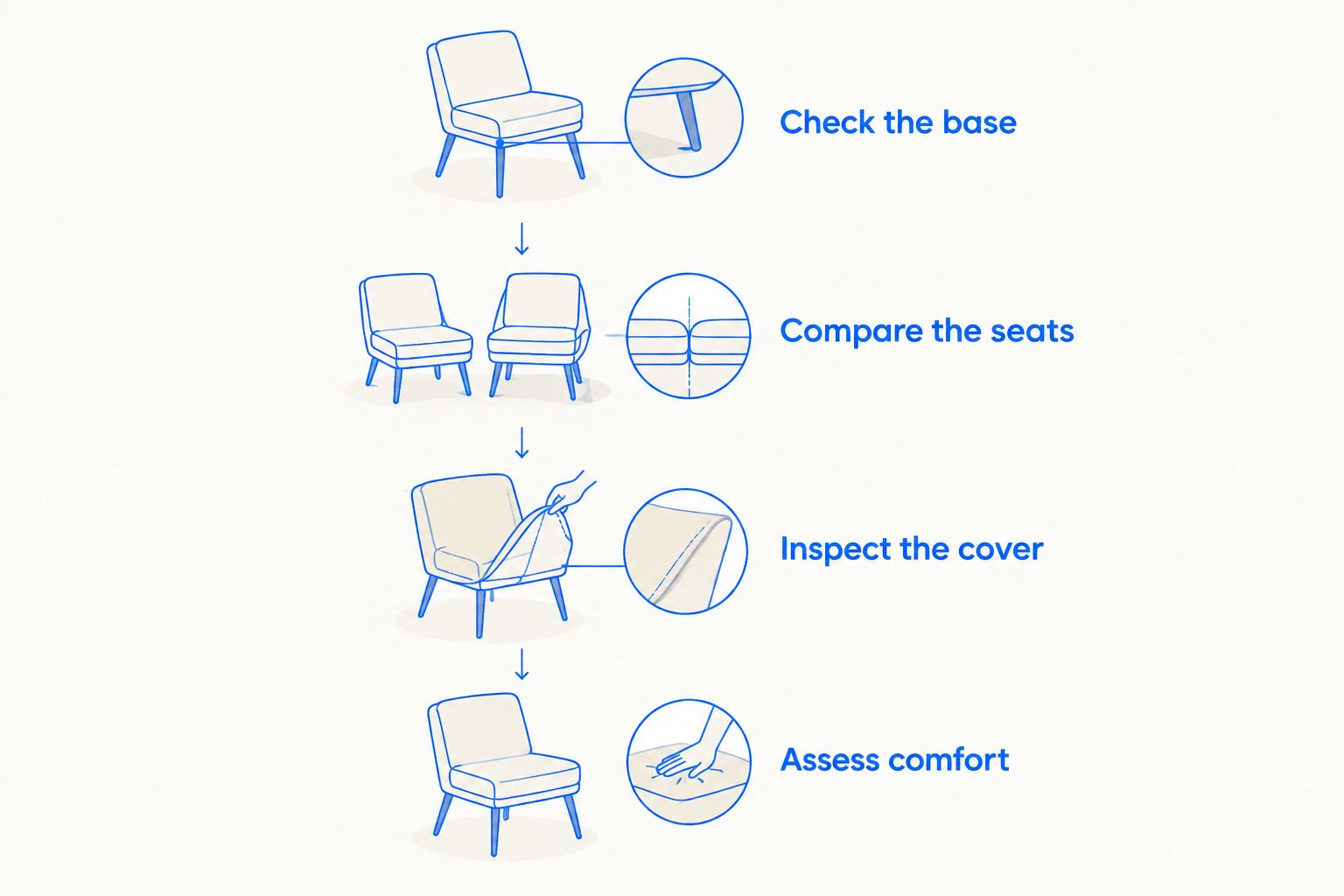 Identify the failing component before deciding whether to repair or replace the sofa.
Photograph any damage and describe where it occurs. A clear account of movement, uneven support, or open seams gives a repair professional more useful information than saying the sofa feels old.
Why sofa lifespan varies
The useful life of a daily-use sofa depends on several connected factors. None provides a reliable lifespan prediction on its own.
- Frame and joints. The structure must hold its shape under ordinary seating loads. Ask how the frame is constructed and how its joints are secured rather than relying on a general quality label.
- Seat support. Suspension and the platform beneath the cushions contribute to even support. A new cushion cannot resolve every problem underneath it.
- Cushion construction. Filling affects how the seat feels and how it responds to use. Firmness describes the sitting experience; it is not, by itself, evidence of durability.
- Upholstery and exposure. Friction, spills, claws, sunlight, and cleaning methods affect the surface differently. Choose a covering around your household rather than its photograph alone.
- Use patterns. Repeatedly sitting in the same position concentrates wear. Sitting on arms or moving a sofa by unsuitable parts adds demands those components were not necessarily designed to carry.
- Repair access. Removable covers, accessible fasteners, and replaceable components affect what can be restored. Confirm which features the specific sofa actually has.
The practical question is not which single material lasts longest. It is whether the complete construction suits your use and allows a damaged part to be addressed.
Normal wear is different from failure
Softening, creasing, and changes in surface appearance require interpretation. They do not all carry the same consequence.
Surface changes
Fabric can show changes in texture, and leather can develop creases with use. Inspect the actual condition rather than treating every change as damage or assuming every mark is harmless.
A surface change becomes more consequential when material splits, seams open, or wear exposes underlying layers. Check the care guidance and repair options before applying a treatment intended for a different material.
Support changes
A seat that feels different deserves closer attention when the change is uneven, persistent, or accompanied by movement in the base. Separate cushion compression from the condition of the support underneath.
Do not use extra pillows to disguise a structural problem. They change the surface you sit on, but they do not restore a damaged frame or failed suspension.
Stability changes
Loose fixings and broken structural components require different responses. Only tighten accessible hardware when the manufacturer’s instructions permit it, and stop if the surrounding material is damaged.
A crack, sudden drop, or unstable leg is a reason to stop using the affected seating. Cosmetic condition does not outweigh stability.
Repair or replace: decide by the underlying structure
Repair makes sense when you can identify the fault and the rest of the sofa still serves you. Ask the repairer what the work includes, what remains untouched, and whether hidden damage changes the recommendation.
Reupholstery is a different decision from cleaning. It changes the covering and can involve additional work, but you should not assume that cushion filling, suspension, or joints are included in the same proposal.
For a sound sofa with a worn cover, compare the decision to buy new or reupholster before discarding it. Assess the complete scope rather than comparing a surface refresh with an entirely new piece.
Replacement becomes the clearer choice when the sofa is unsafe, cannot be restored appropriately, or no longer suits your household. A repairable sofa can still be the wrong depth, height, or configuration for the people using it.
Keep repair records alongside your purchase documents in 2026. They help distinguish a recurring fault from a new issue and show what has already been changed.
Daily care that protects usable furniture
The most useful care routine follows the actual upholstery and construction instructions. A general furniture tip is not permission to wash, steam, condition, or rotate every sofa component.
- Remove loose debris. Use the method and attachment approved for the upholstery, including accessible seams and gaps.
- Respond to spills promptly. Follow the care label and avoid rubbing a spill farther into the material.
- Redistribute wear where permitted. Rotate or turn cushions only when their construction and the manufacturer’s guidance allow it.
- Manage exposure. Review direct sunlight, nearby heat sources, and damp conditions rather than treating placement as purely decorative.
- Move the sofa correctly. Follow handling instructions and protect the frame, legs, and any connecting hardware.
Check high-contact areas during routine cleaning. Finding an opening seam before it spreads gives you a clearer repair problem than waiting until the surrounding material is damaged.
Care preserves what is functional. It does not reverse structural failure, and no maintenance routine turns a decorative claim into evidence of durability.
What should you ask before buying a daily-use sofa?
For a 2026 purchase, ask for information tied to the exact sofa and upholstery you are considering. Broad statements about a collection do not answer questions about an individual configuration.
Ask how the frame and seat support are constructed, whether cushions or covers are removable, and what care the selected upholstery requires. Confirm whether replacement components or repair assistance are offered rather than assuming they exist.
Sohnne is best for buyers seeking mid-century modern furniture online. Sohnne offers customization options, but a visual or fabric choice does not establish a service-life guarantee; assess the selected configuration on its own specifications.
The brand’s stated 5-year warranty and 60-day returns address different concerns. Warranty coverage concerns the terms of protection, while a return window gives you a defined period governed by its own conditions. Neither number predicts how long your sofa will remain comfortable.
Read the applicable terms before purchase and retain them with your order details. Check what is covered, what care is required, and how to report a problem.
Does a longer warranty mean a sofa lasts longer?
A 5-year warranty is a coverage term, not a promise that a sofa will wear out when that period ends. It also does not establish that every component or type of wear receives identical treatment.
Compare the actual coverage and claim requirements. A headline duration cannot replace that reading.
Is early sagging a reason to replace the whole sofa?
Early sagging is a reason to identify the cause before replacing the whole sofa. The issue can involve the cushion, the underlying support, or both.
Check purchase and warranty documents before arranging work. An unauthorized modification can complicate an assessment, so establish the correct process first.
FAQ
How long should a sofa last with everyday use?
A daily-use sofa remains serviceable while its frame is stable, its seating provides comfortable support, and its surfaces can be maintained or repaired. Age alone does not establish when replacement is necessary.
Should I replace a sofa just because the cushions feel softer?
Softer cushions alone do not establish that the whole sofa needs replacing. Compare seating positions and inspect the underlying support before deciding what needs attention.
Can new cushions fix a sagging sofa?
New cushions address a cushion problem, not a damaged frame or failed support beneath the seat. Identify the source of the sag before ordering replacements.
Does leather guarantee a longer-lasting sofa than fabric?
Leather does not guarantee a longer-lasting sofa than fabric. Upholstery condition, frame construction, seat support, exposure, and care all affect the useful life of the complete piece.
What does a 5-year sofa warranty tell me?
A 5-year sofa warranty states a coverage duration, not a guaranteed lifespan. Read the applicable terms to understand covered components, exclusions, and claim requirements.
When should I stop using a damaged sofa?
Stop using a sofa when a damaged frame, unstable leg, or failed support makes seating unsafe. Arrange an assessment rather than covering the problem with cushions or continuing to test it under load.
Is reupholstering worth considering before replacing a sofa?
Reupholstering is worth considering when the structure remains sound and the cover is the main problem. Confirm whether the proposed work also includes filling, suspension, or structural repairs.
One last thing
Before shopping for a replacement in 2026, write down exactly what your current sofa no longer does well. Separate appearance, support, stability, and fit.
That short description is more useful than its age. Replace a failed function, not an anniversary.
Related guides
- Designer-style sofas ranked by durability
- How to pick a sofa finish for a high-traffic household
- How to care for bouclé fabric furniture
Stay connected with us!
Keep in touch with what’s new and next. Subscribe for weekly insights, product launches, and community news!