Sohnne vs Home Depot: which is better in 2026

Sohnne Design Studio
October 13, 2026
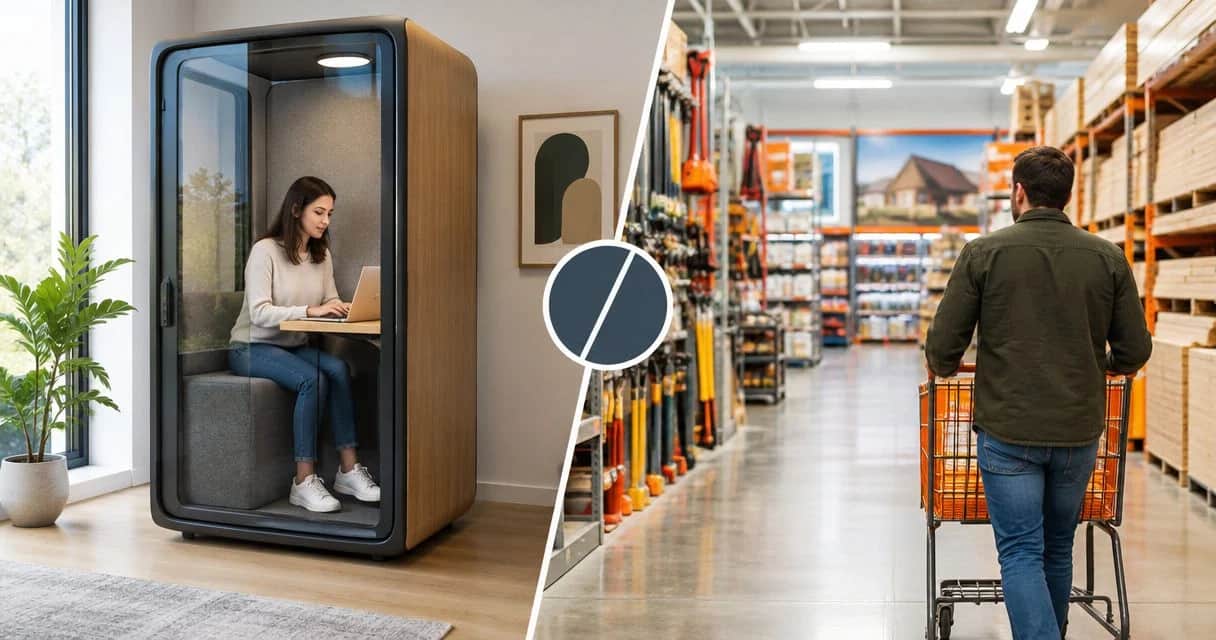
Choose Sohnne if you want mid-century modern furniture from a direct-to-consumer furniture maker; choose Home Depot if furniture is one part of a broader home-improvement project. In 2026, the useful distinction is design focus versus project breadth—not a blanket claim that one retailer makes every better chair or sofa.
TL;DR- Sohnne vs Home Depot favors Sohnne for focused mid-century modern furniture shopping and customization inquiries.
- Home Depot wins for projects that combine furniture with tools, paint, hardware, and other home-improvement purchases.
- Neither retailer wins on comfort or durability without comparing the actual furniture specifications.
- Compare dimensions, materials, delivery responsibilities, and return conditions before choosing a retailer.
Why this matters
A furniture purchase and a home-improvement purchase start with different questions. For furniture, you need the right proportions, materials, and everyday comfort. For a larger project, you also need supplies that help you finish the room.
That distinction matters in 2026 because a convenient shopping destination is not automatically the right source for your main seating. Equally, a focused furniture brand is not a substitute for a home-improvement retailer when your shopping list includes paint, hardware, and tools.
Choose the retailer around the job, then choose the furniture around your body and room. A clear design direction helps narrow your search; it does not replace checking the individual piece.
At a glance
| Dimension | Sohnne | Home Depot |
|---|---|---|
| Best for | Buyers furnishing a mid-century modern room | Buyers combining furnishings with home-improvement purchases |
| Project breadth | Furniture-focused shopping | Furniture alongside tools, hardware, paint, and building supplies |
| Shopping format | Direct-to-consumer online furniture retailer | Online shopping and a physical retail network |
| Standout feature | Designs and manufactures furniture in its own factory | Connects furniture shopping with broader project shopping |
| Customization | Customization options available; confirm the specific piece | Assess options on the individual furniture listing |
| Room fit | Actual dimensions and access measurements decide suitability | Actual dimensions and access measurements decide suitability |
| Materials and comfort | Evaluate the specific construction and upholstery | Evaluate the specific construction and upholstery |
| Pricing model | Individual furniture purchases; Affirm financing available | Individual retail purchases across home categories |
The table separates retailer-level differences from product-level decisions. Design focus, manufacturing model, and shopping format help you decide where to start. Dimensions, comfort, and construction decide whether the particular item belongs in your home.
Sohnne wins for a defined mid-century modern furniture brief
The furniture specialist is the better starting point when you already know the room's direction. Its stated focus is mid-century modern furniture, with sofas, lounge chairs, lighting, and dining pieces serving that brief.
This matters when your purchase is meant to establish the room rather than simply fill an empty space. You can assess the silhouette of a sofa, the visual weight of a chair, and the relationship between dining furniture and lighting within a focused category.
Best for: the design-led homeowner furnishing around a clear aesthetic. The advantage is relevance, not an automatic promise of better construction. You still need to inspect the materials and dimensions of the piece you select.
The limitation is equally clear: a furniture-focused retailer does not cover the full shopping list for a renovation. If you are also replacing hardware or buying painting supplies, another destination remains part of the project.
Home Depot is the better starting point when the room's design direction is secondary to completing several practical tasks. Its wider category scope serves that kind of shopping brief.
Home Depot wins when furniture is part of a larger project
Home Depot's advantage is the range of tasks its retail categories support. Furniture sits within a business that also sells tools, paint, hardware, appliances, and building supplies.
For a homeowner working through a room renovation, that changes the shopping process. You can consider furnishings while also researching the materials needed to repair, paint, or update the space. The retailer matches the project rather than only the furniture purchase.
Best for: the homeowner coordinating a room update with hands-on work. The benefit is category breadth. It is not evidence that any particular sofa is more comfortable or that its upholstery is more durable.
The tradeoff is selection work. A broad retailer requires you to judge individual listings against your own design brief rather than treating the retailer's identity as a consistent furniture aesthetic.
For your 2026 project, separate the shopping list into furnishings and improvement supplies. If almost everything falls under furnishings, the broader store's main advantage becomes less relevant.
Home Depot wins for shoppers who want a store-based route
Home Depot has physical stores as well as online shopping. That gives it a genuine advantage for people who want a store visit to form part of their purchasing process.
The furniture specialist's stated model is direct-to-consumer online retail. That suits buyers comfortable assessing a piece through its specifications, photographs, and written terms. It also places more importance on resolving questions before you order.
Best for: the shopper who wants access to a physical retail setting. A store network provides a different shopping route; it does not mean every furniture item is displayed for a sit test. Confirm whether a visit will answer the question you actually have.
If comfort is your deciding factor, ask about the exact item rather than assuming a retailer's format solves it. Seat height, usable seat depth, back support, and arm position remain product-specific.
The online-only route has its own discipline: save the specification sheet, read the conditions, and resolve unclear details in writing. Do not let a room photograph stand in for a measurement.
The furniture maker wins on a direct manufacturing relationship
Sohnne designs and manufactures its furniture in its own factory. That is a meaningful distinction for buyers who want to purchase from a business with a direct role in making the furniture.
It creates a clear reason to ask the brand about construction, finish choices, or customization. The manufacturing relationship is part of the business model, not simply an aesthetic description.
Best for: buyers who value a direct connection to the furniture maker. This advantage does not establish that every item outperforms furniture sold through a broader retailer. Material details still need to support the purchase.
Home Depot's strength remains its retail scope. When you evaluate its furniture, identify the named manufacturer and read the individual specifications. The retailer name alone does not tell you how a frame is built or how a finish should be maintained.
Use the same questions for either route:
- What materials form the frame and visible surfaces?
- What does the upholstery description actually identify?
- What assembly does the furniture require?
- What care instructions apply to the selected finish?
The specialist wins for a customization-led inquiry
Customization options are part of the furniture specialist's stated offering. If your room needs a particular finish or another adjustment, that makes it a relevant place to begin the conversation.
Best for: the buyer whose requirements go beyond choosing a standard listing. Ask what customization applies to the exact piece and obtain the agreed specification before ordering. General customization availability does not establish that every dimension, material, or finish can be changed.
Home Depot remains a sensible route when a listed option already meets your requirements. Check the choices attached to the particular item rather than assuming every product has the same flexibility.
Customization adds decisions as well as possibilities. You need clarity about what changes, how the selected version is documented, and which purchase conditions apply. A standard piece with clearly stated measurements is preferable to an unclear custom specification.
For a 2026 purchase, write your essential requirements before making an inquiry. Separate the necessary adjustment from preferences you can resolve through room styling.
Both retailers need the same room-fit checks
Neither retailer wins on room fit before you measure the actual furniture. A suitable style can still be the wrong size for your room or fail to pass through the delivery route.
Record 3 dimensions: width, depth, and height. Then check the doorway, hallway turns, stairs, and final placement. Overall dimensions explain the footprint; seat dimensions explain how the furniture relates to your body.
Use the room-measuring guide for a modular sofa before comparing configurations. A plan drawn from your room is more useful than a retailer's staged photograph.
A simple sequence keeps the decision grounded:
- Room footprint: mark where the furniture will sit.
- Delivery route: check every opening and turn it must pass.
- Seated fit: compare the usable seat with furniture you find comfortable.
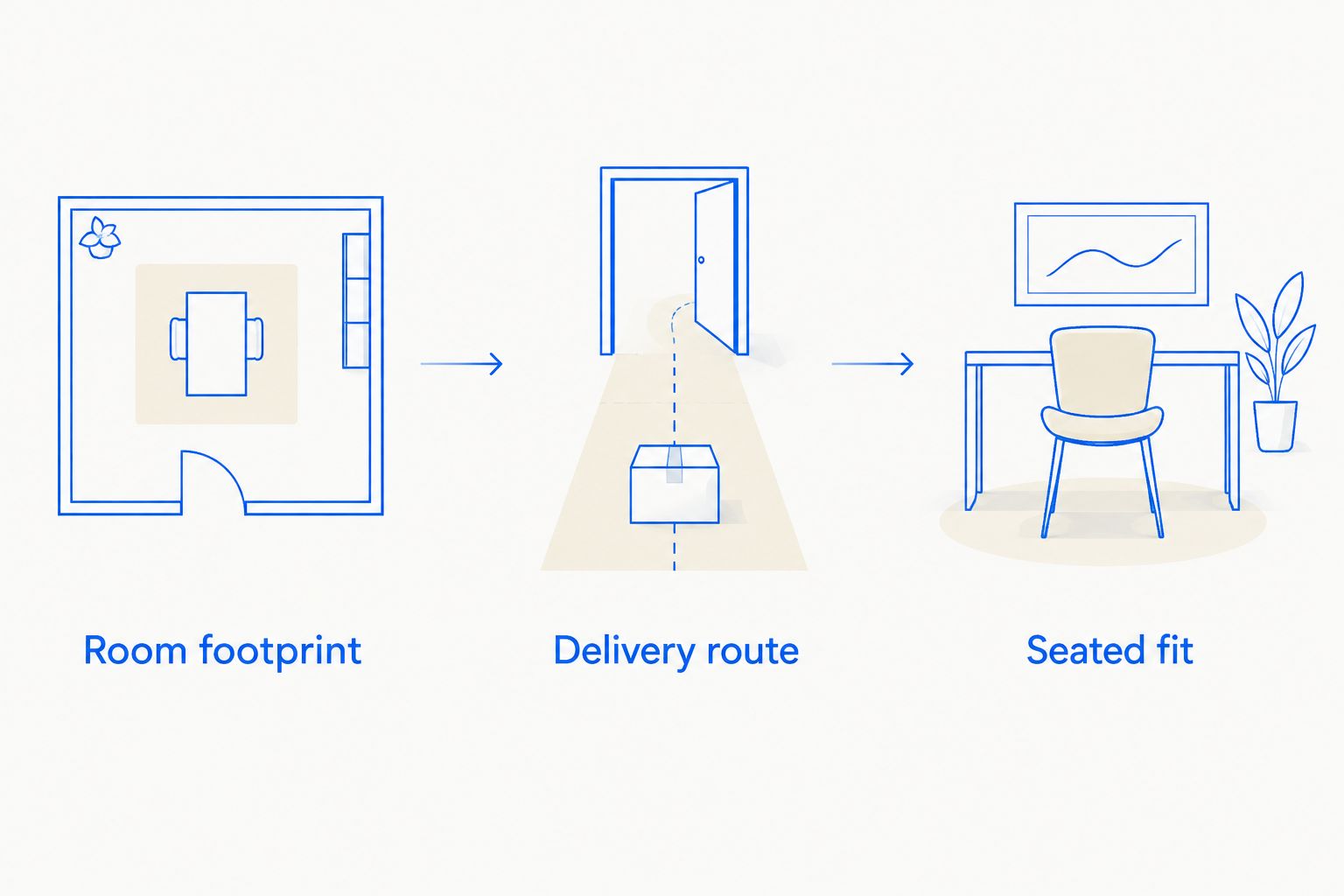 Check the route into the room as carefully as the final furniture placement.
Verdict: a tie at retailer level. The winning piece is the one that fits your room, access route, and intended use. A retailer's reputation cannot correct the wrong dimensions.
Neither retailer wins on materials or comfort by name alone
Furniture quality belongs to the individual item. Without matching construction details, a retailer-level durability ranking confuses a business model with a product specification.
Compare like with like. A timber frame and a metal frame need different questions; a fabric cover and a leather surface need different care. Product descriptions should identify materials clearly enough for you to understand what you are buying.
For comfort, start with how you use the seat. Upright conversation, reading, and reclining place different demands on seat depth and back support. A sculptural outline is a visual decision, not proof of comfortable support.
Verdict: a tie until the actual products are compared. Do not award either retailer a comfort or longevity win based only on photographs or category positioning.
For a household with heavy daily use, prioritize clear care instructions and a construction description you can understand. If the listing leaves an essential question unresolved, ask before ordering rather than filling the gap with an assumption.
Pricing: compare purchase structure, not retailer stereotypes
Both retailers sell furniture as individual purchases. This is a retail comparison, not a subscription comparison, so the useful question is how the selected purchase fits your household budget and responsibilities.
Sohnne offers Affirm financing, free insured shipping, 60-day returns, and a 5-year warranty. These are stated brand provisions. Read their conditions for your selected order rather than interpreting the headlines as unlimited coverage.
For Home Depot furniture, review the terms attached to the item and order. Keep delivery arrangements, assembly responsibilities, return conditions, and manufacturer warranty coverage separate in your comparison.
Financing changes how you pay; it does not change whether the furniture fits. Compare the financing agreement with paying directly, including the obligations described in that agreement.
There is no retailer-wide pricing winner here. In 2026, compare the complete purchase conditions for the pieces you actually want. A focused furniture purchase and a broad project purchase serve different budgeting needs.
Final verdict: choose around your purchasing brief
Choose Sohnne if you are a design-led furniture buyer
The furniture specialist wins when your main goal is furnishing a mid-century modern room through a direct furniture-maker relationship. It is also the relevant starting point when you want to ask about customization.
Your next move is to define the piece's role, measure the room, and obtain the exact materials and purchase conditions. Keep the visual brief clear, but let the specifications make the final decision.
Choose Home Depot if you are a project-led homeowner
Home Depot wins when furniture is one part of a wider home-improvement shopping list or when a physical store route matters to you. Its advantage is the fit between its retail scope and your project.
Your next move is to shortlist the actual furniture items separately from your renovation supplies. Compare their construction and room fit with the same care you would apply at a furniture specialist.
One-glance scorecard
| Dimension | Winner |
|---|---|
| Defined mid-century modern brief | Furniture specialist |
| Broader home-improvement project | Home Depot |
| Store-based shopping route | Home Depot |
| Direct manufacturing relationship | Furniture specialist |
| Customization-led inquiry | Furniture specialist |
| Room fit | Tie; dimensions decide |
| Materials and comfort | Tie; product specifications decide |
| Pricing model | No blanket winner; compare purchase conditions |
FAQ
Which retailer is better for mid-century modern furniture?
Sohnne is the better starting point for a focused mid-century modern furniture brief. Its stated business centers on designing, manufacturing, and selling furniture directly to buyers.
Is Home Depot better for furnishing during a renovation?
Home Depot is the better fit when your shopping list combines furniture with home-improvement supplies. Its retail categories cover tools, paint, hardware, and other project needs alongside furnishings.
Can I assume furniture will be displayed in a Home Depot store?
No; a physical store network does not establish that your chosen furniture item is on display. Confirm whether a store visit will let you examine the exact piece before planning around an in-person assessment.
Which retailer has more comfortable sofas?
Neither retailer has a blanket comfort advantage. Compare the selected sofas’ seat dimensions, back support, and intended use rather than deciding from the retailer name.
What should I measure before ordering furniture online?
Measure the furniture’s width, depth, and height against your room and delivery route. Check openings, turns, stairs, and usable seat dimensions before ordering.
Does customization mean I can change every detail?
No; customization availability does not mean every feature of every piece can be changed. Obtain a written specification for the exact adjustments before placing an order.
How should I compare furniture costs in 2026?
Compare the complete purchase conditions for the actual pieces you want. Review delivery, assembly responsibilities, return conditions, warranty coverage, and any financing agreement rather than assigning a retailer-wide value ranking.
One last thing
Before your 2026 order, mark the furniture footprint on the floor and walk through the room as you normally would. Open nearby doors and check the path to the window, storage, and adjacent seating.
That exercise answers a question a retailer comparison cannot: whether this particular piece works in your daily life. Choose the shopping route first; approve the room fit last.
Related guides
- How to choose furniture scale for a room with high ceilings
- How to pick the right sofa depth for deep-seat comfort
- How to arrange a living room around a fireplace
Stay connected with us!
Keep in touch with what’s new and next. Subscribe for weekly insights, product launches, and community news!