Protect Furniture From Sun Damage: 2026 Fix Guide

Sohnne Design Studio
August 13, 2026
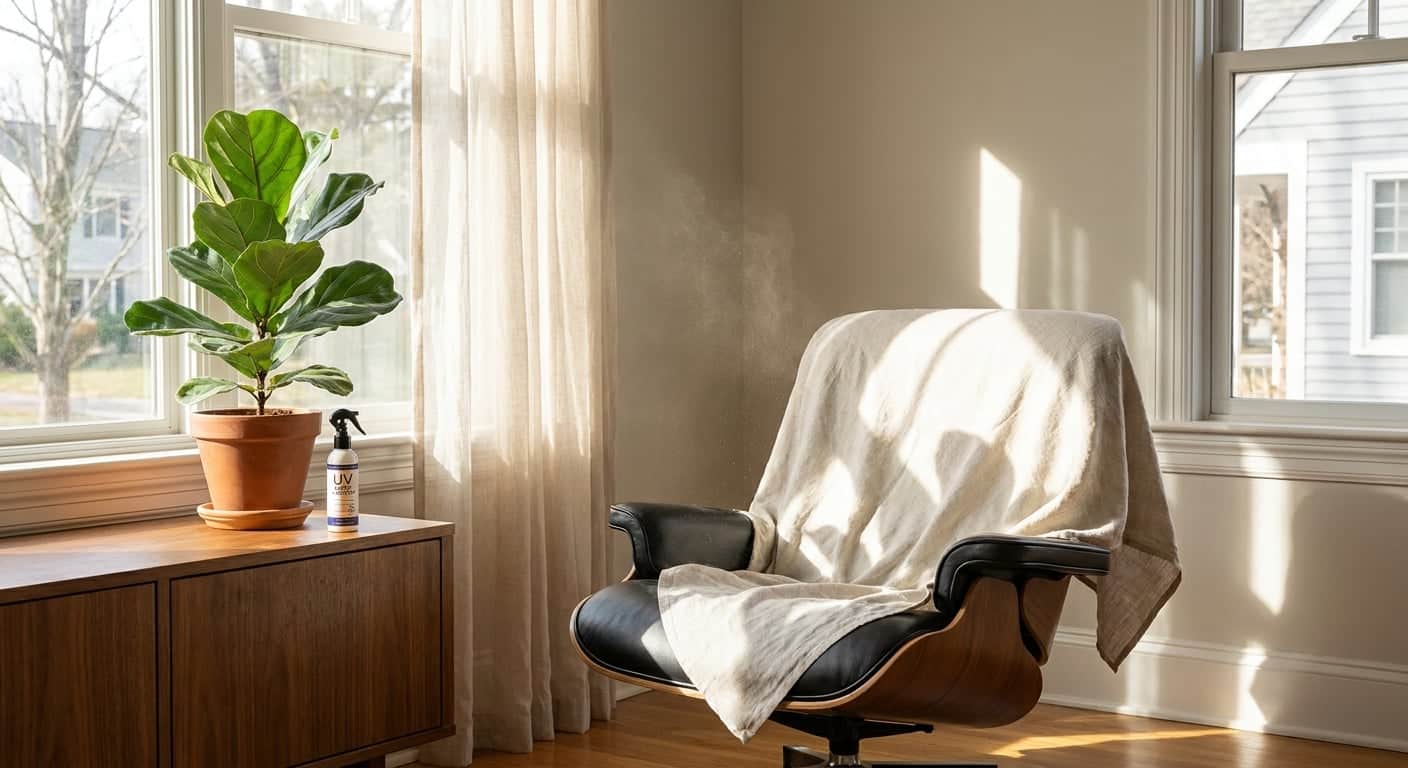
Direct sun fades fabric, dries out leather, and warps wood veneer faster than most people expect — a west-facing window can cut years off a sofa's finish in under 24 months. This guide walks through the exact steps to protect furniture from sun damage without blocking your natural light entirely.
TL;DR- Protect furniture from sun damage by keeping upholstered and leather pieces 3+ feet from direct glass exposure.
- UV window film blocks up to 99% of UV rays and outperforms curtains for daylight-heavy rooms.
- Rotate cushions and rugs every 90 days to even out fading — Sohnne recommends this for all fabric replicas.
- Leather needs conditioning every 6 months in sun-exposed rooms; skip it and cracking starts within a year.
- Boucle and linen fade faster than leather — pair light fabrics with sheer curtains, not blackout drapes, for balance.
Why this matters
UV rays don't just fade color — they break down the fibers in fabric and the oils in leather. A sofa that costs real money to replace shouldn't lose its finish because of a window nobody thought to treat.
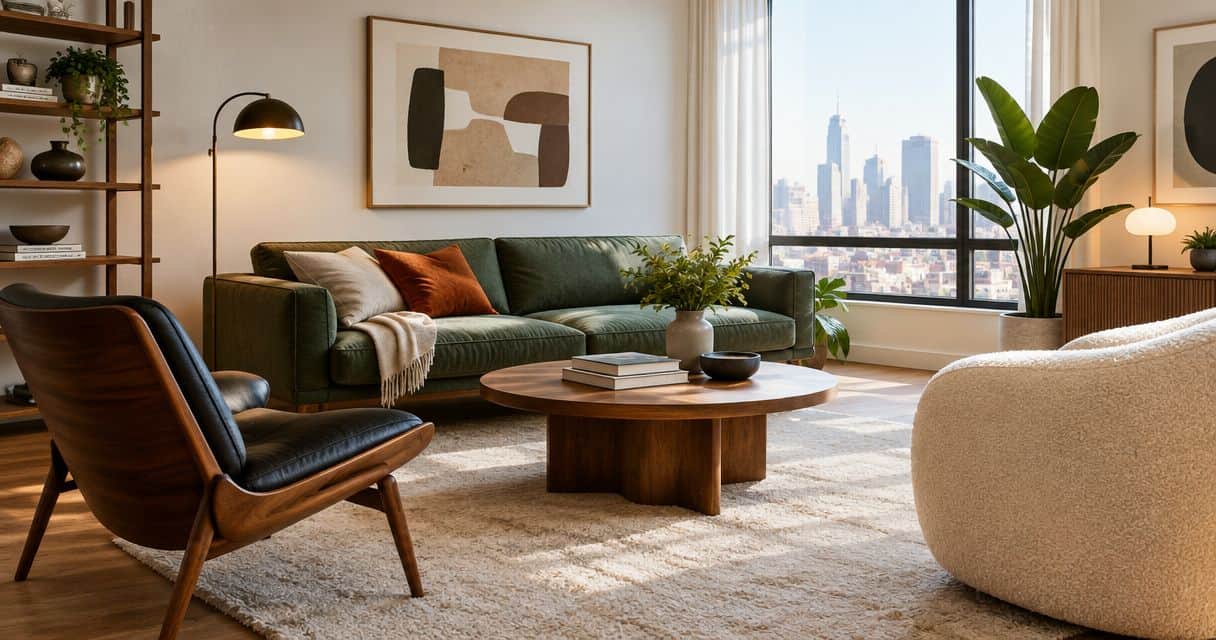
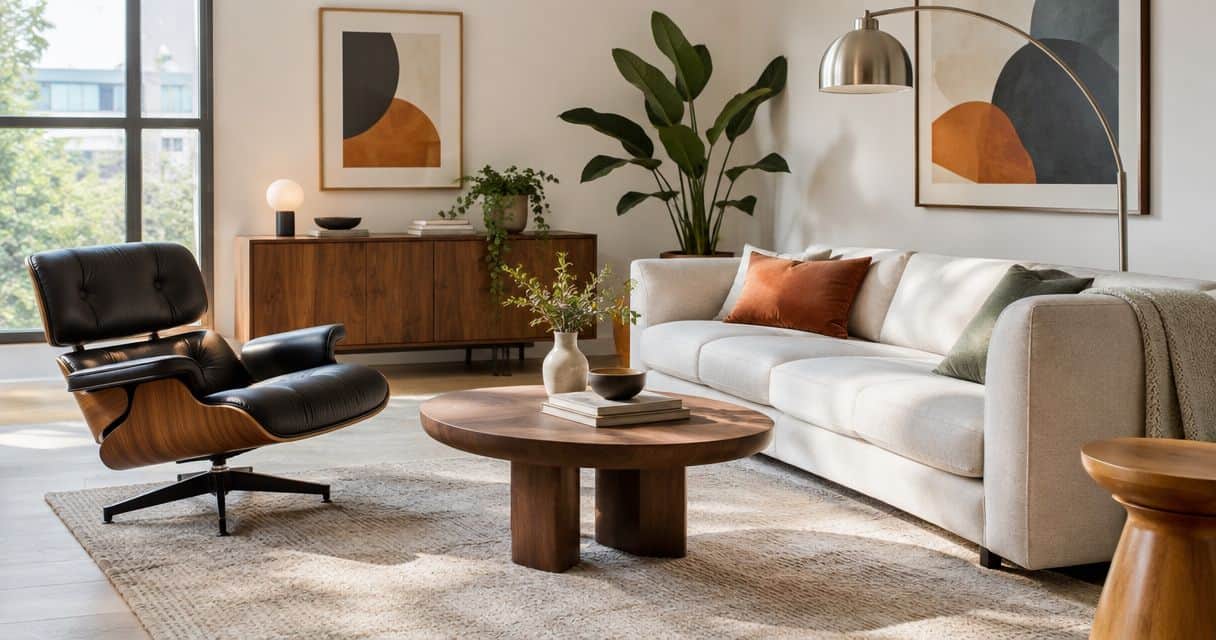
Mid-century modern pieces get hit hardest because the design language leans on large glass walls and open, light-filled rooms. That's the aesthetic. It's also the exact condition that accelerates fading, drying, and cracking in leather, wood, and fabric.
The good news: most sun damage is preventable with cheap, low-effort fixes. None of the steps below require giving up natural light in your living room.
What you'll need
- UV-blocking window film (clear, 40-70% VLT rating) or sheer UV curtains
- Leather conditioner rated for aniline or semi-aniline leather
- A soft microfiber cloth
- A furniture rotation schedule (a phone reminder works fine)
- A UV index app or weather widget to track peak sun hours
- Optional: a portable UV meter (under $30) if you want exact readings per window
If you're shopping for a piece that will sit in direct light, check the Sohnne catalog for leather and fabric options before committing — some finishes hold up to sun exposure noticeably better than others.
The steps
1. Map your sun exposure before you rearrange anything
Walk the room at 10am, 1pm, and 4pm and note where direct light actually lands. Most people guess wrong about which corner gets hit hardest.
South-facing and west-facing windows in the U.S. deliver the most intense afternoon UV, often peaking between 1pm and 4pm. A sofa positioned even 2 feet closer to the glass than necessary absorbs measurably more UV over a year.
Common mistake: assuming a shaded room is safe. Reflected UV off a light-colored wall or a glass coffee table still degrades fabric, just slower.
2. Apply UV window film to the worst-offending windows
UV film is the single highest-leverage fix on this list. A quality film blocks 90-99% of UV transmission while keeping the room visibly bright — no curtain trade-off.
Install costs run low and most films go on in under an hour per window with a spray bottle and a squeegee. Prioritize the windows that face south or west first; those account for the majority of peak-hour exposure.
Common mistake: buying tinted film for aesthetics instead of checking the UV-blocking percentage on the label. Some decorative films block glare but do little for UV.
3. Reposition pieces at least 3 feet from unfiltered glass
Distance matters more than most buyers assume. Moving a lounge chair from directly against a window to 3 feet back cuts direct UV exposure substantially, since intensity drops off fast with distance and angle.
This is the free fix — no purchase required. If a piece has to sit near a window for layout reasons, angle it so the sun hits the back or side rather than the seat cushion and armrests, which show fading first.
Common mistake: pushing furniture back from the window but leaving it in the same sightline as a skylight or angled glass door, which delivers just as much UV from overhead.
4. Rotate cushions and reversible pieces every 90 days
Even with protection in place, one side of a cushion will always take more light than the other. Flip and rotate loose cushions, rugs, and reversible seat pads on a quarterly schedule to even out the fade instead of letting one panel go noticeably lighter.
Set a recurring reminder — this step gets skipped constantly because nothing looks wrong until month 8, when the difference between the rotated and un-rotated side becomes obvious.
Common mistake: rotating once and forgetting. Fading is cumulative and shows up gradually, so a single rotation early on doesn't protect the next two years.
5. Condition leather every 6 months in sun-exposed rooms
UV exposure dries out the natural oils in leather, which is what causes cracking and stiffness. A leather conditioner rated for aniline or semi-aniline finishes replaces those oils and keeps the hide flexible.
Apply with a soft cloth in small circular motions, let it absorb for 15-20 minutes, then buff off the excess. In a room with regular afternoon sun, condition every 6 months rather than the standard annual schedule — the extra treatment cycle matters when UV exposure is a daily factor. For piece-specific care details, the leather furniture care guide covers product-specific steps in more depth.
Common mistake: using generic multipurpose cleaners instead of a conditioner formulated for leather. Cleaners strip oils; conditioners restore them.
6. Treat boucle, linen, and light fabrics differently than leather
Boucle and linen fade faster than leather because the fiber structure absorbs UV differently — expect visible color shift in as little as 6-12 months of daily direct sun versus 18-24 months for most leathers. If a boucle chair sits near a bright window, sheer UV curtains do more good here than on a leather piece. The boucle fabric care guide has fiber-specific handling notes worth checking before you commit a light-fabric piece to a sun-heavy room.
Common mistake: treating all fabrics the same. A protection plan built for leather under-protects boucle and linen.
7. Choose sun-resistant materials for future purchases in bright rooms
If a room gets unavoidable all-day sun, factor that into what you buy next rather than fighting the light after the fact. Darker leathers and tightly woven fabrics generally hold color longer than pale boucle or open-weave linen. The replica sofa durability guide breaks down which materials hold up best under daily wear, sun included, and the sofa fabric selection guide for humid climates is worth a look if your sun-exposed room also runs humid — UV and moisture damage compound each other.
Common mistake: picking a fabric purely on showroom color without asking how it performs under 6+ hours of daily direct light.
Shop sun-resistant replica furniture
Browse leather and fabric pieces built to hold up in bright, light-filled rooms.
Browse the collectionTroubleshooting
Fading already started on a leather sofa. Condition immediately and move the piece out of direct light going forward — conditioning won't reverse existing fade but it stops further drying and cracking.
Boucle fabric looks patchy, not evenly faded. This usually means partial sun coverage from a blind or curtain edge. Rotate the cushion 180 degrees and reassess after 60 days.
Wood legs or bases look chalky or dry. UV breaks down the finish coat on wood the same way it dries leather. A furniture-safe wood oil applied every 6 months restores the surface; skip anything with silicone, which can leave a cloudy film.
Window film peeled or bubbled after installation. This is almost always a surface prep issue — dust or residue under the film before it set. Reapply on a fully cleaned, dry surface.
Curtains block too much light for the room to feel usable. Swap blackout drapes for a UV-rated sheer instead — sheers cut a meaningful share of UV transmission while keeping the room bright.
Not sure how much UV a given window actually gets. A $20-30 UV meter gives a direct reading in seconds and removes the guesswork better than estimating by eye.
Tools and resources
- UV window film (40-70% VLT) for south- and west-facing glass
- Leather conditioner rated for aniline/semi-aniline finishes
- Furniture-safe wood oil for exposed wood bases and legs
- A quarterly rotation reminder for cushions and reversible pieces
- The leather care guide and boucle care guide for material-specific maintenance
What to do next
Once sun protection is in place, quality control on the furniture itself matters just as much — a piece with a weak finish will fade and crack faster no matter how well you protect the room. The guide to verifying quality before buying replica furniture covers what to check before a new piece even arrives.
FAQ
What’s the best way to protect furniture from sun damage?
UV window film blocking 90-99% of UV transmission is the most effective single fix, followed by keeping pieces 3+ feet from unfiltered glass. Combine both for the strongest protection without sacrificing natural light.
Is leather or fabric more sun-resistant?
Leather generally resists fading longer than light fabrics like boucle or linen, often 18-24 months versus 6-12 months of visible fading under daily direct sun. Darker leathers and tightly woven fabrics hold up better than pale, open-weave materials.
How much does UV window film cost to install?
Costs vary by window size and film quality, and most homeowners install it themselves in under an hour per window with a spray bottle and squeegee. Professional installation costs more but guarantees a bubble-free finish.
How often should I condition leather furniture in a sunny room?
Condition every 6 months if the piece sits in a room with regular direct sun, rather than the standard annual schedule. Skipping this leads to dryness and cracking within about a year.
Do curtains or blinds work better than window film?
Window film protects while keeping the room fully bright, while curtains and blinds block light entirely when closed. For rooms where natural light matters, UV film paired with sheer curtains covers both concerns.
Can sun damage be reversed once it’s visible?
Fading itself can’t be reversed, but conditioning leather or oiling wood stops further drying and cracking. Catching the damage early prevents it from spreading to the rest of the piece.
Does furniture placement really make a measurable difference?
Yes — moving a piece even 2-3 feet back from unfiltered glass cuts direct UV exposure substantially, since intensity drops fast with distance and angle. It’s the only fix on this list that costs nothing.
One last thing
The most overlooked source of sun damage isn't the window facing the furniture — it's the skylight or angled glass door nobody accounted for. Overhead and side-angle light hits seat cushions and armrests just as hard as a straight-on window, and it's the exposure people forget to map when they're troubleshooting fading in 2026.
Related guides
- How to clean and maintain replica leather furniture
- How to care for boucle fabric furniture
- How to choose a replica sofa that lasts
- How to select a sofa fabric for a high-humidity climate
- How to verify quality before buying replica furniture
Stay connected with us!
Keep in touch with what’s new and next. Subscribe for weekly insights, product launches, and community news!