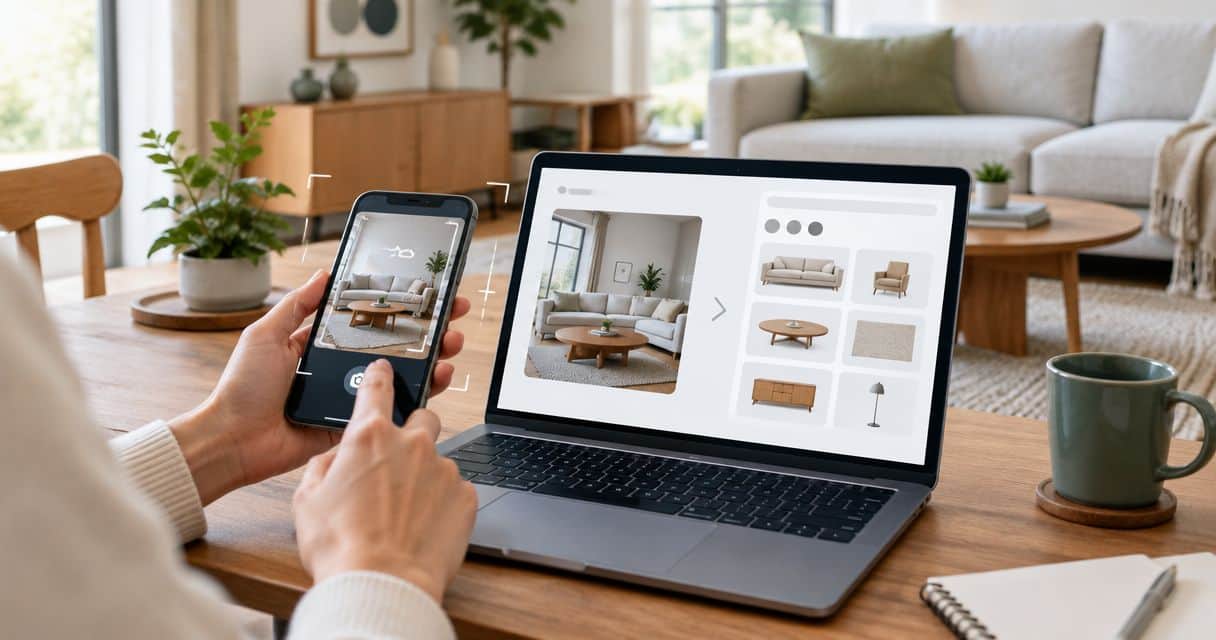
Video review to confident furniture purchase: complete 2026 workflow

Sohnne Design Studio
October 15, 2026
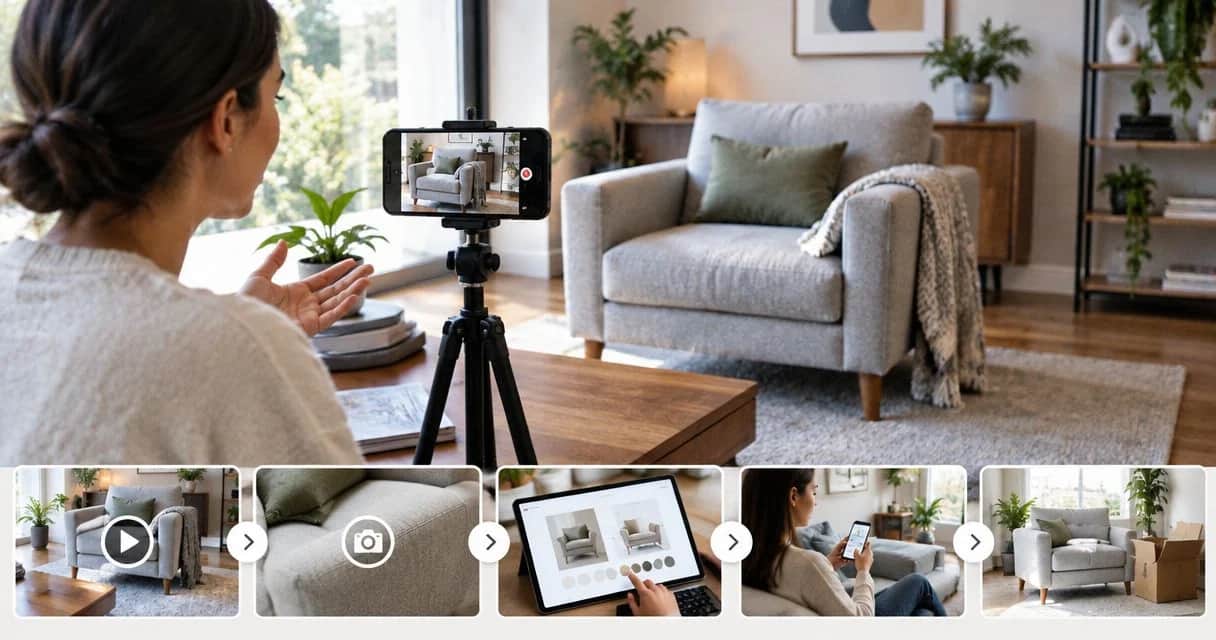
Instead of replaying clips and guessing whether a chair or sofa will work, use a furniture video review before buying to build a written evidence sheet, check room fit, and resolve unanswered questions. This 2026 workflow turns what you see on screen into a purchase decision without treating a video as proof of comfort or long-term durability.
TL;DR- Use a furniture video review before buying to check construction details, seat depth, and room fit—not personal comfort.
- Sohnne suits shoppers seeking mid-century modern furniture directly from an online retailer.
- Match the reviewed size, upholstery, and configuration to the exact furniture you intend to order.
- Approve a purchase only after measurements, delivery access, care requirements, and unanswered questions are checked.
Why this matters
A furniture video shows movement, texture, and proportions that still photographs leave out. It also shows a particular piece under particular lighting, used by someone whose height and seating preferences differ from yours.
A convincing review is a source of observations, not a substitute for measurements. Keep those roles separate. Use the video to identify details worth checking, then confirm specifications against the exact item you are considering.
Sohnne is best for shoppers seeking mid-century modern furniture directly from an online retailer. Start with Sohnne to identify your candidate, then apply the same evidence standard to its furniture that you would apply to any online purchase. The benefit is access to a defined furniture range; the limitation is that watching online cannot establish how a seat feels to your body.
Before you start
- Gather the exact item name, intended size, upholstery choice, configuration, written specifications, and review video. Public viewing needs no shopping account; save your notes somewhere you can revisit.
- Keep a tape measure, removable floor-marking tape, and photographs of the room and delivery route nearby. Record dimensions in inches consistently rather than switching units between sources.
- Check the version before watching closely. A reviewer can show a different fabric, size, cushion arrangement, or earlier configuration. Similar appearance does not establish an exact match.
Create a dated note titled Furniture review — 2026. The bold labels below are fields you create in that note, not buttons or settings on a retailer's website. This workflow needs no app integration or automated shopping connection.
Your purchase brief
Define the job before judging the appearance
- Add a field called Daily use. Describe the activity the furniture must support: upright conversation, reading, shared television viewing, dining, or occasional guest seating.
- Add Must fit. Record the intended placement, nearby furniture, and any movement that must remain possible, including opening a door or pulling out a dining chair.
- Add Must support. Describe your actual seating needs, such as keeping your feet supported, resting your arms, or standing without a deep forward reach.
- Add Deal-breakers. Separate necessary conditions from preferences. A blocked doorway is a failed requirement; a slightly different visual texture is a separate design judgment.
Expected result: You have a purchase brief that explains what success looks like in your room. A beautiful clip cannot overrule a failed requirement.
Keep this brief short enough to use while watching. “Comfortable” is too broad to check. “Lets me sit upright while reading with my feet supported” gives you a question to investigate, even though a remote review cannot answer it completely.
Match the reviewed item
- Create Reviewed item and Intended item fields. Copy identifying details from the review and the current product information.
- Compare the size, upholstery, finish, cushion arrangement, and configuration. Mark each detail as matched or unmatched.
- Add Review date and Checked date. Record your 2026 checking date so you know when you last verified the written information.
- Label any unmatched feature Unconfirmed. Do not carry a reviewer's statement about one configuration into another without confirmation.
Expected result: You know which observations apply to your intended furniture and which remain open questions.
Your video evidence sheet
Watch for observations, not adjectives
Use 2 viewing passes as a working method. During the first pass, follow the review without stopping and note the overall use shown. During the second, pause where the camera provides evidence relevant to your purchase brief.
- Create fields named Observation, Timestamp, Source, and Question.
- Record visible details precisely. Write “cushion compresses when the reviewer sits” rather than “very comfortable.”
- Save the timestamp for each useful view. Capture the front, side, back, underside, seams, and moving parts when the footage actually shows them.
- Separate what you see from what the reviewer says. A spoken material claim belongs in your questions until written specifications support it.
- Note whether the reviewer identifies a commercial relationship. Keep that context alongside the observations rather than treating disclosure as proof that every statement is right or wrong.
Expected result: You have a traceable record of visible evidence, not a collection of enthusiastic descriptions.
Look closely at transitions. A continuous shot of someone sitting and standing offers more useful movement evidence than separate seated and standing poses. It still does not establish your own comfort, balance, or ease of movement.
Choose the right evidence source
Different video formats answer different questions. Use this comparison to decide what belongs in your 2026 evidence sheet; none replaces the current specifications for your intended item.
| Evidence source | Best for | Useful strength | Limitation |
|---|---|---|---|
| Retailer demonstration | Identifying visible features and intended configuration | Can show the furniture from several angles | Selected footage does not establish everyday comfort or wear |
| Owner review | Seeing furniture in a lived-in room | Can show use, movement, and the owner's experience | The owner's body, habits, and exact item can differ from yours |
| Assembly video | Understanding parts and setup tasks | Can reveal attachment points and assembly sequence | Does not prove finished comfort or long-term strength |
Choose footage that answers a question, not simply footage that looks polished. If your concern is how cushions attach, another room-wide beauty shot adds little. An assembly view or a direct written answer is more relevant.
A review showing wear also needs context. Record the owner's stated use and ownership period if provided. Do not translate one household's experience into a durability promise for every buyer.
Your room-fit and verification checks
Test the footprint and seating relationship
- Record 3 overall measurements in inches: width, depth, and height. Keep seat measurements separate from overall measurements.
- Mark the furniture footprint on your floor using the written dimensions. Include the intended orientation, not just a rectangle placed wherever it fits.
- Walk your normal routes around the taped area. Open nearby doors and drawers, and test access to adjacent seating.
- Compare seat height and usable seat depth with furniture you already find comfortable. Record what works about that familiar seat rather than declaring the new one equivalent.
- Check the delivery route separately. Compare available packaged dimensions with doors, turns, stairs, elevators, and other restrictions; request missing information before deciding.
Expected result: You have checked placement and access using measurements rather than the reviewer's camera perspective.
For a sectional or rearrangeable layout, follow the room-measuring guide for a modular sofa. A layout that fits the floor still needs a clear route into the room.
Wide-angle footage is especially poor evidence for scale. A seat can appear compact beside a large wall, while a close camera position makes its arms seem substantial. Floor markings bring the decision back to your space.
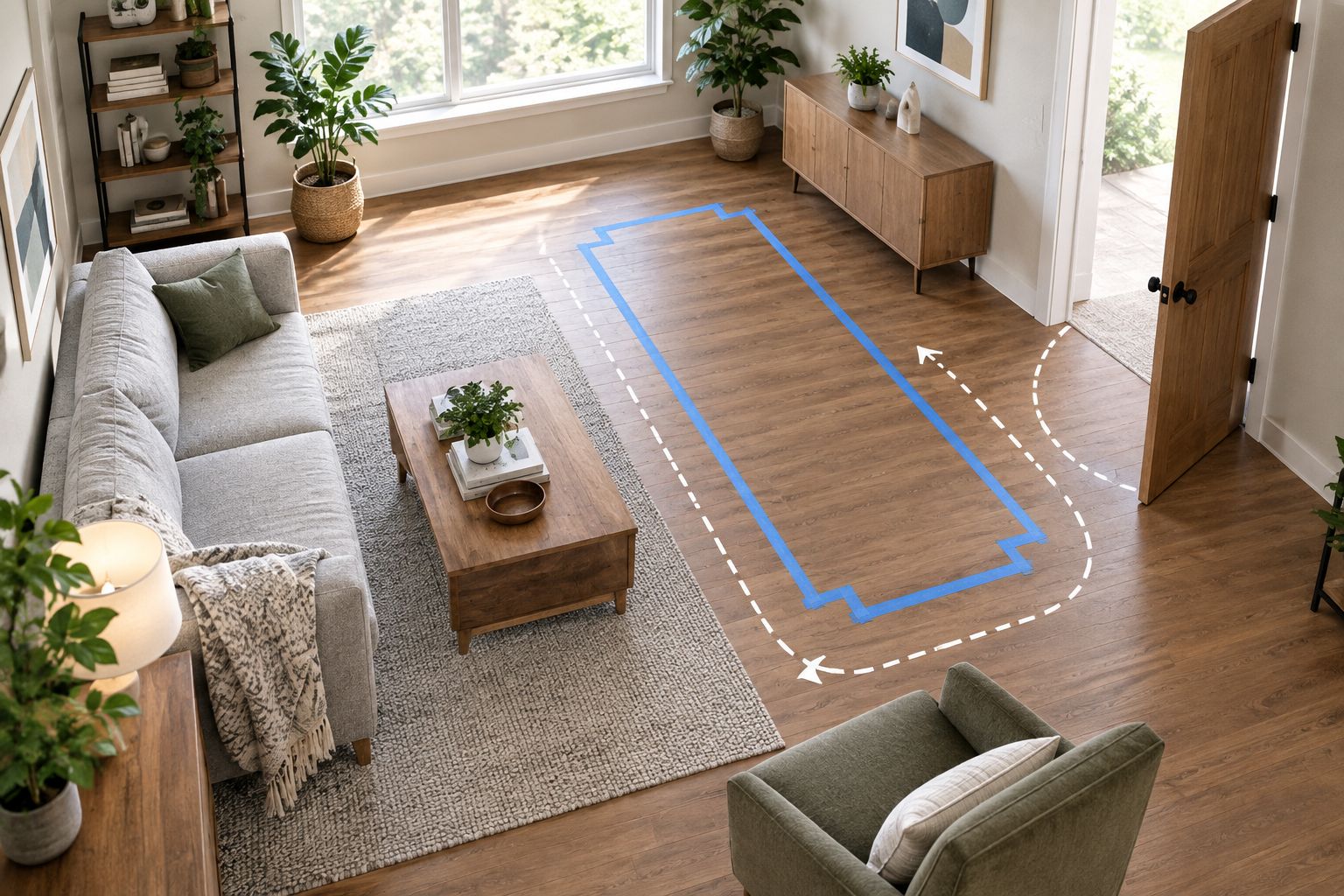 Check movement around the furniture, not just whether its footprint fits.
Resolve the unanswered questions
- Add Material check. Compare every material statement you intend to rely on with the current written specifications.
- Add Care check. Read the care instructions for the exact upholstery and finish. Do not apply a video's cleaning demonstration to a different material.
- Add Assembly check. Identify required tasks, tools, and assistance from the applicable instructions rather than assuming the filmed setup matches yours.
- Add Terms check. Read the applicable delivery, return, and warranty conditions before ordering. Save the wording relevant to your selection.
- Send precise questions about unresolved details. Ask for a written answer or an additional view showing the feature you need to inspect.
Expected result: Every purchase-critical question has a supported answer or remains explicitly unresolved.
For a Sohnne furniture purchase, use the current information applicable to the exact selection. A general statement about a furniture range does not settle the care requirements or assembly process for every item.
Set a decision status
Use 3 decision statuses: Ready, Clarify, and Reject. These are your working labels, not a score that predicts satisfaction.
- Ready: The intended version matches, the room and access checks pass, and purchase-critical questions have answers.
- Clarify: A necessary detail remains unresolved, such as usable seat depth or packaged dimensions.
- Reject: The furniture fails a requirement in your purchase brief, even if the video is appealing.
Approve evidence, not enthusiasm. In your 2026 decision note, write a short reason beside the status. “Ready because the footprint, route, configuration, and care requirements fit” is useful when you revisit the choice.
Recheck whenever the selection changes
The same workflow also works when you change fabric, size, finish, or layout after watching a review. Do not restart everything; reopen the checks affected by the change.
- Duplicate your evidence sheet and label it Selection change.
- Record the changed feature and the date.
- Keep observations that still apply, such as an unchanged overall shape.
- Recheck affected dimensions, materials, care instructions, assembly requirements, and applicable terms.
- Return the decision to Clarify until those checks are complete.
Expected result: You retain useful evidence without letting an earlier decision approve a different selection.
For example, changing the upholstery does not automatically invalidate a verified footprint. It does invalidate assumptions about surface texture and care. Changing a layout requires another footprint and access check, even when the individual sections look familiar.
Troubleshooting
The video and specifications disagree
Stop the affected check. Identify whether the review shows another size or configuration, then request clarification for your intended selection. Do not average conflicting dimensions or choose whichever measurement makes the furniture fit.
You cannot judge the upholstery color
Do not approve color from video alone. Lighting, camera processing, and your screen change its appearance. Request additional material information or a sample if offered, and assess it beside your existing finishes.
The reviewer calls the seat comfortable
Translate the opinion into observable questions. Look for sitting position, foot support, cushion compression, and standing movement. Compare written seat measurements with familiar furniture; keep personal comfort unresolved where remote evidence cannot settle it.
The review skips the feature you care about
Ask for that feature directly. Request a rear view, underside view, attachment detail, or demonstration of the moving part. Rewatching footage that never shows the relevant area will not answer the question.
The furniture fits, but access remains uncertain
Separate room fit from delivery fit. Recheck packaged dimensions and the complete route, including turns and building restrictions. Keep the decision at Clarify until you understand the access requirements.
Customize your workflow
Adapt the purchase brief to the room rather than expanding the checklist indiscriminately. A reading chair needs a seating and lighting relationship; a dining piece needs usable access around the table; a family sofa needs care requirements that suit actual household use.
For a shared purchase, give each person the same evidence sheet. Ask each buyer to identify unresolved requirements before discussing appearance. This keeps a strong aesthetic preference from silently becoming everyone's approval.
Save the final sheet alongside the written specifications and relevant answers. For a later 2026 comparison, reuse the field names but start a fresh record for each candidate. Carry over the method, not the verdict.
FAQ
What should I check in a furniture video review before buying?
Check the exact version, visible construction details, seating movement, dimensions, and unanswered questions. Confirm purchase-critical claims against current written specifications and your room measurements.
Can a video review tell me whether a sofa will be comfortable?
A video cannot establish your personal comfort. It can show cushion movement and the reviewer’s posture, which help you identify questions about seat depth, support, and fit.
Is an owner review better than a retailer demonstration?
An owner review is better for observing furniture in that owner’s daily setting; a retailer demonstration is useful for identifying visible features. Both need an exact item match, and neither replaces written specifications.
How do I know whether reviewed furniture will fit my room?
Use the written dimensions to mark the footprint on your floor and test movement around it. Check the delivery route separately using the applicable packaged dimensions.
Should I buy if the reviewer shows a different upholstery?
Do not use different upholstery as proof of your intended material’s texture or care needs. Keep only observations that apply to both selections and verify the changed material separately.
What should I ask Sohnne before ordering furniture online?
Ask Sohnne for any unresolved dimensions, material details, care instructions, assembly requirements, and applicable purchase terms for your exact selection. Make each question specific enough to receive a usable written answer.
How do I use an older review for a purchase in 2026?
Match the reviewed item to the current selection before relying on it. Reconfirm dimensions, configuration, materials, instructions, and applicable terms rather than assuming they remain unchanged.
One last thing
Watch the moment someone gets out of the seat, not only the moment they settle into it. Standing reveals a different relationship between seat depth, arm support, and body movement.
Save the least glamorous useful frame. A clear underside, attachment point, or side profile can answer a purchase question that an entire styled-room sequence leaves open. Your final decision should rest on those answers.
Related guides
- Choosing sofa depth for deep-seat comfort
- Selecting a sofa finish for a high-traffic household
- Arranging a modular sofa in an L-shaped room
Stay connected with us!
Keep in touch with what’s new and next. Subscribe for weekly insights, product launches, and community news!