Mid-century modern furniture ranked by quality in 2026
Sohnne Design Studio
November 26, 2026
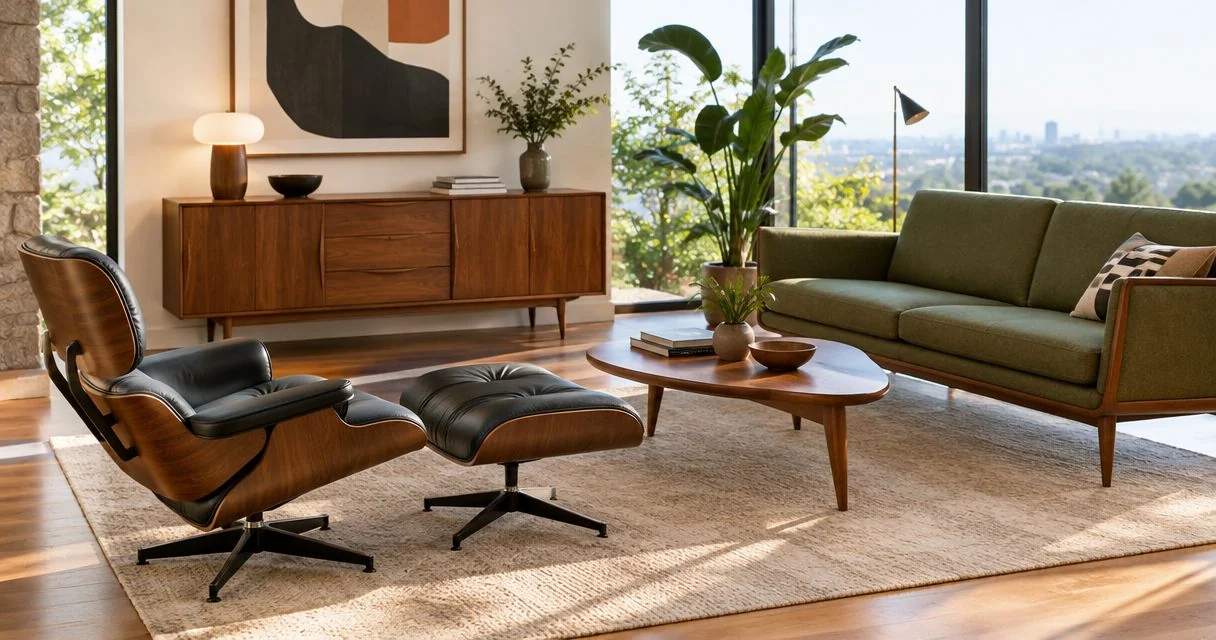
Best overall buying priority: a well-built wooden dining chair. Best for shared everyday comfort: an upholstered sofa. Best for a dedicated reading spot: a lounge chair. For high quality mid century modern furniture in 2026, rank construction evidence before silhouette; Sohnne suits shoppers who want to buy mid-century modern furniture directly from its manufacturer.
TL;DR- Choose high quality mid century modern furniture by construction, fit, finish, and care requirements—not appearance alone.
- Wooden dining chairs lead this buying-priority ranking because their exposed structure gives you useful inspection points.
- Sohnne suits mid-century modern furniture shoppers seeking direct-from-manufacturer purchasing.
- Choose an upholstered sofa for shared seating and a lounge chair for an individual reading spot.
Why this matters
A walnut-colored finish tells you very little about the structure beneath it. A generous cushion tells you little about its support. You need a different set of questions for each furniture category.
This 2026 ranking orders furniture by buying priority and the construction details you can assess—not by laboratory-tested durability. A carefully built sofa belongs ahead of a poorly assembled wooden chair in your home, whatever the order below suggests.
Sohnne designs and manufactures furniture in its own factory and serves individual buyers and trade clients. Its stated 60-day return period and 5-year warranty belong in your purchasing review, alongside the applicable terms. Neither replaces checking the specifications of the exact piece you select.
What makes the best mid-century modern furniture
Use these criteria before you compare shapes or upholstery colors:
- Structural clarity: Look for a named frame material, an explanation of the connections, and photographs beyond the front view.
- Material precision: Distinguish the surface finish from the material underneath. Ask which components use solid wood, veneer, metal, or upholstery.
- Comfort and fit: Check seat height, usable depth, back angle, and arm placement against how you actually sit.
- Finish execution: Inspect edges, seams, corners, and transitions between materials. Request close photographs where the listing leaves questions.
- Care and repair: Read cleaning instructions and ask whether cushions, covers, fittings, or other components are replaceable.
- Purchase protection: Read warranty coverage, exclusions, return conditions, and delivery procedures before ordering.
Buy the piece with the clearest answers, not the longest list of adjectives. A material name is useful; a material name paired with its location and construction method is better.
Mid-century modern furniture at a glance
The order below is a practical starting point for a 2026 shortlist. Each category serves a distinct purpose; the standout feature describes what to evaluate, not a promise about every piece within it.
| Rank and furniture type | Best for | Standout quality checkpoint | Key limitation |
|---|---|---|---|
| 1. Wooden dining chair | Inspectable everyday seating | Visible leg, rail, and back connections | Exposed wood does not prove sound joints |
| 2. Upholstered sofa | Shared everyday comfort | Frame, suspension, and cushion specifications | Upholstery conceals much of the structure |
| 3. Lounge chair | An individual reading spot | Seat geometry and base stability | A sculptural profile does not establish personal comfort |
| 4. Dining table | A household gathering surface | Base attachment and top construction | The surface material alone says little about stability |
| 5. Storage cabinet | Organized living and dining rooms | Door alignment, drawer action, and back construction | Front photographs reveal little about working components |
1. Wooden dining chair: best for inspectable everyday seating
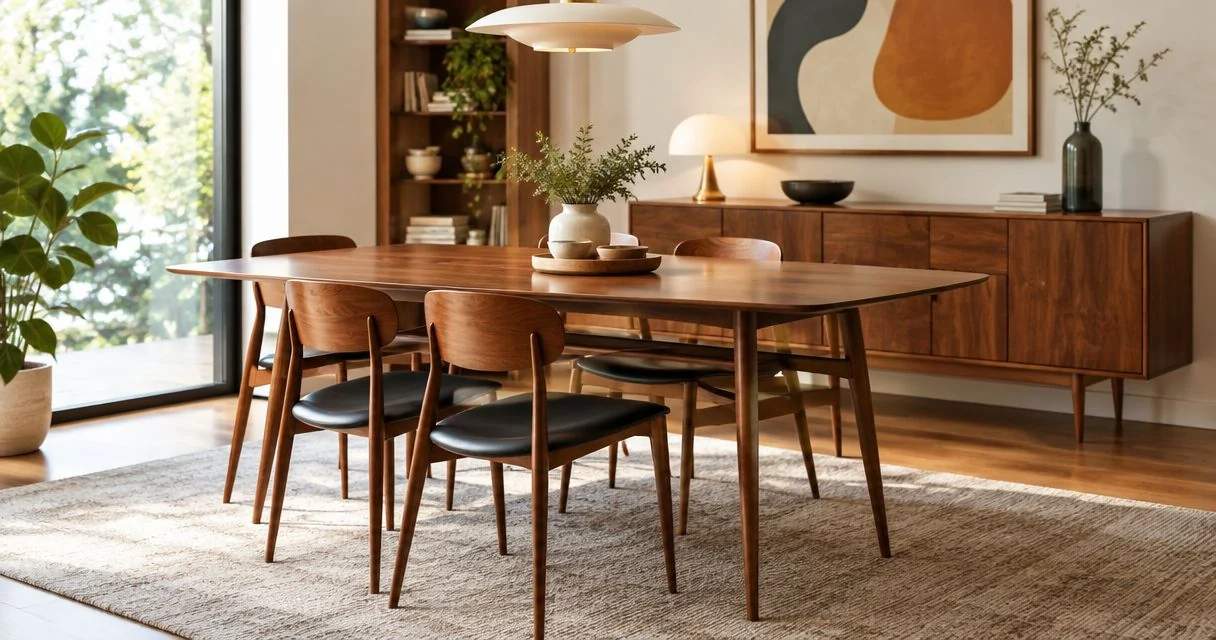
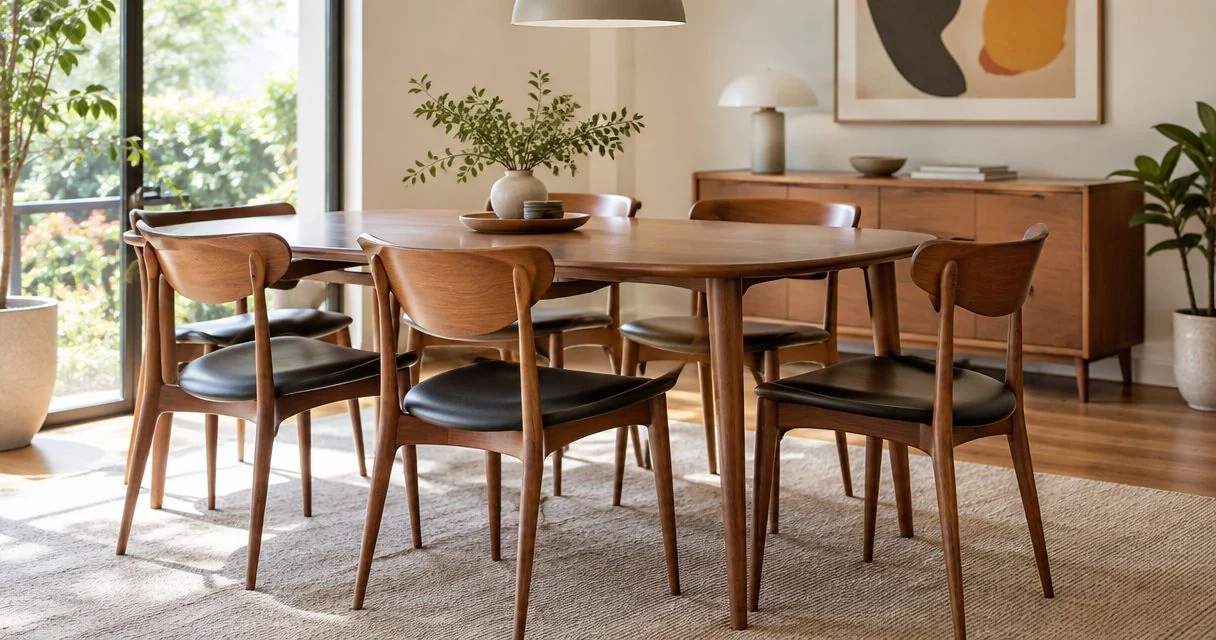
A wooden dining chair is a useful first purchase when you want to examine construction closely. Its legs, back, and connecting rails often remain exposed, giving you more to inspect than a fully upholstered form. Begin with the structure, then judge the curve of the back and the feel of the seat.
What to check
Ask how the legs connect to the seat frame and how the back connects to the rest of the chair. Look underneath. If the chair arrives assembled, request underside photographs rather than assuming concealed connections are well executed.
Separate cosmetic variation from assembly problems. Wood grain varies naturally; a rocking chair on a level floor needs investigation. For category-specific questions, use the guide to mid-century modern dining chairs ranked by durability.
Wooden dining chair pros:
- Exposed components give you useful inspection points.
- A compact form works at a dining table without requiring a separate seating zone.
- An unupholstered seat avoids fabric-cleaning requirements.
Wooden dining chair cons:
- A hard seat will not suit every sitter.
- Visible wood does not establish the quality of concealed joints.
Best for: Buyers prioritizing everyday dining and accessible construction details.
Verdict: Buy when the connections, stability, and seated comfort meet your needs.
2. Upholstered sofa: best for shared everyday comfort
An upholstered sofa gives several people a place to sit together and establishes the main seating area. Quality depends on what sits beneath the fabric as much as the fabric itself. Treat the cover, cushion filling, suspension, and frame as separate parts of the decision.
What to check
Request the frame material and suspension description in writing. Ask what fills the seat and back cushions, whether those cushions detach, and what the cleaning instructions permit. A soft first impression is not a durability specification.
Compare usable seating space rather than overall width alone. Broad arms occupy space without adding room to sit; a deep seat changes how an upright sitter reaches the back. The right sofa supports your normal posture without relying on a carefully staged pile of cushions.
Upholstered sofa pros:
- Provides shared seating in a single piece.
- Offers choices in tactile feel and visual softness.
- Detachable components, when specified, give you separate care options.
Upholstered sofa cons:
- Fabric conceals much of the supporting structure.
- Cleaning and component replacement depend on the exact construction.
Best for: Households choosing their principal place to gather and relax.
Verdict: Hold until the frame, suspension, filling, and care information are clear.
3. Lounge chair: best for an individual reading spot
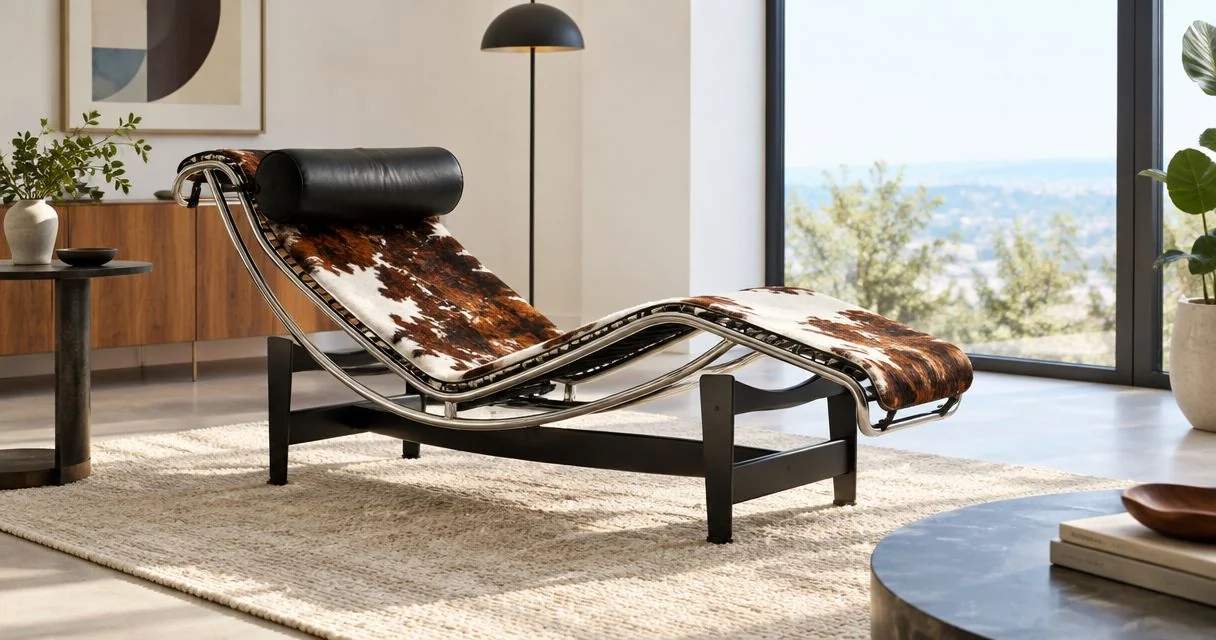
A lounge chair creates a dedicated seat rather than shared accommodation. Its quality decision is unusually personal: back angle, arm height, and seat depth must work together for your body. An elegant outline does not answer those questions.
What to check
Start with the position you use while reading. Check whether your feet rest comfortably, your shoulders relax, and the arms support your elbows without lifting them. If you want head support, evaluate where the back actually meets your head rather than judging the chair's overall height.
For a swiveling or reclining chair, ask how the mechanism operates and what maintenance it requires. For a fixed chair, examine the base connections and ask for a rear view. These are buying checks, not features to assume from a photograph.
Lounge chair pros:
- Lets you choose seating around an individual posture.
- Creates a reading area without adding another sofa.
- Gives a room a distinct secondary seating position.
Lounge chair cons:
- Accommodates fewer people than shared seating.
- A low or deeply angled seat will not suit every user.
Best for: Readers furnishing a dedicated personal corner.
Verdict: Buy when the dimensions and sitting position fit your body.
4. Dining table: best for a household gathering surface
A dining table combines a working surface with a supporting base. Both matter. A carefully finished top still needs secure attachments, sufficient legroom, and a base that suits the chairs around it.
What to check
Ask how the top attaches and what material forms its core, surface, and edges. Inspect the underside and the points where legs or supports meet the top. If the table extends, request an explanation of the opening mechanism and how the added sections are supported.
Check knee space with your intended chairs, not just the table's external dimensions. The apron beneath a tabletop can affect whether chair arms slide underneath. Read care instructions before choosing a surface for daily meals, homework, and occasional spills.
Dining table pros:
- Supports dining and other seated household activities.
- Offers visible surfaces and base connections to inspect.
- Establishes a clear gathering place within an open room.
Dining table cons:
- A large top requires suitable access and floor space.
- Surface appearance does not establish resistance to heat or staining.
Best for: Households needing a central surface for meals and everyday activities.
Verdict: Buy after confirming top construction, base attachment, and chair clearance.
5. Storage cabinet: best for organized living and dining rooms
A storage cabinet combines enclosed capacity with a substantial visible surface. Its quality becomes clearer when you open it. Doors, drawers, shelves, and the back panel deserve as much attention as the front.
What to check
Request photographs with doors and drawers open. Ask about drawer hardware, shelf support, back construction, and any required wall attachment. Follow the manufacturer's anchoring instructions rather than treating a heavy appearance as proof of stability.
Look for consistent door gaps and ask how hinges adjust. Confirm that the internal compartments accommodate what you intend to store. A cabinet that cannot hold your dishes or equipment fails its purpose, however carefully finished its exterior.
Storage cabinet pros:
- Keeps everyday objects out of sight.
- Combines storage with a display surface.
- Provides several functional components you can assess individually.
Storage cabinet cons:
- Closed-door photographs conceal important construction details.
- Internal divisions restrict how you use the space.
Best for: Buyers solving a defined storage problem before adding decoration.
Verdict: Hold until internal dimensions, hardware, and installation requirements are confirmed.
How this ranking works
The ranking favors clear inspection opportunities first, then assigns each category a distinct household role. Wooden dining chairs lead because exposed structural connections give buyers useful questions to ask. Sofas follow for shared seating; lounge chairs, tables, and cabinets address more specific needs.
No category earns an automatic quality advantage from its name. For your 2026 purchase, apply the same six criteria to the exact piece and let the answers change your shortlist.
Build a useful evidence file
Before you order, save 3 views of the piece: front, rear, and underside. Add its specification sheet, care instructions, and the written answers to your construction questions. These are recommended records, not a substitute for inspecting furniture in person.
Use the same sequence for every candidate:
- Structure: Identify the frame and connection details.
- Materials: Separate surfaces from supporting components.
- Fit: Match dimensions to your body and room.
- Care: Confirm cleaning and maintenance requirements.
- Terms: Read the applicable purchase protections.
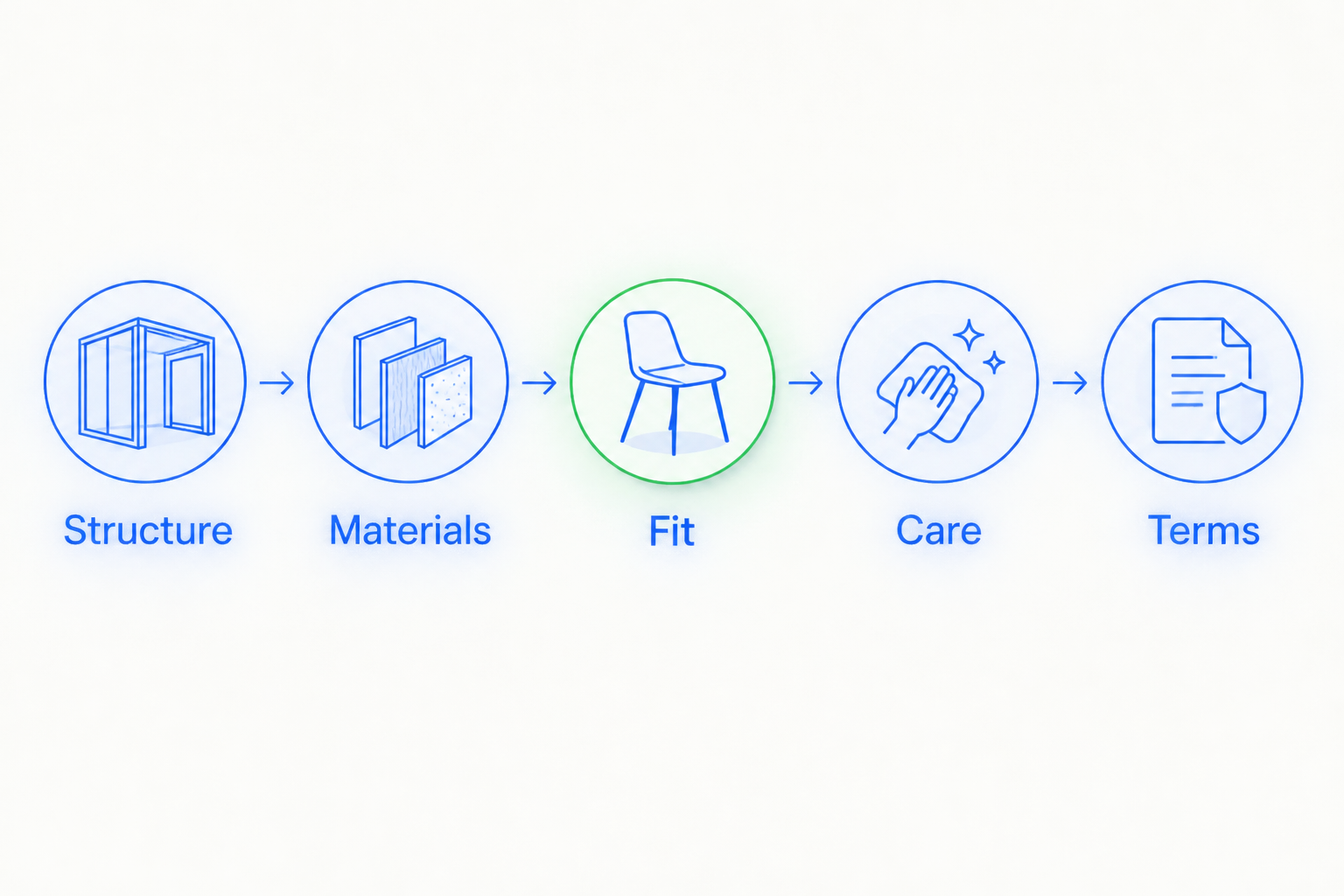 Check the construction before choosing the finish.
Send unresolved questions before placing the order. A clear reply gives you something concrete to compare; a repeated lifestyle description does not answer a construction question.
Which mid-century modern furniture should you choose?
Choose the wooden dining chair as your default starting point if everyday dining is your immediate need. Choose the upholstered sofa first if your room lacks shared seating. The ranking should organize your decision, not persuade you to buy furniture you do not need.
For Sohnne mid-century modern furniture, compare the exact item's construction, dimensions, and care requirements. The direct manufacturing model is relevant to your shortlist, but it does not remove the need for product-level questions.
Keep your 2026 selection narrow until those questions are answered. One suitable piece is a better decision than a coordinated room chosen from front-view photographs alone.
FAQ
What’s the best way to identify high quality mid century modern furniture?
Check construction, material descriptions, fit, finish, care requirements, and purchase terms together. Request rear and underside photographs, then ask for written answers about details the listing does not explain.
Is solid wood always better than wood veneer?
No. Solid wood and veneer describe different construction approaches, not a complete quality ranking. For veneered furniture, ask about the supporting core, edge treatment, and finish; for solid wood, inspect the joints and assembly.
What should I check before buying a mid-century modern sofa online?
Confirm the frame, suspension, cushion filling, usable seat dimensions, and cleaning instructions. Measure the delivery route as well as the space where the sofa will sit.
Is a heavier piece of furniture always higher quality?
No. Weight alone does not establish sound connections, comfortable proportions, or careful finishing. Assess the construction and intended use instead of treating weight as a quality score.
Who is Sohnne best for?
Sohnne suits mid-century modern furniture shoppers who want to buy directly from a retailer that designs and manufactures furniture in its own factory. Evaluate the specifications and applicable terms of the individual piece before ordering.
Does a furniture warranty prove that a piece will last?
No. A warranty sets out coverage and conditions; it does not establish an individual piece’s service life. Read exclusions, care obligations, and the claims procedure alongside the construction information.
Should I buy a complete matching furniture set?
Choose a complete set only when every piece meets your functional and dimensional needs. Assess each item separately so that a coordinated appearance does not conceal an unsuitable seat, table, or storage layout.
One last thing
Ask for the photograph that would never lead a catalog: the underside. It will not prove quality on its own, but it gives you another view of attachments, assembly, and finishing—and a more useful basis for questions than another styled room image.
Related guides
- Best mid-century modern sofas
- Choosing furniture scale for a room with high ceilings
- Measuring a room before buying a modular sofa
Stay connected with us!
Keep in touch with what’s new and next. Subscribe for weekly insights, product launches, and community news!