Sofa Color for Dark Walls: 2026 Buying Guide

Sohnne Design Studio
July 28, 2026
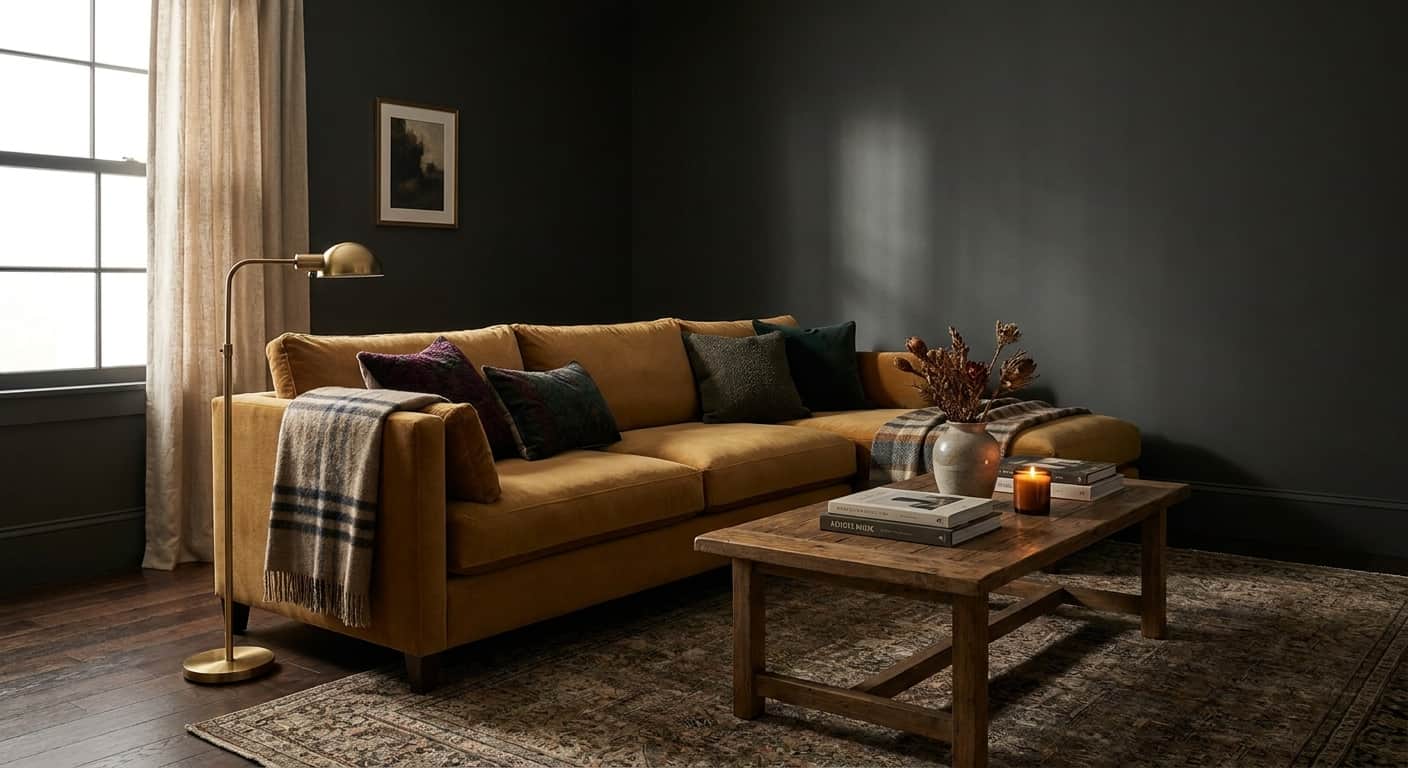
Dark walls change every color decision that follows, and picking a sofa color for dark walls without a plan usually ends one of two ways: an invisible sofa that vanishes into the paint, or a fabric that fights the wall for attention. The fix is a short, repeatable process — not a Pinterest board.
TL;DR- For a sofa color for dark walls, warm neutrals like oatmeal or sand beat stark white in most 2026 living rooms.
- High-contrast picks — rust, terracotta, deep olive — read as intentional against charcoal or navy walls. Buy with confidence.
- Skip cool grey sofas on dark walls; they flatten the room and disappear once evening light drops.
- Test any swatch under your actual bulbs first — showroom lighting misreads undertone by 2 to 3 shades.
Why this matters
Dark paint absorbs light instead of bouncing it, which means every other object in the room reads darker than it does against white walls. A sofa color for dark walls has to do more work than a sofa on a beige backdrop — it either grounds the room or gets swallowed by it. Get the undertone wrong and a $2,000 sofa looks like an afterthought. Get it right and the same room photographs like a design studio shot, which is exactly why this decision deserves 20 minutes of testing before you buy in 2026, not a guess.
What you'll need
- Fabric swatches or sample squares (order at least 3-4 finalists)
- A tape measure and photos of the wall in daylight and lamp light
- Your wall paint's exact name and undertone (warm black, cool navy, deep green, etc.)
- A sense of whether you're buying leather or fabric — the two hold color differently, and it's worth reading how to choose between leather and fabric replica sofas before you shortlist colors
- A rough budget range, since fabric grade affects how a color actually renders
- 48 hours of patience — never decide under one light source
The steps
1. Name your wall's actual undertone
"Dark" is not a color, and treating it like one is the most common mistake in this whole process. Charcoal can lean blue, green, or brown depending on the pigment mix, and that undertone decides which sofa colors clash. Hold your paint chip against a white sheet of paper in daylight — if it pulls blue-grey, you're working with a cool dark; if it pulls warm brown-black, you have more flexibility with rust and camel tones. Skipping this step is why so many sofa purchases get returned within 60 days.
2. Decide the contrast level before you shop colors
There are three strategies, not one: blend (sofa close in value to the wall, room feels cocoon-like), anchor (sofa in a warm neutral a few shades lighter, room feels grounded), or pop (sofa in a saturated color that becomes the focal point). Pick one on purpose. A sofa color for dark walls chosen without deciding this first usually lands in an accidental blend that reads muddy instead of intentional.
3. Default to warm neutrals if you're unsure
Oatmeal, sand, ivory boucle, and warm greige are the safest calls against charcoal, black, or deep navy walls in 2026 — they lift the room without competing with it. These tones also age better than trend colors, which matters if you're keeping the sofa 5+ years under a warranty period. Verdict: buy warm neutral if this is your only sofa purchase this decade.
4. Go bold if the room already has restraint elsewhere
If your walls are dark but the rest of the room is quiet — plain floors, minimal art, simple lighting — a saturated sofa color earns its place. Rust, olive, and burnt orange read as confident against black or deep green walls rather than chaotic, especially in a single statement piece rather than a full sectional. Verdict: buy bold only if you can commit to one loud element per room.
5. Test the swatch under three light sources, not one
This is the step everyone skips and regrets. Photograph the fabric swatch against your wall in morning daylight, midday light, and lamp light after dark — the same fabric can shift from warm sand to dull grey depending on the bulb's Kelvin rating. A swatch that looks perfect at noon can go flat and cold by 8pm under a 2700K bulb.
6. Match the fabric texture to the color's job
A flat color reads differently depending on weave. Boucle and nubby weaves scatter light and soften saturated colors, which is useful if you're going bold and want the effect to feel textured rather than glossy — see how to care for boucle fabric furniture if that's the direction you're leaning. Smooth velvets and leathers intensify color and contrast harder against dark paint, which suits the anchor or pop strategy better than the blend strategy.
7. Balance the pairing with one warm accessory
Once the sofa color is set, add one warm textural element — a rug, a wood coffee table, or a brass lamp — to keep a dark-walled room from feeling like a single flat block of color. This is the detail that separates a room that photographs well from one that just looks matched.
Compare fabric options before you commit
Browse Sohnne sofa fabrics and finishes designed for bold or neutral rooms.
Browse sofasTroubleshooting
- The sofa disappears into the wall. You picked a value too close to the wall's darkness. Move two shades lighter or add a contrasting throw immediately rather than repainting.
- The room feels heavier than expected. A saturated sofa on dark walls without enough natural light reads as cave-like. Add a mirror or a pale rug to bounce light back before assuming the color choice was wrong.
- The fabric looked warm in the sample, cold once delivered. Sample chips are often cut from a different dye lot than a full production run. Order a second, larger swatch if the color is a final-decision purchase rather than trusting a 2-inch square.
- Photos of the room look duller than real life. Camera white balance shifts undertone more than people expect — judge the color in person under your actual bulbs, not through a phone screen.
- You want a colorful sofa but the wall reads too busy already. Check a color-forward option like the Togo sofa's color and fabric range for a sense of how saturated tones actually perform against dark backdrops before ruling bold out entirely.
- Budget swatches don't match the final delivered batch. This is normal with natural fiber dyes; ask about dye-lot variance before ordering if color accuracy is non-negotiable for your space.
Tools and resources
- Paint undertone testing (paper + daylight, no apps needed)
- 3-4 fabric swatches, tested under three light sources
- A reference guide on leather versus fabric behavior against dark paint
- A finished-room example, like a Togo-style sofa in a saturated tone, to calibrate expectations before ordering
What to do next
Once the color is locked, the next decision is how the sofa anchors the rest of the room — placement, rug layering, and whether it should be the loudest object in the space or the second. That's covered step by step in how to decorate a living room with a statement sofa, which picks up exactly where this guide leaves off.
FAQ
What is the best sofa color for dark walls in 2026?
Warm neutrals like oatmeal, sand, and warm greige are the safest sofa color for dark walls in 2026 because they lift the room without competing with the paint. Bold tones like rust or olive work only when the rest of the room stays simple.
Should a sofa be lighter or darker than dark walls?
Lighter, in most cases. A sofa a few shades lighter than the wall creates contrast and keeps the room from reading as one flat block of color. Matching the wall’s darkness too closely makes the sofa disappear.
Is a grey sofa a bad choice for dark walls?
Cool grey often flattens a dark-walled room and can look washed out once evening lamp light replaces daylight. Warm neutrals or a saturated accent color generally photograph and live better against charcoal, black, or navy paint.
Does fabric texture change how a sofa color looks against dark walls?
Yes. Boucle and nubby weaves scatter light and soften bold colors, while smooth velvet or leather intensifies color and sharpens contrast. Pick texture based on whether you want the sofa to blend or pop.
How do I test a sofa fabric swatch against dark walls before buying?
Photograph the swatch against your wall in morning daylight, midday light, and lamp light after dark, since the same fabric can shift tone significantly under different bulbs. Never decide on a swatch under one light source alone.
Can a bold-colored sofa work with dark walls?
Yes, if the rest of the room stays restrained — plain floors, minimal art, simple lighting. Rust, terracotta, and olive sofas read as intentional against black or deep green walls when they’re the only loud element in the space.
What sofa colors should I avoid with black walls?
Avoid mid-tone cool greys and muddy browns close in value to the wall itself, since both tend to disappear or read as an afterthought. Either go noticeably lighter with a warm neutral or noticeably bolder with a saturated color.
One last thing
The undertone test with paper and daylight catches more color mistakes than any swatch app, because screens and camera sensors correct for warmth automatically and hide exactly the shift you're trying to see. Do that test before anything else in 2026, and half the guesswork in picking a sofa color for dark walls disappears before you spend a dollar.
Related guides
- Layer rugs and replica furniture for a warm living room
- Decorate a living room with a statement sofa
Stay connected with us!
Keep in touch with what’s new and next. Subscribe for weekly insights, product launches, and community news!