How to Move a Modular Sofa Replica Without Damage 2026

Sohnne Design Studio
August 28, 2026
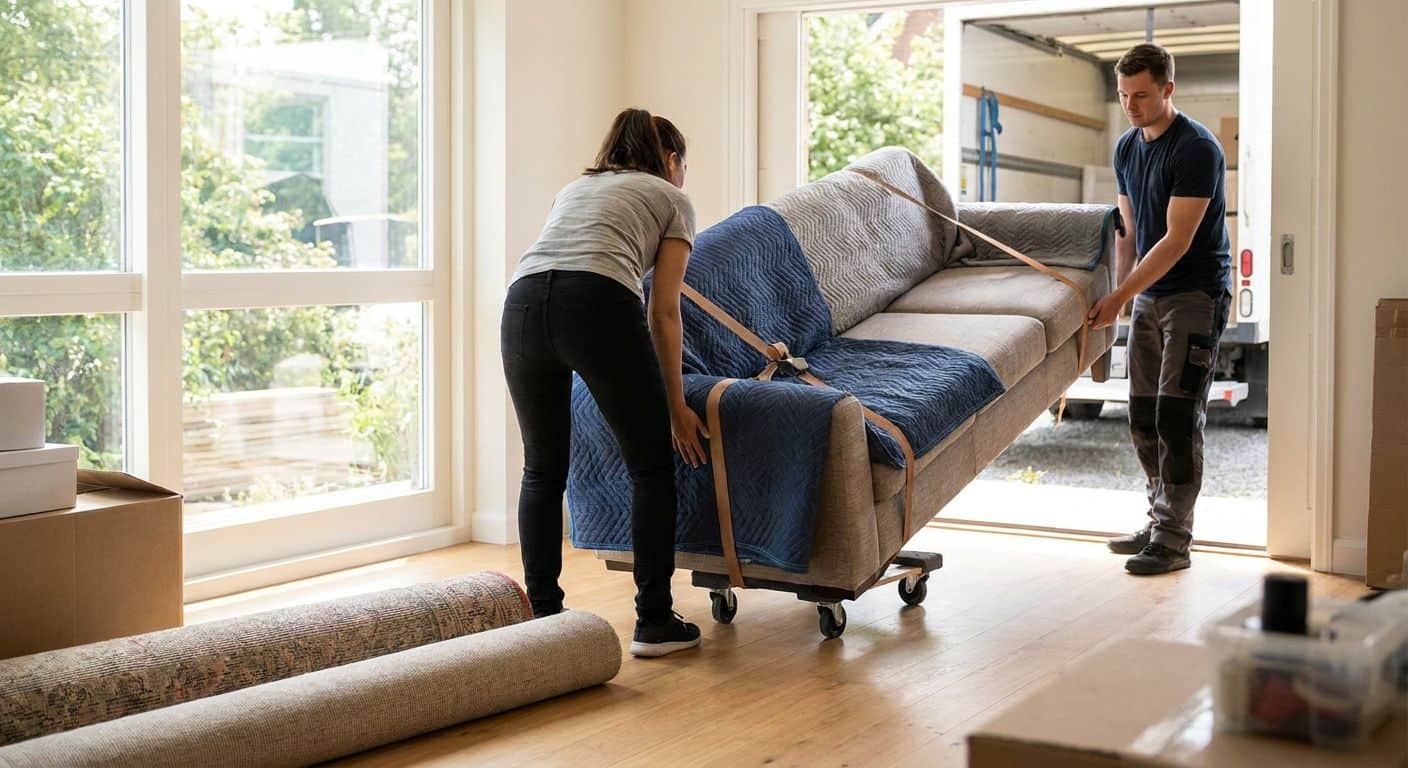
Moving a modular sofa replica without cracking a frame joint or shredding upholstery comes down to one habit: separate before you lift. Modular pieces like the Camaleonda sofa replica or the DS-600 modular sofa replica are built to break apart into single modules — treat them that way and the move is routine.
TL;DR- The safest way to move a modular sofa replica is to detach every connector first — Camaleonda and DS-600 configurations separate into single-person modules once disconnected.
- Wrap boucle and leather modules separately; shared plastic wrap traps moisture against the fabric.
- A standard 32-inch doorway clears most single modules — measure diagonal chaise pieces before moving day.
- Sohnne’s 5-year warranty covers frame defects, not transit damage — moving blankets on corners are non-negotiable.
Why this matters
A connected modular sectional is deceptively heavy and awkward — four attached modules can weigh as much as a loveseat and a dining table combined, and dragging that mass across a floor stresses the cam locks or dowel joints holding modules together. Damage from a move isn't covered the same way a manufacturing defect is: Sohnne's 5-year warranty protects against frame and structural failure from normal use, not from a module dropped on a stairwell in 2026. The fix costs nothing but planning — disassemble, wrap, carry, reassemble, in that order.
What you'll need
- A Phillips or Allen key set (most modular connectors use hex bolts or cam locks)
- 4-6 moving blankets, one per module minimum
- Stretch wrap for fabric protection (not for leather — see troubleshooting)
- A furniture dolly for anything wider than 30 inches
- Painter's tape and a marker for labeling connector points
- A second person, minimum — three for anything with a chaise module
- A tape measure — check how to measure your room before buying a modular sofa if you skipped this step at purchase, because doorway and hallway clearance matters just as much on the way out as it did on the way in
The steps
1. Photograph the assembled configuration
Before anything moves, take wide shots of the full modular sofa replica from three angles. This is your reassembly map. Modular systems like the Alterra or Song Range configurations have multiple valid layouts, and you want the exact one you had, not a guess. Skipping this step is the single most common reason a modular sofa replica gets reassembled backward.
2. Locate and label every connector
Most Sohnne modular sofa replicas join modules with hidden cam locks or bracket bolts along the base or backrest. Run your hand along the seams to find them — they're usually under a fabric flap or zipper. Label each connection point with painter's tape (A-to-B, B-to-C) before you touch a wrench. Skipping the labeling step is what turns a 20-minute reassembly into a two-hour puzzle.
3. Detach modules one at a time
Unbolt or unlock one connection, set the freed module flat, and repeat. Never unbolt two connectors simultaneously on a multi-module run — an unsupported middle section can tip. For configurations like the camaleonda sofa replica modular configurations, each module is designed to stand independently once separated, which is exactly why the disassembly order matters more than the reassembly order.
4. Remove and bag loose cushions and legs
Cushions absorb humidity and dust in transit if left loose. Bag each cushion set separately by module so nothing gets mismatched. Unscrew any detachable legs and tape them, screws included, to the underside of their matching module.
5. Wrap each module in a moving blanket, not plastic
Wrap fabric and boucle modules in moving blankets secured with tape, not stretch wrap directly on the upholstery — trapped moisture under plastic causes mildew spotting within days in humid climates. Leather modules can take a light plastic layer over a blanket, but never plastic against bare leather for more than a few hours. Corners get double-wrapped; that's where frame joints crack on a bad angle through a doorway.
6. Move modules through the narrowest point first
Measure your tightest doorway or stairwell turn before lift day — a standard interior doorway clears 32 inches, but stair landings and 90-degree turns often don't. Carry each module upright when possible; laying a module on its back for an extended carry stresses the frame in a direction it wasn't built for. If a module won't clear a doorway upright, tilt it diagonally rather than forcing it flat.
7. Reassemble against your reference photos
Set modules in place using your step-1 photos as the layout guide, then re-bolt connectors in reverse of how you removed them — last off, first on. Snug every bolt by hand before using a tool; forcing a misaligned cam lock strips the fitting. Once assembled, sit on each seam and rock gently — a properly reconnected modular sofa replica shouldn't shift or gap at the joints.
Building or expanding your configuration?
Browse modular sofa replicas designed to separate cleanly for moving day.
Shop modular sofasTroubleshooting
A connector bolt won't budge. Don't force it with a larger tool — apply a drop of household oil, wait five minutes, then try again. Stripped hex heads usually mean the wrong bit size was used first.
A module won't fit through a doorway. Try a diagonal tilt before you try removing a door from its hinges. Chaise modules and corner pieces are the widest parts of any modular sofa replica and often need to go through at a 30-45 degree angle.
Fabric smells musty after the move. That's trapped moisture from plastic wrap left on too long. Unwrap immediately, air the module in a dry room for 24 hours, and avoid plastic wrap directly against fabric next time.
Leather feels stiff or shows white marks after transit. Cold-weather moves can stiffen leather temporarily. Let it acclimate to room temperature for a few hours before judging any damage, then check how to clean and maintain replica leather furniture for conditioning steps.
Cushions look mismatched after reassembly. This is the labeling step catching up with you. Match cushion tags to the module tags you wrote on masking tape in step 2 — if you skipped that step, match by seam wear pattern instead.
A seam gaps between two modules after reconnecting. The cam lock isn't fully seated. Loosen it, push the modules flush by hand, then re-tighten — never tighten a gapped connector expecting it to pull the modules together.
Tools and resources
Beyond the wrench and moving blankets, a few reference points make the job faster. The guide on how to verify quality before buying replica furniture explains what a properly built connector should feel like, which helps you spot a loose or worn fitting before it fails mid-move. If your sofa is leather, the piece on how to care for a Camaleonda leather sofa replica covers conditioning after a cold-weather relocation. And if you're not just moving but reconfiguring the layout entirely, treat that as a separate project from the move itself — get the modules settled first, style second.
What to do next
Once the modular sofa replica is back together, give it 48 hours before rearranging cushions or adding throws — connectors can settle slightly under weight in the first day or two, and you want to catch any gap before you finalize the layout. If the move revealed that your current configuration doesn't fit the new room, that's a layout problem, not a moving problem, and it's worth solving separately.
FAQ
How do you move a modular sofa replica without damaging it?
Detach every module at its connector points before lifting, wrap each module separately in a moving blanket, and carry modules upright through the narrowest doorways first. Never drag a connected multi-module sectional across a floor.
Do modular sofa replicas come apart easily?
Yes, most Sohnne modular sofa replicas use cam locks or bolted brackets under a fabric flap or zipper, designed to separate without tools beyond a hex key. Configurations like the Camaleonda and DS-600 are built around this modularity.
Can two people move a modular sofa module alone?
Two people can usually move a single standard module, but corner and chaise pieces are wider and heavier and often need a third person or a dolly. If two people strain to lift it, call for a third.
Is it safe to move a leather modular sofa replica in winter?
Yes, but let the leather acclimate to room temperature for a few hours after the move before judging its feel — cold leather stiffens temporarily and can show false signs of damage.
Should you wrap sofa modules in plastic for a move?
Wrap fabric and boucle modules in moving blankets instead of plastic, since trapped moisture under plastic can cause mildew spotting within days. Light plastic over a blanket is acceptable for leather modules only.
Does moving damage void a sofa’s warranty?
Structural warranties, including Sohnne’s 5-year coverage, typically apply to manufacturing defects and normal use, not damage from a move. Protect corners and joints during transit since that damage usually isn’t covered.
What doorway width do you need to move a sofa module?
A standard interior doorway clears about 32 inches, which fits most single modules carried upright. Wider chaise or corner pieces may need a diagonal tilt to clear the same opening.
How long does it take to move a modular sofa replica?
A four-module sectional typically takes longer to disassemble and label than to physically carry, since matching connectors correctly is what prevents reassembly problems. Budget more time for labeling than for lifting.
One last thing
The reassembly step people rush is the one that matters most: re-bolting connectors in reverse order of removal. Do it out of sequence and you can force two modules together that were never meant to sit side by side in your original layout, which strains the frame at a joint that wasn't built to carry that angle. Take the extra ten minutes with your step-1 photos before you pick up a wrench.
Related guides
- How to arrange a modular sofa in an L-shaped room
- How to clean and maintain replica leather furniture
- How to choose a replica sofa that lasts
Stay connected with us!
Keep in touch with what’s new and next. Subscribe for weekly insights, product launches, and community news!