Layering Replica Furniture in a Multigenerational Home 2026

Sohnne Design Studio
September 3, 2026
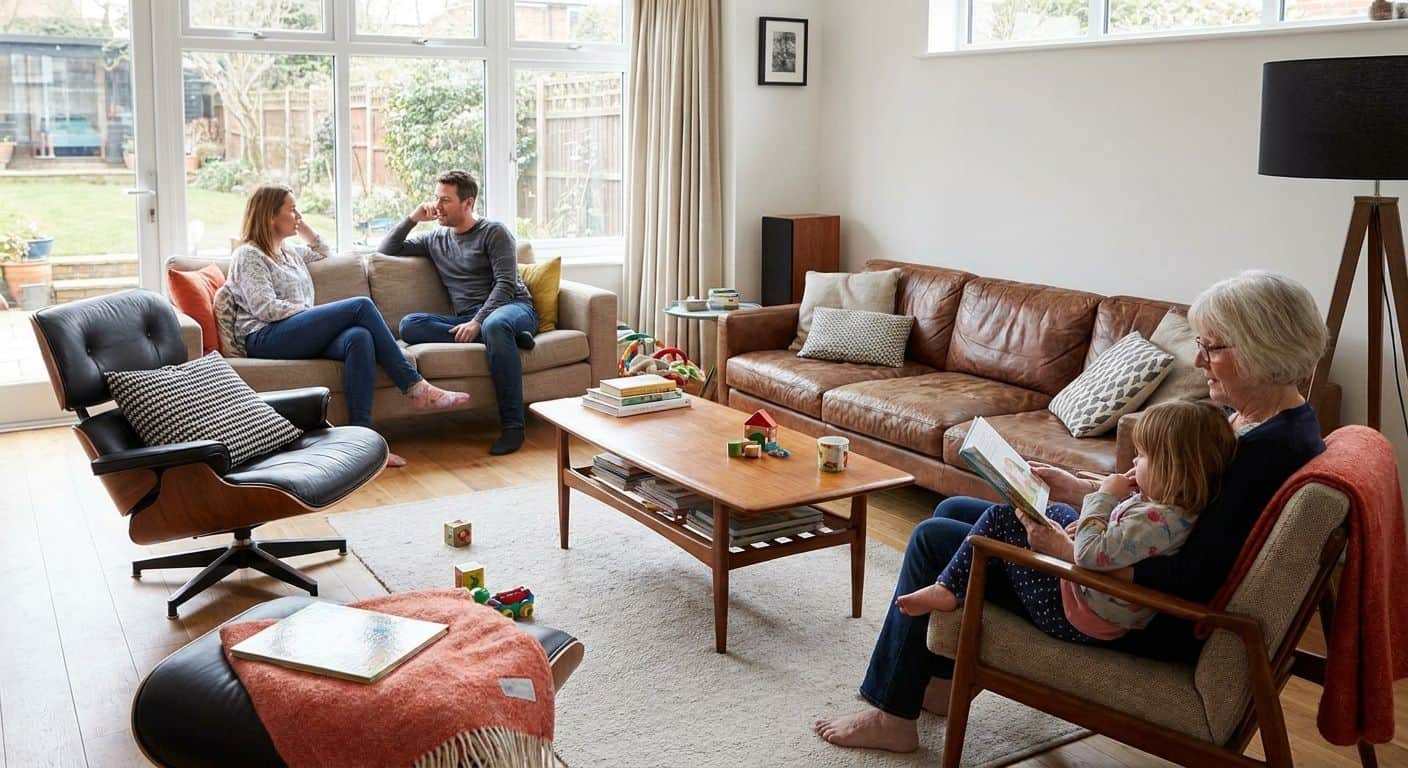
Layering replica furniture in a multigenerational family room means zoning seating by body and behavior, not by era or style. Give grandparents higher seats with firm cushions and real armrests, give parents durable modular pieces that survive daily traffic, and give kids low, resilient furniture that shrugs off spills — then tie the room together with consistent wood tones and one or two repeated silhouettes.
TL;DR- Zone seating by generation: higher seat height and firm cushions for grandparents, modular durability for parents, low resilient pieces for kids.
- Replica furniture multigenerational family room layouts work best when scale and wood tone repeat across zones instead of matching every piece.
- A 5-year warranty and 60-day return window matter more in shared rooms because pieces get tested by three age groups at once.
- Mix in one or two vintage or heirloom pieces per zone to keep the room from feeling like a single furniture catalog.
- Fabric choice, not frame style, is usually the first thing that fails in a high-traffic multigenerational room.
Why this matters
A family room shared by grandparents, parents, and kids gets used differently by each group, all day, every day in 2026. A lounge chair that photographs beautifully but sits 14 inches off the ground is a hazard for a 70-year-old with knee stiffness. A boucle sofa that looks perfect in a design magazine is a liability with a toddler and a snack plate nearby.
Most furniture guides assume one buyer with one set of needs. A multigenerational room has three sets running at once, and the furniture has to hold up to all of them without looking like a compromise. That is the actual design problem, and it is solvable with layering, not with buying three separate rooms' worth of furniture.
How to layer replica furniture in a multigenerational family room
Start with the seating that gets used most — the primary sofa or sectional — and treat it as the shared spine of the room. Everything else gets layered around it by function, not by matching it stylistically.
| Generation | Seating priority | What to look for | Watch-outs |
|---|---|---|---|
| Grandparents | Getting up without strain | Firmer cushions, real armrests, seat height around 18-19 inches | Deep, low lounge chairs and backless benches |
| Parents | Daily durability | Modular pieces, wipeable or performance fabric, tight cushion construction | Loose covers with no structure underneath heavy use |
| Kids | Impact resistance | Low profile seating, washable fabric, rounded edges | Glass tabletops and sharp brass legs at knee height |
A family with young children benefits from modular sofas for families with young children because sections can be pulled apart, cleaned, or rearranged without replacing the whole piece. That same modularity helps a multigenerational room because you can reconfigure the layout as needs change — say, when a parent recovers from surgery and needs a firmer seat closer to the room's entry.
Zone 1: The grandparents' corner
This is not the room's design centerpiece — it is the room's most functional seat. A chair with a seat height in the high teens and a firm cushion supports someone getting up without pushing off the armrests awkwardly. Rounded, wood-framed lounge chairs typically outperform low-slung modern silhouettes here.
A sofa built specifically with mobility needs in mind solves this without turning the corner into a hospital waiting room. Buy a firmer-cushion piece for this zone; skip anything advertised primarily for its low, sculptural profile.
Zone 2: The parents' everyday seating
This is the piece that absorbs the most hours of use — laptop work, evening television, weekend guests. Fabric durability matters more here than anywhere else in the room.
A sofa finish suited to a high-traffic household holds up to years of daily contact without pilling or sagging. Buy performance fabric or full-grain leather for this zone; hold on velvet or boucle unless the household has low daily traffic.
Zone 3: The kids' and shared-play zone
Low, sturdy, and washable beats stylish and precious every time in this corner of the room. Ottomans, poufs, and low benches work harder here than a second sofa would.
Keep glass and sharp metal edges out of this zone entirely — a rounded wood or upholstered edge at knee height prevents most minor injuries before they happen. Buy low, rounded pieces; skip anything with exposed glass or thin metal legs in this corner.
“In a shared family room, the furniture that survives three generations is the furniture nobody had to compromise on.”
Why furniture needs vary this much across generations
- Seat height and knee angle — a chair comfortable for a 30-year-old is often too low for someone with joint stiffness.
- Cushion firmness — soft, deep cushions feel luxurious but make standing up harder for older adults.
- Armrest presence — a defined armrest gives leverage; a floating or armless design removes it.
- Fabric durability — kids and daily use punish fabric faster than any other factor in the room.
- Modularity — pieces that reconfigure adapt as the household's needs shift year to year.
- Visual scale — mixing a large sectional with a smaller heirloom chair keeps the room from feeling like one showroom vignette.
Browse mid-century pieces built for daily use
1:1 dimensions, 5-year warranty, 60-day returns on every piece.
Shop the collectionCan mid-century modern furniture work for a family room with kids?
Mid-century modern furniture works for a family room with kids when the upholstery is performance-grade and the frame sits low enough for small bodies to use safely. The style itself is not the risk — thin, unfinished wood legs and glass tabletops are. Choosing rounded profiles and washable fabric keeps the aesthetic intact without sacrificing safety.
What's the best seat height for older adults in a shared living room?
The best seat height for older adults in a shared living room sits around 18 to 19 inches, roughly an inch or two higher than a standard sofa. That extra height reduces the strain of standing up and pairs well with a firm cushion and a defined armrest for pushing off.
How do you mix vintage heirlooms with new replica pieces?
Mixing vintage heirlooms with new replica pieces works best when one element repeats between them — wood tone, leg shape, or upholstery color — so the pairing reads as intentional rather than accidental. A guide on mixing replica furniture with vintage pieces walks through pairing an heirloom side table with a newer sofa without the room feeling split down the middle.
FAQ
What is the best replica furniture for a multigenerational family room?
The best setup uses zoned seating: firmer, higher chairs for grandparents, durable modular sofas for parents, and low resilient pieces for kids, rather than one universal sofa for everyone. Matching wood tone and scale across zones keeps the room cohesive in 2026.
Is a modular sofa better than a fixed sofa for a shared family room?
A modular sofa is usually better for a shared family room because sections can be rearranged or replaced individually as the household’s needs change. A fixed sofa is simpler but offers no flexibility once seating priorities shift.
How do you keep a multigenerational room from looking mismatched?
Repeat one or two design elements, like wood tone or a leg silhouette, across every zone in the room. Mismatched furniture reads as chaotic only when nothing ties the pieces together visually.
What seat height works best for elderly parents living with adult children?
A seat height around 18 to 19 inches works best for elderly parents, since it reduces the effort needed to stand. Pair that height with a firm cushion and a real armrest for extra support.
Are performance fabrics necessary in a family room with kids and pets?
Performance fabrics are close to necessary in any family room with kids and pets, since they resist stains and wear far longer than delicate fabrics like velvet or boucle. Full-grain leather is a durable alternative if the household prefers a non-fabric option.
Can replica furniture and vintage heirlooms sit in the same room?
Replica furniture and vintage heirlooms sit well together when a shared detail, like wood tone or scale, connects them across the room. Without that connective detail, the pairing can feel accidental rather than curated.
What furniture should be avoided in a room with young children?
Avoid glass tabletops, exposed sharp metal legs, and low sculptural chairs with unstable bases in a room with young children. Rounded, low-profile, washable pieces hold up far better to daily play.
One last thing
The detail most households miss: the piece that fails first in a multigenerational room is almost never the frame — it is the fabric. A well-built frame with a 5-year warranty behind it can outlast three kids and two decades of daily use, but the wrong upholstery choice shows wear within a single year. Pick the fabric for the zone's actual traffic level before picking the silhouette.
Related guides
- How to verify quality before buying replica furniture
- How to mix replica furniture with vintage pieces
Stay connected with us!
Keep in touch with what’s new and next. Subscribe for weekly insights, product launches, and community news!