Furnish an Apartment with Designer Furniture: 2026 Guide

Sohnne Design Studio
July 27, 2026
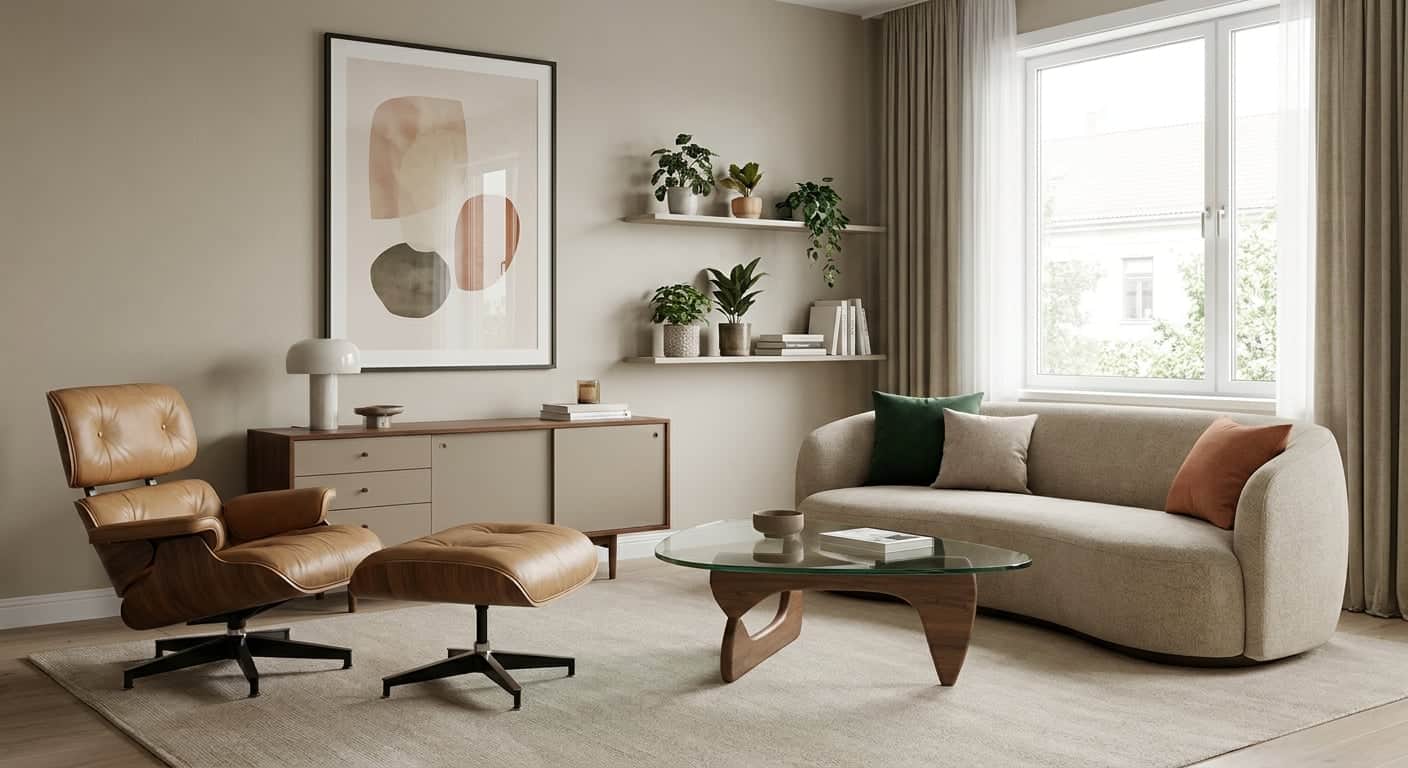
Furnishing a new apartment with designer furniture comes down to sequence, not shopping speed: buy the piece that sets the room's scale first, verify build quality before checkout, and fill in the rest against a fixed budget split instead of piece by piece.
TL;DR- Buy the sofa or lounge chair first — it sets scale for every purchase that follows in 2026.
- Verify joinery, foam density, and stitching before checkout; replicas vary more in construction than in looks.
- A one-bedroom furnished with designer replicas runs roughly $3,000 to $8,000 in 2026 depending on piece count.
- Sohnne’s 60-day returns and 5-year warranty cut the risk of buying furniture without sitting in it first.
Why This Matters
Most apartment furnishing mistakes happen in the first two weeks after signing the lease, when people buy whatever fits in the truck instead of what fits the room. Learning how to furnish an apartment with designer furniture is less about taste and more about order of operations. A Wishbone-style dining chair or a low-slung lounge chair reads as intentional the moment it's in the room — but replicas don't fix a sequencing mistake, they just make it more visible.
The piece that anchors a room (sofa, bed, dining table) has to get chosen before anything else, because its scale, wood tone, and silhouette set the rules for every smaller purchase that follows. That's true in a 450-square-foot studio and in a two-bedroom with a dining nook. Get the anchor right and the room reads like mid-century modern apartments styled with intent in 2026. Get it wrong and every accent chair after it fights for attention.
What You'll Need
- Full room measurements: width, depth, ceiling height, and doorway clearance for every space you're furnishing — standard interior doors run 32 to 36 inches wide, and that's the pinch point that kills more furniture deliveries than bad taste ever does.
- A percentage-based budget, not a lump total: roughly 40% seating, 20% tables, 20% storage, 20% lighting and textiles.
- One style anchor — mid-century modern, Bauhaus, Japandi — so a dozen separate purchases across a few months still read as one room.
- A replica quality checklist covering joinery, cushion foam density (2.2 lb per cubic foot is the daily-use minimum), and fabric weight.
- A confirmed move-in date. Made-to-order replica pieces typically ship in 2 to 6 weeks in 2026, and that window needs to close before your lease starts, not after.
The Steps
1. Measure Every Room Before You Open a Single Tab
This step eliminates the single biggest cause of furniture returns: pieces that fit the floor plan but not the path to get there. Measure width, depth, and ceiling height in every room, then measure the doorway, hallway, stairwell turns, and elevator interior if you've got one. Write the tightest number down — that's your real constraint, not the room's square footage.
Common mistake: measuring the living room and skipping the building's freight elevator, which is often narrower than any apartment door.
2. Set a Sequencing Budget, Not Just a Total Budget
A single number like $5,000 doesn't tell you what to buy first. Split it instead: 40% seating, 20% tables, 20% storage, 20% lighting and accents. That split keeps one hero chair from eating the money you needed for the sofa people actually sit on every day.
Furnishing a one-bedroom with designer replicas typically lands between $3,000 and $8,000 in 2026, depending on how many statement pieces you include and whether you're buying new storage or reusing what you have.
Common mistake: spending 60% of the budget on one striking chair, then furnishing the rest of the apartment with whatever's cheapest.
3. Anchor the Room With One Statement Seat
Pick the sofa or lounge chair before anything else touches your cart. Its depth, arm height, and wood tone become the reference point for the coffee table, the rug, and the dining chairs you choose weeks later.
If a piece needs three people to carry it through your front door, it doesn't belong in a one-bedroom apartment — check the diagonal clearance, not just the width, before you order.
Common mistake: buying the accent chair first because it's cheaper, then discovering it clashes with the sofa you pick two weeks later.
“If a piece needs three people to carry it through your front door, it doesn’t belong in a one-bedroom apartment.”
4. Build Dining and Work Surfaces Second
Once the anchor piece is set, size the dining table and desk against the walking space you have left, not the space you started with. Leave at least 36 inches of clearance behind every dining chair for someone to pull it out and stand up.
Common mistake: buying a six-seat table for a four-person household because it looked proportionate in a photo, not in the room.
5. Verify Replica Quality Before You Checkout
This is the step people skip and regret. Replica furniture varies far more in construction than in appearance — two sofas can look identical in photos and differ completely in frame material, foam density, and stitch count. Check joinery type, cushion fill, and fabric weight before you pay, not after delivery.
Sohnne designs and manufactures its replica furniture in its own factory to 1:1 original dimensions, which is one of the few claims you can verify against the product page before ordering. Run through a quality checklist before buying replica furniture so you're comparing frames and foam, not just finish photos.
Common mistake: choosing a piece based on the lowest price without checking whether the frame is solid wood or particleboard underneath the veneer.
6. Layer Lighting and Textiles Last
Rugs, floor lamps, and throw pillows get bought last because they're the cheapest way to fix a room that still feels unfinished after the furniture arrives. A rug should be large enough that at least the front legs of every seating piece sit on it — anything smaller reads as an afterthought.
Common mistake: matching every finish in the room so it looks like a showroom floor instead of a place someone actually lives.
Ready To Start Sequencing Your Furniture?
Browse Sohnne’s 1:1 mid-century modern replicas by category.
Shop SohnneTroubleshooting
The sofa won't clear the front door. Measure the diagonal clearance of the doorway and stairwell, not just the width — a sofa that measures 84 inches wide can still fail to turn a tight stairwell corner. Modular sectionals solve this because each section ships separately and assembles inside the room.
One piece ate the whole budget. If a single chair or table took more than 40% of your total spend, use the return window before you commit to the rest of the room. Sohnne's 60-day return policy gives enough runway to send a piece back and reallocate before the rest of the apartment gets furnished around a mistake.
Wood tones clash across pieces bought weeks apart. Stick to one wood family — walnut, oak, or ash — across every wood-framed piece in a room. Mixing warm walnut with cool ash reads as unplanned even when each individual piece is well made.
A small bedroom runs out of storage the moment the bed and dresser go in. This is a floor-space problem, not a furniture-quality problem, and the fix is the same whether you're furnishing with replicas or anything else: build storage into the wall instead of the floor. The same logic behind built-in wardrobes for small bedrooms applies to a compact living room too — fixed shelving and wall-mounted storage free up square footage that loose furniture never gives back.
Shipping windows overlap the move-in date. Order anchor pieces at least 6 weeks ahead of your lease start in 2026, since made-to-order replicas don't ship same-week. If the timeline is already tight, prioritize the sofa and bed first — everything else can arrive after you've moved boxes out of the way.
Tools And Resources
- A 25-foot tape measure and painter's tape, so you can map a sofa or table's footprint on the actual floor before delivery day instead of guessing from a listing photo.
- A moving checklist that separates day-one furniture (bed, sofa) from week-two furniture (accent chairs, art, lighting), so a delayed shipment doesn't leave you without a place to sit.
- Financing through Affirm if a full room is landing at $3,000-plus and you'd rather spread it across a few months than one card swing.
- A styling reference for mixing replica furniture with vintage pieces if you're bringing an heirloom dresser or a thrifted lamp into an otherwise all-new room — the same wood-tone rule from the troubleshooting section applies.
What To Do Next
Once the anchor pieces are ordered and the quality check is done, the next decision is how much the full room costs against how it looks finished. Walk through building a designer living room under $3,000 for a room-by-room breakdown of what that budget actually buys in 2026 — sofa, coffee table, rug, and lighting priced against the percentage split from step two. It's the fastest way to check whether your sequencing plan matches your actual spend before you place the last order.
FAQ
How much does it cost to furnish an apartment with designer furniture in 2026?
Furnishing a one-bedroom apartment with designer replica furniture typically costs $3,000 to $8,000 in 2026, depending on how many statement pieces (sofa, lounge chair, dining table) you include versus reusing existing storage. A studio apartment can land closer to $2,000 to $4,000 if you skip a separate dining set.
What should I buy first when furnishing a new apartment?
Buy the sofa or primary lounge chair first, since its scale, wood tone, and depth set the reference point for every other piece in the room. Buying smaller accent pieces before the anchor piece is the most common reason a room ends up mismatched.
Are designer furniture replicas good quality?
Quality varies significantly between manufacturers even when photos look identical, so check frame joinery, cushion foam density, and fabric weight before ordering. Replicas built in-house to 1:1 original dimensions, with documented materials, tend to hold up closer to the originals than mass-produced imports.
How long does replica furniture take to ship?
Made-to-order replica furniture typically ships in 2 to 6 weeks in 2026, so order anchor pieces at least six weeks before your move-in date. Smaller accent pieces usually ship faster than sofas and sectionals.
Can I return designer replica furniture if it doesn’t fit?
Return policies vary by retailer, but a 60-day window is enough time to test a piece in the room and send it back if the fit or fabric is wrong. Confirm the return policy before ordering anything you can’t easily resell if it doesn’t work out.
How do I mix designer replicas with furniture I already own?
Stick to one wood tone family across the room and let one piece — usually the sofa or the rug — set the color palette everything else follows. Mixing eras works better than mixing finishes; a vintage dresser next to a new replica sofa reads as curated, while clashing wood tones read as accidental.
What size apartment works for a mid-century modern sofa?
Most mid-century modern sofas run 78 to 86 inches wide with a seat depth of 34 to 38 inches, which fits comfortably in a living room of at least 12 by 14 feet. Measure your doorway and stairwell clearance before ordering, since width on the floor plan doesn’t guarantee it clears the path to get there.
Is it cheaper to buy designer replicas or vintage originals?
Replica furniture is almost always cheaper than an authenticated vintage original, and it comes with a return window and warranty that vintage sellers rarely offer. Vintage pieces carry provenance value that replicas don’t, but for daily-use furniture in a first apartment, the cost and risk gap usually favors a well-made replica.
One Last Thing
The apartment that looks most designed after move-in usually isn't the one with the most furniture — it's the one where the fewest pieces are doing the most work. A single well-chosen lounge chair with a floor lamp beside it photographs better than six mismatched accent pieces crammed into the same corner. Buy fewer things in 2026, buy them in the right order, and let empty floor space do some of the styling for you.
Related Guides
Stay connected with us!
Keep in touch with what’s new and next. Subscribe for weekly insights, product launches, and community news!