How to Clean a Velvet Sofa Replica the Right Way (2026)

Sohnne Design Studio
August 28, 2026
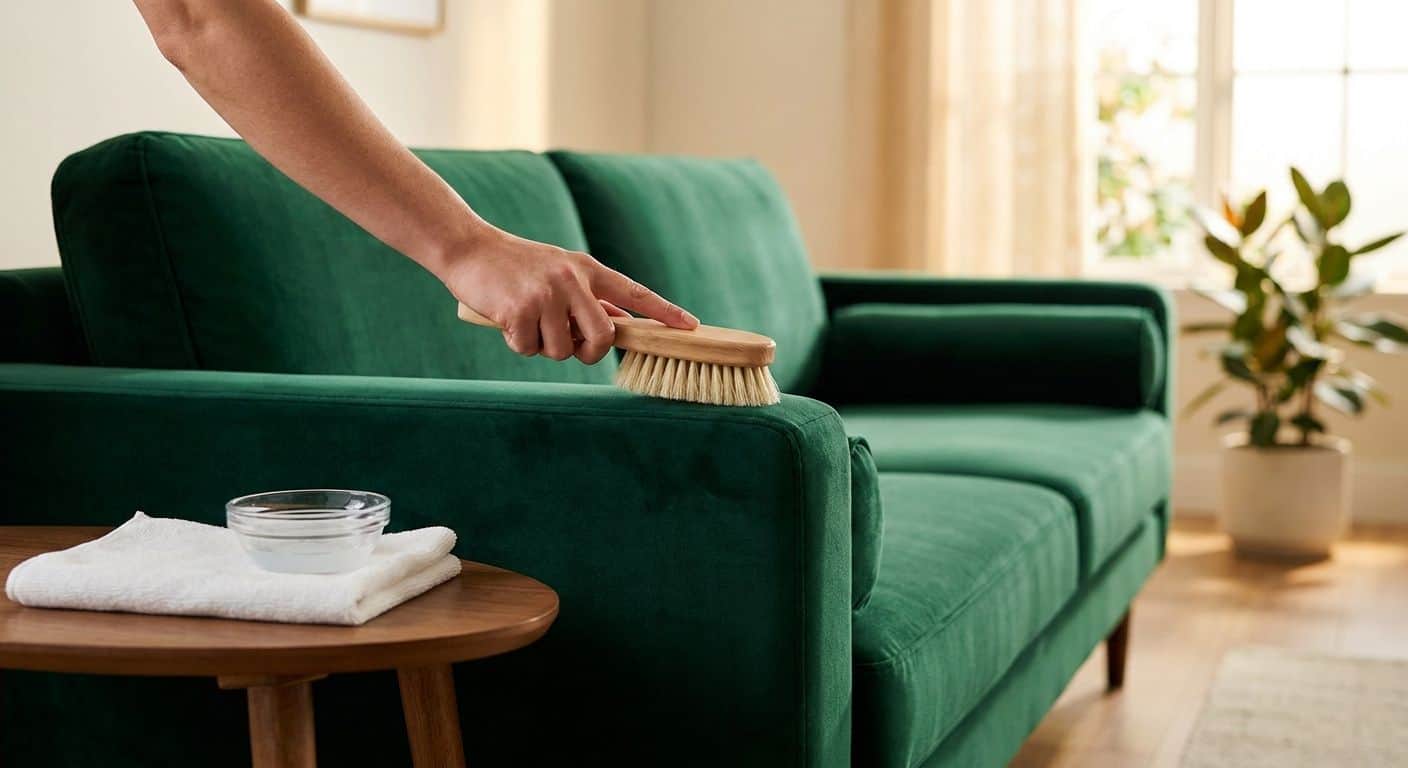
Velvet holds a room together until the first spill or the first crush mark from a cushion left in one spot too long, then it shows every mistake. This guide walks through the cleaning routine that keeps a velvet replica sofa looking like it did the day it left the factory, plus the mistakes that flatten the pile for good.
TL;DR- Water-based (W-coded) velvet cleans safely with a mild soap solution and a soft brush; solvent-only (S-coded) velvet needs dry-cleaning fluid instead.
- Always brush in the direction of the nap after cleaning or the pile dries with visible watermark shading.
- Skip the steam cleaner on cotton or rayon velvet blends — heat and moisture crush the pile permanently.
- A 24-hour spot test on a hidden panel is non-negotiable before treating any visible stain on a velvet sofa replica.
Why this matters
Velvet is a pile fabric, not a flat weave, which means the fibers stand upright and catch light differently depending on which way they're brushed. That's what gives it the color-shift effect people love. It's also why the wrong cleaning method leaves a permanent shadow instead of a clean patch.
A replica sofa from Sohnne is built with the same 1:1 dimensions and construction standards as the design it references, but the fabric care rules are generic to velvet itself — they apply whether the piece is an original from 1965 or a 2026 reproduction. Get the cleaning code wrong and even a well-built frame won't save the upholstery.
What you'll need
- A soft-bristle upholstery brush or a dry, clean sponge
- A vacuum with an upholstery attachment (no beater bar)
- Mild dish soap or a manufacturer-approved upholstery cleaner
- Distilled water (tap water can leave mineral spots on light velvet)
- Two clean, white microfiber cloths
- A small fan or hair dryer on the cool setting
- The cleaning code tag on your sofa (W, S, or WS) — check the underside cushion tag before starting
If you're shopping for a velvet piece and want to avoid this hassle altogether, check the fabric furniture care guide before buying — some pile fabrics resist crushing and staining far better than others.
The steps
1. Check the cleaning code before touching anything
Every upholstered piece ships with a code: W means water-based cleaners are safe, S means solvent-only, WS means either works. Skipping this step is the single most common reason a velvet cleaning attempt goes wrong. If there's no visible tag, treat the fabric as S-coded and use dry-cleaning solvent only — water on solvent-only velvet leaves permanent rings.
2. Vacuum the full surface first
Run the upholstery attachment over the entire sofa in the direction of the nap, cushions included, before applying any liquid. This lifts loose dust and pet hair that would otherwise grind into the pile once it's wet. Skip the beater bar setting completely — it snags velvet fibers and pulls them loose.
3. Spot test for 24 hours
Mix one drop of mild dish soap into a cup of distilled water for W-coded velvet, or use the dry-cleaning solvent as-is for S-coded fabric. Apply a small amount to a hidden section, like the back panel or underside of a cushion, and let it sit for 24 hours. If there's no discoloration, ring, or texture change, you're clear to treat the visible stain.
4. Blot, don't scrub
Dip a white microfiber cloth in the tested solution and blot the stain from the outside edge inward. Scrubbing pushes the stain deeper into the pile and crushes the fibers in the process, which is worse than the stain itself. Work in short dabbing motions and switch to a dry section of the cloth as soon as it picks up color.
5. Rinse with a barely damp cloth
Once the stain lifts, go over the same area with a second cloth dampened only with plain distilled water to remove any soap residue. Leftover soap attracts dirt faster than the original stain did, so this step protects the fabric long-term, not just cosmetically.
6. Brush the pile back into direction
While the treated area is still slightly damp, brush it gently in one consistent direction with the soft-bristle brush. This is what prevents the watermark ring that shows up once velvet dries unevenly. Do the whole cushion or panel, not just the treated spot, so the sheen stays uniform.
7. Dry fast, away from direct heat
Point a fan or a hair dryer on the cool setting at the damp area from about 12 inches away until it's fully dry, usually within an hour for a small spot. Never use direct sun or a radiator to speed things up — heat sets any remaining residue and can shrink the fibers unevenly. For sun exposure concerns beyond cleaning, the guide on protecting designer replica furniture from sun damage covers placement.
8. Steam only if the tag allows it, and only on low
Steam cleaners work on some cotton-blend velvets but crush rayon and silk-blend velvet almost instantly. If the fabric tag doesn't explicitly clear steam, skip it and stick to the blot-and-brush method above.
Shop velvet sofas built to last
Factory-made replicas with a 5-year warranty and free insured shipping.
Browse the collectionTroubleshooting
Watermark rings after cleaning. This happens when the area dried unevenly or wasn't brushed while damp. Re-dampen the whole panel evenly with distilled water, brush in one direction, and dry with a fan pointed at the entire section rather than the ring itself.
Crushed or flattened pile. Steam the area lightly (only on W or WS-coded fabric) and brush immediately while warm, working in the nap direction. Repeated sitting in the same spot causes this over time, so rotating cushions monthly prevents it.
Pet hair embedded in the weave. A rubber-bristle pet brush or a slightly damp rubber glove pulls hair out of velvet better than a vacuum alone. If cats are part of the household, the cat scratch-resistant fabric guide is worth reading before the next upholstery purchase.
Musty smell in humid climates. Velvet traps moisture in its pile more than flat weaves do. Run a dehumidifier near the sofa and avoid placing it against an exterior wall in rooms with high humidity.
Faded color from sun exposure. This isn't a cleaning fix — it's prevention. Rotate cushions and keep the sofa out of direct afternoon light going into 2026's warmer months.
Sheen looks patchy after drying. Uneven brushing is almost always the cause. Go over the entire cushion, not just the treated section, with the same brush and direction every time.
Tools and resources
- Soft-bristle upholstery brush (any home goods store)
- Upholstery vacuum attachment
- Distilled water and mild dish soap for W-coded fabric
- Solvent-based dry-cleaning fluid for S-coded fabric
- White microfiber cloths, at minimum two per cleaning session
- For fabric selection ahead of a purchase, the guide on choosing a sofa fabric for high-humidity climates breaks down which pile fabrics hold up best
What to do next
Cleaning keeps a velvet sofa looking sharp week to week, but the bigger question is whether the piece was built to survive years of that routine. Frame quality, foam density, and seam construction all determine how many cleaning cycles the upholstery can take before it sags or pills. Sohnne's guide on choosing a replica sofa that lasts covers what to check before buying, not just after.
FAQ
How do you clean a velvet sofa replica without leaving watermarks?
Blot the area rather than scrub it, then brush the entire panel in one direction while it’s still damp. Uneven drying, not the cleaning itself, is what causes watermark rings on velvet.
Can you use a steam cleaner on a velvet replica sofa?
Only if the fabric tag shows a W or WS cleaning code; steam crushes rayon and silk-blend velvet permanently. Check the underside cushion tag before using any heat-based cleaning method.
Is velvet a good choice for households with pets?
Velvet shows pet hair more than flat-weave fabrics but resists claw damage reasonably well when the pile is dense. A rubber-bristle brush removes embedded hair better than a standard vacuum attachment.
How often should you vacuum a velvet sofa?
Weekly vacuuming with an upholstery attachment prevents dust from grinding into the pile during future cleaning. Skip the beater bar setting, which snags and pulls velvet fibers loose.
What does the W, S, and WS cleaning code mean on a velvet sofa?
W means water-based cleaners are safe, S means only solvent-based dry-cleaning fluid should touch the fabric, and WS means either method works. Using water on an S-coded velvet leaves permanent rings.
Does sunlight damage velvet upholstery?
Yes, direct sun fades velvet color unevenly over months, especially on darker dyes. Rotating cushions and keeping the sofa out of direct afternoon light slows the fading significantly.
How long does it take a velvet sofa to dry after spot cleaning?
A small treated area typically dries within an hour using a fan or cool-setting hair dryer held about 12 inches away. Avoid direct heat sources, which set residue and shrink fibers unevenly.
Can you machine wash velvet sofa cushion covers?
Most velvet cushion covers are not machine washable and require hand spot-cleaning or professional dry cleaning depending on the fabric code. Check the tag before attempting any full-immersion wash.
One last thing
The cleaning code tag matters more than any product you buy to treat a stain — more homeowners ruin velvet by using the wrong solvent than by leaving a stain untreated. Find that tag before you do anything else in 2026, and the rest of this routine takes care of itself.
Related guides
Stay connected with us!
Keep in touch with what’s new and next. Subscribe for weekly insights, product launches, and community news!