Camaleonda Leather Sofa Replica Care Guide 2026

Sohnne Design Studio
August 7, 2026
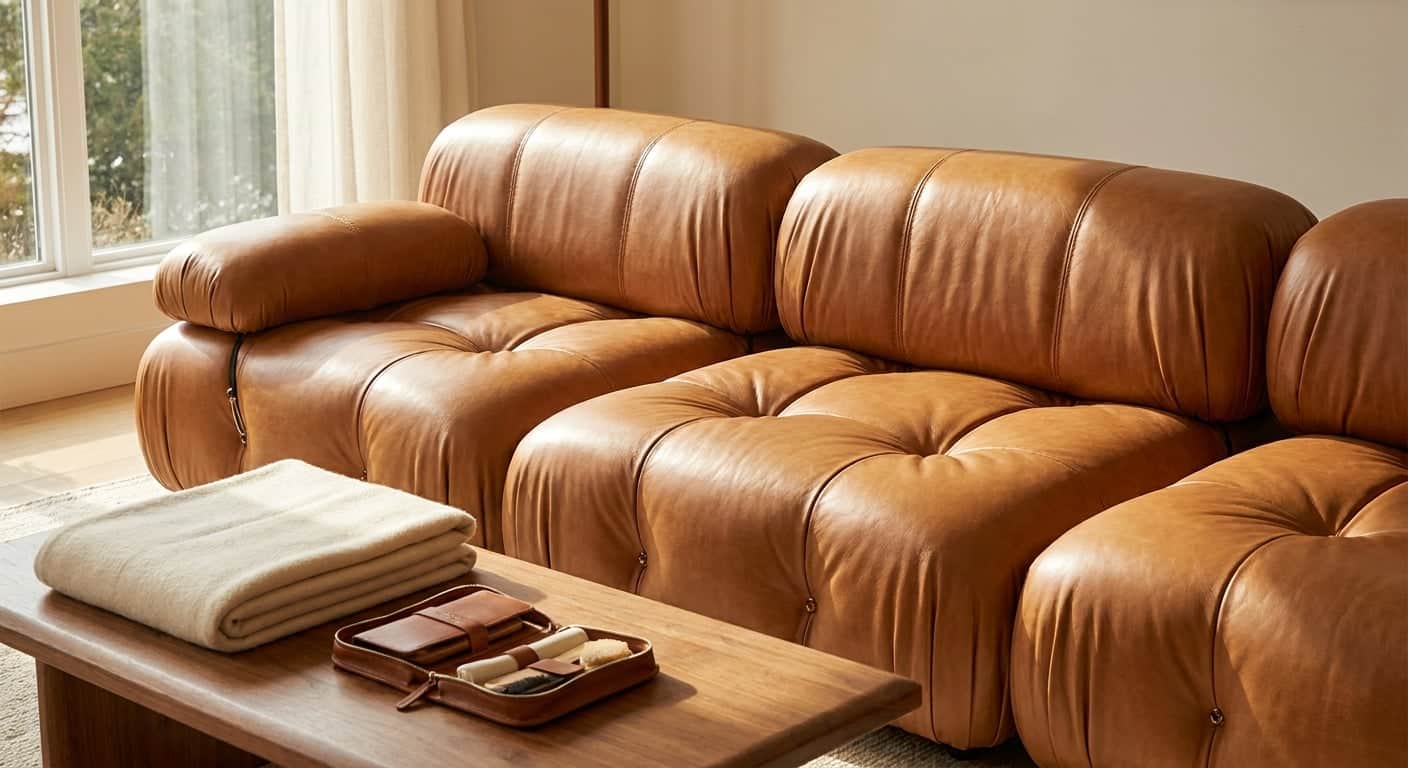
A Camaleonda leather sofa replica rewards routine care and punishes neglect — the loose modular cushions and tufted channels crack faster than a fixed-frame sofa if the hide dries out. This guide walks through the exact cleaning schedule, the tools worth buying, and the mistakes that shorten a leather sofa's life by years.
TL;DR- Condition a camaleonda leather sofa replica every 6-12 months or the hide starts cracking within 2026’s first heating season.
- Wipe spills within minutes using a dry microfiber cloth — never soap or alcohol wipes on leather.
- Rotate and fluff Camaleonda modules monthly since loose cushions wear unevenly, unlike fixed-back sofas.
- Keep the sofa out of direct sunlight; UV exposure fades and dries leather faster than daily use does.
- Sohnne’s Camaleonda replica ships with a 5-year warranty, but conditioning is on you, not the warranty.
Why this matters
Leather doesn't fail because of one bad spill. It fails because nobody conditioned it for two years and the natural oils that keep the hide flexible dried out of the surface. On a modular sofa like the Camaleonda replica, that damage shows up first at the fold lines between tufted panels, since those creases flex every time someone sits or the modules get rearranged.
A well-maintained leather sofa in 2026 should still look supple after five or six years of daily use. A neglected one starts cracking at the arms and seat edges within 18-24 months, especially in dry climates or homes with forced-air heating running most of the winter. The replica leather furniture cleaning routine below applies to any leather sofa, but the Camaleonda's modular build adds a few extra steps most guides skip.
What you'll need
- Vacuum with a soft brush attachment
- 2-3 microfiber cloths, kept separate from cloths used elsewhere in the house
- Distilled water (tap water leaves mineral spots on leather)
- A pH-balanced leather cleaner, not a general upholstery cleaner
- A leather conditioner formulated for aniline or semi-aniline leather
- A soft-bristle detailing brush for tufted seams and piping
- 20-30 minutes per cushion module for a full conditioning pass
Skip anything with silicone, wax, or ammonia. Those ingredients sit on the surface, clog the leather's pores, and make the next conditioning pass less effective.
The steps
1. Vacuum every module weekly
Dust and grit act like sandpaper on leather over time, working into seams and dulling the finish. Run the soft brush attachment along every seam, tuft, and the gaps between Camaleonda modules where crumbs and pet hair collect. This takes under five minutes and prevents the slow abrasion that makes leather look tired years before it should.
Common mistake: using the vacuum's hard floor attachment, which scuffs the leather's finish.
2. Blot spills within minutes, dry only
Liquid that sits on leather for more than a few minutes starts to penetrate the surface and can leave a permanent ring. Blot — don't rub — with a dry microfiber cloth immediately, working from the outside of the spill inward. For oily spills like food or lotion, dust cornstarch on the spot, let it sit for 15 minutes, then brush it away.
Common mistake: reaching for a wet wipe or soapy rag, which pushes moisture into the leather instead of lifting it off.
3. Clean with a pH-balanced leather cleaner every 4-6 weeks
A proper leather cleaner lifts body oils and surface grime without stripping the finish the way household cleaners do. Dampen a cloth (not the leather directly) with the cleaner, work in small circular motions on one panel at a time, then buff dry with a second cloth. Test on the underside of a cushion first if you've never used the product on this piece.
Common mistake: spraying cleaner directly onto the leather, which oversaturates one spot and can leave a water mark once it dries.
4. Condition every 6-12 months
This is the step most people skip, and it's the one that decides whether a camaleonda leather sofa replica lasts 5 years or 15. Apply a thin, even coat of leather conditioner with a soft cloth, let it absorb for 10-15 minutes, then buff off any residue. Homes with dry winter air or strong sun exposure should lean toward the 6-month end of that window.
Common mistake: applying conditioner too heavily, which leaves a tacky film that attracts dust.
5. Rotate and fluff cushions monthly
The Camaleonda's modular cushions rely on loose fill and foam that compress unevenly if the same seat gets used every day. Swap seat and back cushions between modules once a month, and give each one a firm shake or hand-fluff to redistribute the fill. For the full range of configurations this design supports, the Camaleonda sofa replica modular layout guide breaks down which arrangements put the most stress on specific modules.
Common mistake: leaving one module as the permanent "TV-watching seat" — it will sag noticeably faster than the rest of the sofa.
6. Keep it out of direct sunlight
UV exposure dries leather faster than almost anything else, and it fades color unevenly if only part of the sofa sits in a sunbeam. Position the sofa away from south-facing windows, or use UV-filtering film or sheer curtains if repositioning isn't possible. A sofa that gets 3-4 hours of direct afternoon sun daily can show visible fading within a single summer.
Common mistake: assuming a throw blanket over the sun-exposed section fixes the problem — it just hides uneven fading instead of preventing it.
“Leather doesn’t fail from a stain, it fails from years without conditioner.”
Troubleshooting
Leather feels stiff or shows fine cracks at the fold lines. Increase conditioning frequency to every 4-6 months for the next year, focusing extra product on the crease areas between tufted panels.
Cloudy or white residue after cleaning. The cleaner wasn't buffed off fully, or the water used wasn't distilled. Wipe the area with a barely damp cloth and dry immediately with a clean one.
Cushions look flat or lopsided. This is normal fill settling on any modular sofa. Fluff by hand weekly and rotate cushions monthly; if a module still won't hold shape after a year, the foam insert may need replacing rather than the cover.
Color looks patchy or faded in one area. Almost always sun exposure. Move the sofa or block the light source — conditioner won't restore lost pigment, only slow further fading.
Squeaking when someone sits down. Usually dry leather rubbing against itself at the seams. A light conditioning pass on the affected panel typically resolves it within a day.
A pet scratch or small tear. Stop it from spreading with a leather repair patch kit matched to the sofa's color, applied per the kit's instructions. Deep tears on a Camaleonda module usually mean replacing that panel rather than patching it.
Camaleonda leather care benchmarks 6-12 months Conditioning interval Shorter in dry climates 5 years Warranty coverage On Sohnne’s Camaleonda replicaTools and resources
- Soft-bristle vacuum brush attachment and microfiber cloths — weekly dusting
- pH-balanced leather cleaner — every 4-6 weeks
- Leather conditioner rated for aniline or semi-aniline finishes — every 6-12 months
- UV-filtering curtain or window film — ongoing protection
- Leather repair patch kit matched to the sofa's color — kept on hand for accidents
- If deciding between leather and fabric before buying, the leather versus fabric replica sofa comparison covers maintenance trade-offs for each
What to do next
Once the care routine is running, the next question is longevity — how the frame, foam, and stitching hold up over years of use, not just the leather surface. The guide to choosing a replica sofa that lasts covers frame construction and foam density, the two factors that matter as much as leather care for a sofa you plan to keep past 2026.
FAQ
How often should you condition a Camaleonda leather sofa replica?
Condition it every 6-12 months, leaning toward the 6-month end in dry climates or homes with forced-air heating. Skipping conditioning for over a year is the most common cause of premature cracking.
Can you use regular upholstery cleaner on a leather sofa?
No, regular upholstery cleaner strips the leather’s natural finish and dries it out. Use a pH-balanced cleaner formulated specifically for leather instead.
Is real leather or leather-look PU better for a Camaleonda replica?
Real leather ages better and develops a patina over time, but needs the conditioning schedule above. PU leather-look materials need less upkeep but don’t age the same way and can crack instead of develop patina.
How do you clean a leather sofa after a pet scratch?
Wipe the area gently with a dry cloth first to remove debris, then assess the depth. Surface scuffs buff out with conditioner; deeper scratches need a leather repair patch kit matched to the sofa’s color.
Why is my leather sofa cracking already?
Cracking almost always means the leather dried out from lack of conditioning, sun exposure, or nearby heating vents. Increase conditioning frequency immediately and reposition the sofa away from direct heat or sunlight.
Do Camaleonda modular cushions need different care than a fixed sofa?
Yes, the loose modules need monthly rotation and fluffing to prevent uneven wear, since the same seat gets more pressure if it’s never swapped. Fixed-back sofas don’t have this issue because the cushions can’t be rearranged.
What’s the biggest mistake people make caring for leather sofas?
Using household cleaners or wet wipes on spills instead of blotting dry and using a proper leather cleaner. The second most common mistake is skipping conditioning for years at a time.
How long should a well-maintained leather sofa last?
A leather sofa maintained on a 6-12 month conditioning schedule should still look supple after 8-10 years of daily use. Sohnne backs its Camaleonda replica with a 5-year warranty, but the conditioning routine is what determines how it looks beyond that window.
One last thing
Most care guides treat every leather sofa the same, but the Camaleonda's design punishes uneven care specifically because it's modular — a fixed-frame sofa wears evenly whether you rotate cushions or not, while a Camaleonda leather sofa replica with one "favorite seat" will show a visible difference in texture and sheen between that module and the rest within a year. The fix costs nothing: swap cushions once a month and the whole sofa ages at the same rate.
Related guides
- Leather versus fabric replica sofas: which needs less upkeep
- How to verify quality before buying replica furniture
Stay connected with us!
Keep in touch with what’s new and next. Subscribe for weekly insights, product launches, and community news!