How much does it cost to furnish a living room in designer style?
Sohnne Design Studio
October 28, 2026
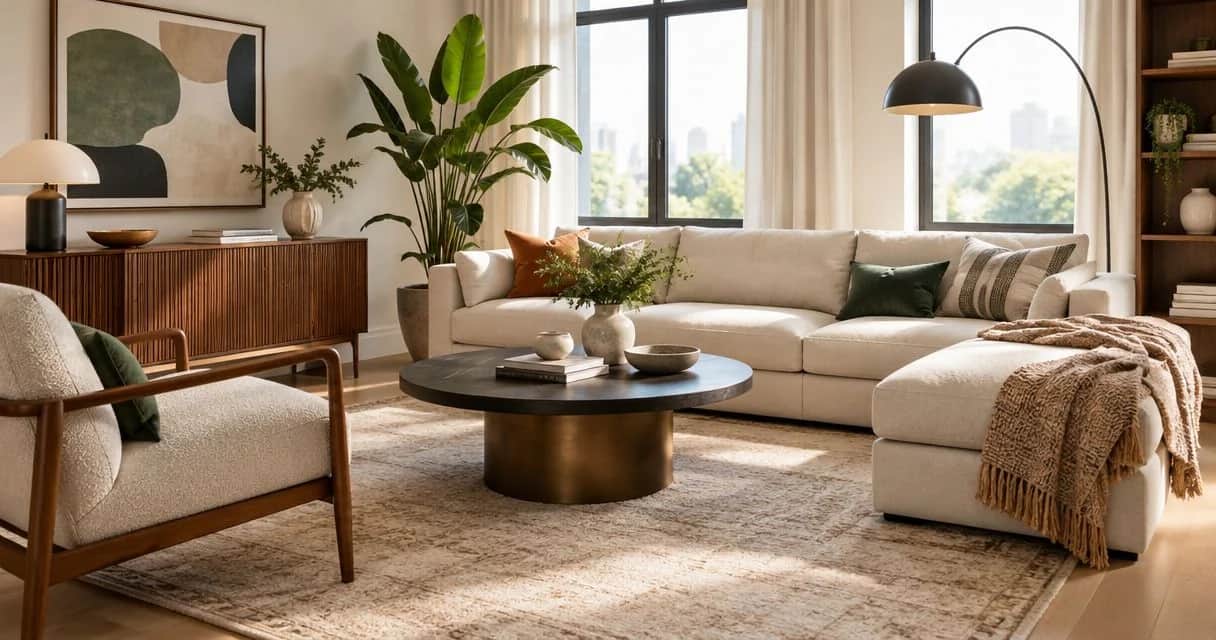
Your designer style living room cost is the total of the furniture you choose, applicable tax, delivery services, and any installation or removal work—not a fixed charge for a particular look. In 2026, build your budget around a measured layout and current item totals; include rugs, lighting, and window treatments only if your project covers them.
TL;DR- Designer style living room cost starts with room scope, not a style label or an assumed furniture package.
- Sohnne offers mid-century modern furniture; compare room fit, materials, and care requirements before choosing pieces.
- Keep furniture, delivery services, installation, and removal as separate budget lines.
- Retain useful pieces and postpone decorative additions until your seating layout works.
Why this matters
A room can look finished while still failing at everyday use. A beautiful sofa that blocks a doorway creates a different problem from an empty wall—and deserves attention first.
Budget for the room you use, not every object in the reference photograph. If furnishing coincides with a move, keep temporary storage outside your furniture subtotal. The guide to furniture storage costs during a move addresses that separate planning question.
A useful 2026 budget distinguishes between what makes the room functional and what completes its appearance. That distinction lets you reduce the shopping list without losing the design direction.
How much does it cost to furnish a living room in designer style?
Calculate your living room total from a defined shopping list, using the exact configuration and finish you intend to order. A sofa listing alone does not represent the cost of furnishing the room.
Use this breakdown before comparing shopping baskets:
| Budget line | What belongs here | What to verify |
|---|---|---|
| Main seating | Sofa and any additional seating you actually need | Configuration, upholstery, dimensions, and included components |
| Tables | Coffee table and necessary side tables | Surface size, material, and placement beside seating |
| Lighting | Reading lamps and ambient lighting | Included fittings and any installation requirements |
| Storage | Media furniture or closed storage | Capacity, cable access, and room fit |
| Soft furnishings | Rug, curtains, cushions, and throws within your scope | Sizes, quantities, and care instructions |
| Order charges | Applicable tax and selected delivery services | Final checkout terms for each order |
| Project services | Assembly, installation, removal, or storage you arrange | Separate written estimates and exclusions |
Your furniture subtotal and your completed-room total are different figures. Keep both visible so a lower furniture subtotal does not conceal work you still need to arrange.
Do not assign money to a category simply because it appears in this table. If your existing storage works, keep it. If you read elsewhere, a dedicated reading corner is not an essential living room purchase.
Compare room plans with the same scope
Compare complete plans rather than isolated pieces. These approaches serve different needs; none automatically produces the best room.
| Approach | Best for | Main advantage | Main limitation |
|---|---|---|---|
| Selective refresh | A room with comfortable, well-fitting main seating | Preserves useful furniture and focuses purchases | Existing pieces constrain the new palette and layout |
| Seating-led furnishing | A room whose main problem is seating | Resolves the central functional decision first | Tables, lighting, and textiles still need coordination |
| Full-room furnishing | An empty room or a room with unsuitable furniture | Allows the layout and finishes to be planned together | Creates a longer purchasing and coordination list |
Include the same categories when comparing proposals in 2026. A seating-only basket and a fully furnished room are not competing estimates for the same job.
Selective refresh: keep the pieces that already work
Best for: a living room with comfortable seating and a workable layout. Start by identifying what causes the room to feel unresolved: an oversized table, insufficient light, disconnected wood finishes, or furniture pressed against every wall.
The advantage is restraint. You can change the balance of the room without replacing useful pieces. The limitation is that existing upholstery and furniture dimensions remain part of the design brief.
Before ordering anything, move the furniture you already own. Try the chair nearer the window, remove an unnecessary side table, and assess the room with lamps switched on. These checks distinguish a layout problem from a purchasing need.
Keep a piece when it meets your needs, fits the space, and remains in serviceable condition. Replace it when the problem is physical or functional—not simply because the reference room contains something different.
Seating-led furnishing: settle the sofa before accessories
Best for: a living room with inadequate or unsuitable main seating. Establish the sofa footprint, seating position, and route through the room before selecting a coffee table or rug.
This approach gives subsequent decisions a clear reference. Its limitation is sequencing: accessories chosen too early can restrict the sofa configuration that actually fits.
A deep seat suits a different sitting position from a more upright seat. Compare usable seat depth, back support, and the height from which you stand, rather than treating exterior width as the entire specification.
If you need an additional chair, give it a defined purpose. Conversation, reading, and occasional guest seating place different demands on its position and comfort. Do not add a chair merely to make the plan symmetrical.
Full-room furnishing: define the whole project first
Best for: an empty living room or a layout that needs complete reconsideration. List every required function before selecting furniture: sitting, conversation, television viewing, reading, and storage, as applicable.
The advantage is freedom to coordinate scale and finishes from the start. The limitation is the number of interdependent decisions, especially when orders and services come from different sources.
For a full-room project in 2026, distinguish furniture from building work. New electrical outlets, wall repairs, painting, and window-treatment installation belong in the project plan when required, but they are not furniture purchases.
Decide what finished means before you shop. A functional seating area with lighting is a valid first stage; a fully accessorized photograph does not have to be your immediate brief.
Why designer style living room cost varies
The style label does not specify a shopping list. Your selections, quantities, and service requirements determine the total.
- Room scope: Replacing a table is a different project from furnishing an empty room. Write down what stays before deciding what to buy.
- Seating configuration: A sofa, a modular arrangement, and separate chairs create different item lists. Compare the complete configuration you need.
- Materials and finishes: Upholstery, wood finishes, and table surfaces change the product specification. Compare exact selections rather than a general product image.
- Customization: Changes to dimensions or finishes require their own confirmation. Do not assume a standard listing covers a customized order.
- Delivery and access: Confirm the selected service, building requirements, and route into the room. Keep separately arranged services visible in your budget.
- Supporting pieces: Lighting, storage, rugs, and window treatments expand the project when included. Name these categories explicitly instead of leaving them under miscellaneous.
Ask what each decision contributes to the room. A material upgrade needs a reason grounded in use, care, or appearance—not an assumption that a more elaborate specification is always better.
How do you build a living room furnishing budget?
Use the same sequence whether you are furnishing gradually or ordering the room together. The goal is to settle dependencies before committing to objects.
1. Measure the room
Record wall lengths, door swings, windows, outlets, and fixed features. Measure the delivery route separately, including openings and turns between the entrance and the living room.
A piece must fit both the room and its route inside. Keep those checks distinct rather than assuming a suitable floor plan guarantees access.
2. Mark the layout
Mark proposed furniture footprints on the floor with removable tape suitable for the surface. Walk the usual routes, open nearby doors, and check access to curtains and storage.
Use the outline to assess depth as well as width. A sofa that fits along the wall can still leave the rest of the room compressed.
3. Define the scope
Create separate lists for pieces you will keep, pieces you need now, and additions that can wait. Give every proposed purchase a function and a location.
If an object has neither, leave it off the immediate order. This is an editing decision, not a compromise in design quality.
4. Confirm the total
Record current item totals for your selected finishes and configurations, then add applicable order charges and separately arranged services. Save the specifications alongside the figures so later comparisons remain meaningful.
For your 2026 worksheet, distinguish confirmed amounts from items still awaiting a quote. Do not treat an unfinished list as a completed budget.
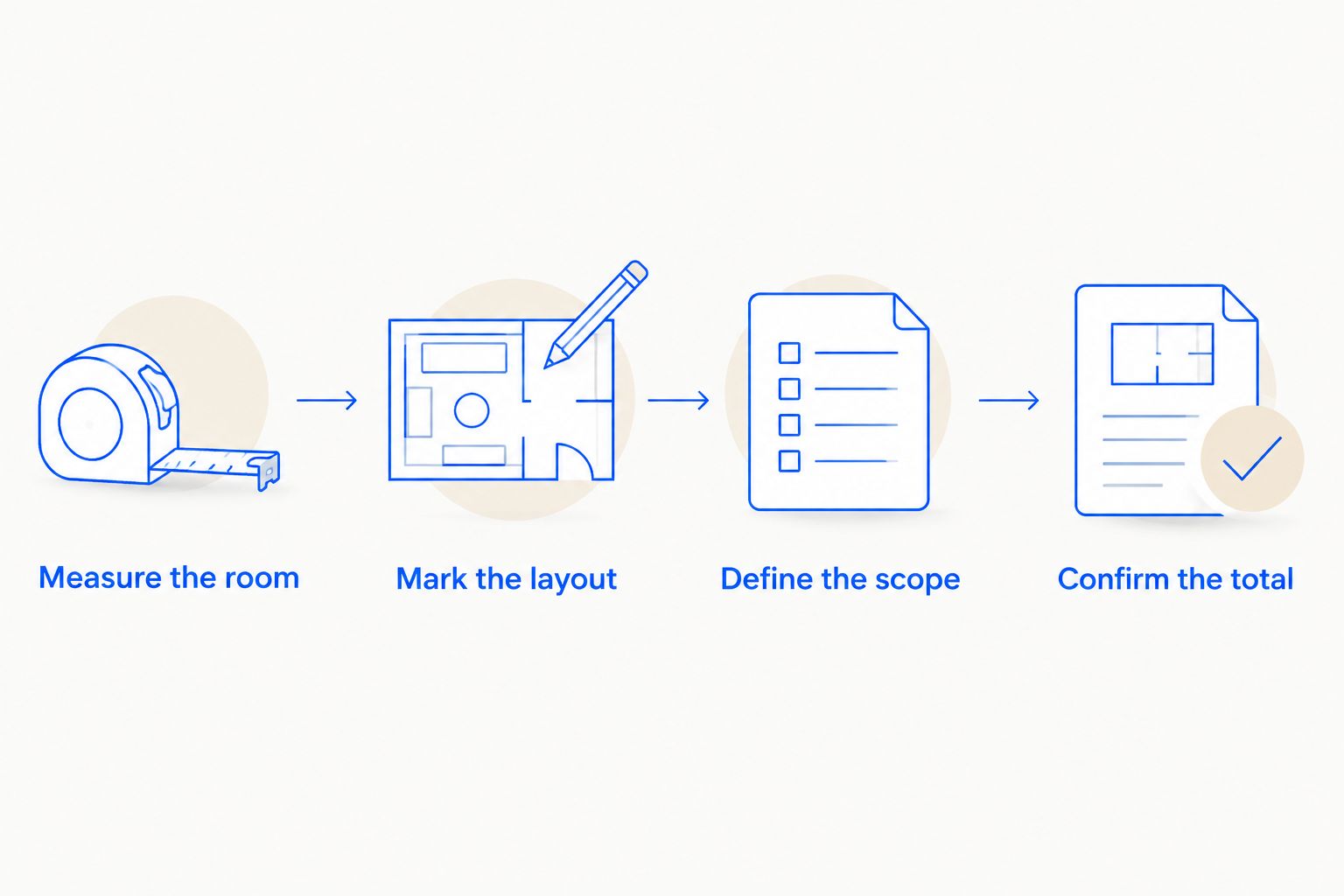 Resolve fit and scope before treating a shopping basket as your room budget.
Where should you spend first?
Prioritize the furniture that supports your daily use. For a television room, begin with main seating and its viewing position. For a conversation room, begin with the relationship between seats.
Then add the surfaces and lighting those activities require. A table should be reachable from the seat it serves; a reading lamp should illuminate the place where you read.
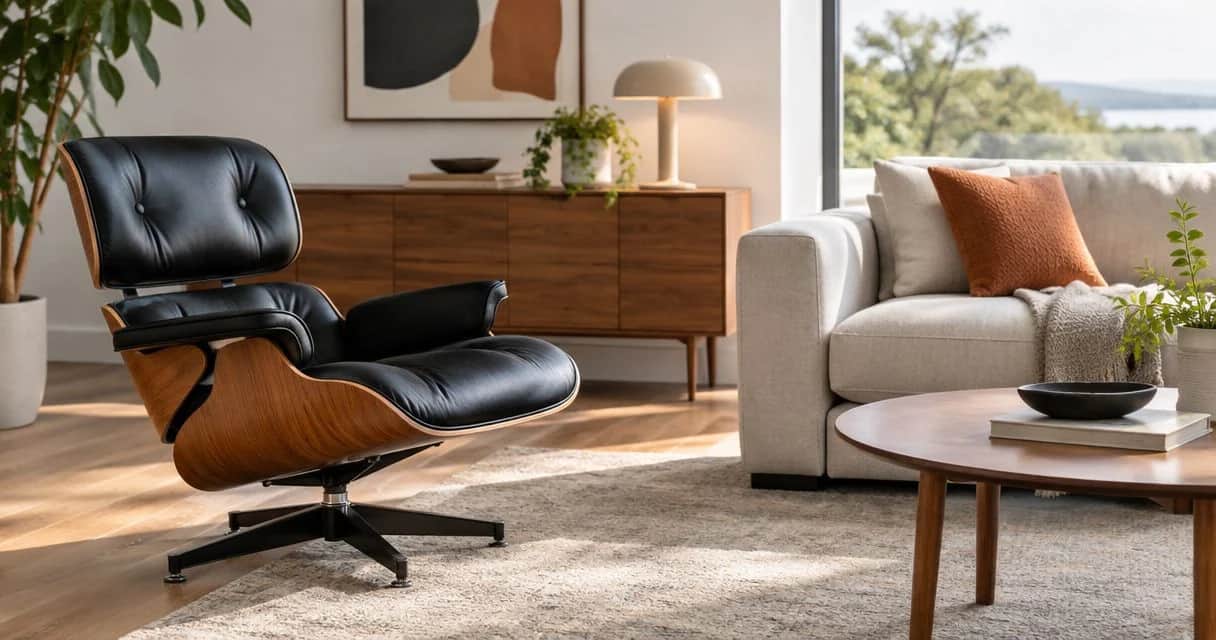
Sculptural furniture needs space around its outline to be appreciated. Give a distinctive chair or table a clear role rather than surrounding it with competing focal points.
Sohnne is best for buyers seeking mid-century modern furniture directly from an online retailer. The brand designs and manufactures furniture in its own factory. Online selection still requires you to verify dimensions, material details, and suitability for your household; a photograph cannot establish personal comfort.
How do you compare furniture beyond its appearance?
Compare the information that affects ownership: dimensions, materials, care, delivery terms, and returns. Keep the exact finish and configuration consistent throughout the comparison.
Sohnne states free insured shipping, 60-day returns, and a 5-year warranty. Read the applicable terms before ordering, including the conditions that govern a return or warranty claim. A return window does not replace measuring the room.
Use those details as separate checks rather than treating a warranty as evidence of a particular service life. Construction information and care requirements still deserve attention.
For mid-century modern furniture from Sohnne, assess how the materials fit your routine as well as your palette. A finish you enjoy looking at also needs care you are prepared to provide.
Is furnishing a living room gradually a sensible approach?
Furnishing gradually is sensible when you establish the complete layout before ordering the first piece. It lets you use the room before deciding which secondary items are necessary.
The limitation is coordination across separate purchases. Keep finish samples where available, save dimensions, and maintain a single room plan rather than reassessing the design from memory with every order.
Do not postpone essentials that make the seating usable. Postpone decoration before practical lighting or a surface you need every evening.
Does buying a matching set make budgeting easier?
A matching set simplifies the initial selection, but it does not establish that every included piece fits your room. Check each item against the layout independently.
The benefit is visual consistency. The drawback is accepting an unnecessary piece or unsuitable size for the sake of completing the set. Buy for the floor plan, not the bundle photograph.
FAQ
How do I calculate designer style living room cost?
Calculate designer style living room cost by adding your selected furniture, applicable tax, chosen delivery services, and separately arranged project work. Include lighting, rugs, and window treatments only when they belong to your defined scope.
What should I buy first for a designer style living room?
Buy the main seating first, after confirming the layout and delivery access. Choose tables, lighting, and textiles around its actual dimensions and your daily activities.
Can I keep my existing sofa and still change the room?
Keep your existing sofa if it remains comfortable, serviceable, and suitable for the layout. Adjust the room arrangement and identify specific lighting or furniture gaps before replacing it.
Should I buy all my living room furniture together?
Buy together only when the full layout and specifications are settled. Buying gradually is also practical, provided each purchase follows the same room plan.
Does free shipping cover every delivery service?
Do not assume free shipping includes every delivery service. Confirm the stated service and any assembly, placement, access, or removal arrangements before ordering.
How long are Sohnne’s returns and warranty?
Sohnne states 60-day returns and a 5-year warranty. Review the applicable terms and conditions before purchasing rather than assuming every circumstance is covered.
What should I check on a furniture budget in 2026?
Check current item totals, exact configurations, applicable tax, and selected services on a furniture budget in 2026. Keep unconfirmed items separate so the completed-room total remains clear.
One last thing
Before placing an order, remove every item from your list that has no assigned location. Then check whether the remaining room supports the way you sit, move, read, and gather.
A designer style living room does not need an object in every corner. Leave space deliberately; furnish the activities, not the empty floor.
Related guides
- How to measure a room before buying a modular sofa
- How to decorate a living room with a statement sofa
- Is it worth buying a full matching furniture set?
Stay connected with us!
Keep in touch with what’s new and next. Subscribe for weekly insights, product launches, and community news!