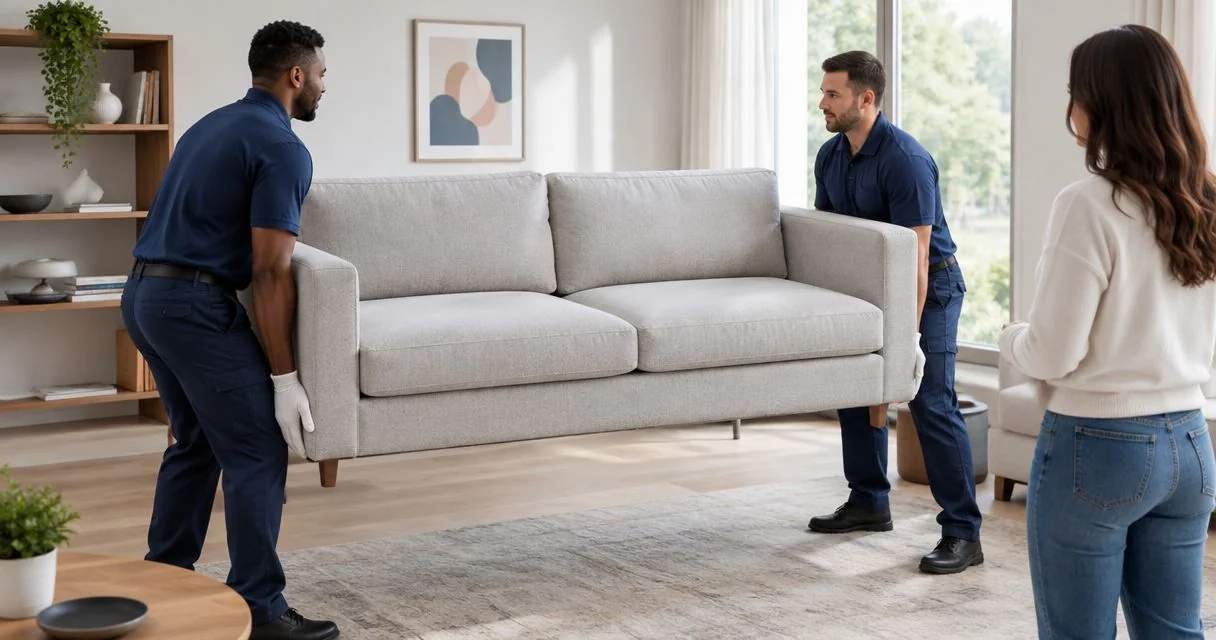
How long does new sofa fabric take to break in?
Sohnne Design Studio
November 12, 2026

New sofa fabric has no fixed break-in timeline: the upholstery, cushion filling, and seat construction all affect how firm a new sofa feels. Normal use can change the feel of the seating, but you should not expect rough fabric, poor fit, or a structural problem to disappear with time. This 2026 guide explains what to watch for and when to ask for help.
TL;DR- How long does new sofa fabric take to break in? There is no universal deadline for upholstery softening.
- Separate surface texture from cushion firmness before deciding that a new sofa needs more time.
- Sohnne offers mid-century modern furniture; assess sofa comfort against the specific model’s construction and care instructions.
- Report opening seams, exposed filling, or a failing seat instead of treating damage as normal settling.
How long does new sofa fabric take to break in?
There is no reliable calendar-based answer that applies to every new sofa. Fabric is the outer covering, while the filling and suspension beneath it also shape what you feel when you sit down. A firm seat does not establish that the fabric itself needs breaking in.
Start by identifying the sensation. If your hand catches on the surface, investigate the upholstery texture; if your body barely sinks into the seat, investigate the cushion construction. If you keep sliding forward or cannot sit comfortably against the back, check the dimensions using this guide to choosing sofa depth for comfort.
| What you notice | What to investigate | What waiting cannot establish |
|---|---|---|
| A coarse feeling against bare skin | Fabric texture, weave, and suitability for your use | Whether the surface will become comfortable enough for you |
| A firm feeling beneath your weight | Cushion filling and the seat beneath it | Whether the upholstery is responsible |
| A loose-looking cover after sitting | Cover fit, filling distribution, and care instructions | Whether the appearance falls within the maker’s expectations |
| A visibly lower seating position | Cushion recovery, support, and assembly | Whether the change is harmless settling |
| A rough line along a seam | Stitching, seam placement, or a local fault | Whether general use will resolve the irritation |
A break-in estimate only helps when it refers to the exact sofa and explains what change to expect. Ask whether the estimate concerns the cushion core, the cover, or the overall seating feel. Those are different questions.
Why this matters
Waiting without a clear reason leaves you guessing about comfort. It also delays reporting problems that deserve attention while the condition is easy to document.
For a sofa bought in 2026, keep the delivery record, care instructions, and photographs together. Judge changes against the sofa’s original condition, not your memory of how another sofa felt. The goal is comfortable support, not simply a softer seat.
Fabric texture: judge the surface separately
Run a clean hand lightly across an unused area and a frequently used area. Note whether the difference is in surface texture, fabric tension, or the cushion underneath. Do not scrub the upholstery to make that comparison.
A textured fabric does not need to become smooth to perform as intended. Raised yarns, loops, and a visible weave are part of some upholstery constructions. If that texture irritates your skin, treat it as a comfort concern rather than assuming wear will remove it.
Loose fibers also need a separate assessment. Small surface pills and a yarn pulled out of the weave are not the same condition. Avoid pulling either one, and ask for the fabric-specific care method before using a trimming tool or brush.
The practical test is ordinary use. Sit in your normal clothes, in your usual position, and notice where discomfort occurs. A cushion that feels pleasant through heavy trousers can feel quite different against bare legs.
Cushion firmness: check what sits beneath the cover
Cushion filling affects how readily a seat compresses and how it feels when you change position. The fabric above it is only part of that experience. Calling every firm seat a fabric problem sends you toward the wrong remedy.
Check the product information for the filling description. Follow any instructions for restoring cushion shape, and do not assume every removable cushion needs fluffing. Likewise, do not reverse a cushion unless its construction and instructions permit it.
Compare equivalent seating positions under similar conditions. Keep your posture consistent and remove decorative cushions that change your position. A comparison between an upright seat and a reclining posture tells you little about material change.
More softness is not automatically better. If you sink farther but find it harder to stand, or need extra cushions to sit upright, assess the fit and support rather than celebrating the change as successful break-in.
Why the feel of a new sofa varies
Use these factors to frame a useful question about your sofa. None supplies a universal number of days, and none justifies ignoring a worsening fault.
- Fabric construction: The yarns, weave, and surface texture affect how the upholstery feels against your skin. Texture and cushion firmness need separate assessments.
- Cushion filling: Different filling constructions create different seating sensations. Use the actual filling description rather than assuming every upholstered sofa contains the same materials.
- Cover fit: A fitted cover and a deliberately relaxed cover present differently. Compare the appearance with the maker’s description before deciding that looseness means damage.
- Pattern of use: Repeatedly using the same position gives that area a different use history. Compare like-for-like positions when you assess a change.
- Care and setup: Incorrectly positioned cushions or incomplete assembly complicate any comfort assessment. Check the setup instructions before trying to change the materials.
- Seat geometry: Depth, height, and back angle influence posture. A dimensional mismatch is not a fabric-softening problem.
In 2026, base your decision on the construction of the sofa you received. A general upholstery article cannot establish how a particular cushion should feel or whether a particular seam is acceptable.
How to assess a new sofa without forcing the process
Use a repeatable check rather than a countdown. This sequence helps you distinguish an uncomfortable surface from an uncomfortable seat and gives customer support something specific to assess.
- Read instructions. Confirm the assembly, cushion placement, and upholstery-care directions. Keep the product description with your order information.
- Check setup. Look for a cushion sitting unevenly, a cover caught beneath a cushion, or an assembly step that remains incomplete. Follow the supplied directions rather than improvising a fix.
- Compare seats. Sit in equivalent positions with the same posture. Describe whether the difference concerns texture, compression, balance, or support.
- Record changes. Photograph the seat without anyone on it, then note what changes after ordinary use. Keep the angle and lighting consistent enough to make the images useful.
- Ask support. Describe the observation and ask whether it matches the expected behavior of that model. Request written care guidance before trying a treatment.
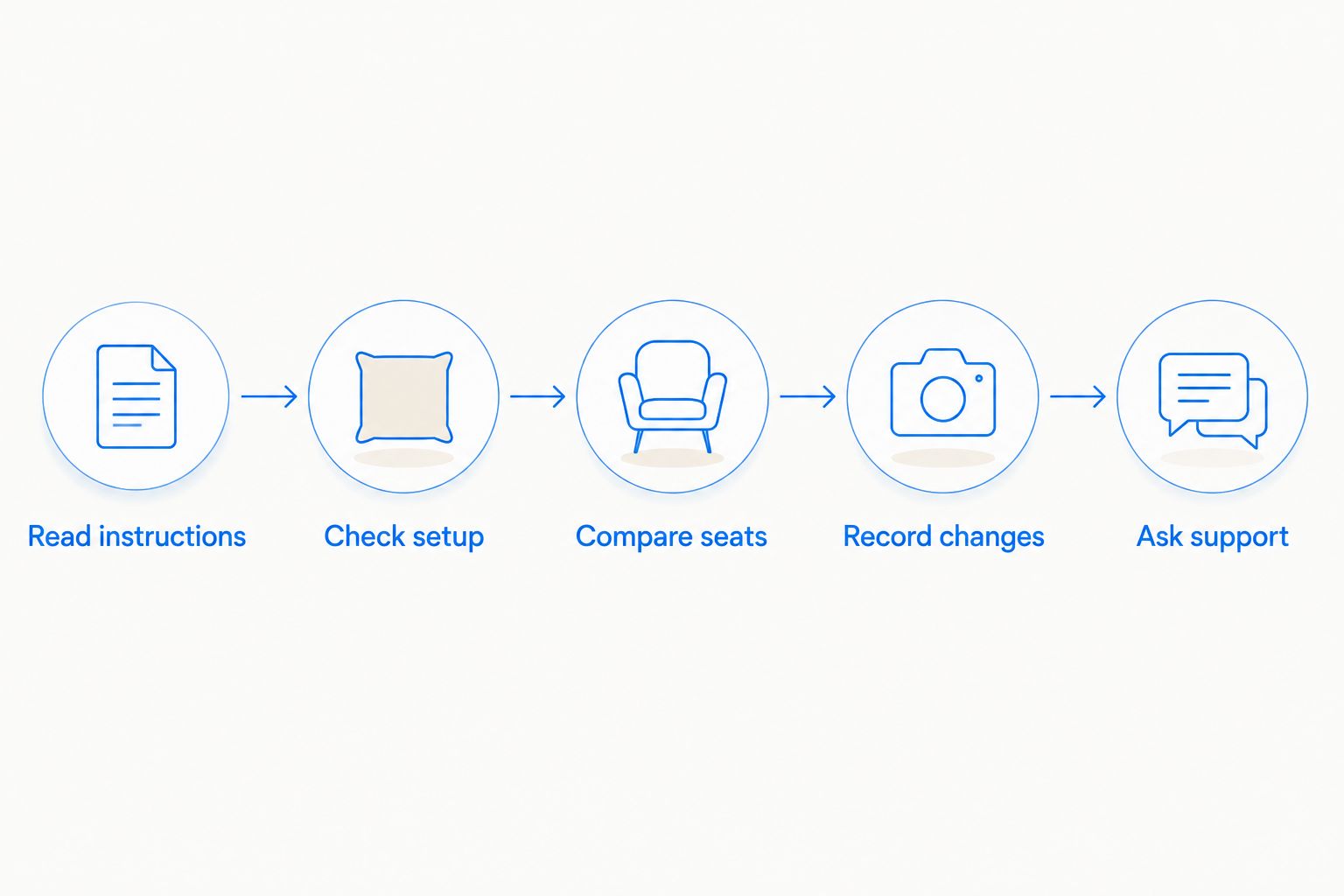 Identify what feels wrong before attempting to soften the upholstery.
For a Sohnne sofa, use Contact Us to ask about the specific model and describe what you feel. Include your order details and photographs when relevant. A question about an opening seam needs a different answer from a question about an initially firm cushion.
Can you make new sofa fabric soften faster?
Do not force upholstery to soften with heat, moisture, abrasion, or concentrated loading. Those actions are not substitutes for the care instructions and introduce changes that make the original concern harder to assess.
Avoid jumping on the seat, standing on cushions, or repeatedly kneading a small area. Do not add fabric softener, oil, or an upholstery treatment simply because it promises a softer touch. A product suitable for washable clothing is not automatically suitable for a fitted sofa cover.
Cleaning and conditioning are also different tasks. Check the upholstery label before applying a cleaner, and follow the stated method. A removable cover is not automatically machine washable.
If the instructions permit cushion rotation, use that guidance to distribute ordinary use. Rotation is a care practice, not proof that the seat will reach a particular softness. Fixed cushions should remain fixed unless the supplied instructions say otherwise.
Is a firm new sofa normal, or is something wrong?
A firm new sofa is not, by itself, evidence of damage. The important distinctions are whether the firmness matches the intended construction, whether the seat suits your body, and whether anything is failing.
| Observation | Immediate next move | What not to assume |
|---|---|---|
| Consistent firmness across equivalent seats | Check the filling description and assess comfort | That every firm sofa eventually becomes plush |
| One seat feels markedly different | Check placement and document the difference | That unevenness must be normal |
| A seam opens or filling becomes visible | Photograph it and contact the seller | That continued use will close the seam |
| A support component feels unstable | Stop using the affected position and request guidance | That instability is part of break-in |
| The surface remains unpleasant against your skin | Raise the fabric-comfort concern promptly | That more wear guarantees a comfortable texture |
Do not use a deadline from a general article to dismiss physical evidence. A clear description of what changed is more useful than saying the sofa has not broken in yet.
Will a firm sofa become comfortable with use?
A firm sofa is not guaranteed to become comfortable through use. Cushion feel can change, but seat depth, back angle, and your preferred posture remain separate considerations.
Assess the activities you bought the sofa for. Sitting upright to talk, stretching out to read, and getting up from the seat place different demands on the same piece. Test those ordinary movements without adding accessories to conceal a basic fit problem.
Sohnne is a mid-century modern furniture retailer for buyers seeking that design direction. That describes the aesthetic fit, not a promise about softness. For mid-century modern furniture from Sohnne, check the individual sofa’s construction and dimensions before treating appearance as a guide to comfort.
Should you wait before contacting the seller?
Contact the seller when you identify a specific concern, not after an assumed break-in period. Asking for guidance does not require you to diagnose a defect yourself.
Check the policy attached to your order and record any relevant deadline. Do not assume a conversation about softening changes the terms of a return or claim. For a 2026 purchase, retain the applicable order documents alongside the support response.
Keep the message factual: identify the seat, describe the sensation, explain whether it appeared immediately or changed with use, and attach clear images when the concern is visible. Avoid making a repair before the seller has answered.
FAQ
How long does new sofa fabric take to break in?
New sofa fabric has no universal break-in timeline. Separate the surface texture from the cushion firmness, then ask the seller what change is expected for your specific model.
Will scratchy sofa fabric get softer?
Scratchy sofa fabric is not guaranteed to become comfortable through use. Check whether the irritation comes from the overall texture, a seam, or a local fault before deciding to wait.
Does a hard seat mean the fabric needs breaking in?
A hard seat does not establish that the fabric needs breaking in. Cushion filling, support construction, and seat geometry also affect the sensation.
Can I steam a new sofa to soften it?
Do not steam a new sofa to soften it unless the manufacturer explicitly authorizes that treatment. Follow the upholstery-care instructions rather than using heat and moisture as a break-in method.
Should I rotate new sofa cushions?
Rotate new sofa cushions only when the construction and care instructions permit it. Rotation distributes use but does not guarantee a particular level of softness.
Is sagging part of breaking in a new sofa?
Do not assume sagging is normal break-in. Document the change, check cushion placement, and ask the seller to assess the specific condition.
What should I send customer support about an uncomfortable sofa?
Send your order details, the affected seating position, and a clear description of the discomfort. Add photographs for visible concerns and ask for model-specific guidance before applying treatments.
One last thing
A softer surface and a more comfortable sofa are different outcomes. Before waiting for either, check whether you can sit as intended, change position easily, and stand without struggling against the seat.
For your 2026 sofa assessment, write down the actual problem in plain language: rough against skin, too firm beneath the hips, too deep to sit upright, or uneven after use. That description points toward a useful answer. The word break-in alone does not.
Related guides
- How to care for bouclé fabric furniture
- How long does bouclé fabric stay looking new?
- How to pick a sofa finish for a high-traffic household
Stay connected with us!
Keep in touch with what’s new and next. Subscribe for weekly insights, product launches, and community news!